Main Facts: The Evolution of an Independent Masterpiece
In the upper echelons of independent watchmaking, few names evoke as much reverence, technological audacity, and philosophical depth as De Bethune. Founded in 2002 by master watchmaker Denis Flageollet and entrepreneur David Zanetta, the brand has consistently bridged the gap between historical horology and futuristic materials science. Among the expansive universe of De Bethune creations, the jumping hour complication holds a storied, near-mythic status.
The culmination of this lineage arrived with the launch of the De Bethune DB25 Digitale, a timepiece that transitions the house’s signature digital-and-analogue display architecture into the refined, classical geometry of the DB25 platform.
Core Specifications at a Glance:
- Case Material: Hand-polished grade 5 titanium.
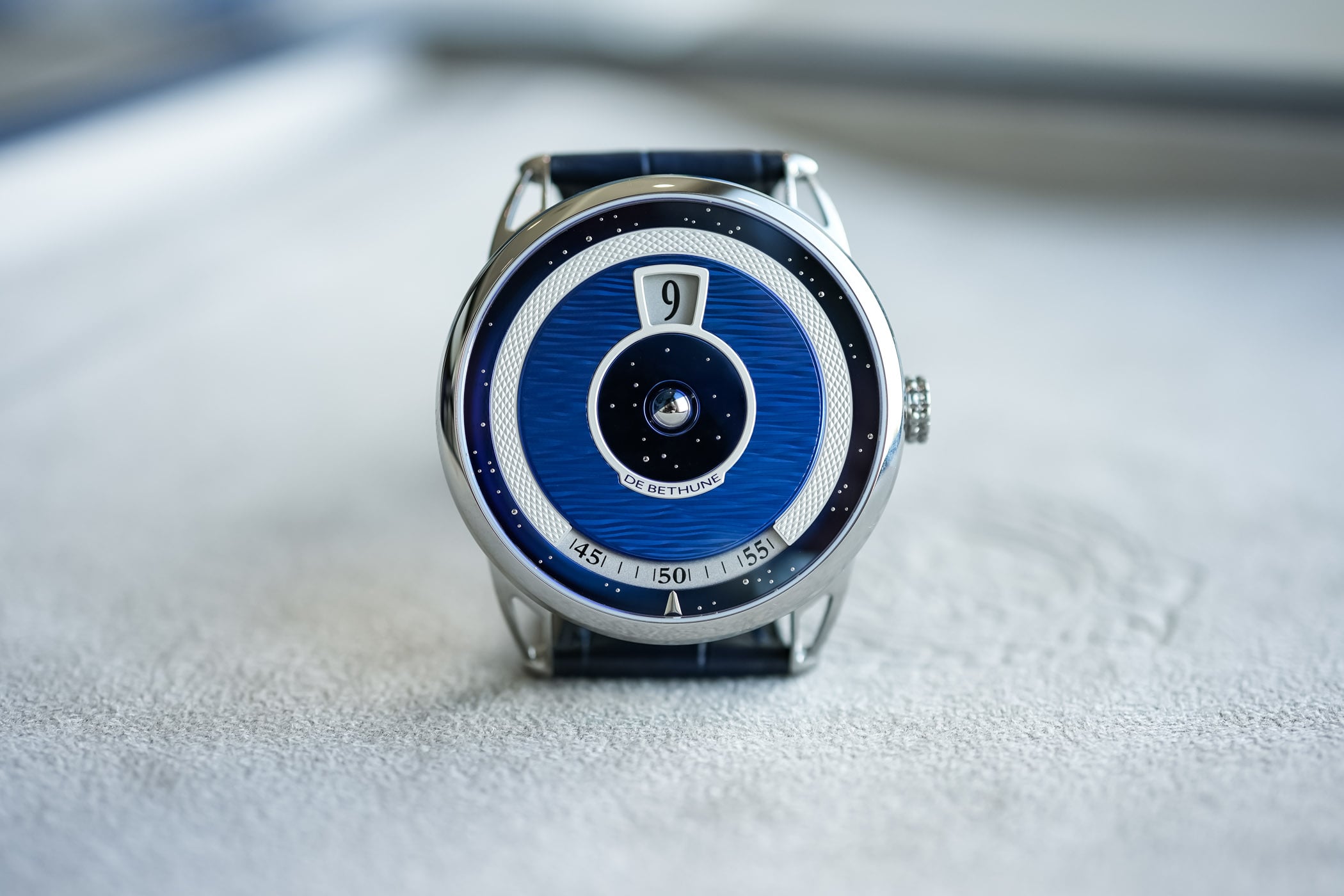
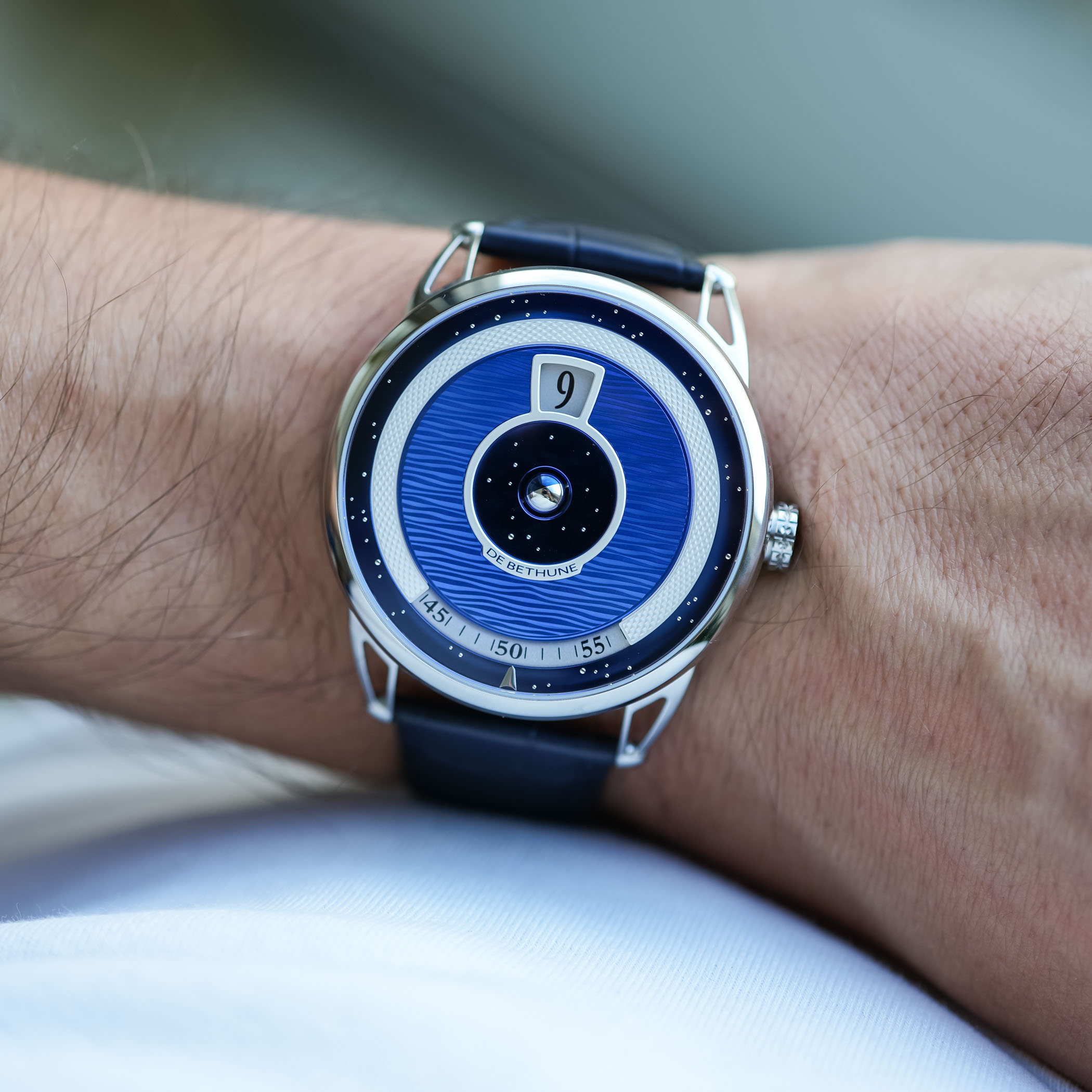
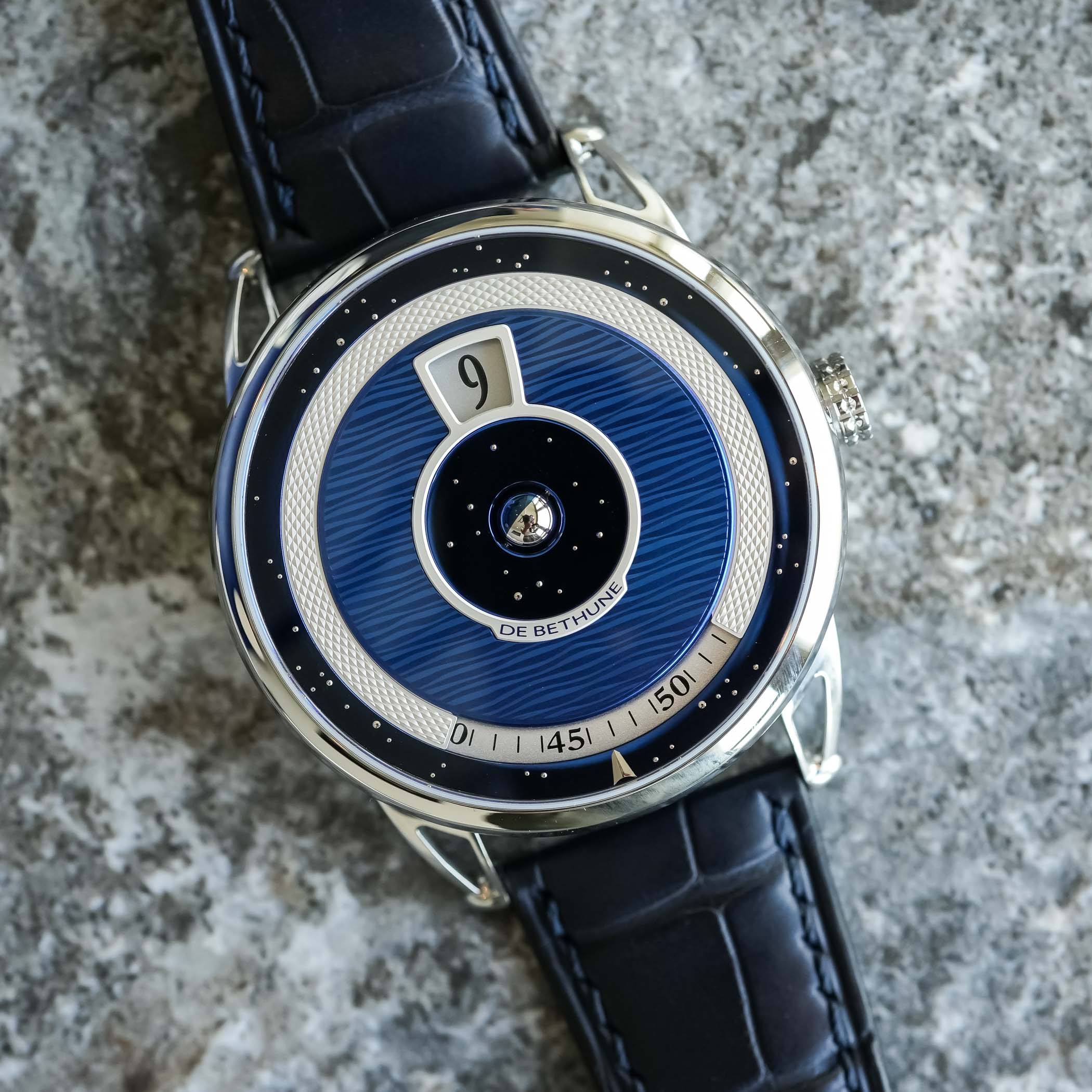
- Case Dimensions: 42mm diameter by a slim 11.8mm height, featuring short, integrated, openworked fixed lugs.
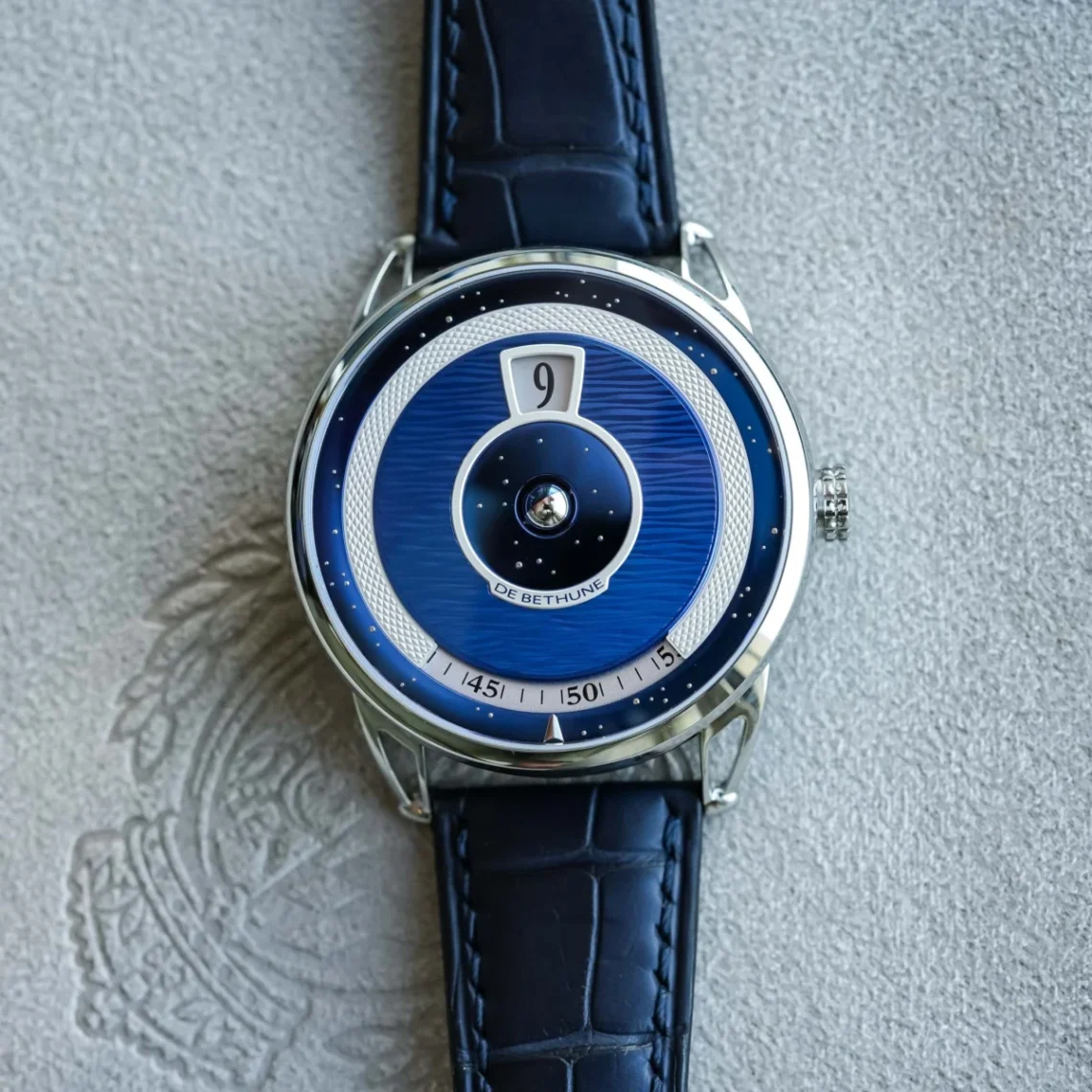
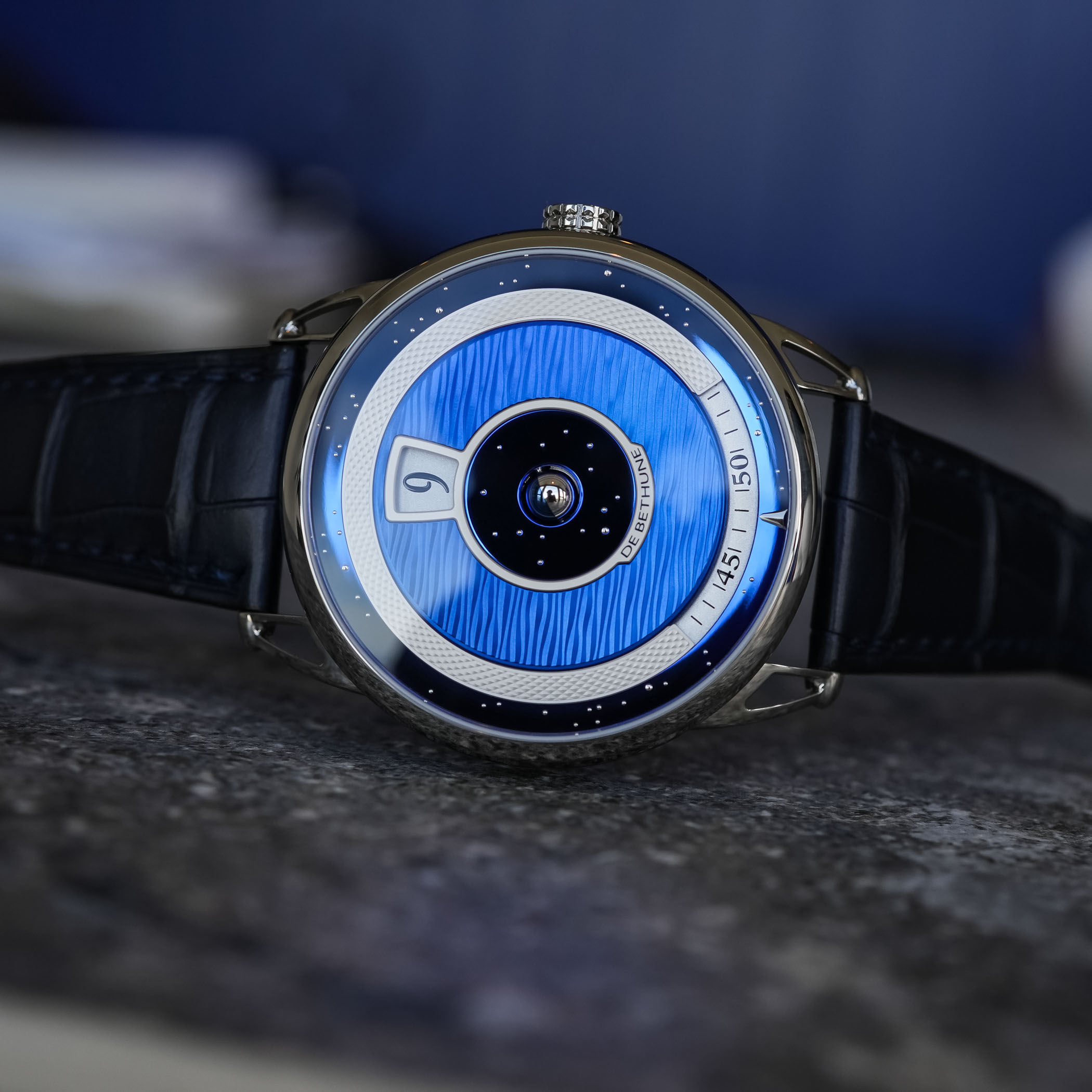
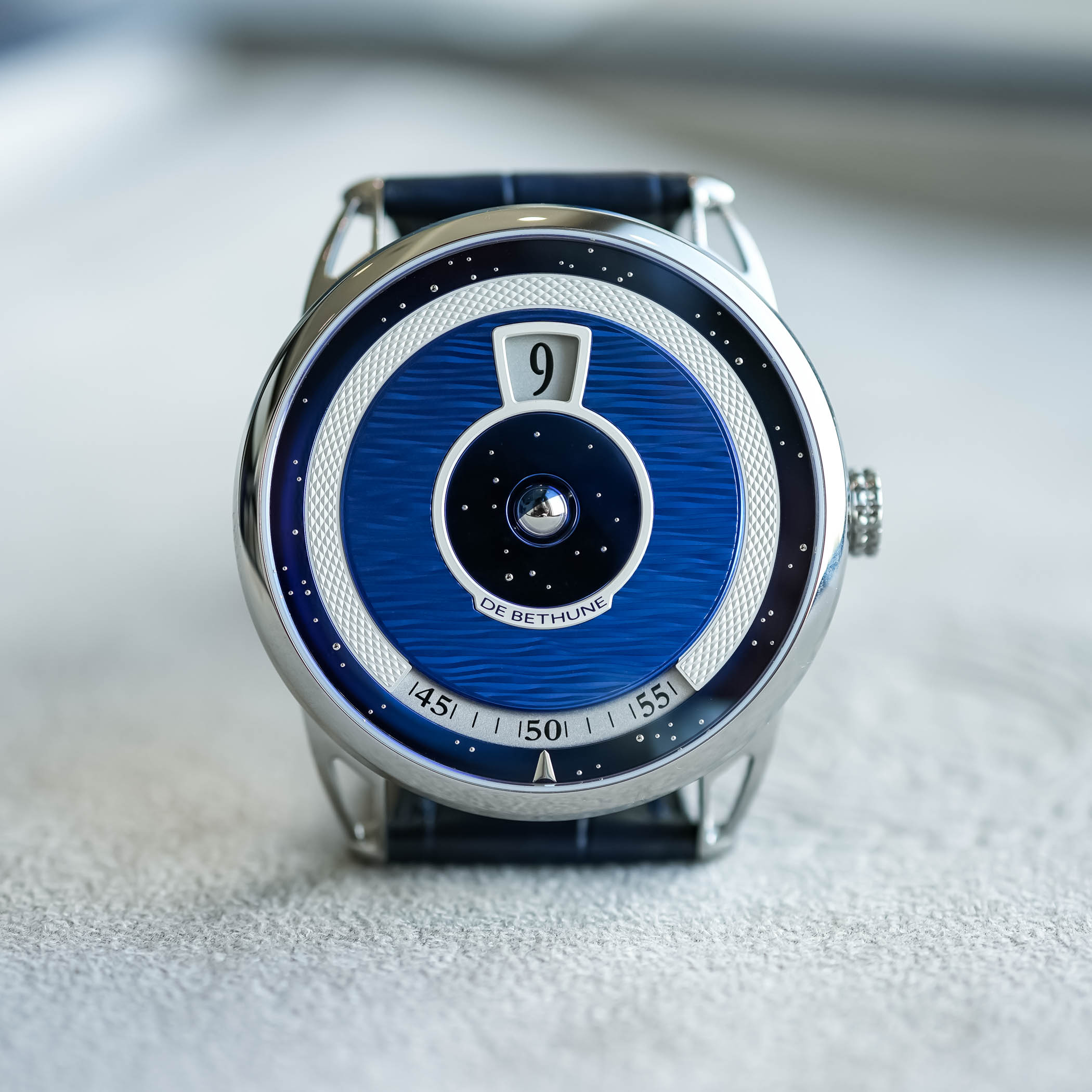
- Dial Architecture: Multi-layered, featuring concentric rings, hand-guilloché barleycorn motifs, random blue titanium guilloché, and flame-blued titanium elements accented with grey-gold stars.
- Complications: Jumping hours, dragging minutes via an arched aperture at 6 o’clock, and a central spherical palladium and flame-blued steel moon-phase indicator.
- Movement: In-house, hand-wound Calibre DB2144V3 (3rd generation).
- Frequency: 4Hz (28,800 vibrations per hour).
- Power Reserve: 5 days (120 hours), delivered via a self-regulating twin-barrel system.
- Strap: Supple alligator leather secured with a pin buckle.
- Availability & Pricing: Part of the permanent collection, priced at CHF 106,000 (excluding taxes).
Chronology: Tracing the De Bethune Digitale Lineage
To fully appreciate the significance of the DB25 Digitale, one must understand the evolutionary timeline that brought it into existence. De Bethune’s exploration of jumped indications is not a recent marketing exercise; it is deeply rooted in the brand’s formative years.
2006: The Genesis – The DBD
The journey began with the introduction of the DBD (De Bethune Digitale). Serving as an outlier even within De Bethune’s experimental early catalog, the DBD was an asymmetrical UFO of a timepiece. It featured an antique-style display layout combining a linear calendar (day, date, and month) with jumping hours and dragging minutes. It established the brand’s willingness to look backward into pocket-watch history while employing ultra-modern execution. The concept experienced a celebrated resurgence with the "Season 2" iterations, including high-profile collaborations such as the Swizz Beatz edition.

2014: The Transition to the DB28 Platform
At Baselworld 2014, De Bethune revolutionized the concept by merging it with its flagship design language: the DB28 architecture. The resulting DB28 Digitale featured the collection’s signature patented floating lugs, a monumental 45mm titanium case, and a stunning silvered guilloché dial. Positioned at the top of the dial was the jumping hour window coupled with the brand’s iconic spherical moon-phase display. For many collectors—including seasoned connoisseurs—the DB28 Digitale stood as the pinnacle of modern avant-garde watchmaking for over a decade.
2023–2026: The Shift to the DB25 Platform
Following the success of smaller, more wearable case formats like the DB25XS and DB28XS lines, De Bethune recognized a desire among collectors for reduced footprints without any loss of mechanical complexity. In late 2024 to 2026, the brand officially unveiled the DB25 Digitale. By migrating the mechanical architecture from the oversized, floating-lug DB28 case to the round, integrated, openworked lugs of the DB25 collection, De Bethune recalibrated the watch’s ergonomics. The case diameter dropped to a much more accessible 42mm, transforming the timepiece from a radical wrist sculpture into a wearable daily statement piece.
Supporting Data: Mechanical Brilliance and Dial Architecture
While the external aesthetics shifted to embrace the classical round geometry of the DB25 family, the internal mechanics were subjected to meticulous refinement.
The Dial: A Symphony of Concentric Rings
The dial of the DB25 Digitale is an optical marvel composed of 82 distinct elements. It represents a masterclass in visual contrast:
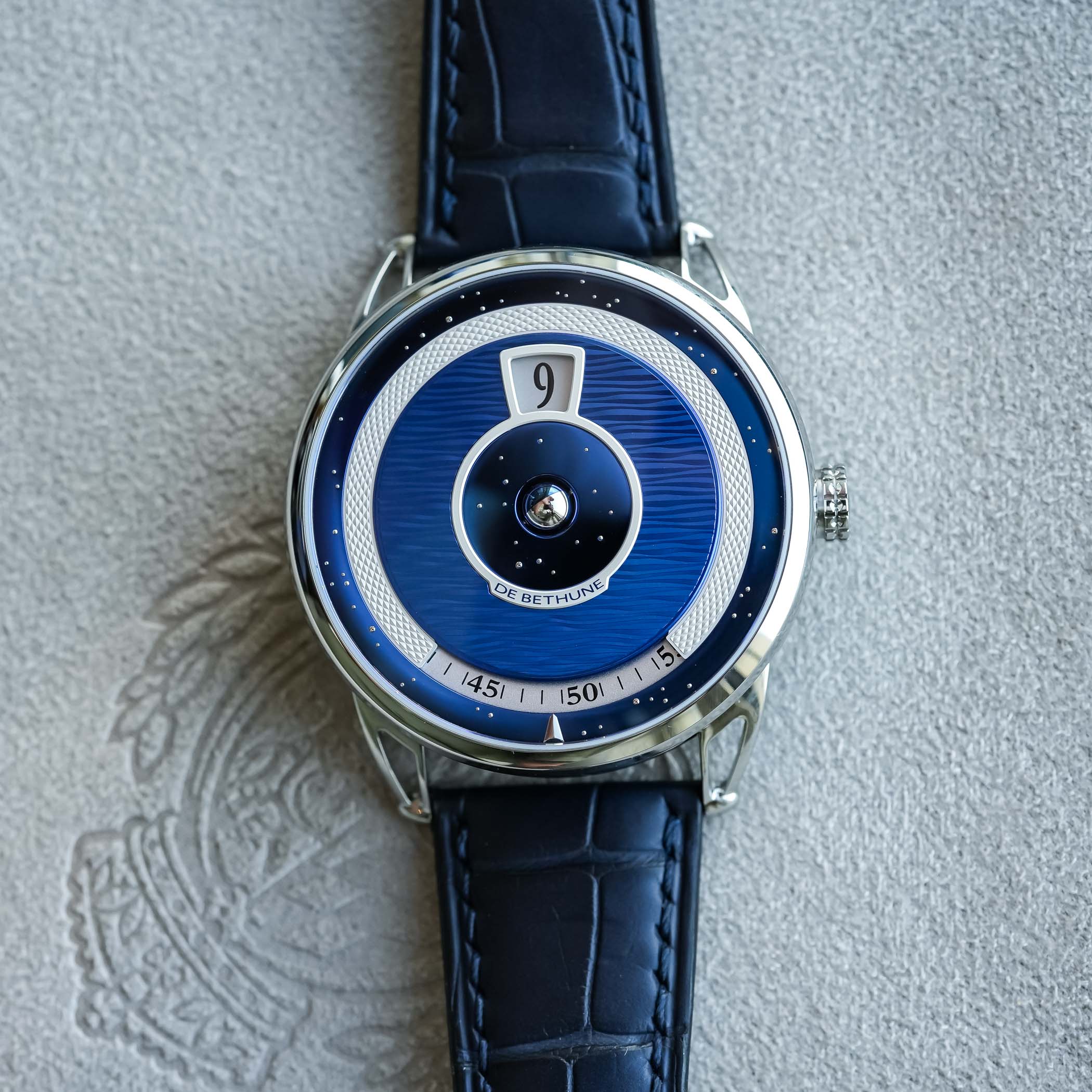
- The Core: At the very center sits the spherical moon-phase indicator crafted from palladium and flame-blued steel. It is accurate to within one lunar day every 1,112 years—a proprietary De Bethune patent first introduced in 2004.
- The Inner Constellation: The moon phase is framed by a blued titanium disc studded with tiny grey-gold stars, which in turn is ringed by polished titanium holding the hour window aperture.
- The Wave Motif: Expanding outward, a blued titanium plate showcases De Bethune’s modern "random guilloché" wave pattern, a dynamic texture introduced in 2023.
- The Barleycorn Perimeter: This modern blue expanse is contrasted by a classic silvered ring hand-engraved with a traditional barleycorn guilloché motif. The relocation of the minute track to an arched aperture at 6 o’clock ensures this ring forms a continuous, uninterrupted concentric circle.
- The Outer Edge: A final outer ring of blued titanium with grey-gold stars meets the polished titanium bezel, drawing the eye naturally toward the celestial center.
Calibre DB2144V3: Engine of the Cosmos
Powering this multifaceted display is the third generation of the hand-wound in-house Calibre DB2144V3. Driving both a jumping hour and a rotating minute disc requires immense energy management. De Bethune achieves this via a micro ball-bearing system that cleanly releases and locks the display discs without sapping amplitude from the gear train.
The movement integrates several hallmark De Bethune innovations:
- Titanium Balance Wheel: Patented in 2004 and optimized in 2016 with white-gold inserts for superior aerodynamic efficiency and thermal stability.
- Flat Terminal Curve Balance Spring: A proprietary geometry ensuring concentric breathing of the hairspring.
- Silicon Escape Wheel: Reducing friction and wear within the high-frequency escapement.
- Triple Pare-Chute Shock-Absorbing System: A blued steel bridge suspension system (patented in 2005) that protects the delicate balance staff against impacts.
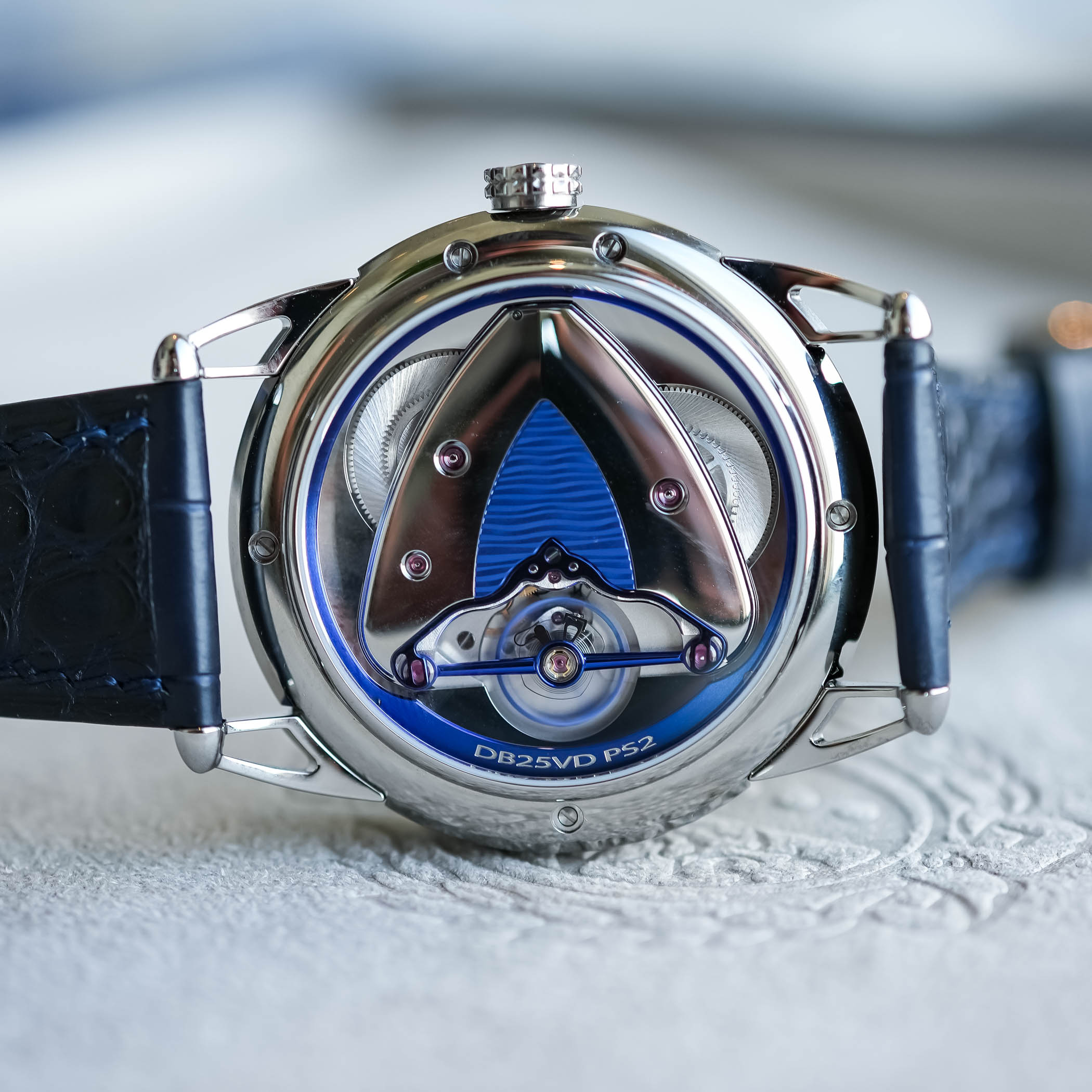
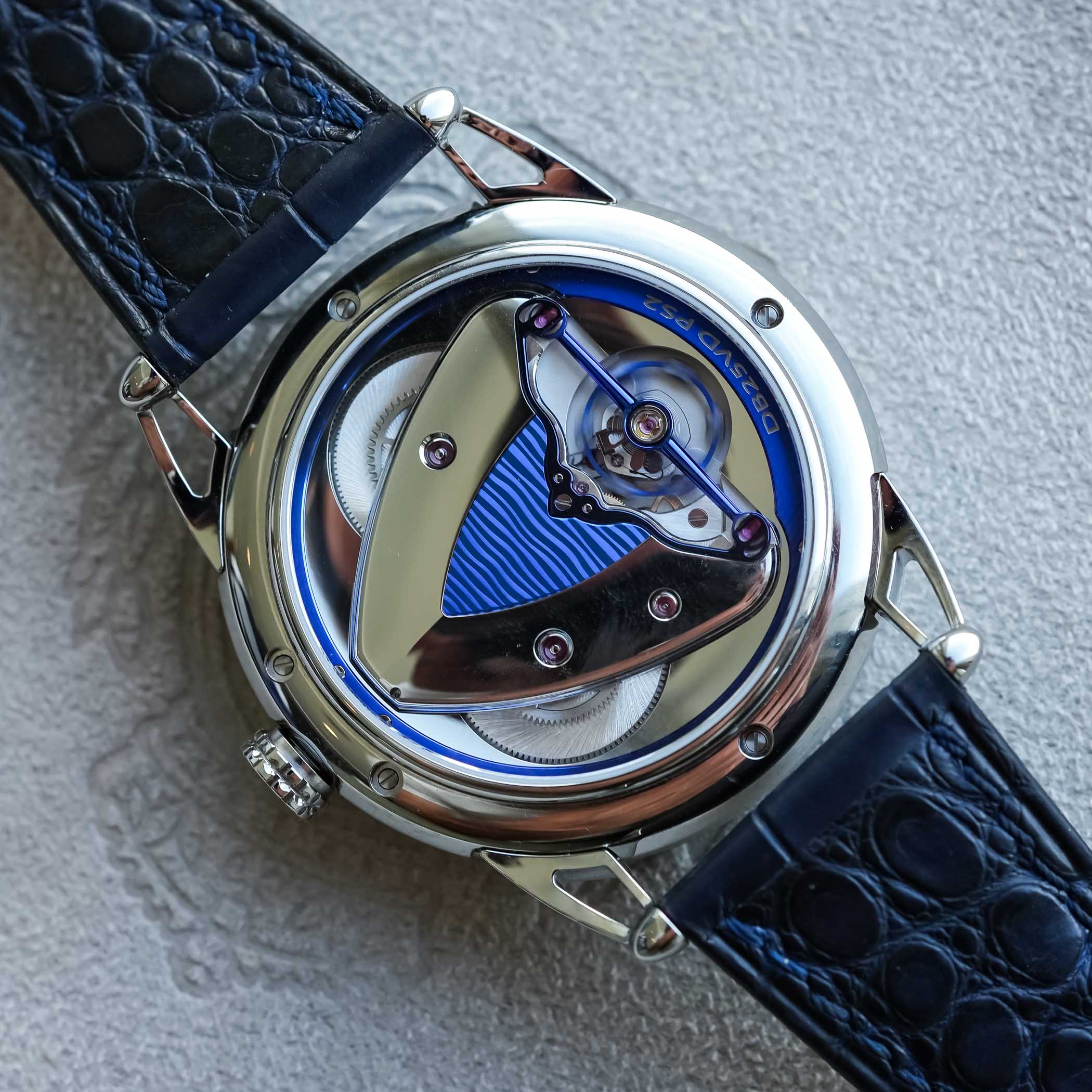
Beating at 4Hz (28,800 vph) and driven by a self-regulating twin-barrel setup, the movement guarantees a robust 5-day (120-hour) power reserve—an impressive feat given the heavy mechanical load of the digital jumping hour and moon-phase modules. Turning the watch over reveals a concave titanium mainplate, hand-beveled deltoid barrel bridges, and the first-ever application of the random guilloché motif directly onto a blued titanium movement component.
Official Responses and Independent Perspectives
When De Bethune introduces a major complication housed within a reimagined case family, the reactions from the horological community offer profound insights into the brand’s market positioning.
Denis Flageollet, co-founder and Master Watchmaker of De Bethune, has consistently emphasized that his work is not merely about manufacturing timepieces, but about engaging in an ongoing dialogue with the history of the craft. In recent press statements regarding the expansion of the DB25 line, Flageollet noted that the challenge of contemporary watchmaking lies in respecting traditional finishing techniques while refusing to be creatively shackled by them.
Independent reviewers and collectors have universally praised the transition to the DB25 platform. Industry analysts have highlighted how the reduction of the case size from 45mm (on the old DB28 Digitale) to 42mm directly addresses feedback from enthusiasts with average wrist sizes (such as those measuring around 16.5cm).
Furthermore, retail specialists have noted that pricing strategy has remained remarkably stable. When the DB28 Digitale debuted in 2014 at CHF 95,000, it represented the pinnacle of high-end independent watchmaking. Twelve years later, the DB25 Digitale enters the permanent collection at CHF 106,000 (excluding taxes). In an era where luxury watch inflation has routinely seen double-digit percentage spikes year-on-year, De Bethune’s modest price adjustment reflects a brand confident in its intrinsic value rather than capitalizing on short-term market bubbles.
Implications: Where the DB25 Digitale Sits in the Modern Horological Landscape
The introduction of the DB25 Digitale carries several significant implications for the collector market and the trajectory of independent watchmaking as a whole.
1. The Democratization of Wearability in Haute Horlogerie
For years, avant-garde independent watchmaking was plagued by the "size curse"—pieces that featured breathtaking technical innovations but were built to exaggerated proportions (frequently exceeding 44mm to 47mm) simply to accommodate complex display modules. By successfully packaging the sophisticated jumping hour, dragging minute, and spherical moon mechanism into a restrained 42mm DB25 case with a sub-12mm profile, De Bethune proves that extreme complications do not require wrist presence to be compromised by sheer bulk. This trend toward wearable avant-garde design signals a maturing collector base that prioritizes daily ergonomic comfort alongside visual spectacle.
2. The Solidification of De Bethune’s Design Vocabulary
By bridging the gap between the historic asymmetrical DBD, the futuristic DB28 Digitale, and the classical elegance of the DB25, De Bethune has woven its diverse product lines into a cohesive narrative. The juxtaposition of traditional guilloché (the barleycorn pattern) with ultra-modern textures (the random blued titanium guilloché) demonstrates that historical reverence and technological rebellion are not mutually exclusive.
3. The Economics of Independent Masterpieces
At CHF 106,000, the DB25 Digitale occupies an ultra-exclusive tier accessible only to elite collectors and devoted enthusiasts. Yet, its steady pricing trajectory relative to its 2014 predecessor reinforces the perception of independent watchmakers as honest curators of craft, contrasting sharply with legacy houses heavily influenced by conglomerate pricing pressures.
Conclusion
The De Bethune DB25 Digitale is more than just a mechanical timekeeper; it is a celestial canvas. It challenges our perceptions of how time should be read, pairing the stark modernity of a jumping hour aperture with the organic poetry of a three-dimensional moon phase and traditional hand-finishing. While ownership of such a masterpiece remains an aspiration for most, the mere existence of the DB25 Digitale elevates the standards of contemporary watchmaking, proving that art, science, and mechanical mastery can exist in absolute, harmonious balance.