Main Facts: Redefining Eco-Conscious Long-Range Cruising
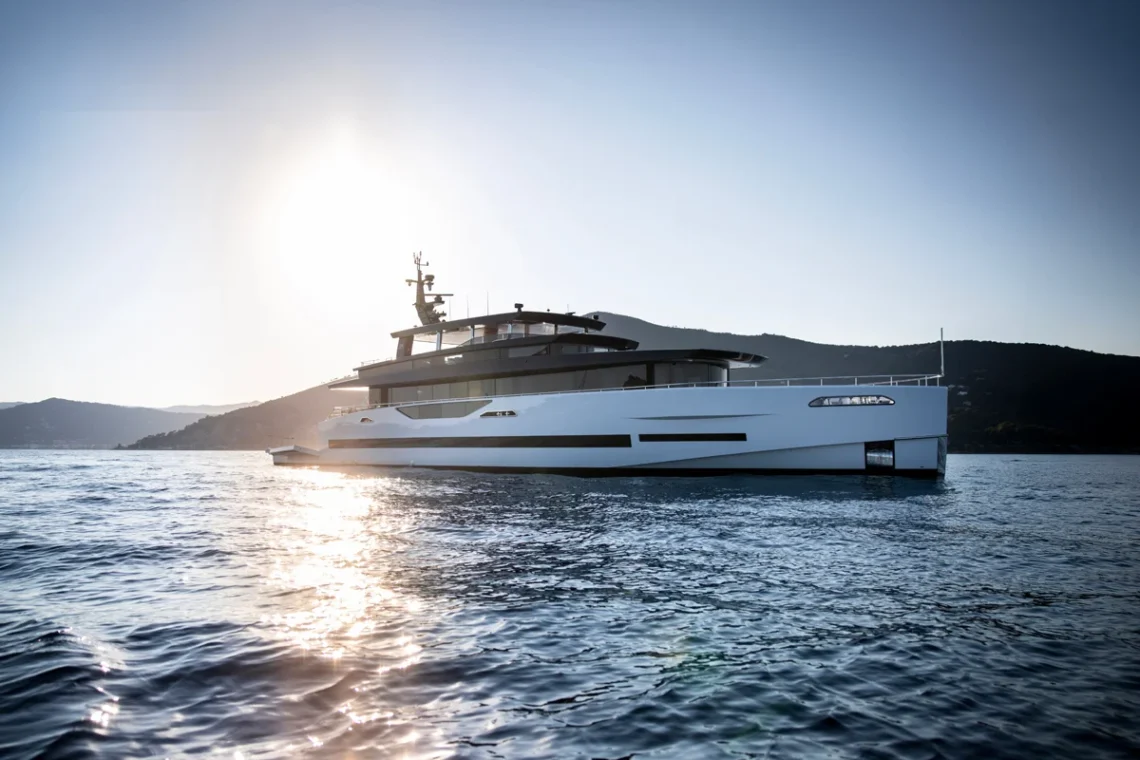
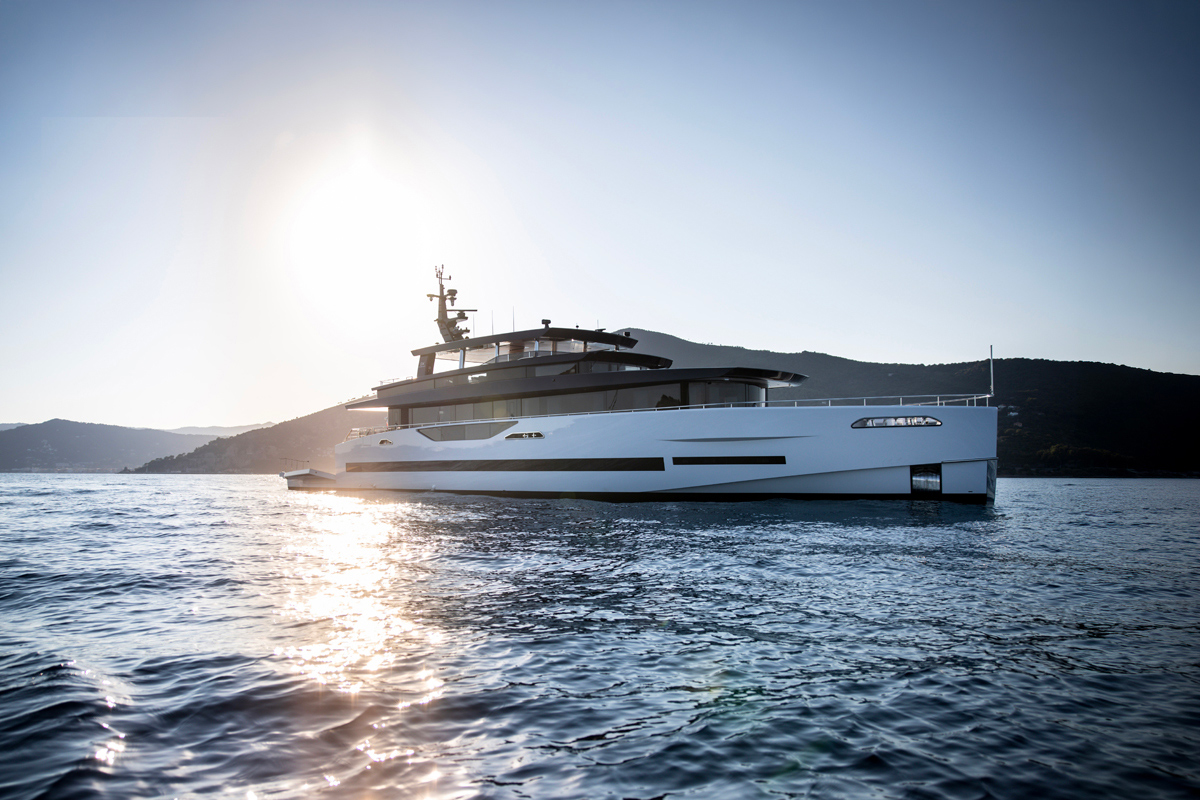
At the prestigious 2026 Monaco Yacht Show, GX Superyachts captured the maritime industry’s attention with the official global debut of the GX42. Spanning 138 feet (42 meters), this revolutionary raised pilot house superyacht establishes a new benchmark for environmentally conscious luxury shipbuilding. Rather than treating hybrid propulsion and eco-friendly engineering as mere afterthoughts or standalone features, the GX42 integrates a comprehensive efficiency-focused architecture into its very DNA.
Designed in a high-profile collaboration between renowned Italian designer Marco Casali—who penned both the striking exterior lines and the sophisticated interior—and naval architecture and engineering firm NAMES, the GX42 marries state-of-the-art hybrid propulsion with a transoceanic hull. The vessel features a parallel diesel-electric hybrid layout, extensive lithium iron phosphate battery storage, and an advanced photovoltaic solar generation array.
Accommodating up to ten guests across five lavish staterooms, the GX42 is purposefully optimized for extended family cruising. It offers exceptional open-ocean capability paired with a serene, near-silent onboard living environment. By harmonizing cutting-edge energy management with residential-grade luxury, GX Superyachts has delivered a vessel that answers the modern yacht owner’s dual demand for ecological responsibility and uncompromised comfort.
Chronology: From Concept to Global Debut at Monaco
The journey of the GX42 from a visionary blueprint to a celebrated physical reality at Port Hercule reflects a meticulous, forward-thinking development timeline.
Phase 1: Conceptualization and Design Inception (2024–2025): Recognizing a shifting market demand for more efficient, long-range vessels that do not sacrifice luxury, GX Superyachts partnered with Marco Casali and NAMES. The objective was clear: engineer a 42-meter platform from the keel up to support a parallel-hybrid ecosystem without disrupting the aesthetic and spatial demands of a luxury superyacht.
Phase 2: Naval Architecture and Engineering Refinement (Mid-2025): Working closely with NAMES, the engineering team optimized a slender, long-range hull form capable of maximizing hydrodynamic efficiency. Simultaneously, the electrical architecture was mapped out, integrating MAN engines with custom electric drivetrain components, a massive 938 kWh battery bank, and rooftop solar integration.
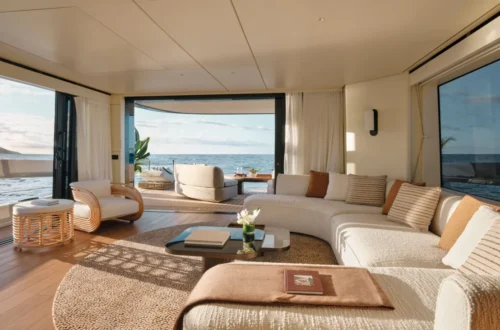
Phase 3: Interior Architecture and Material Sourcing (Late 2025): Marco Casali’s studio finalized the interior styling, curating a palette of warm walnut, Italian leather, stone, and neutral fabrics. High-end bespoke touches—including backlit Turkish marble and liquid-metal panels—were specified to complement the vessel’s floor-to-ceiling windows and open-plan layouts.
Phase 4: Global Premiere at the Monaco Yacht Show (September 2026): The GX42 made its official public debut, drawing immense crowds of industry experts, prospective buyers, and maritime media. The unveiling marked the official launch of GX Superyachts’ new 42-meter series, positioning the brand at the vanguard of sustainable superyacht manufacturing.
Supporting Data: Engineering Specifications and Performance Metrics
The true innovation of the GX42 lies beneath its sleek exterior, driven by a sophisticated matrix of power, storage, and hydrodynamic efficiency.
Propulsion and Hybrid Architecture
Abandoning traditional, purely mechanical setups, the GX42 utilizes a parallel diesel-electric hybrid system. This configuration maintains a direct mechanical connection between twin MAN main engines and the propeller shafts while seamlessly integrating electric machines into the drivetrain. This allows the vessel to operate in multiple modes:
Pure Diesel Mode: For high-speed transits or heavy open-ocean conditions.
Diesel-Electric Mode: For optimized fuel burn and supplemental power generation.
Zero-Emission Silent Mode: Powered entirely by the vessel’s extensive battery reserves.
Energy Storage and Solar Generation
Battery Bank Capacity: Approximately 938 kWh of advanced lithium iron phosphate (LiFePO4) batteries.
Photovoltaic Array: An integrated solar panel system rated at approximately 27 kWp (kilowatt-peak), continuously harvesting renewable energy from the sun.
Zero-Emission At-Anchor Endurance: Capable of up to 48 hours of silent, emission-free operation at anchor (depending on hotel loads and environmental conditions).
Energy Consumption Reduction: Up to a 45 percent reduction in overall onboard electricity consumption compared to traditional yachts of similar volume, achieved through intelligent power management and heat recovery systems.
Range and Hydrodynamics
Hull Form: Slender, low-drag, displacement-to-semi-displacement hybrid hull designed by NAMES.
Economical Cruising Speed: Approximately 9 knots.
Transoceanic Range: Exceeding 5,000 nautical miles, allowing owners to cross oceans with absolute confidence and minimal refueling stops.
Accommodations and Layout
Staterooms: 5 total staterooms accommodating up to 10 guests.
Owner’s Suite: A full-beam master stateroom located on the main deck, featuring a private foredeck terrace.
VIP Suite: Positioned on the lower deck, complete with an innovative fold-down balcony that extends over the water.
Guest Staterooms: Three additional guest cabins on the lower deck, styled to match the vessel’s residential aesthetic.
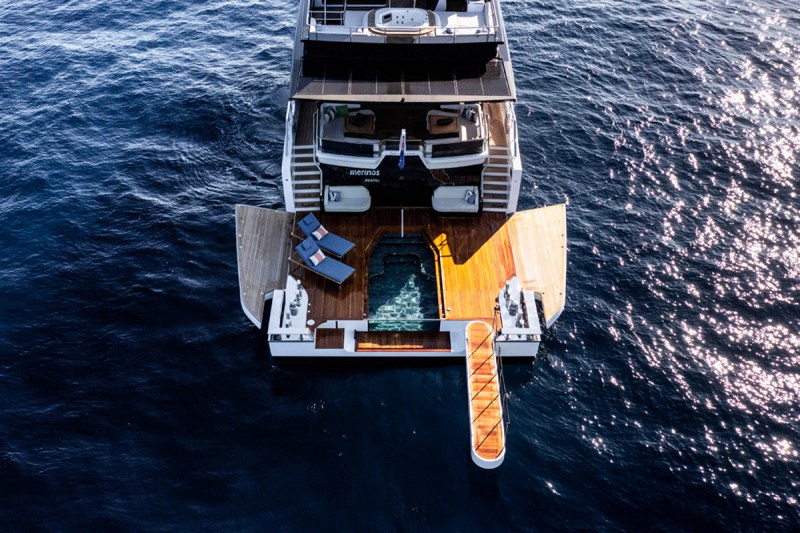
Social and Entertainment Spaces: Dedicated zones across the main and upper decks, including an indoor/outdoor dining area for 10, a spacious main salon, and an expansive upper deck complete with modular lounges, sunbeds, a wet bar, and a custom Jacuzzi.
Official Responses and Design Philosophy
In statements released during the Monaco Yacht Show, representatives for GX Superyachts and designer Marco Casali emphasized that the GX42 was created to shift industry paradigms regarding green technology.
"With the GX42, our goal was not simply to add a hybrid battery pack to an existing hull design," noted a spokesperson for GX Superyachts. "We built an entirely integrated platform where efficiency, engineering, and onboard comfort reinforce one another. Owners today want to explore remote corners of the globe, but they want to do so quietly, efficiently, and with a clean conscience. The GX42 achieves this without asking for a single compromise in luxury."
Designer Marco Casali elaborated on how the vessel’s exterior architecture directly influences its interior atmosphere:
"The Raised Pilot House configuration allowed us to craft a dynamic, flowing exterior profile while keeping the interior spaces vast, luminous, and deeply connected to the sea. By using broad-radius curves, floor-to-ceiling glass, and warm, tactile materials like walnut and backlit Turkish marble, we stripped away the clinical feel sometimes associated with ‘eco-friendly’ vessels. Instead, we created a floating residential sanctuary that transitions effortlessly from vibrant daytime entertaining to intimate, tranquil evenings."
NAMES, responsible for the vessel’s naval architecture, highlighted the synergy between form and function:
"Every millimeter of the hull was hydrodynamically optimized to reduce resistance at displacement speeds. When you combine a low-drag hull with a 5,000-nautical-mile range and the ability to run silently on battery power for two full days at anchor, you redefine what a mid-sized superyacht can achieve."
Implications: The Future of Sustainable Superyachting
The introduction of the GX42 at the 2026 Monaco Yacht Show carries significant ramifications for the broader superyacht sector, signaling a decisive shift in owner priorities and shipyard capabilities.
1. Mainstreaming Hybrid Technology in Smaller Footprints
Historically, advanced hybrid and diesel-electric propulsion systems were largely restricted to massive custom mega-yachts exceeding 70 or 80 meters, due to weight, space, and cost constraints. By successfully packaging a 938 kWh battery bank, solar arrays, and parallel-hybrid MAN drivetrains into a 42-meter (138-foot) platform, GX Superyachts proves that high-efficiency green technology is entirely viable—and highly desirable—in the mid-size luxury segment.
2. Redefining Onboard Comfort Through Silence and Stability
Beyond environmental metrics, the operational implications of the GX42 touch heavily on guest experience. Traditional yachts rely on loud, vibration-heavy diesel generators running continuously, even while anchored in pristine bays. The GX42’s ability to draw on stored lithium-iron-phosphate power for up to 48 hours eliminates generator noise and exhaust fumes at anchor. This creates an unprecedented level of tranquility, aligning luxury travel with absolute peace and quiet.
3. Aesthetic Evolution in Eco-Design
For years, early eco-yachts often suffered from utilitarian or overly radical styling that alienated traditional yacht buyers. The collaboration between GX Superyachts and Marco Casali demonstrates that sustainable engineering can be wrapped in timeless, elegant Italian design. By employing luxurious finishes—liquid-metal panels, fine Italian leathers, and warm woods—the GX42 normalizes sustainability within the upper echelons of luxury, proving that responsible yachting requires no aesthetic compromise.
4. Setting a New Standard for Future Series
As environmental regulations tighten globally and discerning owners increasingly prioritize eco-conscious operations, the GX42 serves as a blueprint for the future of custom and semi-custom series construction. By proving that a 4,000+ nautical mile voyage can be undertaken with dramatically reduced fuel burn and zero-emission capability at destination anchorages, GX Superyachts has set a high bar that the rest of the brokerage and shipbuilding community will be compelled to follow.