Main Facts
Italian heritage shipyard Baglietto has officially unveiled the highly anticipated first interior renderings of the Farah, a magnificent 164-foot (50-meter) custom superyacht currently under construction at its premier facility in La Spezia, Italy. Representing a seamless fusion of European maritime craftsmanship and vibrant South American design sensibilities, the Farah is a masterclass in luxury living.
The vessel is the result of a powerhouse collaboration between architectural firm Matheus Farah and Manoel Maia Arquitetura and Fernando de Almeida Yacht Design. Together, they have introduced a distinct design philosophy to the high seas known as "Warm Modernism." This concept deftly bridges the gap between clean, minimalist architecture and the cozy, unpretentious warmth of a high-end private residence.
Beneath its striking exterior lies a thoughtfully engineered platform. Naval architecture for the Farah is masterminded by the renowned studio Pierluigi Ausonio Naval Architecture, guaranteeing top-tier hydrodynamics, safety, and seakeeping performance. Meanwhile, brokerage and project oversight are being expertly managed by Royal Yacht International on behalf of the owner. Conceived from the keel up as a sanctuary for hospitality and holistic wellbeing, the Farah prioritizes fluid spatial circulation, tactile materials, and an intimate connection with the ocean environment.
Chronology of the Project
The journey of the Farah from a visionary concept on paper to a tangible masterpiece taking shape in the historic sheds of La Spezia reflects a meticulous, multi-phase development process typical of world-class bespoke superyachts.
- Initial Conception and Design Phase: The genesis of the Farah began when the owner sought to combine the robust engineering pedigree of an established Italian builder with a fresh, residential design approach inspired by Brazilian modernism. Matheus Farah and Manoel Maia Arquitetura, alongside Fernando de Almeida Yacht Design, were brought on board to conceptualize the interiors. Their mandate was to translate the breezy, open-plan, natural-material-heavy ethos of contemporary Brazilian residential architecture into a seaworthy format.
- Engineering and Naval Architecture Integration: As the interior layout took shape, Pierluigi Ausonio Naval Architecture was tasked with engineering the hull and superstructure. This phase ensured that the voluminous interior spaces, expansive glass panels, and open layouts did not compromise the vessel’s structural integrity or performance parameters.
- Contract Finalization and Project Management: Royal Yacht International stepped in to navigate the build contract and act as the owner’s representative, establishing a rigorous schedule and quality-control framework alongside Baglietto’s internal project management teams.
- The La Spezia Build Phase: Construction commenced at Baglietto’s state-of-the-art La Spezia shipyard, where skilled artisans began fabricating the custom hull and superstructure.
- Interior Reveal (Current Milestone): Baglietto’s public release of the initial interior renderings marks a significant milestone in the build timeline, offering the maritime industry its first comprehensive look at the "Warm Modernism" aesthetic taking physical form within the shipyard walls. The project now moves further into its outfitting phase ahead of future launch and sea trials.
Supporting Data & Design Specifications
To truly understand the scale and ambition of the Farah, one must examine the specific metrics, material choices, and design components that define the vessel:
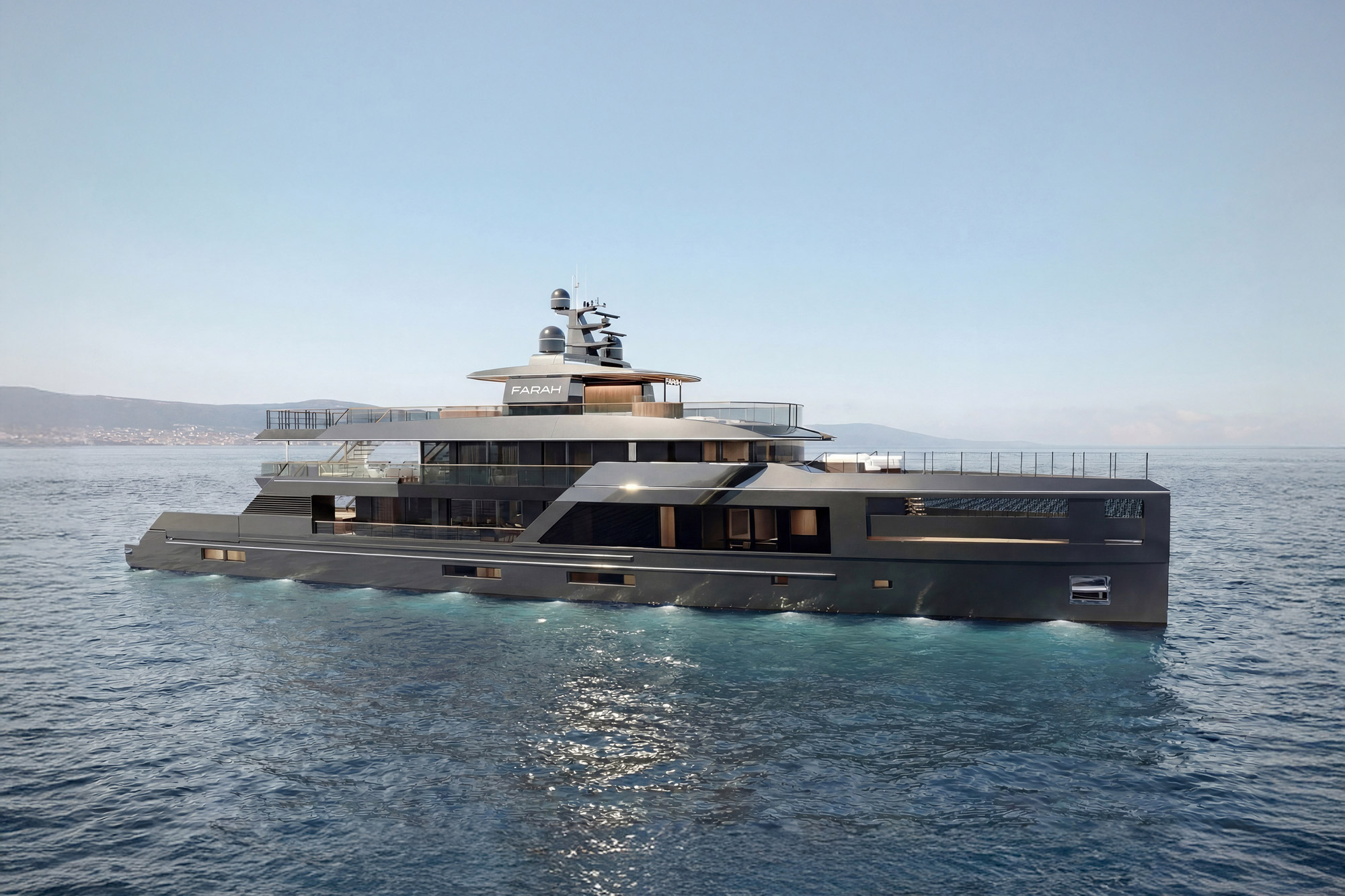
- Length Overall (LOA): 164 feet (approx. 50 meters), placing the yacht squarely in the highly coveted superyacht size category—offering immense volume while maintaining the ability to access exclusive Mediterranean and Caribbean anchorages.
- Builder: Baglietto (La Spezia, Italy).
- Interior Design: Matheus Farah and Manoel Maia Arquitetura, in collaboration with Fernando de Almeida Yacht Design.
- Naval Architecture: Pierluigi Ausonio Naval Architecture.
- Project Representation & Oversight: Royal Yacht International.
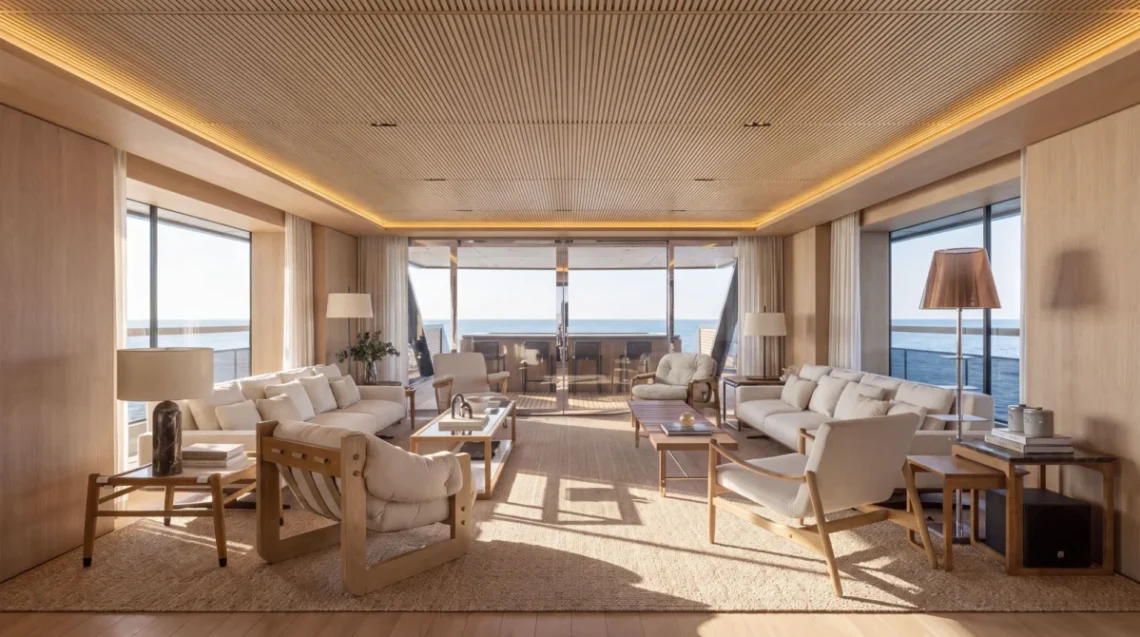
- Color Palette: Dominated by light sand tones, warm earth browns, and delicate soft gold accents. These hues are chosen to reflect natural light and create an expansive, serene environment.
- Material Selection: A curated mix of tactile natural elements, including sustainably sourced woods, supple leathers, richly textured fabrics, architectural metals, and fine stonework. Every surface is chosen to balance aesthetic comfort, usability, and long-term durability in a marine environment.
- Furnishings & Art Integration: The interior features iconic armchairs designed by prominent Brazilian design masters, serving as functional sculptures that pay direct homage to South America’s rich modernist heritage.
- Lighting Infrastructure: A sophisticated system of warm, indirect architectural lighting that eliminates harsh shadows, reinforces the residential feel of the vessel, and establishes seamless visual continuity across different interior zones.
Official Responses and Industry Perspectives
The unveiling of the Farah has generated considerable buzz across the luxury yachting sector, prompting reflections from the key stakeholders involved in bringing the vessel to life.
While Baglietto has long been celebrated for its aggressive, sleek planing hulls and military-derived pedigree, the shipyard has increasingly positioned itself as a leader in fully custom, highly sophisticated displacement and semi-displacement yachts. Representatives for the builder emphasize that projects like the Farah demonstrate the shipyard’s versatility and its willingness to embrace diverse global design languages without sacrificing traditional Italian craftsmanship.
Designers Matheus Farah and Manoel Maia have consistently highlighted that the core challenge—and triumph—of the Farah project was dissolving the psychological barrier between being on a boat and living in a home. By implementing "Warm Modernism," the design team sought to strip away the clinical, overly nautical clichés often found in traditional yacht interiors, replacing them with breathable layouts, organic textures, and furniture that invites physical engagement.
Royal Yacht International, speaking on behalf of the owner, noted that the construction process has been defined by an extraordinary level of synergy between the client’s exacting vision, the designers’ creative boldness, and Baglietto’s technical execution. According to the brokerage, the owner’s primary directive was to create an environment centered entirely on hospitality, relaxation, and emotional wellbeing—a floating estate capable of hosting family and friends in absolute comfort while cruising the globe.
Implications for the Superyacht Industry
The introduction of the Farah signals several noteworthy shifts in contemporary custom superyacht design and construction trends:
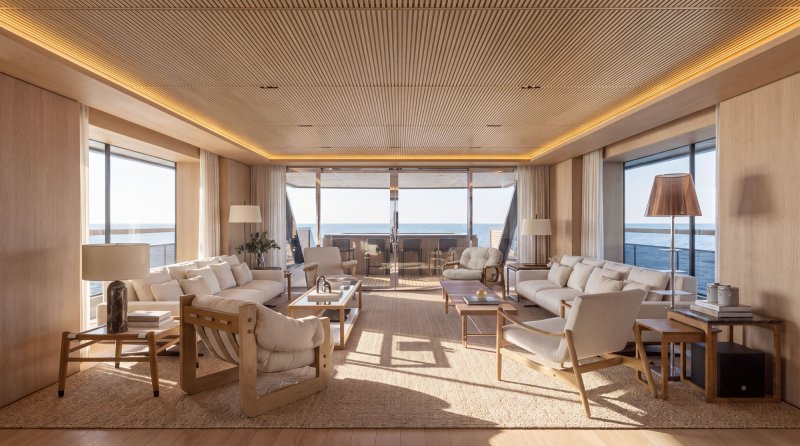
1. The Rise of "Residential Architecture" at Sea
For decades, superyacht interiors often mimicked ultra-luxurious hotels or traditional nautical showcases, heavily reliant on high-gloss woods, brass details, and segmented cabins. The Farah accelerates a broader industry movement toward true residential architecture. By utilizing matte finishes, tactile stone, raw fabrics, and loose, movable furniture typical of high-end land-based villas, Baglietto and its design partners are redefining what luxury feels like. Owners increasingly view their yachts not merely as transit vessels, but as primary or secondary homes, demanding the same psychological comfort and emotional grounding they experience on land.
2. Cross-Cultural Design Collaborations
The fusion of Italian shipbuilding expertise with Brazilian architectural philosophies highlights a growing globalization in the superyacht market. While Italy remains the undisputed capital of yacht manufacturing, owners are looking far beyond European shores for interior and architectural inspiration. Brazilian modernism—known for its emphasis on indoor-outdoor living, integration with nature, and organic warmth—proves to be exceptionally well-suited for maritime environments, offering a fresh alternative to traditional European minimalist or maximalist tropes.
3. Flexibility and Adaptable Spaces
Modern superyacht owners demand multi-functional spaces that can adapt to changing itineraries and social moods. The Farah’s emphasis on fluid circulation and reconfigurable layouts points to an industry-wide pivot away from rigid, compartmentalized floor plans. As wellness, longevity, and multi-generational cruising become primary motivators for yacht buyers, spaces that can seamlessly transition from a quiet family retreat to a dynamic entertainment venue are becoming the gold standard.
Ultimately, as the Farah progresses toward completion in La Spezia, it stands as a testament to the evolving aspirations of the modern yacht owner—proving that cutting-edge naval architecture and warm, human-centric design can coexist in perfect harmony on the open water.