NEW DELHI—The modern era has been forged in the crucible of relentless global shocks. Over the past two decades, humanity has careened from one systemic disruption to another: the protracted and destabilizing wars in Iraq throughout the 2000s, the catastrophic 2008 global financial meltdown, a once-in-a-century pandemic that upended supply chains and daily life, and the erratic geopolitical realignments driven by an unpredictable American hegemon. Today, the world finds itself grappling with active, high-stakes conflicts in Ukraine and the Middle East.
Yet, beneath the din of these ongoing crises, a far more consequential shockwave is quietly gathering force—one that global policymakers, economists, and strategists largely whisper about behind closed doors.
According to prominent economists Navneeraj Sharma and Arvind Subramanian, if current structural trajectories persist, the Chinese state is hurtling toward a "perfect storm." This looming crisis will not arrive as a single isolated event, but rather as a catastrophic convergence: an impending political succession crisis, a structurally weakening domestic economy, and a severe depletion of the fiscal and political resources required both to maintain rigid social control at home and project formidable power abroad.
The repercussions of such a multifaceted breakdown in the world’s second-largest economy will not remain contained within its borders; they will reverberate across global financial markets, rewrite geopolitical alliances, and redefine the twenty-first century.
Main Facts: Deconstructing the Tripartite Crisis
To understand the magnitude of the storm facing Beijing, analysts must examine the three pillars of vulnerability currently threatening to destabilize the Chinese Communist Party (CCP) state:
- The Structural Economic Slowdown: Gone are the days of hyper-growth driven by cheap labor, massive capital investments, and unfettered exports. China is now trapped in a middle-income slowdown compounded by a historically unprecedented property sector collapse, dangerously high local government debt loads, and a rapidly shrinking and aging workforce.
- The Succession Vacuum: Under the centralized rule of Xi Jinping, traditional intra-party norms of collective leadership and orderly succession have been dismantled. By removing term limits and concentrating unprecedented power in a single office, the Chinese political system has eliminated institutional safety valves, creating a high-stakes succession vulnerability that could spark elite power struggles.
- Resource Constraints on Power Projection: Historically, Beijing’s expansive domestic surveillance apparatus and ambitious global initiatives—such as the Belt and Road Initiative (BRI)—relied on seemingly limitless financial reserves. As growth slows and debts mount, the state faces a zero-sum fiscal dilemma: allocate shrinking resources to appease an anxious domestic population or sustain costly foreign policy ambitions.
Chronology: How China Reached the Precipice
The roots of China’s current predicament are deep, tracing back decades of rapid, debt-fueled expansion followed by a sharp ideological and economic pivot under modern leadership.
- 2008–2010 (The Stimulus Turning Point): In the wake of the global financial crisis, Beijing launched a massive four-trillion-yuan stimulus package. While it successfully insulated China from the immediate Western downturn, it fundamentally hooked the economy on real estate speculation and local government debt, planting the seeds of long-term structural fragility.
- 2012–2015 (Centralization of Power): Following his ascension as General Secretary of the CCP, Xi Jinping launched a sweeping anti-corruption campaign that consolidated political control, sidelined potential rivals, and systematically dismantled institutional mechanisms for power-sharing and succession planning.
- 2020–2022 (The Triple Red Lines and Zero-COVID): Beijing introduced the "three red lines" policy to deleverage the property sector, inadvertently triggering a liquidity crisis among major developers like Evergrande. Concurrently, rigid "Zero-COVID" lockdowns paralyzed economic activity, drained municipal treasuries, and severely eroded public confidence.
- 2023–2025 (The Growth Flatline and Debt Reckoning): Post-pandemic economic recovery faltered immediately. Deflationary pressures took root, youth unemployment soared to historic highs (prompting the suspension of official data releases), and local government financing vehicles (LGFVs) faced widespread default risks.
- Late 2026 (The Horizon of Convergence): As systemic economic strains intersect with mounting geopolitical pushback from the West and profound demographic cliffs, analysts warn that the structural weaknesses are no longer cyclical—they are systemic and acute.
Supporting Data: The Metrics of Vulnerability
The argument that China faces a profound structural crisis is backed by hard economic and demographic data:
- The Demographic Cliff: China’s population officially peaked and began declining in 2022. According to United Nations projections, China’s working-age population is shrinking by millions each year, while those aged 60 and older are projected to exceed 30% of the total population by 2035. This dramatic demographic shift transforms China into a "aging before rich" society, severely dampening productivity growth.
- Debt-to-GDP Ratios: According to estimates by the International Monetary Fund (IMF) and independent financial institutions, China’s total domestic debt (government, corporate, and household) has surged past 300% of GDP. This far exceeds the average for developing economies and rivals that of deeply indebted developed nations.
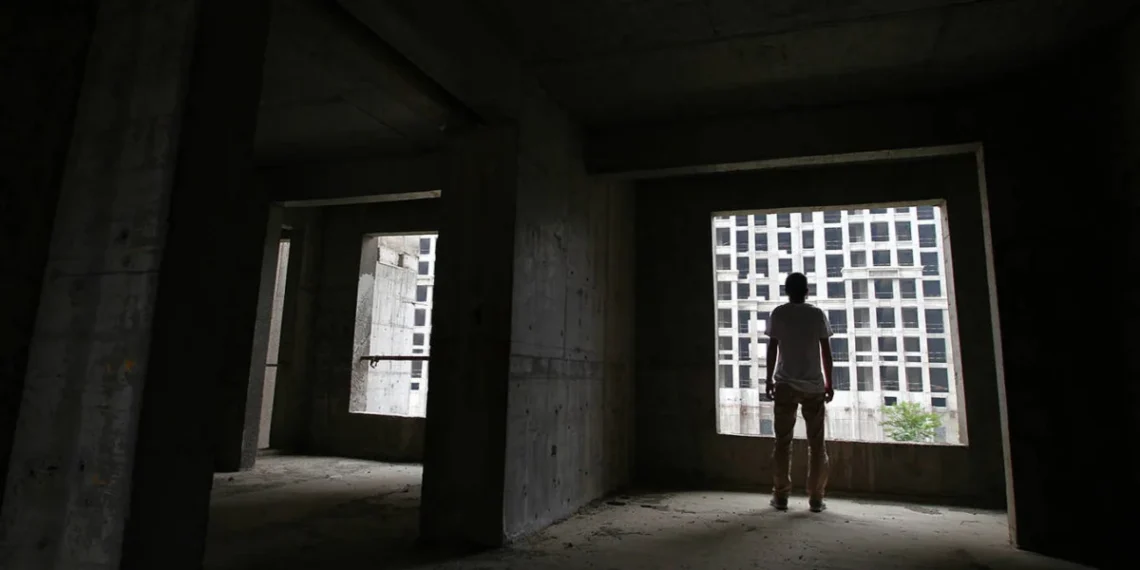
- Property Sector Paralysis: Real estate and its sprawling ancillary industries historically accounted for roughly 25% to 30% of China’s GDP. The ongoing correction—characterized by unfinished housing projects, plummeting land sales, and defaulting developers—has wiped out trillions of dollars in household wealth, dampening consumer spending for the foreseeable future.
- Local Government Fiscal Stress: Municipalities, heavily reliant on land sales to service their debts, have seen revenues collapse. This has forced local governments to cut back on public services, delay civil servant salaries, and rely increasingly on central bank maneuvers to manage short-term liabilities.
Official Responses: Beijing’s Narrative Versus Ground Realities
Faced with mounting skepticism from international financial institutions and foreign investors, the official apparatus in Beijing has maintained a narrative of resilience, innovation, and managed transition.
The Official Stance
Chinese state media and leadership forums frequently emphasize the concept of "high-quality development." Beijing argues that the intentional cooling of the real estate market and the crackdown on speculative technology and tutoring sectors were necessary adjustments to shift the economy away from reckless, debt-fueled growth toward advanced manufacturing, green energy, and high-tech self-reliance.
Chinese officials point to dominance in global electric vehicle (EV) manufacturing, solar panels, and battery technologies as proof of economic vitality. Furthermore, the state insists that its centralized governance model possesses unique systemic advantages, allowing it to bypass the political gridlock plaguing Western democracies and execute long-term strategic plans decisively.
Critical Counter-Perspectives
Independent economists, however, view these official optimistic projections with deep skepticism. Critics argue that doubling down on industrial overcapacity and export-led growth in green tech is provoking fierce protectionist pushback from the United States, the European Union, and emerging markets alike.
Furthermore, analysts note that manufacturing prowess alone cannot absorb the millions of college graduates entering the workforce annually, nor can it replace the vast domestic demand lost through the deflation of the property bubble. By refusing to implement sweeping structural reforms—such as bolstering the social safety net to encourage consumer spending rather than state-directed investment—Beijing is papering over structural insolvency with short-term monetary bandaids.
Implications: Global Repercussions of a Chinese Slowdown
The convergence of political vulnerability, economic exhaustion, and resource constraints in Beijing carries profound implications for the rest of the world.
1. Global Economic Drag
For decades, China served as the primary engine of global economic growth, accounting for roughly a third of worldwide GDP expansion. A prolonged, structural slowdown in China dampens global demand for commodities, energy, and manufactured goods. Nations heavily reliant on Chinese trade—from resource-exporting nations in Latin America and Africa to industrial powerhouses like Germany—will find their own growth trajectories sharply constrained.
2. Geopolitical Instability and Risk-Taking
A dangerous paradox of declining power is the risk of preemptive aggression. Historical precedents suggest that autocratic regimes facing internal economic stagnation and succession anxieties often resort to external nationalism to rally domestic support. Observers worry that a weakening Chinese state might feel its window for territorial ambitions—particularly regarding Taiwan—is closing, prompting higher geopolitical friction in the Indo-Pacific region.
3. Financial Contagion
While China’s financial system is heavily state-controlled and insulated by capital controls, the sheer scale of its debt means that hidden defaults can trigger sudden shifts in global investor sentiment. A systemic shock within China’s shadow banking or municipal debt sectors could trigger sudden capital flights, depressing emerging market currencies and unsettling Wall Street and European bourses.
4. The End of the "China Model" Myth
For years, authoritarian capitalism—the marriage of strict political control with market efficiency—was touted by Beijing as a superior alternative to Western liberal democracy. The unfolding crisis threatens to puncture this ideological myth. If the Chinese state buckles under the weight of its own economic contradictions and succession rigidities, it will signal a historic limits-test for modern autocracy.
Conclusion
The warning issued by analysts Navneeraj Sharma and Arvind Subramanian serves as a stark reminder that the world cannot afford to be complacent. As multiple global crises command the attention of policymakers, the slow-motion collision of economic exhaustion and political fragility inside China represents a tectonic shift in the making.
Whether Beijing can successfully engineer a managed landing or whether it will succumb to the pressures of a multi-front "perfect storm" remains one of the defining questions of our era. What is certain, however, is that the fallout will not be confined to the halls of power in Zhongnanhai; it will reshape the geopolitical and economic architecture of the entire globe.