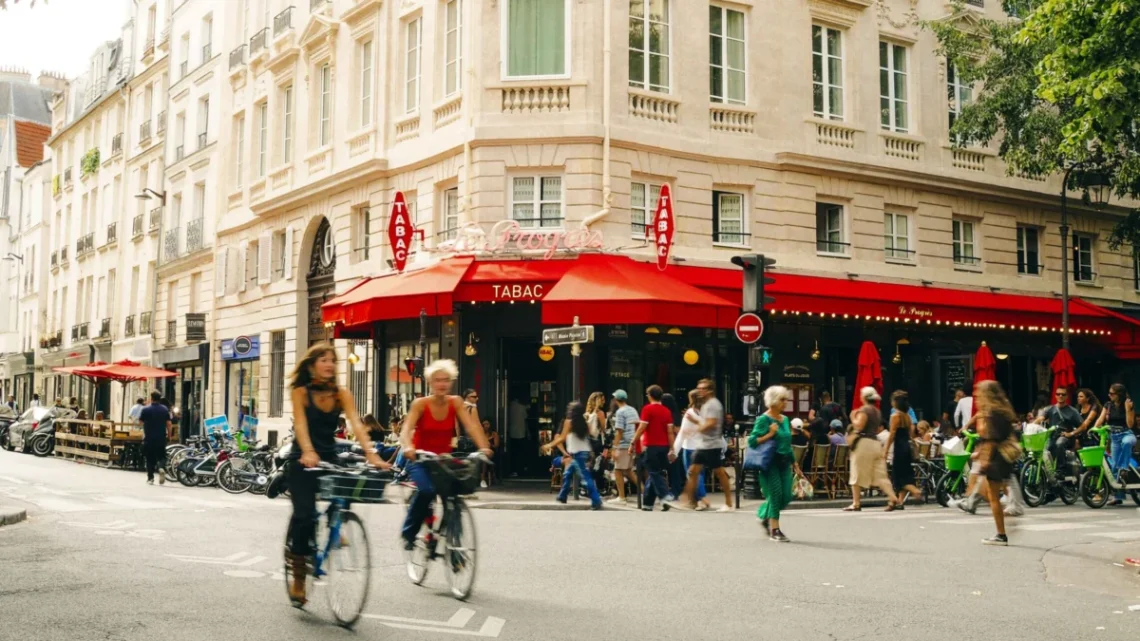
For the uninitiated North American traveler, the act of paying a bill in Paris can trigger a distinct, localized anxiety: the “tipping panic.” In the United States, where the service industry is built upon a foundation of gratuity-dependent wages, the absence of a 20 percent tip is often viewed as a social or moral transgression. However, when the scene shifts to the cobblestone streets of the French capital, that same anxiety is not only unnecessary—it is fundamentally misplaced.
In France, tipping is not a mandatory social contract; it is a discretionary gesture of appreciation. Because the French hospitality model incorporates service charges directly into the final bill and mandates living wages for staff, the power dynamic between patron and server is entirely different from that found in the U.S. To navigate the City of Light with confidence, one must understand that in Paris, you are paying for the service you receive, not subsidizing the employer’s payroll.
The Philosophical Divide: Why France Differs from the West
To understand the French approach to tipping, one must first look at the labor laws that underpin the hospitality sector. Unlike in the U.S., where federal and state laws often allow employers to pay service staff a sub-minimum base wage—relying on the customer to bridge the gap—French labor laws ensure that all hospitality staff are salaried employees.
Camilla Davidson, head of destination management for France, the UK, and Ireland at Red Savannah, notes that there is a profound sense of pride in the “all-inclusive” pricing model. “In many instances, there is a sense of pride that pricing is ‘all-inclusive’ and that service is not expected beyond the cost you are charged,” Davidson explains.
Mark Bonte, a France-based specialist with French Side Travel, echoes this sentiment, emphasizing that tips in France are strictly an acknowledgment of quality rather than a necessity for survival. “Tips are considered an extra gesture of appreciation rather than part of their expected compensation,” Bonte clarifies. This distinction is crucial: when you tip in Paris, you are acting as a patron of quality service, not as an employer of last resort.
The Evolution of the "Service Compris"
The concept of service compris (service included) is the cornerstone of French dining etiquette. Historically, French law mandated that a service charge be included in the price of a meal. Today, while this is often built into the menu pricing, the phrase service compris is frequently printed on receipts to signal to the patron that the cost of service has already been accounted for.
While this has been the standard for decades, the influence of international tourism has introduced a slight shift in expectations. In high-traffic tourist areas or at upscale dining establishments, tipping has become increasingly common for a leisurely, high-quality experience. However, the French approach remains nuanced: it is less about calculating a rigid percentage—such as the American 18 to 20 percent—and more about acknowledging a particularly attentive server or an exceptionally pleasant atmosphere.
A Chronology of Tipping: From Cafés to Concierges
To provide actionable guidance, we have broken down the etiquette of tipping by specific service scenarios.
The Morning Routine: Cafés and Bistros
The Parisian café is the city’s living room, and it is here that the most frequent, low-stakes tipping interactions occur. There is absolutely no obligation to tip for a morning espresso or a croissant. However, if you are lingering for a prolonged period, it is standard practice to round up the bill. For example, if your bill is €18, leaving a €20 note is a polite, unobtrusive way to show appreciation. This practice also serves a practical purpose: it allows you to shed the heavy, loose coins that inevitably accumulate in your pockets—a currency the French continue to use with regularity.

The Culinary Experience: Restaurants
At dinner, the expectations remain modest. While many tourists feel pressured to leave a percentage of the total bill, this is not required. If the service was exemplary, leaving a few euros in cash on the table is perfectly acceptable. There is no need to perform complex mental math or worry about whether your tip is "enough." If you received attentive service, a modest tip is a professional compliment. If the service was standard, feel no guilt in leaving the total exactly as it appears on the bill.
The Hospitality Sector: Hotels and Spas
Hotels in Paris operate under the same "gratitude-based" system. Tipping is not expected, but it is deeply appreciated for personal, human-to-human interactions.
- Porters and Bellhops: A tip of two to five euros per bag is considered a thoughtful gesture.
- Housekeeping: Leaving a few euros per day is a kind acknowledgment of the effort required to maintain your room.
- Concierge Services: If a concierge has gone above and beyond—perhaps securing a last-minute table at an impossible-to-book restaurant or organizing private logistics—a larger tip is appropriate.
- Spas: If you enjoy a spa treatment, it is customary to leave a tip directly for your therapist. A range of 10 to 20 euros is a standard, generous gesture for excellent care.
Transportation: Taxis and Private Drivers
For a standard taxi ride within the city, rounding up the fare is the preferred method. For private drivers, however, the expectation shifts. When hiring a chauffeur for a full-day excursion, it is customary to leave a tip. Bonte suggests that 20 to 30 euros per day is standard, though this can scale up to 50 euros if the driver provides added value, such as acting as an unofficial guide or providing extensive local knowledge.
Expert Consensus: The "Value-Added" Approach
Both Bonte and Davidson agree that the modern French tipping culture is defined by intent. The shift from "mandatory" to "voluntary" puts the power back in the hands of the traveler.
“If a bartender has made a particularly excellent cocktail or you loved your spa treatment, offering a tip for great service is hugely appreciated—but it’s not an expectation in the same way it would be in the United States,” says Davidson.
The underlying message from both specialists is one of empowerment. Travelers should not feel burdened by the act of tipping, but rather liberated by the knowledge that their tip is a genuine reward for quality service. If you encounter a situation where you are unsure, remember the golden rule of Paris: a smile and a polite “Merci” are just as valuable as a few coins.
The Implications for Global Travelers
The divergence between North American tipping culture and the European model carries significant implications for the future of travel. As the global tourism industry continues to evolve, the distinction between "service-included" and "gratuity-dependent" models is becoming a central point of education for international travelers.
By resisting the urge to over-tip—which can occasionally confuse or even offend service staff who do not expect it—travelers help preserve the cultural integrity of the French hospitality industry. When you treat the tip as a thoughtful, rare gesture rather than a routine line item, you participate in a social ritual that is deeply rooted in respect rather than obligation.
In conclusion, as you traverse the boulevards of Paris, keep your wallet and your manners in check. Recognize that the price on your bill is the price of the experience. Anything extra you choose to provide is not a payment for labor, but a personal reflection of a moment well-spent in one of the world’s most sophisticated cities. Whether it is a round-up at a neighborhood café or a modest reward for a helpful bellhop, keep it simple, keep it intentional, and enjoy the freedom of not having to calculate your way through a dinner conversation.