Main Facts
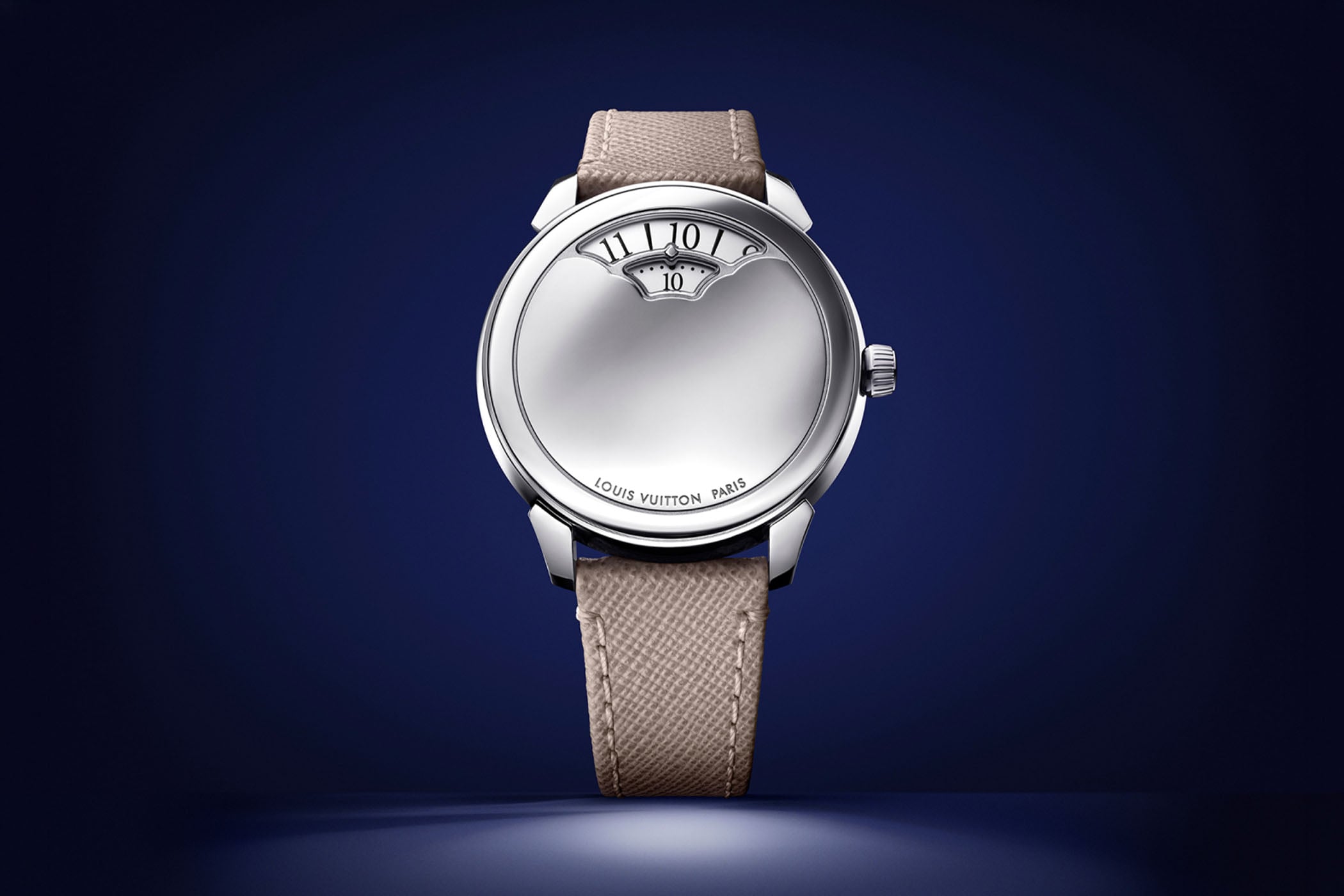
Louis Vuitton has expanded its celebrated modern horological portfolio with the introduction of the Louis Vuitton Tambour Convergence Mirror Steel. Joining the permanent collection, this latest release translates the refined, compact elegance of the montre à guichet (window watch) concept into a high-performance, ultra-durable steel iteration. Following the inaugural precious metal rollouts in pink gold and platinum, alongside the unexpected Convergence Guilloché, this new model marries avant-garde mechanical display concepts with exceptional material science.
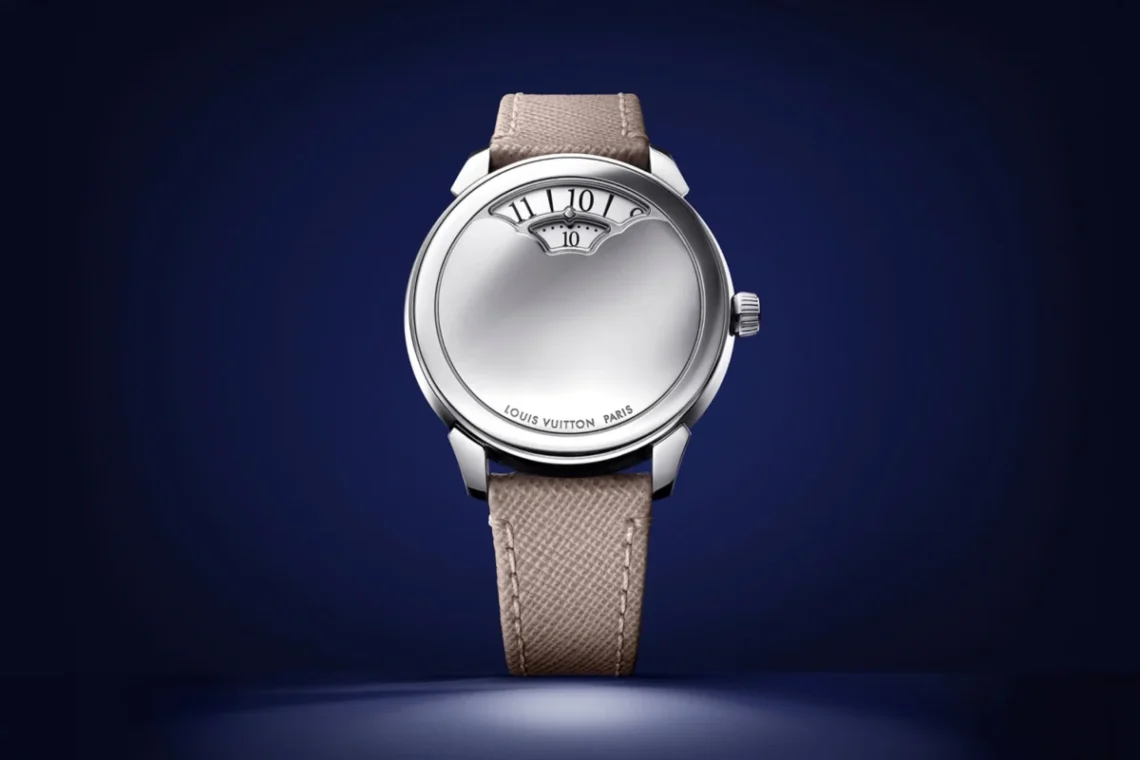
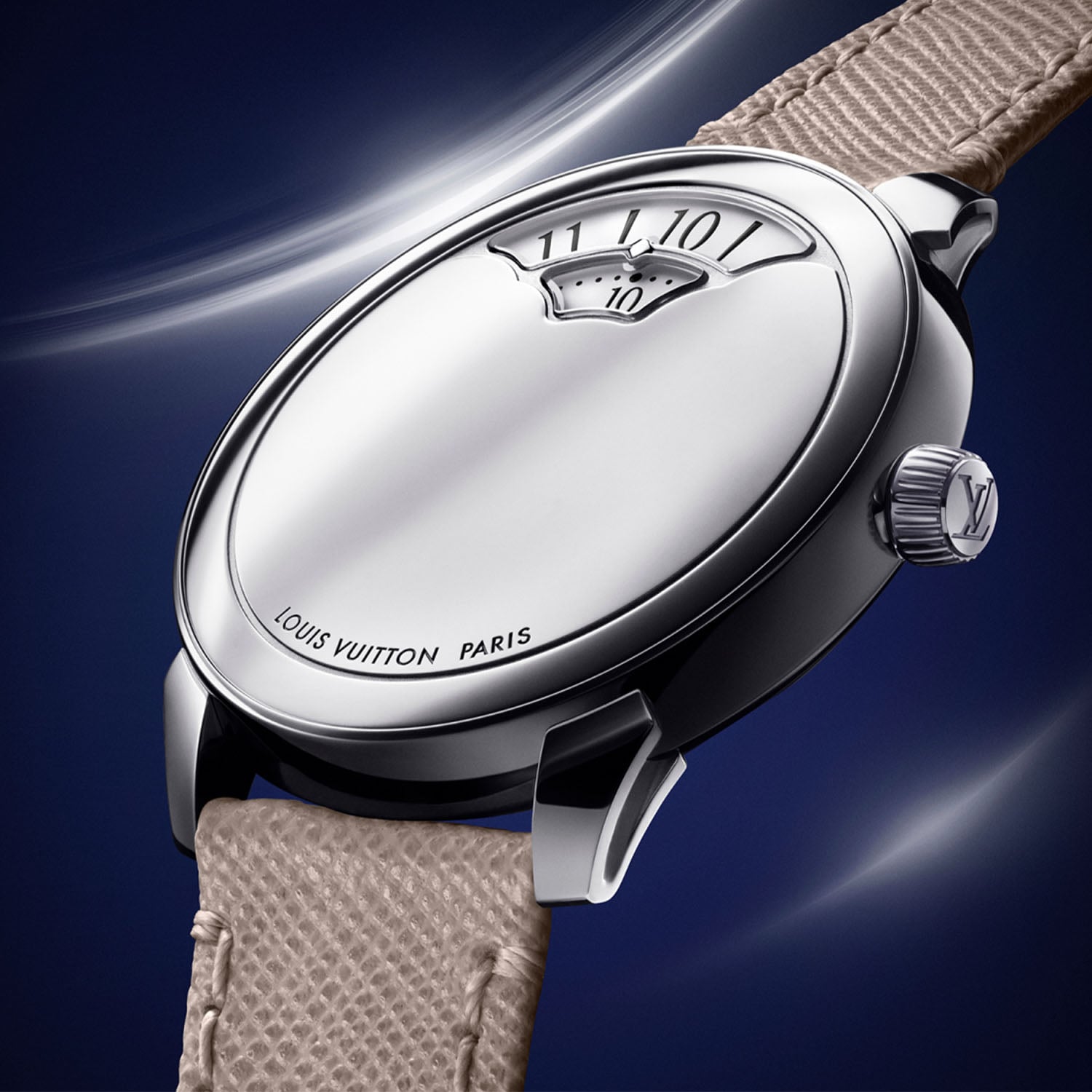
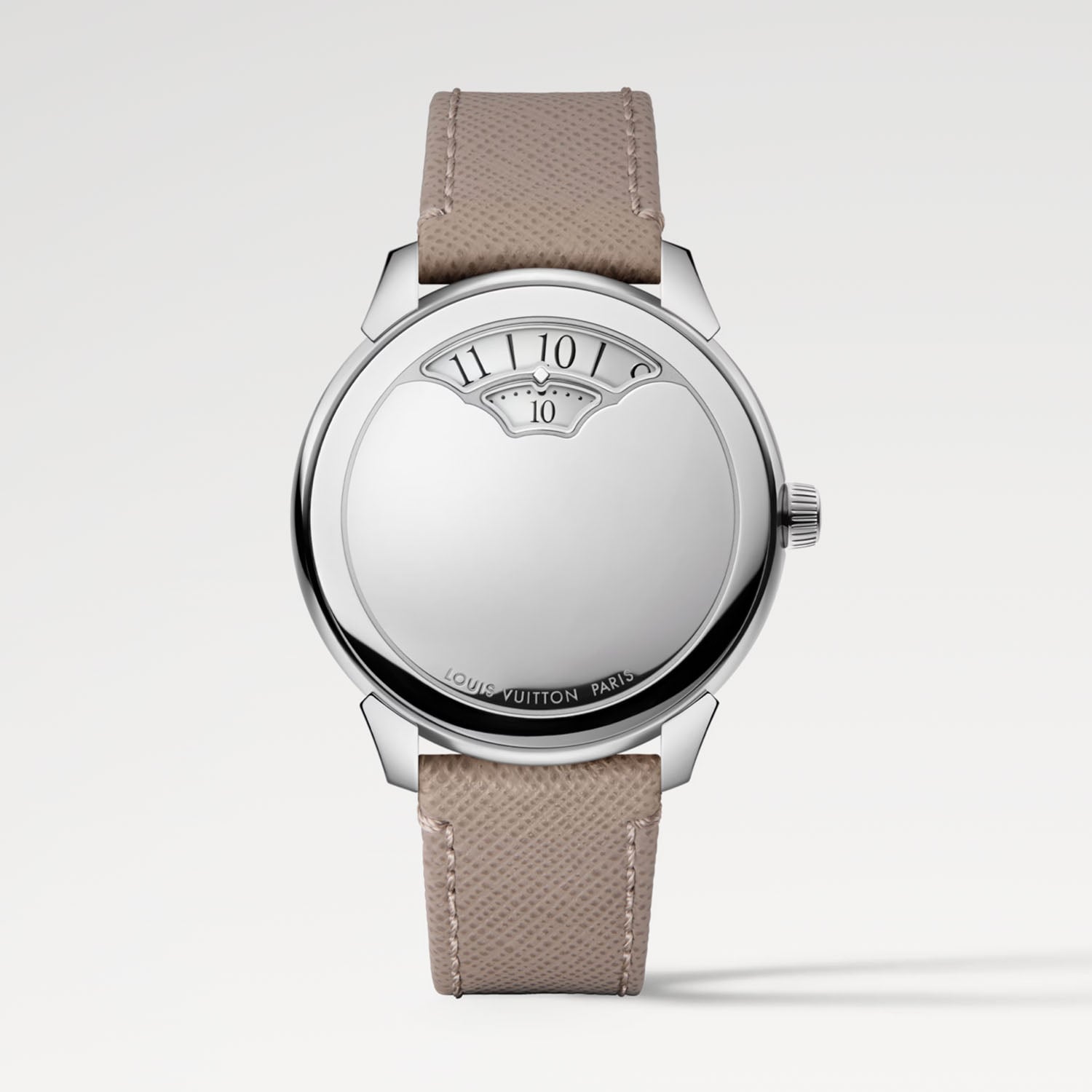
Priced at EUR 26,000 / USD 25,200 / CHF 21,600, the Tambour Convergence Mirror Steel is housed in a 37mm drum-shaped case measuring just 8mm in thickness. What sets this timepiece apart in the contemporary market is its unique mechanical display: rather than employing a traditional hands-based dial or a standard jumping hour mechanism, the watch utilizes two continuous, dragging discs for the hours and minutes, viewed through an arched sapphire crystal window positioned at the 12 o’clock mark.
Crucially, the case is crafted from a proprietary, hardened stainless steel alloy developed by La Fabrique des Boîtiers, Louis Vuitton’s dedicated in-house casemaking facility. This material treatment achieves an astonishing surface hardness of 1,130 Vickers—a dramatic departure from traditional 316L stainless steel (which hovers around 150 Vickers) and a figure that places it in direct competition with high-tech ceramic components. Powered by the in-house automatic Calibre LFT MA01.01, the watch balances modern industrial styling with meticulous hand-finishing, offering a 45-hour power reserve, a 4Hz operating frequency, and an 18k gold central rotor.
Chronology: The Evolution of the Tambour and the Guichet Revival
To fully understand the significance of the Tambour Convergence Mirror Steel, one must look back at the trajectory of Louis Vuitton’s watchmaking division.
2002–2023: The Tambour Foundation
Since its inception in 2002, the Tambour—French for "drum"—has served as the cornerstone of Louis Vuitton’s watchmaking identity. Characterized by its distinct, flared cylindrical case shape, the line evolved over two decades through various complications, sizes, and aesthetic expressions. However, the true renaissance of the collection began in 2023, when Louis Vuitton executed a sweeping overhaul of the icon. This pivot prioritized integrated sports watch architectures, slim profiles, and sophisticated in-house movements, effectively repositioning Louis Vuitton away from fashion-house watchmaking and firmly into the upper echelons of haute horlogerie.
2025–2026: The Return of Complications and the Guichet Trend
Capitalizing on the momentum of the 2023 redesign, Louis Vuitton unleashed a flurry of high-end releases. The brand revived the signature Spin Time display with the Tambour Taiko Spin Time, cementing its mastery over unconventional time displays. Simultaneously, the broader watch industry witnessed an unexpected, widespread resurgence of the montre à guichet format—highlighted by releases such as the Cartier Tank à Guichets, the Audemars Piguet Neo Frame, and the Chronoswiss Neo Digiteur.
Louis Vuitton entered this fray with the Tambour Convergence, breaking traditional conventions by applying the window-display style to a round case geometry rather than a rectangular one. After introducing the concept in exclusive iterations of pink gold and platinum, followed by the ornate Convergence Guilloché, the maison has now rounded out the family in late 2026 with the Mirror Steel edition, making the avant-garde design more accessible as part of the permanent collection.
Supporting Data: Technical Specifications and Engineering Marvels
The architecture of the Tambour Convergence Mirror Steel represents a masterclass in modern manufacturing techniques and traditional finishing. Below is a comprehensive breakdown of its specifications and underlying mechanics:
Case & Exterior Architecture
- Dimensions: 37mm diameter x 8mm thickness—a unisex, highly ergonomic profile that hugs the wrist with refined discretion.
- Material: Specially formulated, hardened stainless steel alloy engineered by La Fabrique des Boîtiers.
- Surface Hardness: 1,130 Vickers, achieved via a specialized hardening process that renders the metal nearly as scratch-resistant as high-tech ceramics.
- Finishing: Entirely hand-mirror-polished across the main drum body. This labor-intensive procedure demands roughly three times the man-hours required to polish a standard gold case due to the extreme density of the hardened alloy.
- Lugs: Ergonomically designed with polished top surfaces contrasted against micro-blasted inner surfaces, adding visual depth and structural complexity.
- Crystal & Water Resistance: Arched sapphire crystal covering the display window, sapphire display caseback, and water-resistant to 30 meters (3 ATM).
Dial & Display
- Display Type: Continuous dragging discs for hours and minutes, visible through an arched sapphire window at 12 o’clock.
- Material & Finishing: Satin-finished brass discs treated with a galvanic rhodium coating to maintain a cohesive, cold-toned monochromatic aesthetic that matches the steel exterior.
- Markers: Crisp, black-printed tracks, numerals, and markers ensuring optimal legibility against the rhodium background.
Movement (Calibre LFT MA01.01)
- Origin: In-house automatic movement, shared with the sophisticated Spin Time collection.
- Power Reserve: 45 hours.
- Frequency: 28,800 vibrations per hour (4Hz), featuring a free-sprung balance equipped with high-precision inertia blocks.
- Jewels: 26 jewels, notably utilizing colourless jewels rather than traditional synthetic magenta rubies to preserve the clean, modern aesthetic.
- Decoration: Sandblasted bridges with micro-sandblasted edges, circular perlage on the mainplate, polished bevels, and a specialized LV motif adorning the periphery of the 18k solid gold central rotor.
Strap & Pricing
- Strap: Grey Saffiano calf leather strap lined with beige leather, secured by a hardened steel pin buckle matching the case’s robust properties.
- Availability: Immediate availability as part of the permanent collection.
- Retail Pricing: EUR 26,000 / USD 25,200 / CHF 21,600 (inclusive of local taxes).
Official Responses and Industry Context
While traditional luxury watchmakers often rely on heritage designs to drive sales, Louis Vuitton has taken a deliberately disruptive approach. Speaking on the strategic direction of La Fabrique du Temps Louis Vuitton—the brand’s high-watchmaking atelier in Geneva—executives have consistently emphasized that the maison’s goal is not merely to participate in historical trends, but to subvert them using contemporary materials and modern engineering.
The choice to deploy an 1,130 Vickers steel alloy for a mirror-polished dress-style watch addresses one of the most common consumer complaints in modern horology: the fragility of high-polish steel finishes. Traditional mirror polishing is notoriously prone to micro-scratching, often discouraging daily wear. By hardening the steel to near-ceramic levels before hand-polishing, Louis Vuitton’s casemakers have effectively bridged the gap between delicate artisanal beauty and industrial-grade durability.
Furthermore, industry analysts have noted that pricing the steel iteration at EUR 26,000—a significant discount compared to the EUR 38,000 rose gold variant—signals a calculated effort to broaden the collector base for Louis Vuitton’s high-end mechanical offerings. By positioning the watch in the permanent collection rather than as a limited-edition drop, the brand is signaling long-term commitment to its independent horological identity.
Implications: What the Tambour Convergence Means for the Future of Louis Vuitton Watchmaking
The launch of the Tambour Convergence Mirror Steel carries several profound implications for both Louis Vuitton and the broader luxury watch market:
-
Maturation of In-House Capabilities:
The seamless integration of the Calibre LFT MA01.01 across disparate collections—from the playful Spin Time to the minimalist Convergence—proves that Louis Vuitton’s Geneva atelier has achieved structural maturity. The brand is no longer reliant on external ebauches or generic modular complications; it possesses a scalable, highly sophisticated mechanical foundation. -
Redefining "Luxury Steel":
For decades, stainless steel watches were viewed as utilitarian or entry-level alternatives to precious metals. By applying hyper-advanced surface hardening (1,130 Vickers) and dedicating triple the standard labor hours to hand-mirror-polishing a steel case, Louis Vuitton elevates steel into a luxury material category of its own—one that offers the visual brilliance of precious metal combined with the ruggedness of modern material science. -
Solidifying Horological Credibility:
With the ongoing success of the redesigned Tambour line and avant-garde complications like the Convergence, Louis Vuitton has successfully dispelled any lingering skepticism regarding fashion-house watchmaking. The brand is now frequently discussed alongside historic Swiss manufactures, appealing to a younger, design-forward demographic of collectors who value mechanical innovation, architectural purity, and uncompromising material execution.
Ultimately, the Tambour Convergence Mirror Steel is much more than a new material variant; it is a statement of intent. It demonstrates that Louis Vuitton’s horological journey, ignited in 2002 and supercharged in 2023, is operating at the absolute cutting edge of design and mechanical engineering.