Main Facts
Independent Saxon watchmaking continues to capture the imagination of high-horology enthusiasts worldwide, and few houses embody the philosophy of uncompromising craftsmanship quite like Moritz Grossmann. In a dual celebration marking both the bicentenary of its historic founder’s birth and the 18th anniversary of the brand’s contemporary revival under the visionary leadership of Christine Hutter, Grossmann Uhren GmbH has unveiled its latest masterpiece: the Moritz Grossmann Benu 1878.
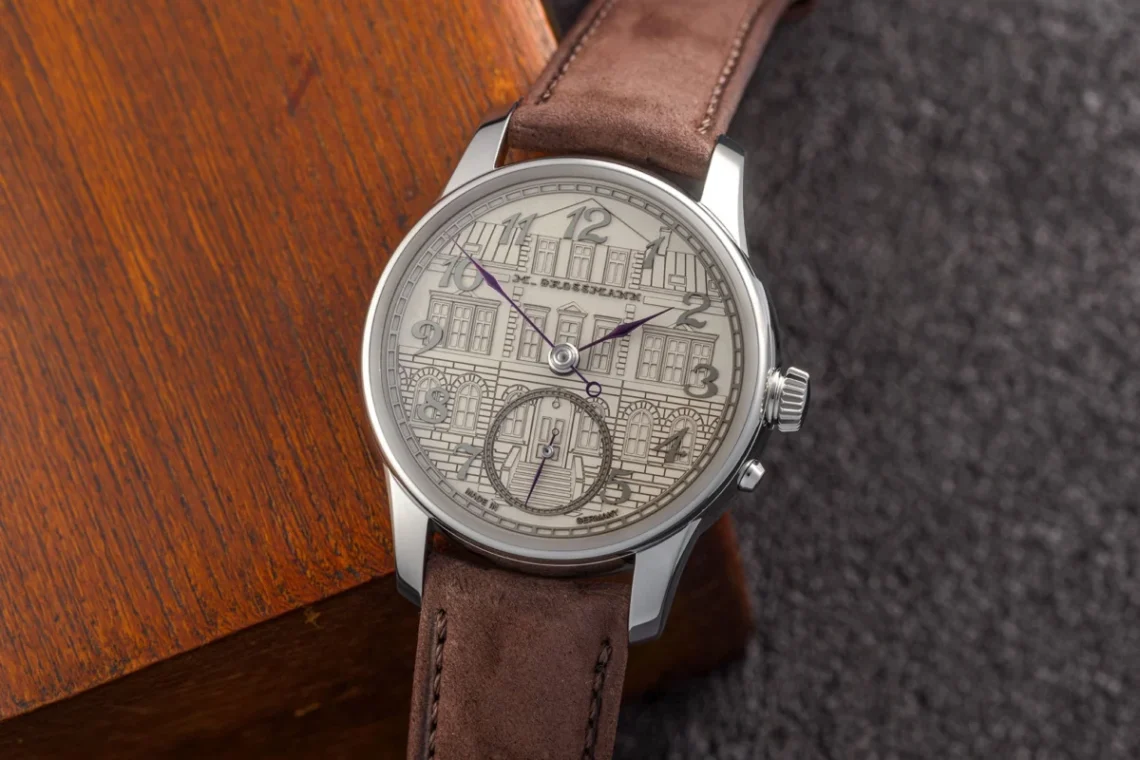
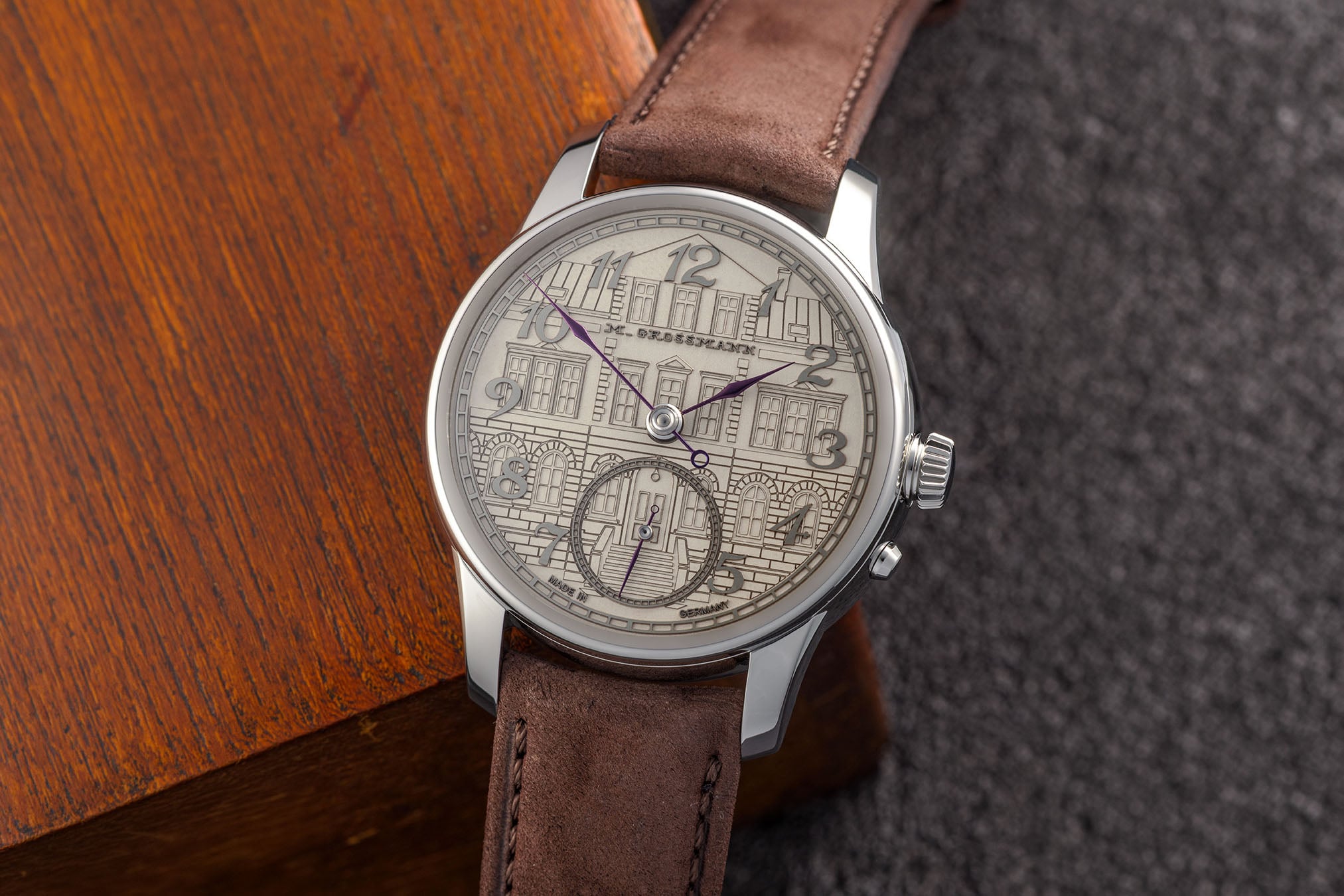
Serving as the eighth commemorative timepiece dedicated to Karl Moritz Grossmann (1826–1885)—one of the foundational pillars of the Glashütte watchmaking tradition—this release is a masterclass in historical tribute. Limited strictly to just 26 pieces in stainless steel, the Benu 1878 features a striking German silver dial adorned with an intricate, three-dimensional relief engraving of the historic German School of Watchmaking. Powered by the meticulously engineered, in-house manual-winding Calibre 100.1, the watch bridges the gap between 19th-century Saxon heritage and 21st-century independent haute horlogerie.
Priced at EUR 38,500 (excluding taxes) and housed in a 41mm stainless steel case paired with a rich brown kudu leather strap, the Benu 1878 is a rare collector’s piece that honors the past while demonstrating the peak of modern German finishing.
Chronology: From Glashütte Pioneer to Modern Revival
To fully understand the weight of the Benu 1878, one must journey through the rich timeline of Saxon watchmaking history, tracing a path from the rugged hills of Glashütte in the mid-19th century to the modern renaissance of independent watchmaking.
- 1826: Karl Moritz Grossmann is born in Dresden, setting the stage for a life dedicated to precision mechanics and horological education.
- 1854: Responding to an invitation from his close friend and fellow horological pioneer Ferdinand Adolph Lange, Moritz Grossmann establishes his workshop in Glashütte. He initially focuses on high-precision measuring instruments before expanding into astronomical pendulum clocks, marine chronometers, and intricate pocket watches.
- 1878: Deeply committed to passing on his accumulated knowledge and securing the long-term legacy of the Saxon town, Grossmann founds the prestigious German School of Watchmaking in Glashütte (Deutsche Watchmacherschule Glashütte). This institution becomes a global benchmark for technical education in horology.
- 1885: Karl Moritz Grossmann passes away unexpectedly during a general meeting of the Central Association of German Watchmakers, leaving behind a profound legacy of technical innovation and pedagogical contribution.
- November 11, 2008: Following decades of dormancy during and after the geopolitical upheavals of the 20th century, the historic Moritz Grossmann name is officially revived. Under the stewardship of founder and CEO Christine Hutter, Grossmann Uhren GmbH is established in Glashütte, reigniting the pursuit of Schönstes deutsches Handwerk—the most beautiful German craftsmanship.
- 2008–Present: Over the subsequent 18 years, the revived independent manufacture consolidates an impressive portfolio of 15 original in-house calibres, establishing itself as a pinnacle of independent German watchmaking.
- 2026: To mark the 200th anniversary of Grossmann’s birth and the brand’s 18th anniversary, the manufacture releases the Benu 1878, immortalizing the German School of Watchmaking on a 3D relief-engraved German silver dial.
Supporting Data and Technical Specifications
The Benu 1878 is as mechanically compelling as it is historically resonant. Every component reflects the rigorous standards demanded by contemporary high horology while paying homage to pocket watch traditions of the 19th century.
Technical Specifications – Moritz Grossmann Benu 1878
- Case:
- Diameter: 41mm
- Height: 11.35mm
- Material: Three-part stainless steel, polished finish
- Crystals: Anti-reflective sapphire crystal on the front; sapphire exhibition caseback
- Crown & Pusher: Unique pull-out and resetting crown with a movement restart pusher system located at 4 o’clock
- Dial:
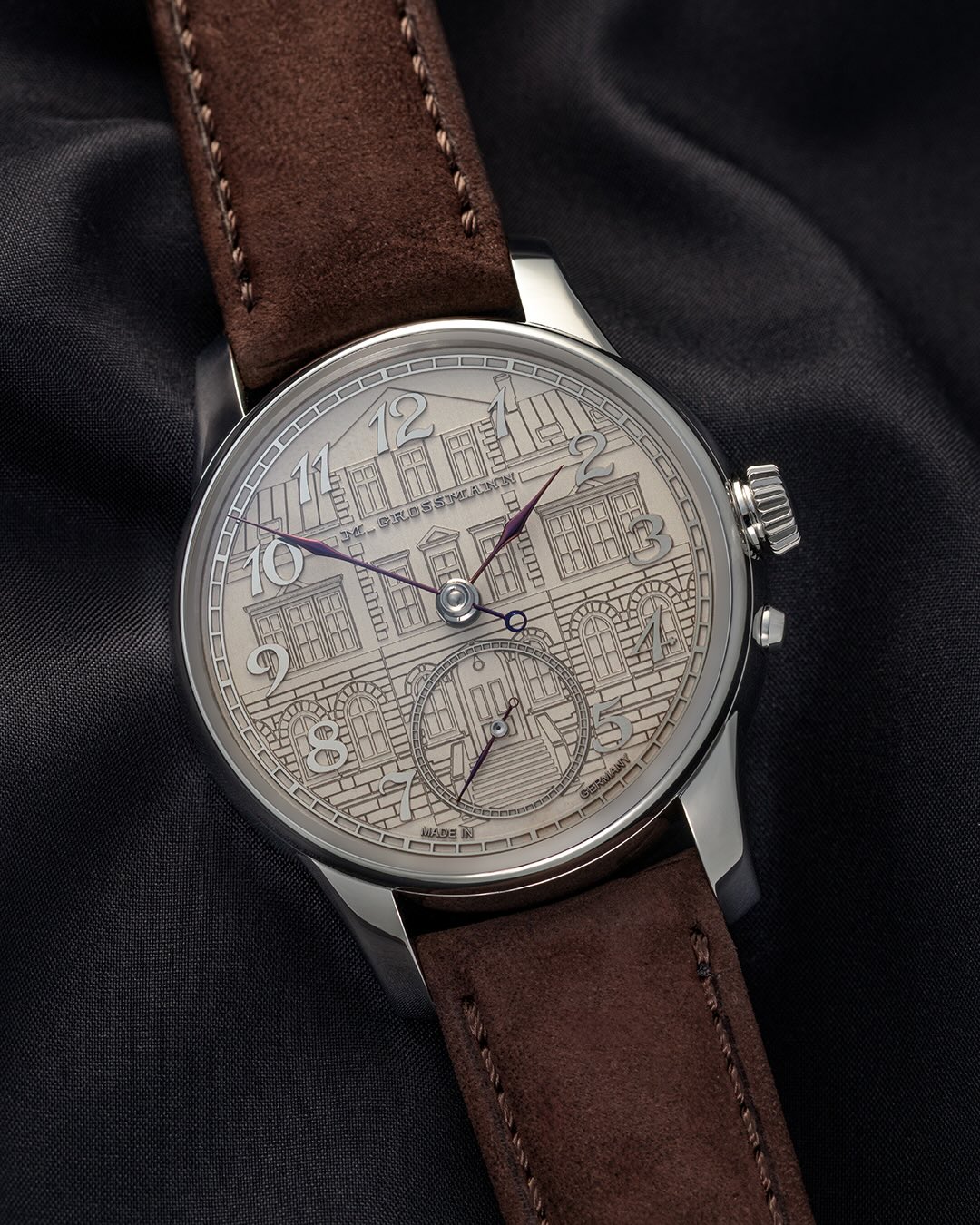
- Material: German silver with a specialised three-dimensional relief engraving depicting the main building of the German School of Watchmaking
- Details: Arabic numerals, historic M. Grossmann brand logo from 1875, and railway-style minute and small seconds tracks carved in relief
- Sub-dial: Subsidiary seconds counter positioned at 6 o’clock
- Hands: In-house, manually crafted lance-shaped hands with hyper-sharp tips, thermally annealed to a distinctive brown-violet hue
- Movement (Calibre 100.1):
- Type: In-house, manual-winding manufacture movement
- Component Count: 198 parts
- Jewels: 38 jewels, including 3 rubies set in screwed gold chatons
- Frequency: 18,000 vibrations per hour (2.5 Hz) for a traditional slow-beat cadence
- Power Reserve: 42 hours on a single wind, optimized by energy-efficient engineering
- Architectural Highlights: Untreated 2/3 German silver pillar plate with hand-grained finish; Moritz Grossmann variable inertia balance designed for aerodynamic efficiency; hand-engraved floral patterns on the balance cock and escape wheel cock; hand-polished bevels, annealed violet screws, and 3-band snailing on the ratchet wheel
- Functions: Hours, minutes, subsidiary seconds with stop-seconds mechanism
- Strap: Hand-stitched brown kudu leather paired with a matching stainless steel prong buckle
- Availability: Strictly limited edition of 26 pieces worldwide
- Price: EUR 38,500 (excluding local taxes)
Official Perspectives and Brand Philosophy
The introduction of the Benu 1878 is more than a commercial product launch; it is an ideological statement by the leadership at Grossmann Uhren GmbH. CEO and founder Christine Hutter has consistently championed the philosophy that modern independent watchmaking must remain deeply anchored in the cultural and educational roots that made Glashütte a legendary geographic marker on the horological map.
In statements surrounding the brand’s ongoing milestone celebrations, Hutter has emphasized that the revival of Moritz Grossmann was never intended to be a mere exercise in nostalgia. Instead, it was conceived as a living laboratory where historic craftsmanship is reinterpreted through contemporary engineering techniques. By dedicating an entire sub-series of anniversary pieces to Karl Moritz Grossmann, the brand seeks to educate a new generation of collectors about the polymathic genius who not only built world-class precision instruments but also ensured the survival of the craft by establishing the German School of Watchmaking in 1878.
The choice to depict the historic school building via a complex 3D relief engraving on German silver—a notoriously difficult material to machine and finish by hand—speaks volumes about the manufacture’s commitment to uncompromising artisanal standards. It is a physical manifestation of the brand’s dedication to Schönstes deutsches Handwerk, ensuring that every watch leaving the Glashütte workshop functions as an uncompromised work of art.
Implications for the Independent Watchmaking Landscape
The release of the Moritz Grossmann Benu 1878 carries significant implications for the broader landscape of independent horology, particularly within the German watchmaking cluster of Saxony.
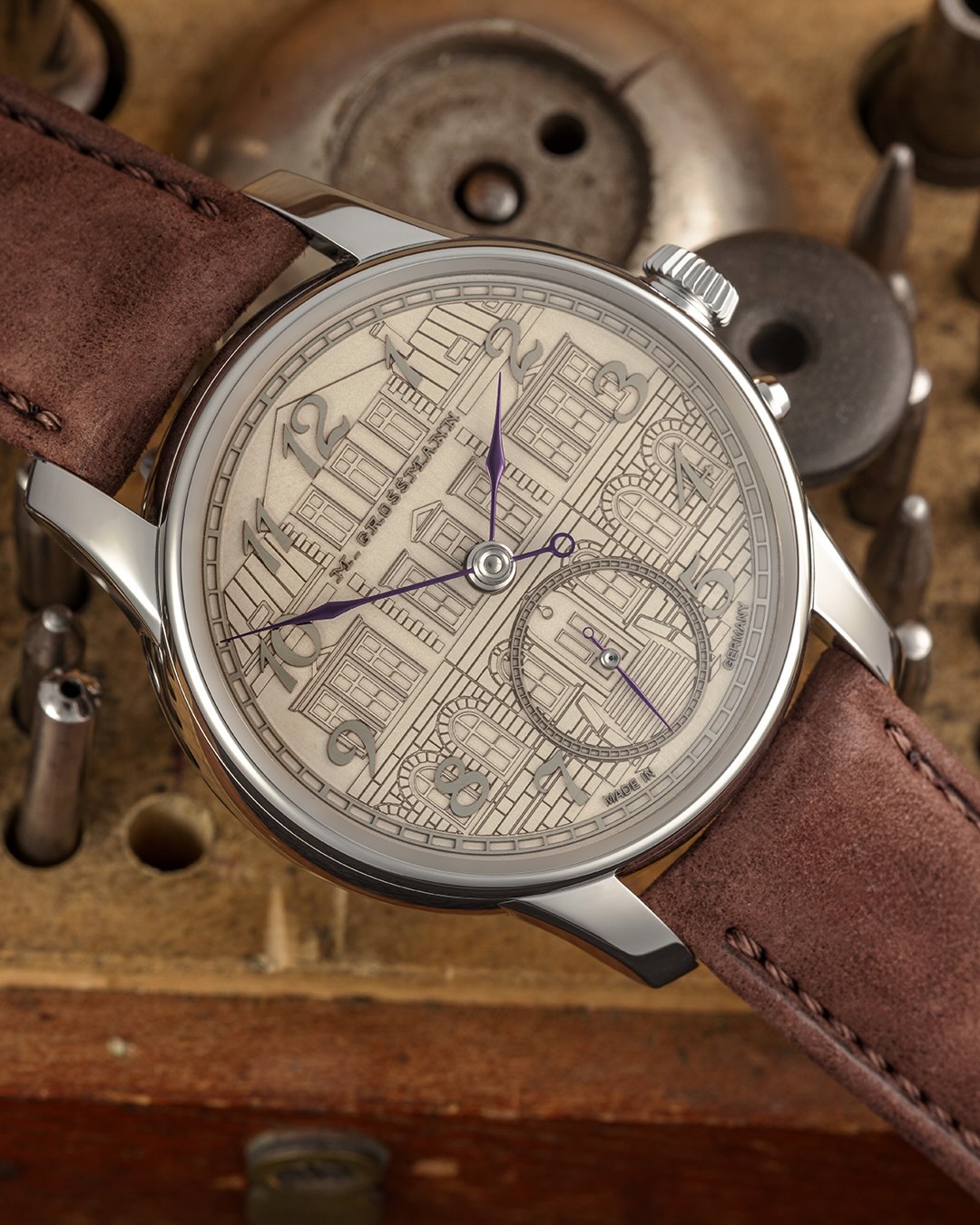
- Elevating German Silver as an Aesthetic Medium: While German silver (Neusilber) is traditionally used for movement bridges and plates due to its stability and warm golden-grey patina, using it as a dial material with relief engravings sets a new benchmark in dial architecture. As the metal naturally ages and oxidizes over time, each of the 26 dials will develop a unique, living patina, making every timepiece entirely one-of-a-kind.
- Reinforcing Glashütte’s Educational Heritage: By directly celebrating the German School of Watchmaking, Grossmann reinforces the narrative that Glashütte’s success was built on collective knowledge transfer rather than isolated genius. This resonates strongly with contemporary collectors who value the cultural heritage and provenance of their acquisitions.
- Exclusivity and the Collector Market: With a production run limited to just 26 pieces globally and a price point positioned firmly in the upper tier of independent watchmaking (EUR 38,500 excluding tax), the Benu 1878 is destined for elite collections. It highlights the growing appetite for low-volume, highly hand-finished independent alternatives to mass-produced luxury timepieces.
Ultimately, the Moritz Grossmann Benu 1878 does not merely tell time; it tells a story. It honors a visionary founder who shaped the destiny of an entire region, celebrates nearly two decades of a triumphant modern revival, and cements Grossmann Uhren GmbH’s status as a guardian of the most exquisite traditions in German watchmaking.