DETROIT — For years, American automotive enthusiasts have flooded social media feeds, forums, and comment sections with a singular, impassioned plea: Give us the Kei truck.
These diminutive, utilitarian Japanese micro-trucks—celebrated for their clever packaging, incredible versatility, and charmingly utilitarian aesthetic—have long been the forbidden fruit of the US automotive landscape. While enthusiasts have eagerly imported aging, decades-old right-hand-drive models under federal 25-year import laws, a brand-new, factory-backed, US-legal Kei truck has remained entirely out of reach.
Until now.
In a surprising and nostalgic twist, Toyota is officially bringing back a dormant nameplate to make the micro-truck dream a reality. Scion—the youthful, experimental brand that gave us the quirky xB, the customizable tC, and the rear-wheel-drive FR-S sports car before being sunsetted in 2016—is officially making a comeback. Reborn as "Scion by Toyota," the brand is returning to the American market atop the diminutive, US-legal bones of an entirely new vehicle: the KEI-01 pickup truck.
However, before internet enthusiasts rush to empty their savings accounts, there is fine print to parse. The KEI-01 is subject to federal Low-Speed Vehicle (LSV) regulations, meaning it features an electronically capped top speed of just 25 miles per hour. Furthermore, the vehicle will roll out initially as a fleet-only offering with an anticipated price tag hovering just below the $20,000 threshold.
Despite these limitations, the resurrection of Scion and the introduction of the KEI-01 represent a fascinating gamble by the world’s largest automaker—one that could ultimately test whether consumers actually want the pint-sized utility vehicles they claim to desire online.
Main Facts: Anatomy of the Scion KEI-01
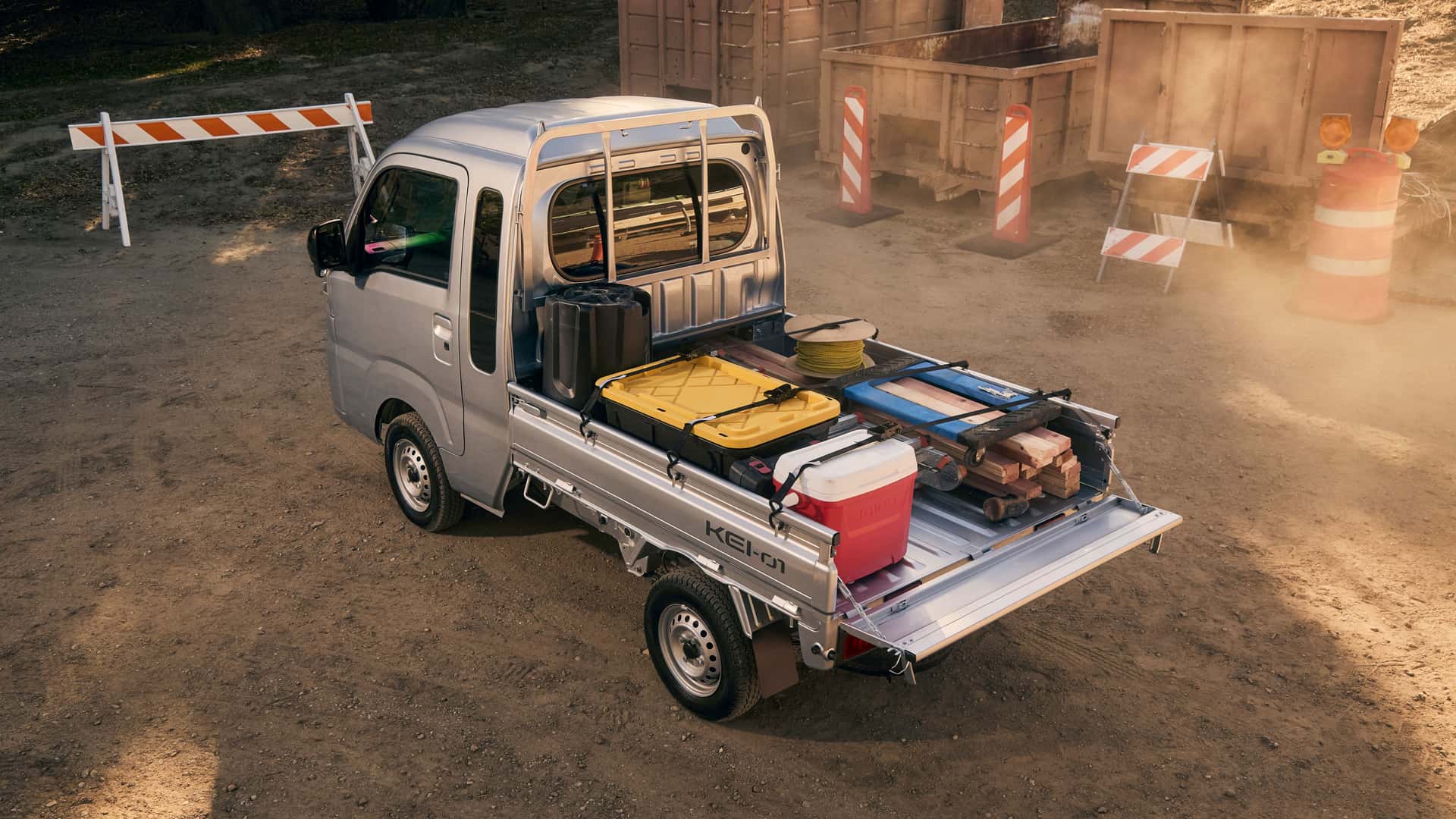
At first glance, the Scion KEI-01 looks every bit the authentic micro-truck. Measuring just over 11 feet long and under five feet wide, it occupies a physical footprint that makes even the smallest modern subcompact cars look oversized. Yet, within those tidy dimensions lies a surprising amount of genuine capability.
Beneath the stubby hood sits a proper, authentic kei-class powertrain: a 660-cc three-cylinder engine. Toyota pairs this tiny mill with a continuously variable transmission (CVT) and a functional four-wheel-drive system, ensuring that the KEI-01 can claw its way through tight spaces, muddy worksites, or snowy unpaved paths with ease.
Utility is where the platform truly shines. In the rear, the KEI-01 features a traditional drop-side cargo bed where all sides can fold flat, dramatically easing the process of loading and unloading bulky cargo. Despite its micro-dimensions, the rear bed boasts an impressive 600-pound payload capacity.
Inside, the right-hand-drive-only cabin keeps things refreshingly simple, adhering to the no-nonsense ethos of traditional Japanese work vehicles. However, it is far from spartan. Drivers and passengers are treated to modern comforts that would make owners of rival utility vehicles jealous, including:
- Standard heating and air conditioning
- Push-button start
- Power windows
- A functional central infotainment screen
Chronology: The Evolution from Internet Rumor to Reality
The path to the KEI-01’s development and the revival of the Scion moniker is a story rooted in shifting consumer demands and regulatory navigation.
- The 2010s: Scion operates as Toyota’s youth-oriented incubator brand in the United States, launching iconic vehicles like the first-generation boxy xB. However, changing market dynamics and declining sales lead Toyota to formally phase out the Scion brand in August 2016, absorbing its portfolio into the mainstream Toyota lineup.
- The Late 2010s to Early 2020s: A massive underground wave of enthusiasm builds across the United States for imported Japanese Kei trucks (such as the Suzuki Carry, Daihatsu Hijet, and Honda Acty). Content creators, urban homesteaders, and small-business owners champion the vehicles across Instagram, TikTok, and YouTube.
- Mid-2025: Toyota product planners and market researchers intensively monitor US digital engagement regarding alternative utility and micro-mobility segments. Internal discussions begin regarding how to legally and economically serve this niche without violating strict federal crash-test standards that typically bar Kei trucks from American highways.
- Late 2026: Toyota finalizes development on a dedicated low-speed utility platform that complies with US LSV standards while maintaining authentic Japanese kei truck architecture. Decision-makers opt to resurrect the dormant Scion brand as the ideal umbrella for unconventional, youthful, and utility-focused mobility projects.
- Second Half of 2027 (Projected): Production of the US-built Scion KEI-01 is officially scheduled to commence, with initial deliveries rolling out to commercial fleets across the country.
Supporting Data: Specifications and Lineup Expansion
The KEI-01 is not arriving alone. Toyota’s revival of Scion is designed to be a multi-pronged assault on alternative mobility, leveraging the brand’s history of targeting lifestyle-driven buyers. Alongside the micro-truck, Scion’s rebirth introduces two additional concept vehicles that highlight the division’s broader ambitions:
| Vehicle Model | Powertrain Specs | Target Market / Intent | Production Status |
|---|---|---|---|
| Scion KEI-01 | 660-cc 3-cylinder, CVT, 4WD (Top speed: 25 mph) | Fleet-first utility; potential limited retail | Scheduled for US production in H2 2027 |
| Scion SxS Concept | 300-hp turbocharged 4-cylinder hybrid | High-performance side-by-side UTV sector | Concept phase; evaluation ongoing |
| Scion BKE Concept | Ruggedized electric scooter | Micro-mobility / last-mile transit | Concept phase; rugged Honda Motocompacto rival |
The Side-by-Side (SxS) concept is particularly striking for performance enthusiasts. Packing an aggressive 300-horsepower turbocharged four-cylinder hybrid powertrain, it is engineered to instantly compete with top-spec performance Utility Task Vehicles (UTVs) currently dominating the off-road recreation market.
Meanwhile, the BKE concept takes inspiration from micro-mobility trends—most notably Honda’s Motocompacto electric scooter—by offering a ruggedized, fold-and-go urban transit solution that matches the visual identity of the brand’s larger off-road machinery.
Official Responses and Strategic Implications
Toyota’s decision to position the KEI-01 under a revived Scion banner is a calculated masterstroke. By resurrecting a brand previously associated with customization, affordability, and counter-culture design, Toyota creates a safe sandbox to test radical vehicle segments without diluting the core, mainstream reputation of the Toyota oval badge.
Speaking on the initial rollout strategy, corporate representatives emphasize a cautious, demand-driven approach. While the KEI-01 will launch strictly as a commercial fleet vehicle—targeting corporate campuses, municipal parks, agricultural operations, and resort properties—the door is explicitly left open for everyday consumers.
"Initially, Toyota plans to sell only to fleet customers," corporate strategy notes indicate. "However, with enough demand, Toyota will consider expanding to limited retail sales later on. So if you really do want one, you better make your voice heard."
This strategy serves as a litmus test for the American automotive public. For years, internet commenters have insisted that they would line up to purchase a brand-new, affordable, legally compliant Kei truck. By pricing the KEI-01 just under the $20,000 mark and manufacturing it domestically for the US market, Toyota is calling the bluff of digital enthusiasts. If commercial and retail demand surges, it could fundamentally alter how major automakers view micro-mobility and alternative urban transport in North America.
Industry Implications: Can Micro-Mobility Find a Foothold?
The launch of the Scion KEI-01 arrives at a critical juncture for the American automotive market. As average new vehicle transaction prices continue to hover near historic highs—often exceeding $48,000—consumers are increasingly vocal about the lack of affordable, simple, and honest transportation options.
Yet, regulatory realities in the United States present steep hurdles. Because the KEI-01 is governed by Low-Speed Vehicle (LSV) laws restricting its maximum velocity to 25 miles per hour, it cannot legally venture onto high-speed roadways, interstate highways, or thoroughfares with speed limits exceeding 35 miles per hour in most jurisdictions. This severely limits its viability as a primary commuter vehicle for the average suburbanite.
Instead, the KEI-01’s true market strength lies in closed-campus logistics, urban delivery fleets, large agricultural estates, and recreational properties. If it succeeds in these sectors, it could pave the way for fully highway-legal micro-trucks in the future—or, at the very least, prove that the Scion brand still possesses the cultural relevance and experimental spirit that made it a household name two decades ago.
As production draws closer to the second half of 2027, all eyes will be on Scion. The digital community asked for a Kei truck; now, Toyota is delivering the answer. Whether American buyers are ready to embrace a 25-mph micro-truck remains the ultimate question left to be answered.