Main Facts: JLC’s Entry into the Integrated Bracelet Arena
When Jaeger-LeCoultre pulled back the curtain on the Master Control Chronomètre collection ahead of Watches & Wonders, the horological community responded with a quiet nod rather than a deafening roar. In an industry currently obsessed with aggressive geometry, loud textures, and instant hook-line-and-sinker visual novelties, JLC’s conservative approach felt almost counterintuitive.
Yet, looking past the initial muted reception reveals a timepiece that fundamentally redefines the brand’s place in the fiercely competitive luxury sports-chic category. The core model of this new lineup—the Master Control Chronomètre Date—represents the purest distillation of what happens when a historic powerhouse applies its signature elegance to an integrated-bracelet architecture.
Measured against formidable contemporary rivals such as the Rolex Land-Dweller, IWC Ingenieur, Chopard Alpine Eagle, and Girard-Perregaux Laureato—not to mention high-end icons like the Vacheron Constantin 222 and Overseas—the JLC entry takes a decidedly understated path. Rather than leaning on over-engineered bezels or stark industrial finishes, the Master Control Chronomètre Date relies on supreme thinness, historical brand DNA, and a level of bracelet articulation that rivals pieces commanding double its price point.
Chronology: From First Impressions to a Re-Evaluated Perspective
The Initial Reveal
When press releases and official renderings landed in newsrooms across the globe prior to the 2026 trade fair, the editorial team’s reaction was measured. There was no immediate sense of "love at first sight." The watches were pleasant, cleanly proportioned, and inherently wearable, but they lacked the immediate visual disruptiveness typically required to dominate social media feeds during a major industry event. Furthermore, the chaotic pacing of Watches & Wonders meant that true, hands-on evaluation time was virtually non-existent.
The Months-Long Respite
Understanding that certain watches are "slow burners"—designs engineered to grow on you over months of wear rather than seconds of viewing—the editorial team pulled a stainless steel Master Control Chronomètre Date back into the office for an extended, real-world review. Stripped of the sensory overload of a trade show booth, the watch revealed its hidden depths.
Rather than chasing fleeting trends, JLC had engineered a timepiece that intentionally bypasses the traditional "novelty effect." Instead, it feels as though it has been part of the permanent collection for a decade—a testament to its timeless, classic silhouette.

Supporting Data: Specifications, Dimensions, and Mechanics
Case Architecture and Ergonomics
The Master Control Chronomètre Date is the most compact offering within the three-tier collection, which also features Power Reserve and Perpetual Calendar variants.
- Diameter: 38mm
- Lug-to-Lug: ~45mm
- Thickness: A remarkably slender 8.4mm
To put this thickness into perspective, it places the JLC right alongside horological royalty: the Vacheron Constantin 222 sits at 8.0mm, the Audemars Piguet Royal Oak Jumbo at 8.1mm, and the Patek Philippe Nautilus at 8.3mm. It handily undercuts the Chopard Alpine Eagle (9.7mm) and the IWC Ingenieur (10.8mm), while remaining only 0.5mm thicker than a traditional, strap-bound Master Ultra-Thin Date.

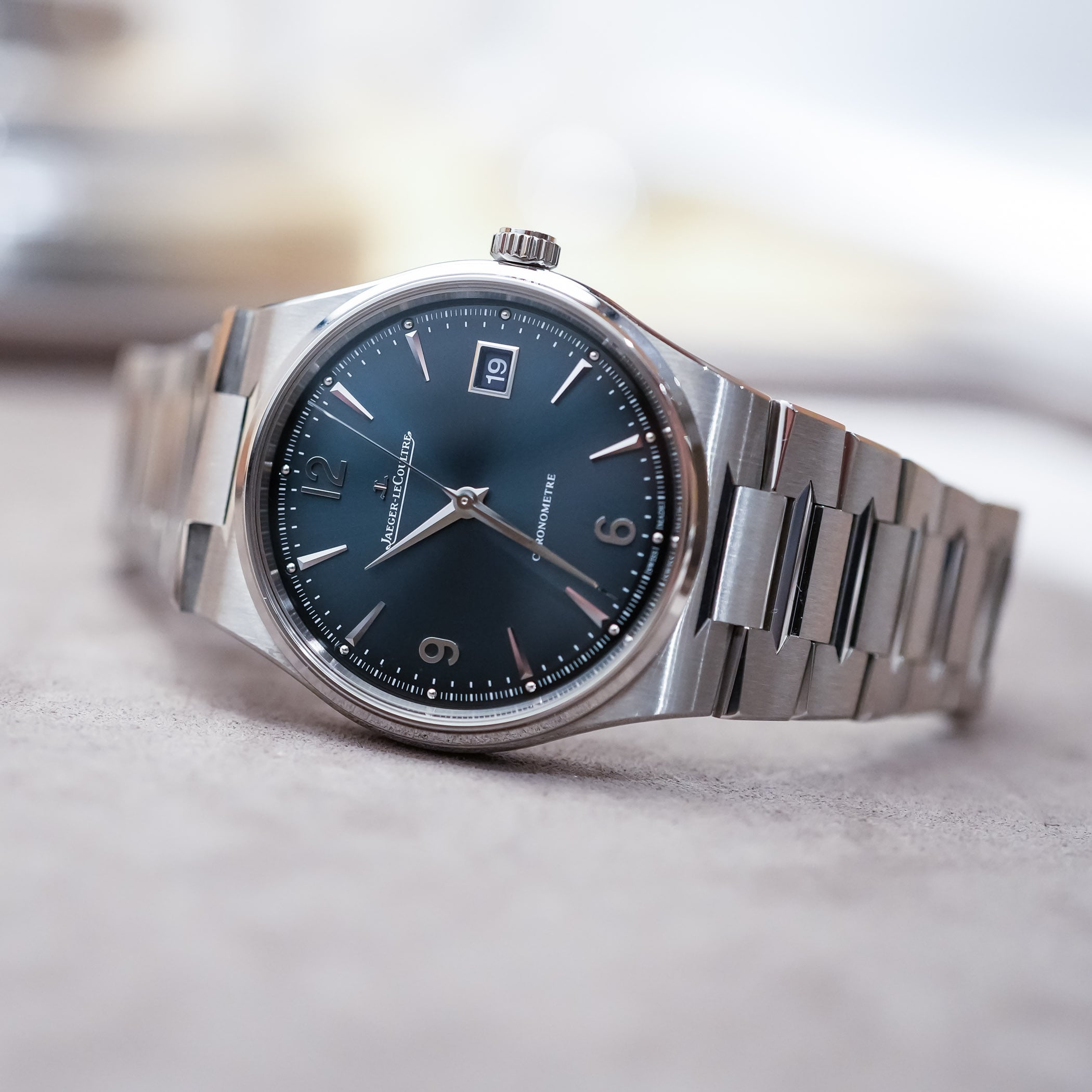
The case construction relies on a classic, polished round bezel that pays direct homage to traditional Master Control models. The middle case features a barrel shape highlighted by vertical satin-brushed surfaces and highly polished bevels, complete with sapphire crystals front and back. Water resistance, however, is a modest 50 meters—serviceable for daily wear, though a screw-down crown and 100m rating would have offered greater peace of mind for a sports-chic timepiece.
The Crown Jewel: The Integrated Bracelet
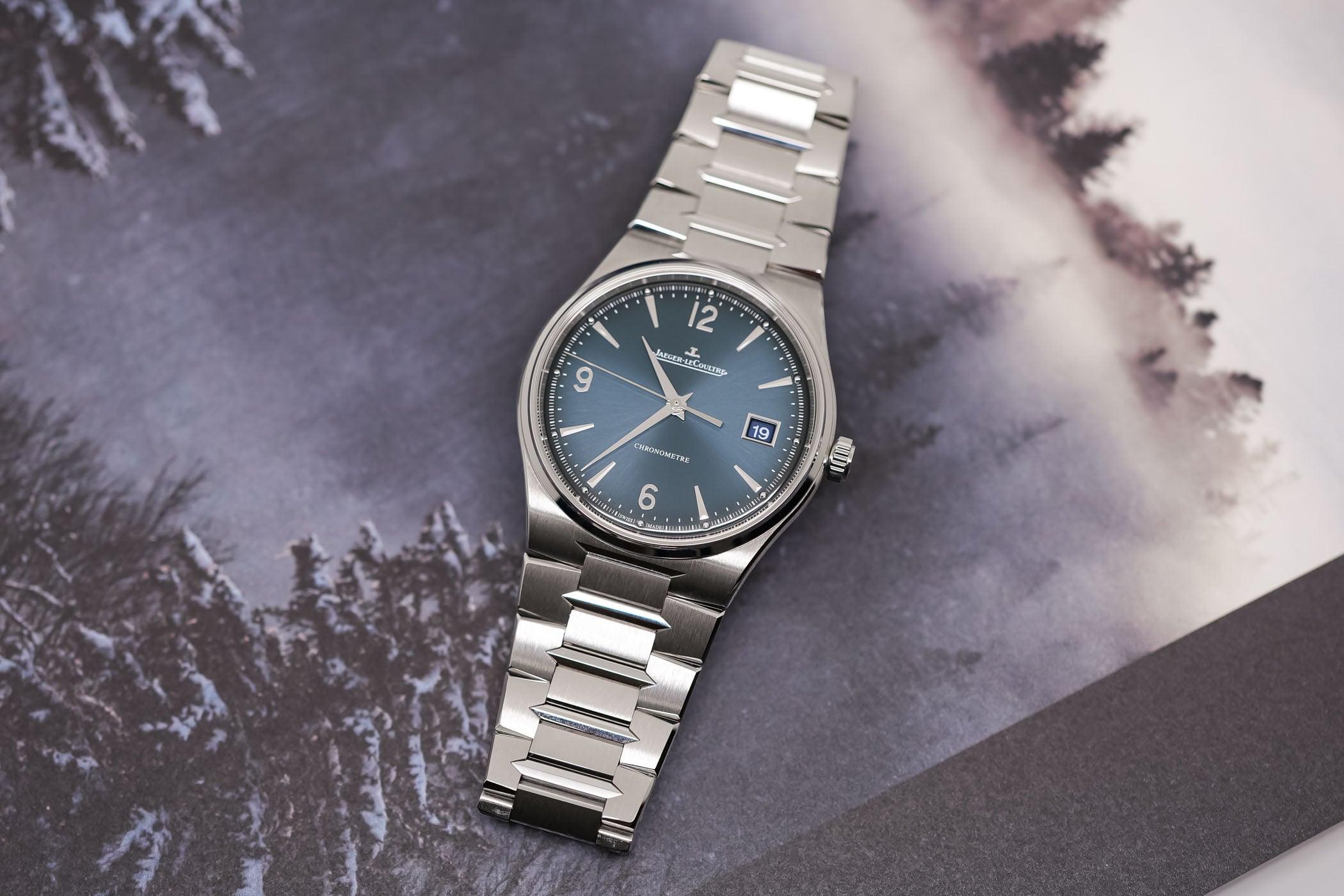
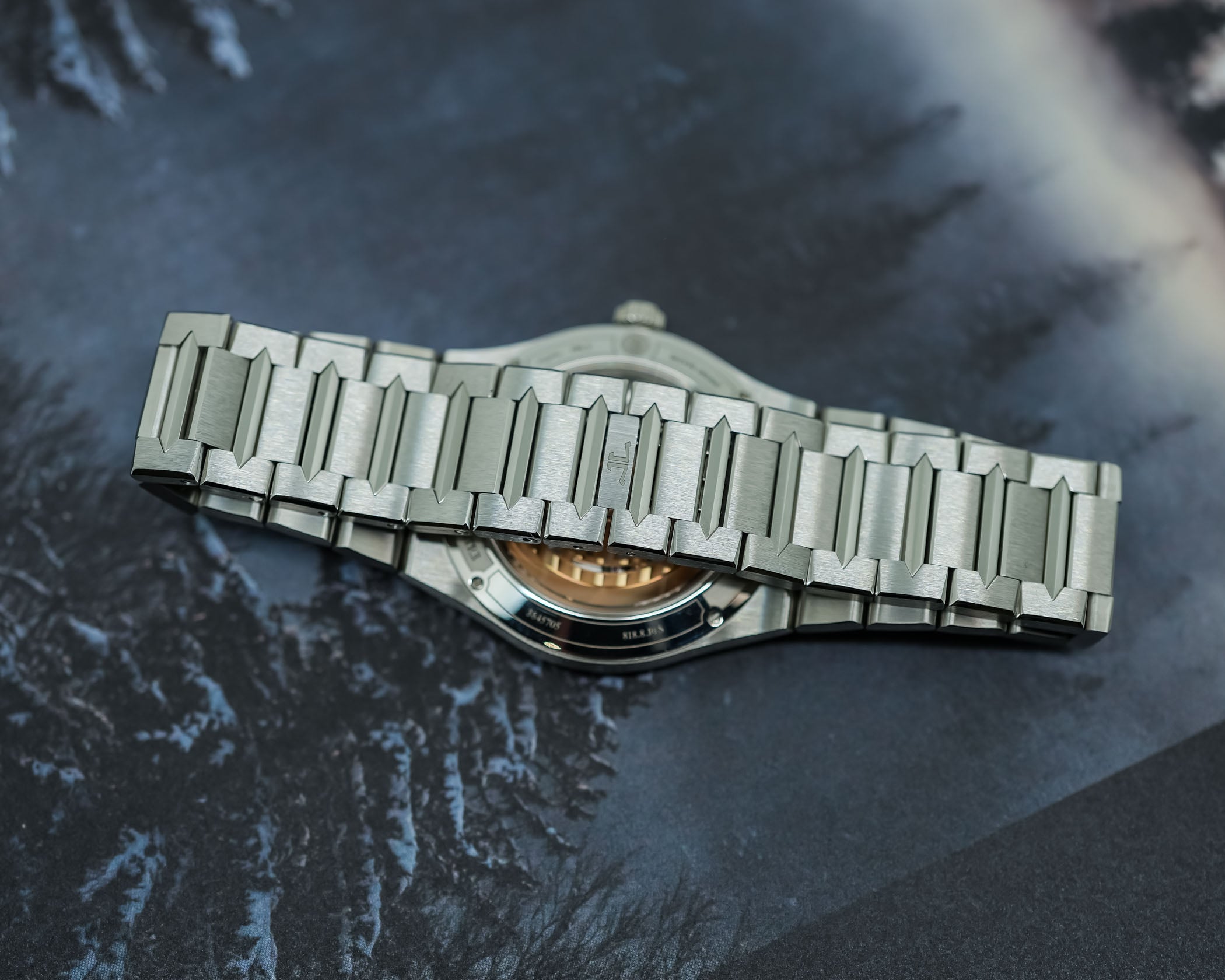
Without question, the standout feature of this release is the bracelet. Constructed as a three-link layout with distinct geometric personality, it features flat, vertical satin-brushed planes paired with meticulous mirror-polished bevels on every outer and inner edge.
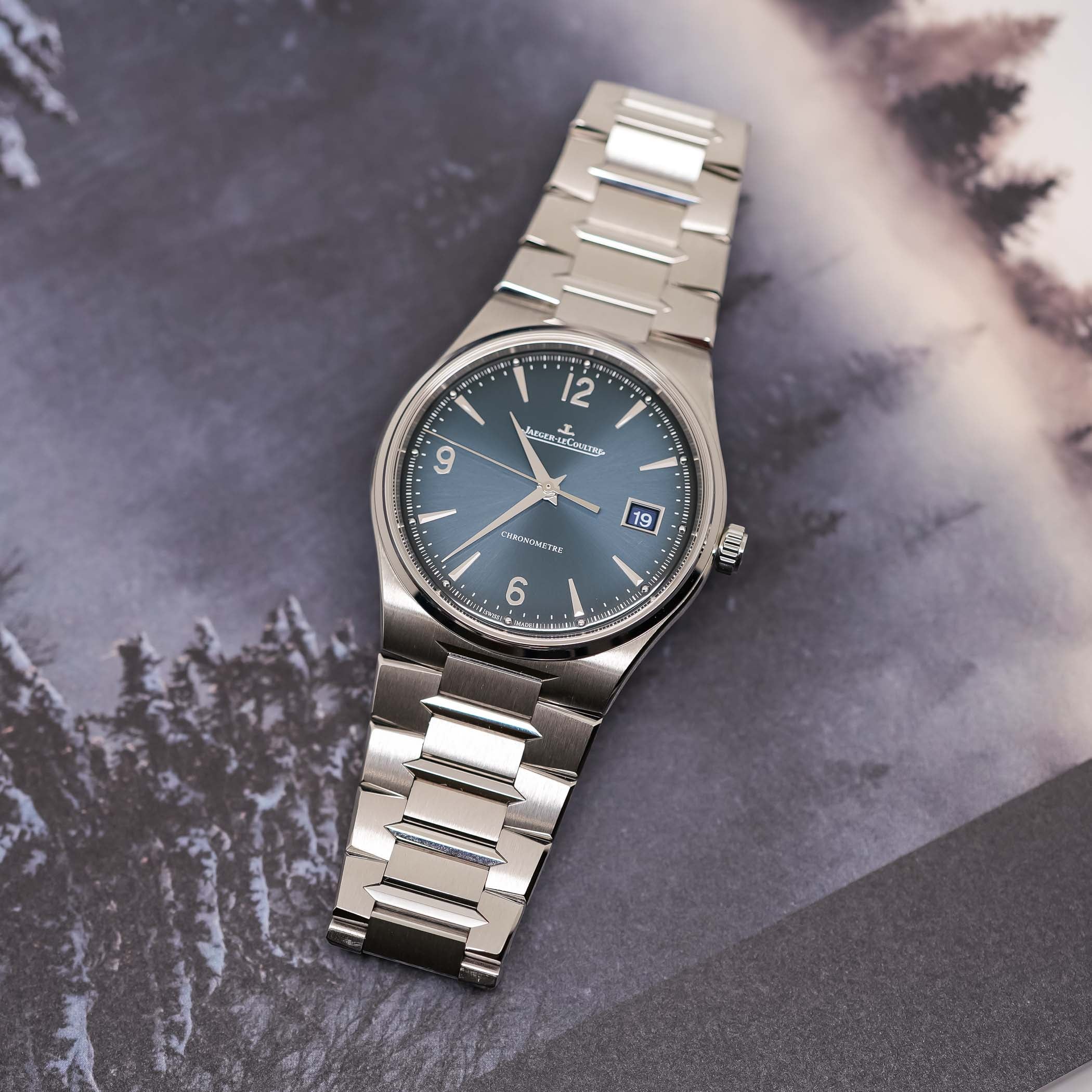
Most distinctively, the connecting links are shaped as triangular prisms—a direct nod to the sharp Dauphine hands and faceted applied markers found throughout JLC’s catalog. The bracelet exhibits an impressive degree of flexibility, draping effortlessly over the wrist. While the evaluation prototypes lacked the anticipated summer/summer micro-adjustment system within the triple-folding clasp, the overall construction quality outclasses most competitors in this price tier.
Dial Execution
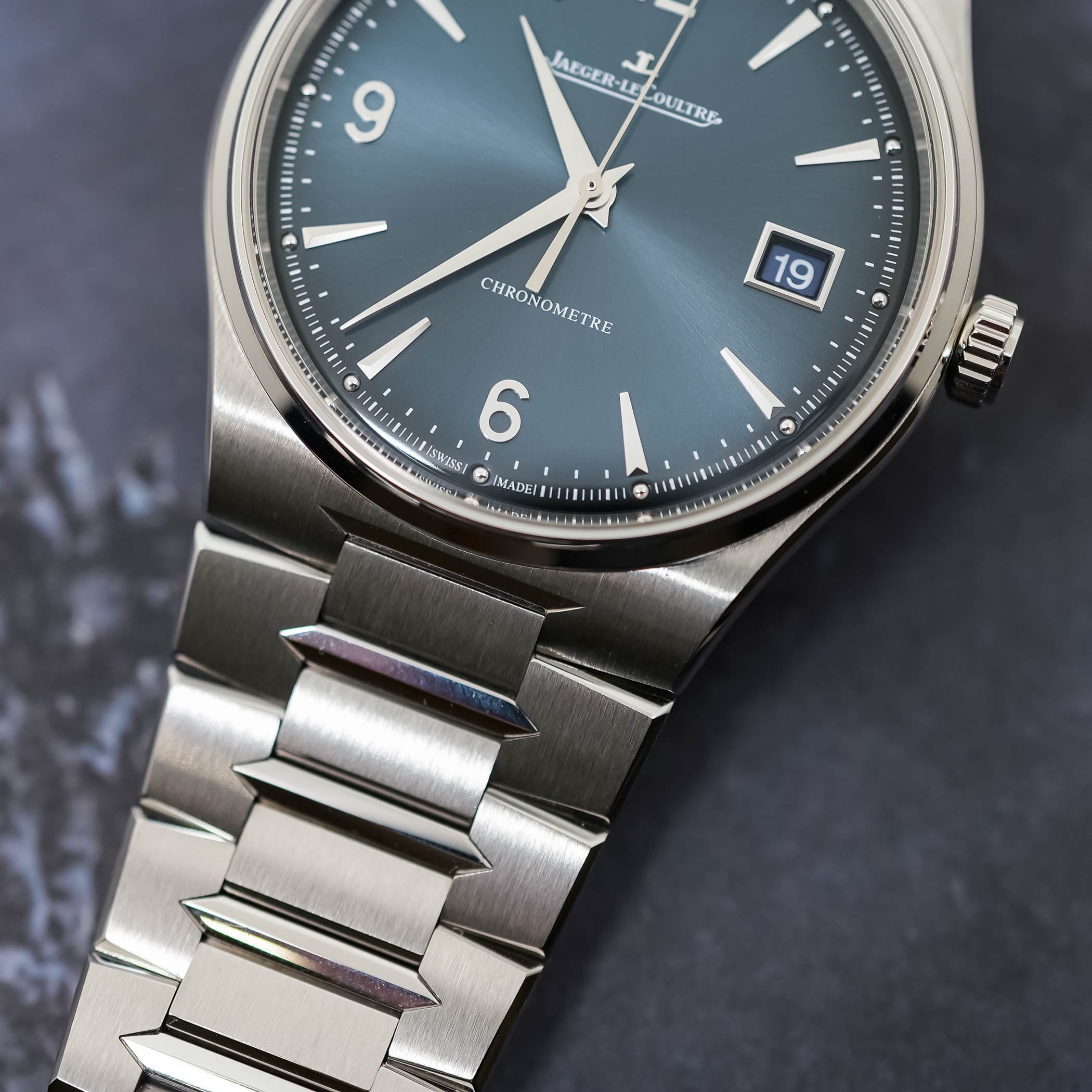
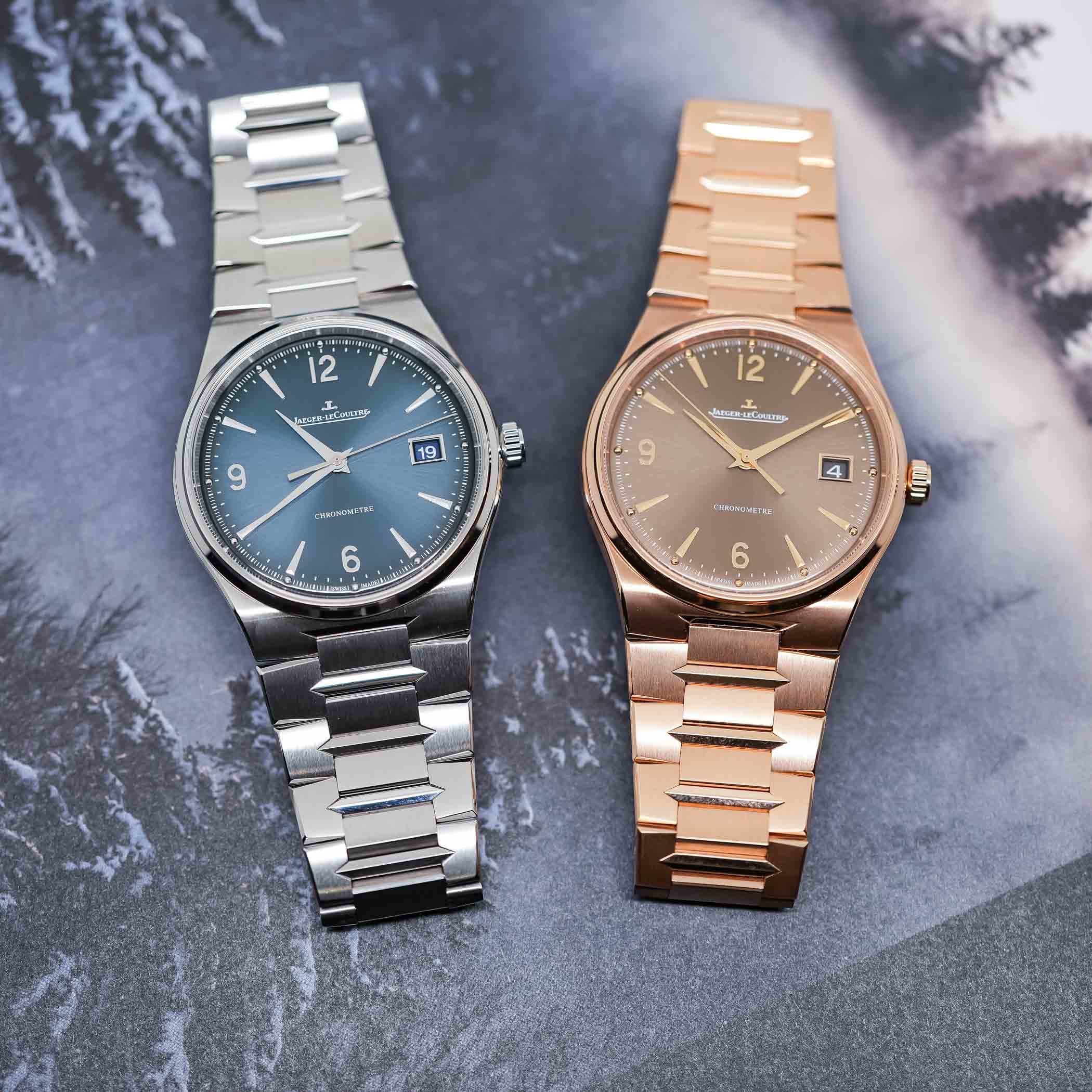
The dial continues the theme of understated refinement. Available in stainless steel with a muted grey-blue gradient or 18k pink gold with a rich bronze hue, the dial surfaces are subtly domed and sunray-brushed.
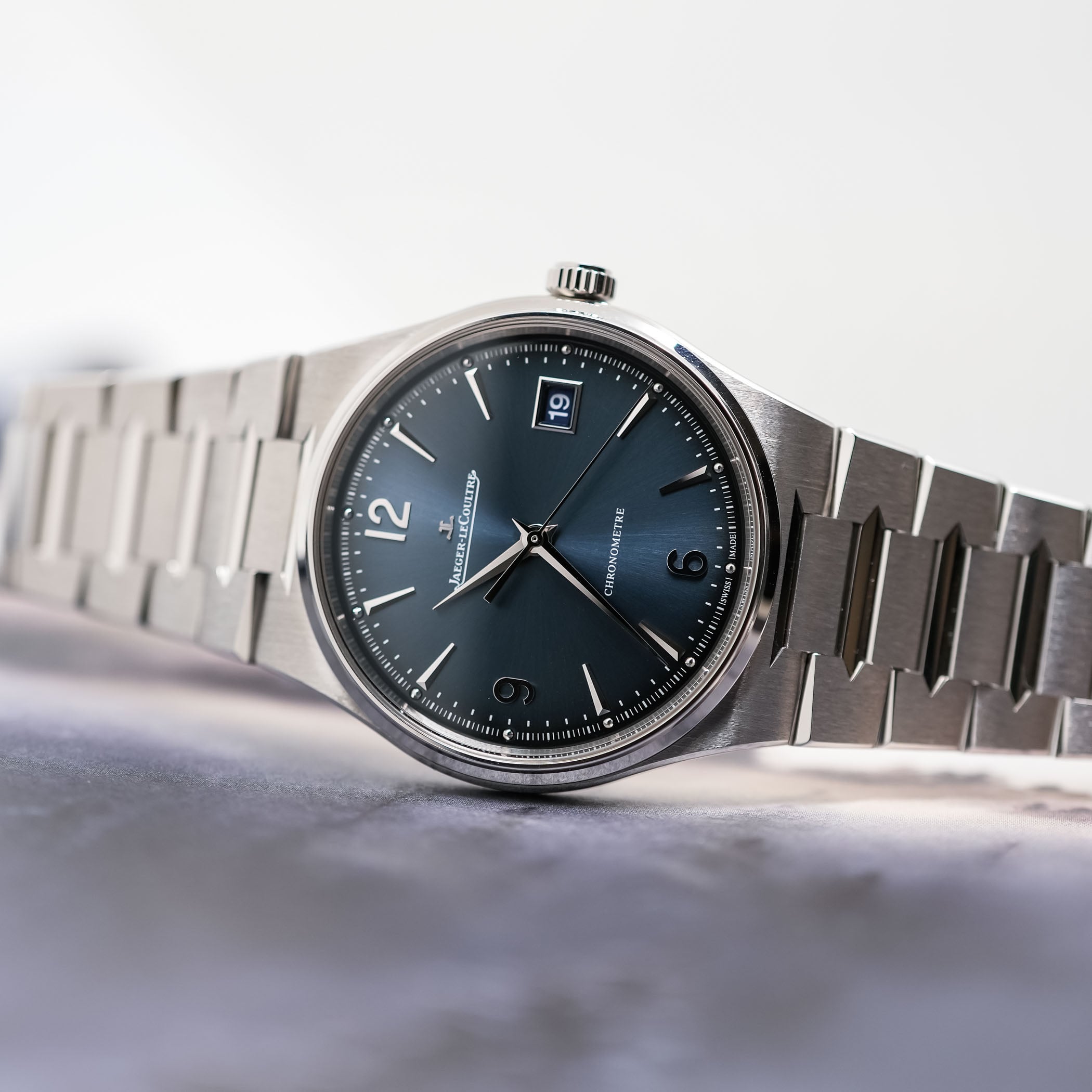
Polished Dauphine hands, faceted triangular hour markers, and polished Arabic numerals anchor the display. A metallic frame surrounds the color-matched date window at 3 o’clock, while recessed polished pearls mark the minute track. Criticisms can be leveled at the complete absence of luminescent material on the hands or markers—a choice favoring dress-watch elegance over true sports utility—and a somewhat polarizing serif font utilized for the "Chronomètre" inscription.
Calibre 899 and the HPG Seal
Beating beneath the exhibition caseback is the automatic Calibre 899. Operating at a modern 4Hz frequency, it utilizes a single barrel to deliver a robust 70-hour power reserve. Winding is handled by an openworked 22k gold central rotor, while the bridges feature Geneva stripes, perlage, and sharp 45-degree polished bevels alongside a slimmed-down balance cock.
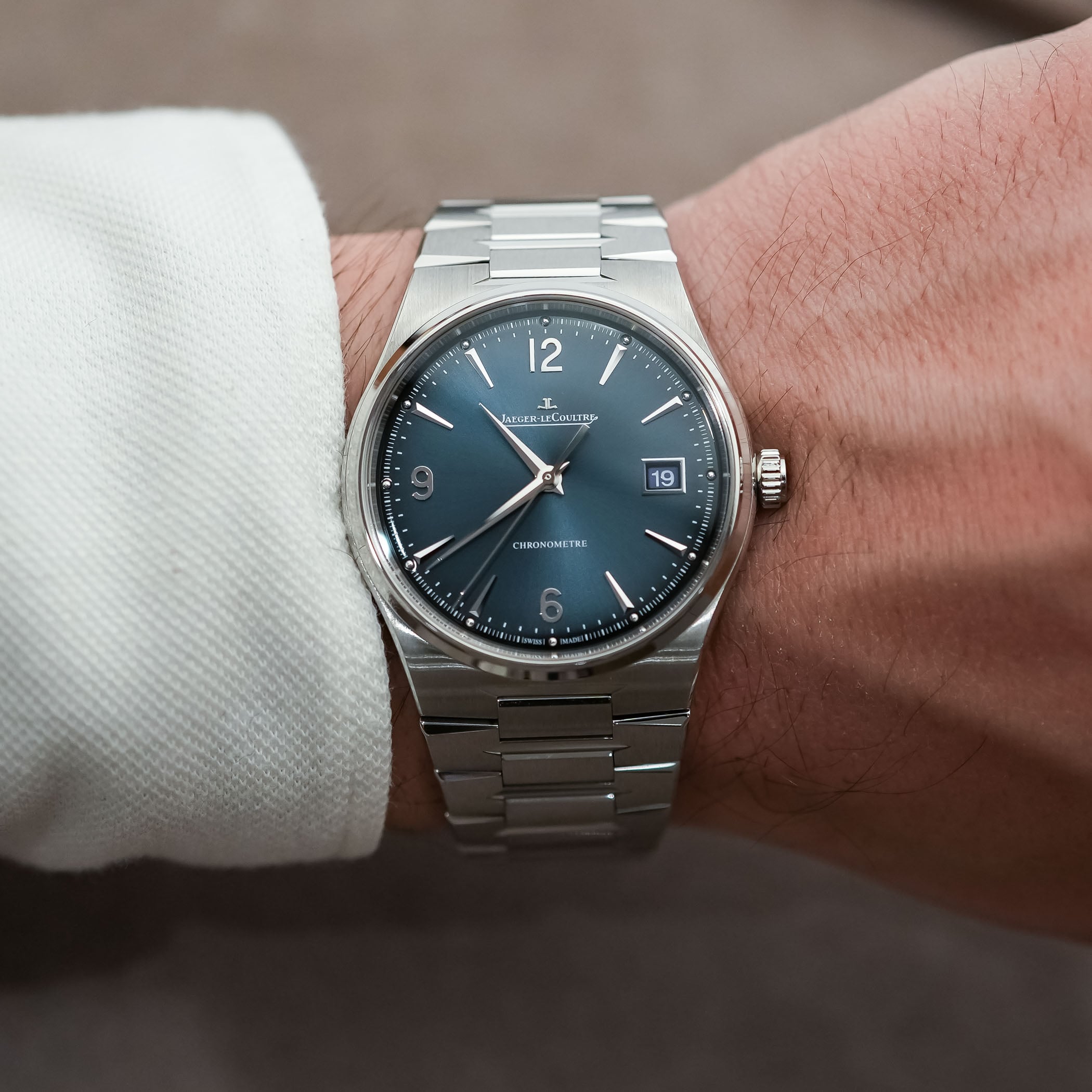
Crucially, the movement is COSC chronometer-certified and carries Jaeger-LeCoultre’s rigorous internal High Precision Guarantee (HPG) seal. Moving far beyond the brand’s traditional 1000-Hour Control, the HPG protocol subjects fully assembled watches to a week of simulated wear compressed into three days. This includes rigorous testing for shock resistance (25G to 50G), altitude variations (up to 1,004 meters), temperature fluctuations (18°C to 35°C), and multiple positional deviations. Furthermore, the HPG certification mandates compliance with eight distinct haute horlogerie finishing standards.
Official Responses and Market Positioning
Pricing for the collection spans two distinct financial realities:
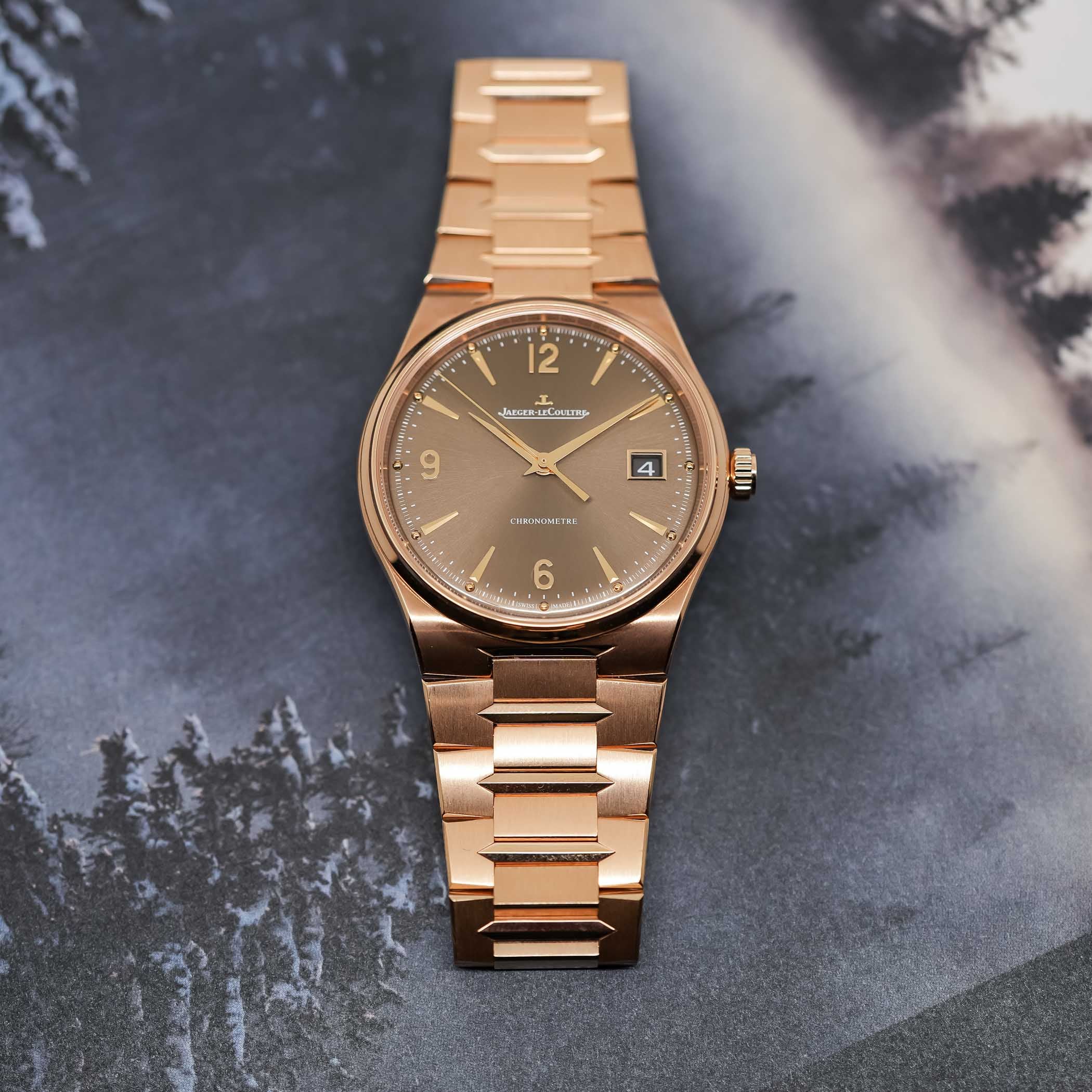
- 18k Pink Gold Edition: EUR 54,500 / USD 52,500
- Stainless Steel Edition: EUR 14,700 / USD 14,200
While the gold model represents a significant capital outlay, the stainless steel variant occupies a fiercely contested market bracket. Retailing roughly EUR 4,000 higher than a strap-equipped Master Ultra-Thin or standard Master Control Date sharing the same base movement, the price increase is justified by the immense labor required to produce the integrated steel bracelet and the added chronometer testing.
When stacked against market peers, the positioning becomes clear:
- IWC Ingenieur: ~EUR 13,300 (Thicker case, ValFleurier-based movement, less intricate finishing)
- Chopard Alpine Eagle 41mm: ~EUR 16,100 (In-house movement, but notably larger and thicker)
- Rolex Land-Dweller 40mm: ~EUR 15,950 (Exceptional in-house escapement and bracelet)
Jaeger-LeCoultre executives and brand representatives have emphasized that the Master Control Chronomètre was never designed to be an overnight internet sensation. Instead, it was conceived as a permanent, enduring pillar of the collection—a watch built to weather changing trends through timeless proportions and mechanical integrity.
Implications: A New Era for JLC’s Core Offerings
The introduction of the Master Control Chronomètre collection carries significant implications for Jaeger-LeCoultre and the broader luxury watch market.
For years, purists noted a glaring omission in JLC’s catalog: while the brand dominated classic dress watches (Master Ultra-Thin) and tool-oriented dive/field watches (Polaris), it lacked a contemporary daily wearer featuring an integrated metal bracelet. By addressing this gap with restraint rather than hyperbole, JLC has avoided the trap of derivative design.
The implications for collectors are clear. The Master Control Chronomètre Date proves that a luxury sports watch does not need to be chunky, overly aggressive, or loud to command attention. By prioritizing ergonomic brilliance, micro-engineering in the bracelet, and elite in-house chronometry via the HPG seal, Jaeger-LeCoultre has delivered a masterclass in subtlety.
Despite minor shortcomings—such as the lack of luminescence, a conservative 50-meter water resistance, and the absence of a quick-release strap system—the Master Control Chronomètre Date stands as a deeply satisfying, highly complete release. It is a watch that takes time to fully appreciate, ensuring that its appeal will only deepen long after the initial novelty of the release cycle has faded.