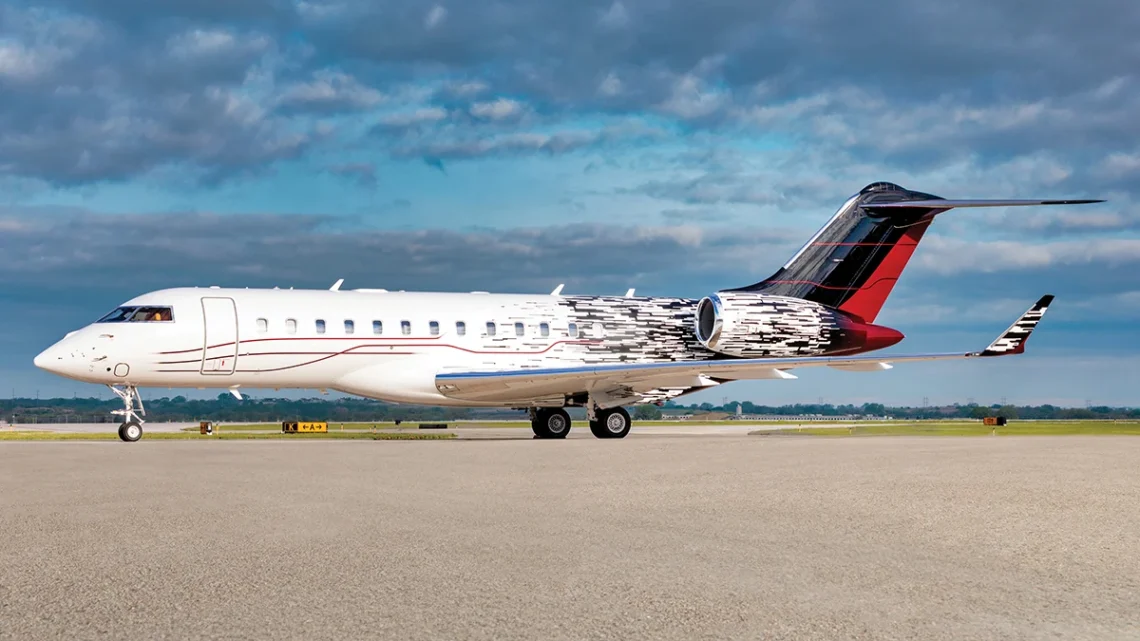
The past few years have been nothing short of a golden era for private aviation, characterized by unprecedented market momentum and banner sales figures that left original equipment manufacturers (OEMs) scrambling to keep pace. However, this historic rally has spawned a significant logistical bottleneck: staggering production delays.
For discerning buyers entering the market today, the price of brand-new luxury comes with a heavy dose of patience. Securing a factory-fresh ultra-long-range jet now requires a wait that stretches well into the decade. Yet, rather than grounding their travel ambitions, this delay has catalyzed a booming, highly sophisticated market for pre-owned private aircraft. Armed with modern engineering and high-end interior design, forward-thinking buyers are bypassing factory backlogs entirely—transforming pre-owned vintage and late-model jets into bespoke masterpieces that rival, and often surpass, brand-new models at a fraction of the cost and time.
Main Facts: The Anatomy of the Private Aviation Logistical Bottleneck
The current landscape of private aviation is defined by a dichotomy: unrelenting demand clashing against finite manufacturing capacity.
The Backlog Crisis: Industry lead times have ballooned dramatically. For those eyeing top-tier models like the Dassault Falcon 10X, delivery slots now stretch out to 2030.
Soaring Acquisition Costs: Driven by raw material inflation, supply chain constraints, and massive demand, brand-new private jets frequently command baseline prices reaching up to $75 million before a single custom interior or upgraded avionics package is even discussed.
The Refurbishment Solution: To circumvent multi-year delivery windows, buyers are increasingly turning to pre-owned aircraft. By purchasing trusted airframes—such as the Gulfstream G550 and G650, Bombardier Global series (6000, 6500, and 7500), or Dassault Falcon 7X and 8X—buyers can acquire proven, highly capable platforms for $20 million to $50 million.
The Modernization Investment: Core updates, averaging around $5 million, breathe new life into these pre-owned jets. These overhauls include cutting-edge avionics, advanced cabin-management systems, state-of-the-art cockpit equipment, acoustic dampening, custom LED lighting, and high-speed Starlink satellite internet.
Chronology: How the Pre-Owned Refurbishment Trend Accelerated
To understand how pre-owned aircraft transformation became the preferred route for elite travelers, it helps to examine the timeline of the post-pandemic private aviation boom.
Phase 1: The Post-2020 Surge in Private Travel
Immediately following the global health disruptions of 2020, high-net-worth individuals, corporate flight departments, and first-time flyers flooded the private aviation market to avoid commercial airline instability. This sudden influx cleared out pre-owned inventories and flooded manufacturers with new orders.
Phase 2: Supply Chain Fractures and Production Gridlock
As global supply chains grew increasingly strained through 2022
and 2023, OEMs struggled to source critical components, engines, and raw materials. Consequently, production lines slowed down significantly. Delivery timelines that historically spanned 12 to 24 months quickly stretched to four, five, and even six years.
Phase 3: The Rise of the Strategic Retrofit
By 2024 and heading into 2026, buyers realized that waiting half a decade for a factory-fresh jet was untenable for their business and lifestyle needs. This realization sparked a rush on late-model pre-owned aircraft. Design firms and completion centers began reporting a massive influx of projects aimed at tearing down older cabins and rebuilding them from the studs up. What was once viewed merely as a budget-conscious compromise evolved into a luxury status symbol in its own right: the custom-retrofitted super-jet.
Supporting Data: Numbers Behind the Retrofit Economy
The economics of private jet refurbishment present a compelling value proposition for financially astute aircraft buyers.
Time-to-Delivery Delta: While a brand-new top-tier jet requires a wait of up to six years, a comprehensive pre-owned acquisition and custom refurbishment can typically be completed and delivered within months, rather than years.
Capital Efficiency: Purchasing a pre-owned platform for $20 million to $50 million and investing an additional $5 million in total modernization results in an aircraft that costs significantly less than a $75 million+ new build.
Technological Superiority: According to industry experts, modern retrofit technology allows completion centers to upgrade a decade-old airframe with avionics and connectivity systems that outperform the factory-default setups of older models, effectively making the used aircraft "stronger than when it first came out."
Maintenance Synergies: Coordinating cosmetic and cabin refurbishments with mandatory, scheduled mechanical maintenance events saves operators millions in lost charter revenue and downtime, optimizing the utilization rate of the aircraft.
Official Responses and Industry Insights
Leading voices in private aviation, design, and aerospace asset management weigh in on the structural shifts shaping the market.
Sarah Mespelt Larrañaga (Sarah Larrañaga Aviation Design)
Los Angeles-based designer Sarah Mespelt Larrañaga has witnessed firsthand the paradigm shift in client preferences.
"There has definitely been an uptick in used aircraft being purchased to be refurbished," Larrañaga notes. Referring to the immense wait times for upcoming flagships, she adds, "If you’re waiting for a Falcon 10X, 2030 is what they’re saying now. There’s so much available technology that we can actually take a used aircraft and almost make it stronger than when it first came out."
Larrañaga highlights that modern client demands extend far beyond aesthetic luxury. While high-end materials and custom layouts are standard, contemporary projects frequently integrate bespoke amenities like onboard cocktail bars, specialized entertainment setups, and professional-grade DJ booths. More importantly, these updates serve a functional purpose. Recalling a recent flight with a client who tested a newly refurbished jet, she noted:
"Because of the new capabilities, they were able to work for the entirety of their eight-hour round trip, just as if they were in their office. We’re helping people do business at a higher level—literally and figuratively."
James Carroll (Duncan Aviation)
James Carroll of Duncan Aviation’s sales and acquisition team emphasizes the critical importance of strategic timing when undertaking major overhauls.
"There can be efficiencies in coordinating upgrades with scheduled maintenance," Carroll explains. "If an aircraft is already going to be down for significant service, combining that visit with paint, interior, avionics, or other modifications can reduce the number of separate downtime events and return a substantially updated aircraft to service more efficiently."
However, Carroll cautions that jumping into the pre-owned market requires rigorous due diligence. He strongly advises executing a comprehensive pre-purchase evaluation. "The key is starting with the right airplane," he stresses.
Rolland Vincent (Independent Industry Analyst)
While customization allows owners to tailor their aircraft precisely to their tastes, independent aviation analyst Rolland Vincent warns against over-customization.
"Highly customized changes will almost certainly diminish the size of the available resale market for an aircraft and the price it will command," Vincent notes, advising owners to balance personal expression with future market liquidity.
Implications: What This Means for the Future of Private Flight
The booming pre-owned retrofit market is reshaping the broader private aviation ecosystem in several profound ways:
A Diversified Pathway to Ownership: Rather than viewing pre-owned aircraft as second-best, the market now views them as a viable, highly efficient alternative track. As James Carroll points out, this trend is currently complementing new-aircraft sales rather than superseding them, offering buyers multiple pathways to fulfill their mission profiles.
Evolution of Completion Centers: MRO (Maintenance, Repair, and Overhaul) facilities and independent design studios are experiencing a golden age. Companies that once specialized purely in basic maintenance are transforming into high-tech interior architecture and avionics innovation hubs.
Redefining Asset Longevity: The traditional lifecycle of a private jet is stretching. By systematically replacing interiors, upgrading engines during heavy checks, and retrofitting next-gen avionics and Starlink connectivity, airframes that might have previously faced retirement are enjoying second and third acts of peak operational utility.
Ultimately, the marriage of luxury interior design and advanced aerospace engineering has proven that in the skies, time truly is the ultimate luxury. For those unwilling to wait until the next decade for a pristine cabin, the smart money is looking backward to move forward faster.