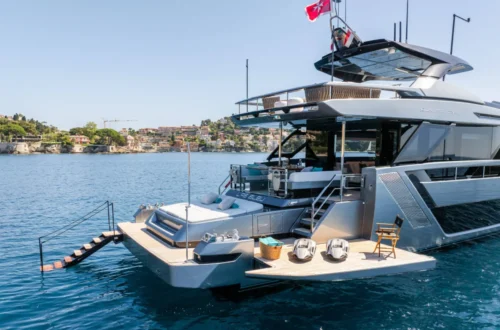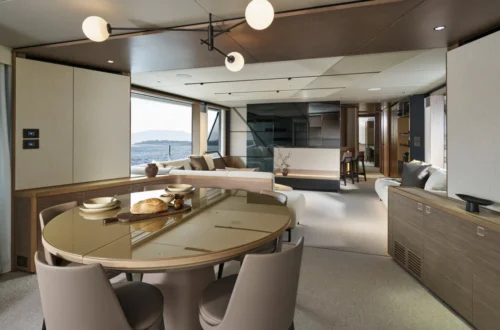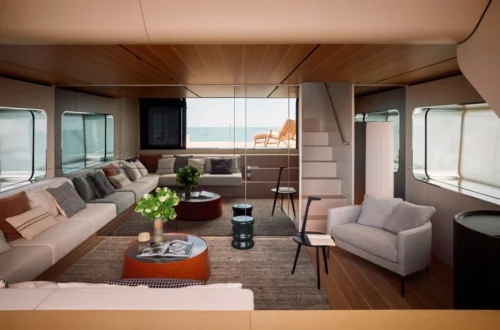
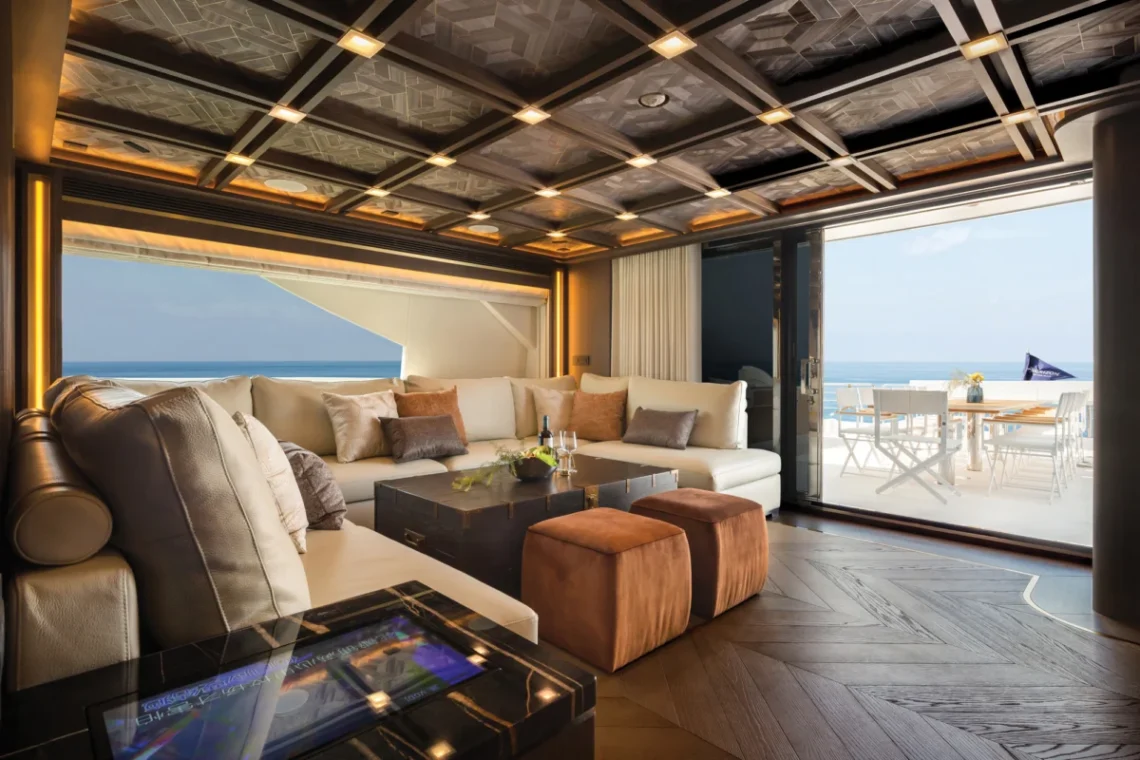
For the modern yacht owner, the definition of luxury has shifted. It is no longer found solely in the opulence of gold leaf or the exclusivity of a guest list. Today, true luxury is measured in volume—the ability to live, breathe, and explore on the water without the claustrophobic constraints of traditional naval architecture. At the center of this transformation is Dutch designer Cor D. Rover, a man whose childhood on the inland waterways of the Netherlands instilled in him a profound, elemental understanding of the sea. His long-standing partnership with Taiwan-based Horizon Yachts has not only reshaped the builder’s identity but has fundamentally altered the expectations of the 75- to 125-foot yachting segment.
The Genesis of a Design Philosophy
Cor D. Rover’s early life was a masterclass in duality. Born on a barge captained by his father, his earliest sensory memories are of the rhythmic hum of engines and the constant movement of the Dutch canals. This nomadic upbringing was tempered by a life on land, where he split his time between bustling shipyards and the quiet, structured labor of the family farm.
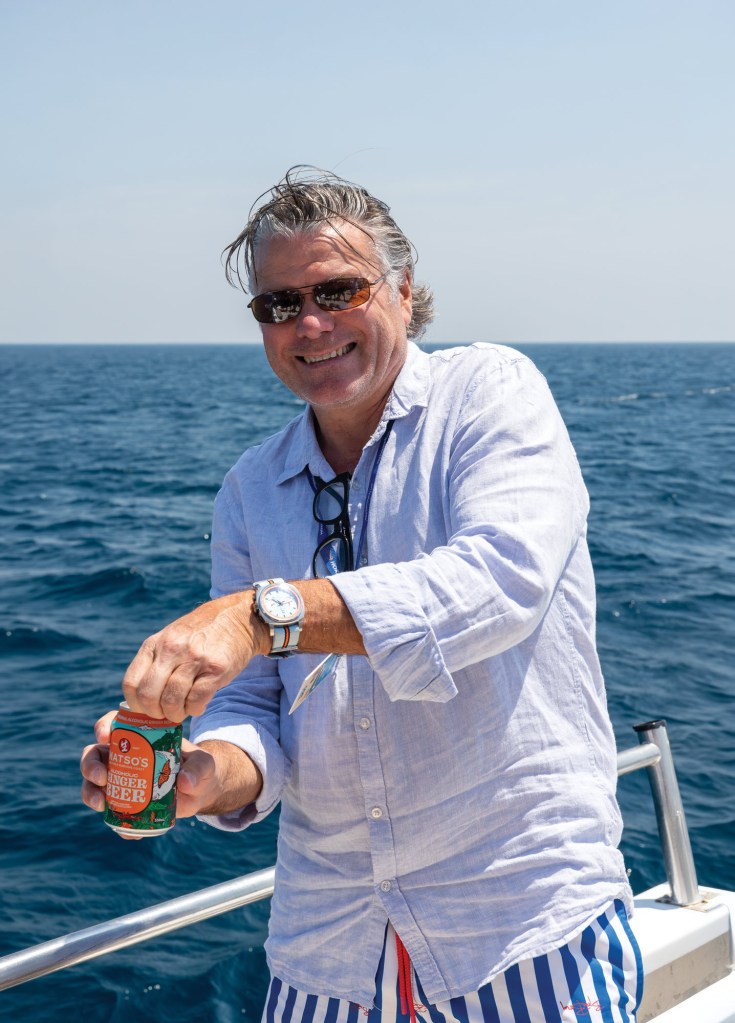
"I always said I could weld metal plates and milk the cows equally well," Rover recalls with a laugh. This blend of grit and grace, of technical discipline and pastoral patience, would become the hallmark of his design career. After transitioning from mechanical engineering to naval architecture, Rover realized that his true calling lay in the intersection of aesthetics and utility. He understood that a yacht is not merely a static object to be admired at a marina; it is a vessel for human experience.
Chronology of a Collaboration: The Rainy Wednesday that Changed Everything
The partnership between Rover and Horizon Yachts began on a rainy Wednesday in Rotterdam. At the time, Horizon was already a formidable player in the global market, known for its robust construction and reliability. However, Rover saw an opportunity to push the brand toward a new horizon—quite literally.
His proposal was bold: to maximize the interior volume of the 24-meter platform through an innovative on-deck master stateroom and a radical rethink of the yacht’s silhouette. Horizon’s president, John Lu, recognized that Rover wasn’t just offering a design; he was offering a new business strategy. Lu, a pragmatist with a visionary’s eye for construction, understood that the most beautiful design is worthless if it cannot be built efficiently and reliably.
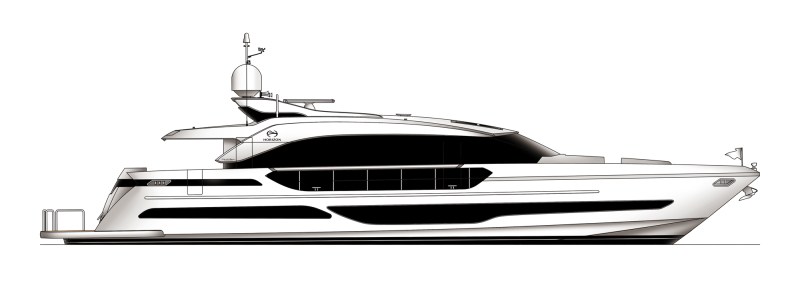
This meeting laid the foundation for the Fast Displacement (FD) Series. Launched in 2016, the series was designed to be a flexible platform rather than a fixed model. Over the ensuing years, the collaboration moved from the initial FD75 to the sprawling, multi-decked FD100 and beyond, proving that the concept of "volume as an experience" was not just a passing trend, but a new standard for the industry.
Technical Foundations: The Science of Space
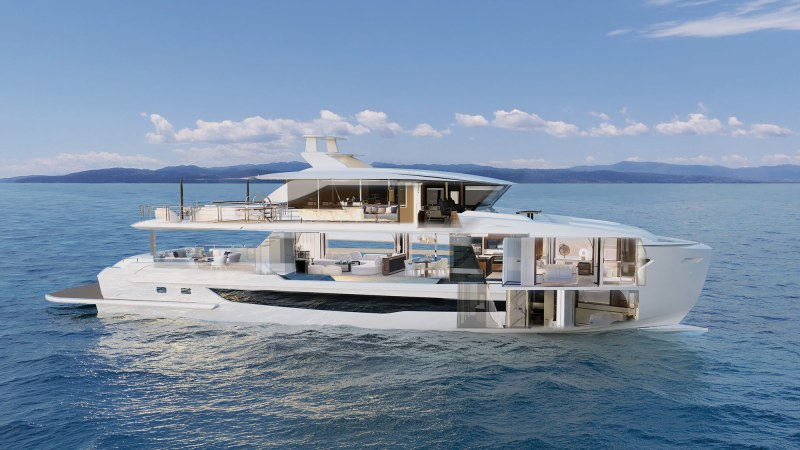
The technical breakthrough of the FD Series rests on a combination of a beamy profile and a hybrid hull form. By utilizing the High-Performance Piercing Bow (HPPB), the design team successfully married the stability of a displacement hull with the speed and agility of a planing yacht.
The Power of Glass
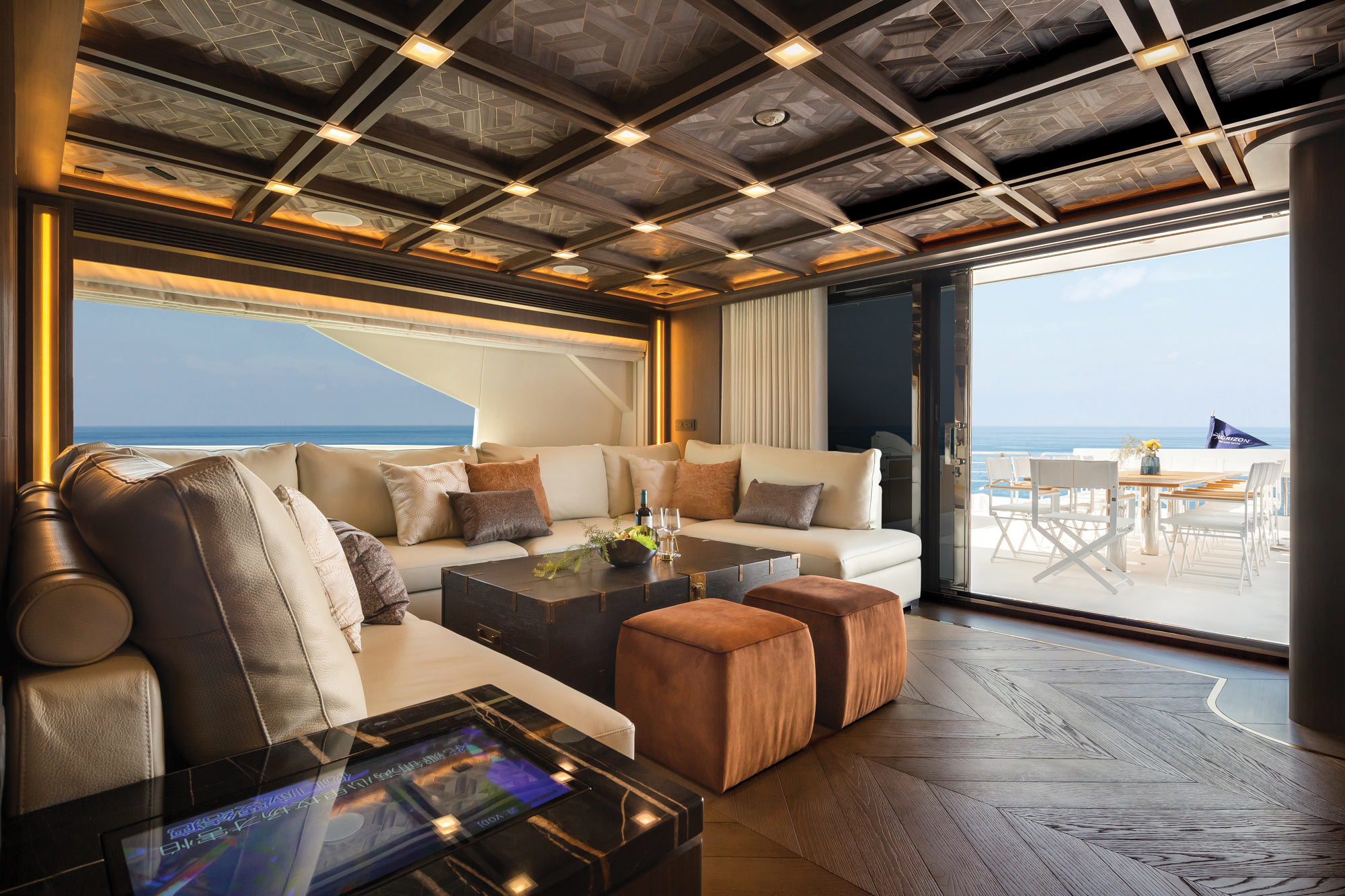
One of the most significant technical advancements integrated into the FD series is the evolution of glazing. As Rover notes, the structural integrity of modern glass allows for floor-to-ceiling windows that were previously unthinkable. These apertures do more than admit light; they dissolve the barrier between the interior and the horizon, making the vessel feel significantly larger than its physical dimensions suggest.
Customization as a Core Competency
Unlike many builders who favor a "cookie-cutter" approach to manufacturing, Horizon and Rover embraced the challenge of being a fully custom builder. Every FD yacht is a unique reflection of its owner’s requirements, whether that involves maximizing stowage for tenders and toys for Australian explorers or creating expansive, climate-controlled sky lounges for the European market. This bespoke approach requires a constant, high-stakes negotiation between design ambition and the cold realities of naval architecture.
Official Perspectives: Building the Future
In reflecting on the trajectory of the brand, Horizon leadership has often cited the "Rover effect" as a catalyst for their growth. By prioritizing the owner’s experience over rigid adherence to traditional yacht profiles, the builder has captured a younger, more adventurous demographic.
"The younger generation wants the experience of yachting and the excitement of exploration," Rover explains. "They are not necessarily looking for a symbol of status or wealth. They want a home on the water that can handle the reality of the ocean."
This philosophy has filtered down to the manufacturing floor. Horizon’s engineers have had to adapt to more complex, multi-functional layouts, such as the transforming beach clubs and drop-down platforms that define the modern FD experience. The result is a collaborative environment where the designer acts as a translator, turning the ephemeral desires of the client into the steel, fiberglass, and carbon-fiber reality of the shipyard.
Implications for the Future of Yachting
The influence of the FD Series extends well beyond the docks of Taiwan or the marinas of the Mediterranean. It has set a precedent for what owners can demand from a vessel in the 75- to 125-foot range.
The Automotive Parallel
Looking ahead, Rover predicts that the yachting industry will follow the path of the automotive sector. As hybrid and electric propulsion technologies mature, the challenge will be integration. "When commercial trucking goes electric, boats will follow," he asserts. The transition will require a delicate balancing act—maintaining the range and comfort that owners expect while navigating the limitations of current battery technology.
The Human Element in an AI World
Despite the increasing reliance on CAD software and AI-driven simulation in design, Rover remains a staunch defender of human judgment. "The hardest part of yacht design is when people think a computer can do it all," he says. He views technology as a tool—a sophisticated drafting table—but insists that the final decisions regarding flow, comfort, and aesthetics must remain in the hands of the designer.
A Legacy of Flow
The story of Cor D. Rover and Horizon Yachts is, at its heart, a story about the fluidity of design. By focusing on volume, the duo has managed to pack the amenities and spatial dynamics of a superyacht into platforms that are easier to operate, more efficient to run, and infinitely more livable.
As the FD series continues to expand in size and capability, the core philosophy remains untouched. It is a commitment to the idea that a yacht should not be a static monument to its owner’s status, but a dynamic, evolving space that facilitates the exploration of the world’s most remote corners. From the canal barges of the Netherlands to the high-tech shipyards of Kaohsiung, Cor D. Rover has proven that when you design for the experience, the volume follows.
The partnership is a testament to the fact that innovation is rarely about inventing something entirely new; rather, it is about observing the way people live and creating the architecture to support that life. As the industry looks toward a future of cleaner, smarter, and more spacious vessels, the work of Rover and Horizon will undoubtedly remain the benchmark for what is possible when design meets the open sea.