Main Facts: The Return of a Modern Horological Milestone
In the world of luxury watchmaking, few disappearances are as frequently debated among enthusiasts as the discontinuation of the Tudor North Flag in 2021. Originally launched in 2015, the North Flag was a pivotal release for the brand, serving as a technological sandbox that introduced Tudor’s very first in-house manufacture movement—the Calibre MT5621—complete with an exhibition sapphire caseback.
Now, five years after it quietly faded from the catalog, Tudor has resurrected the line for 2026. Dropping the space in its name to become the unified Northflag, the collection returns with a familiar angular silhouette, a highly practical GMT complication, and a comprehensive series of ergonomic and mechanical refinements.
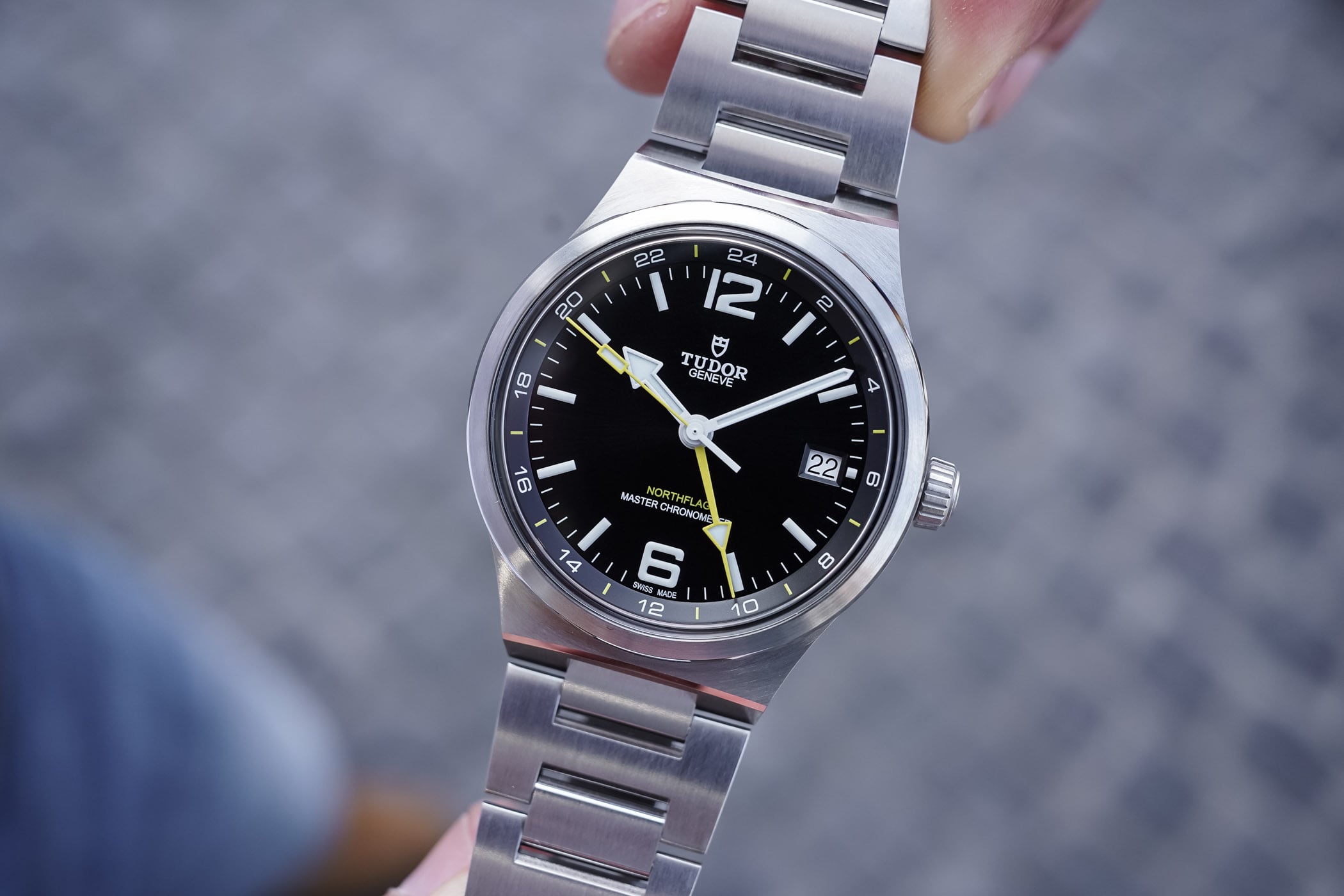
Priced at CHF 4,500 / EUR 5,050 / USD 5,525 and joining the permanent collection as a boutique-exclusive offering, the new Tudor Northflag GMT bridges the gap between historical homage and cutting-edge contemporary watchmaking. It trades the quirky, utilitarian eccentricities of its predecessor for a sharper, more refined execution, proving that Tudor is willing to listen to its collectors while steering its design language into a more mature chapter.
Chronology: From the 1970s Ranger II to the 2026 Northflag GMT
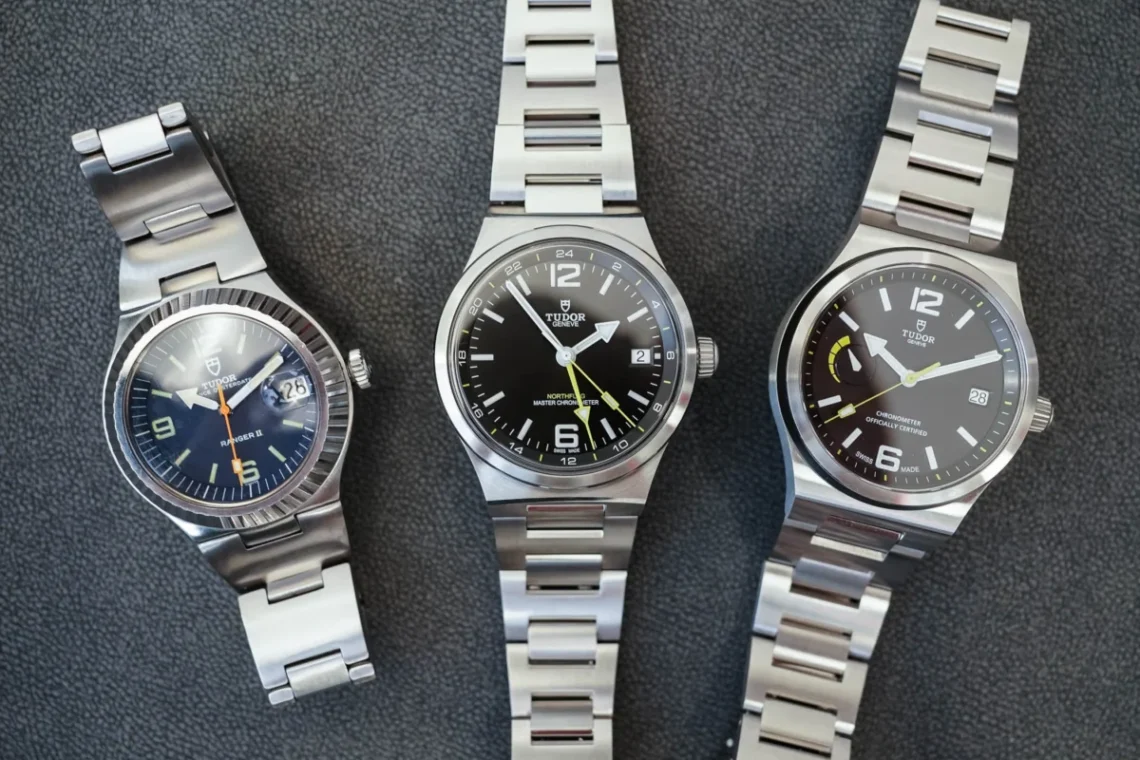
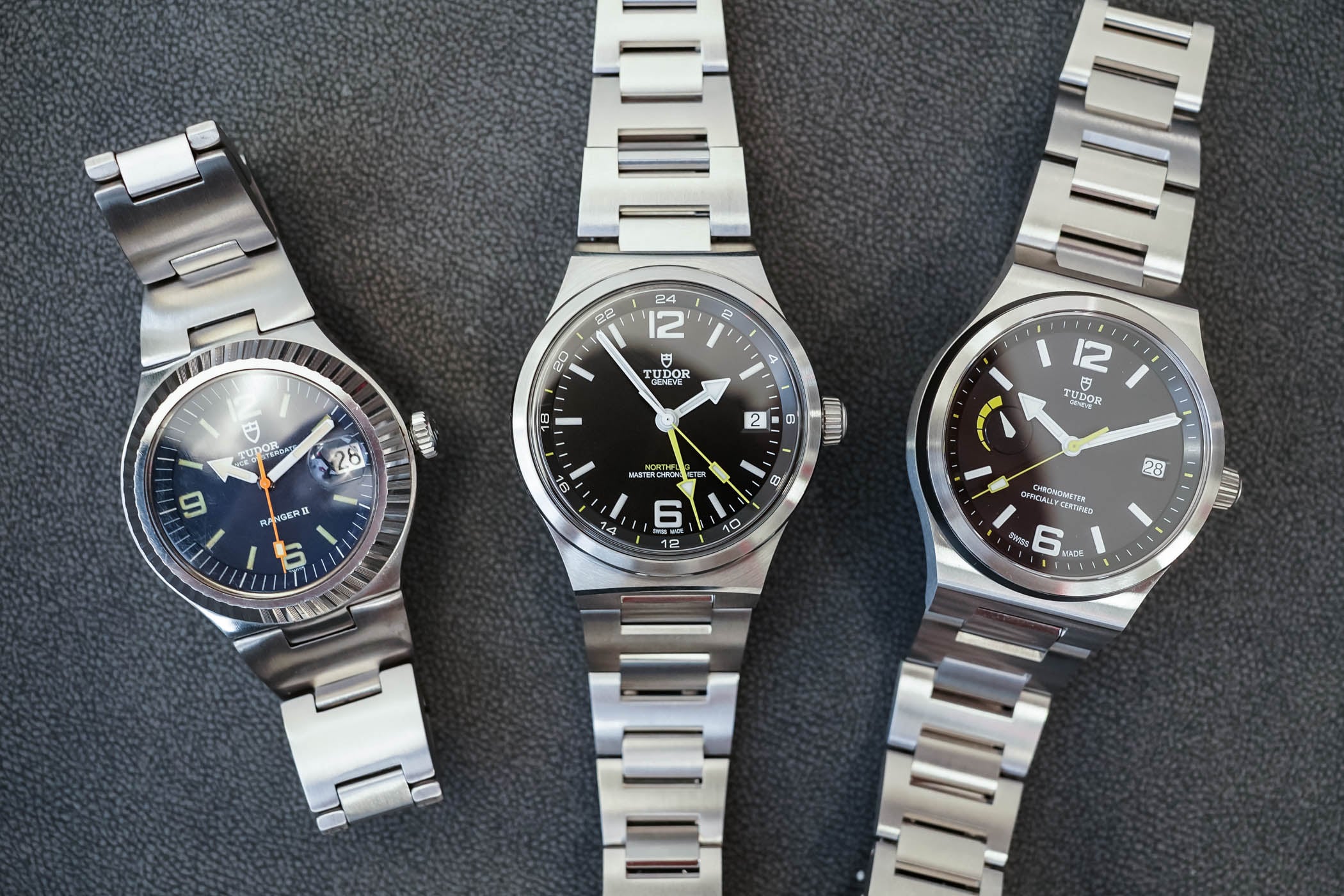
To fully understand the weight of the Northflag’s return, one must look at the lineage that birthed it. The aesthetic DNA of the watch traces its roots back to the 1970s with the obscure yet characterful Tudor Ranger II.
The 1970s: The Ranger II Blueprint
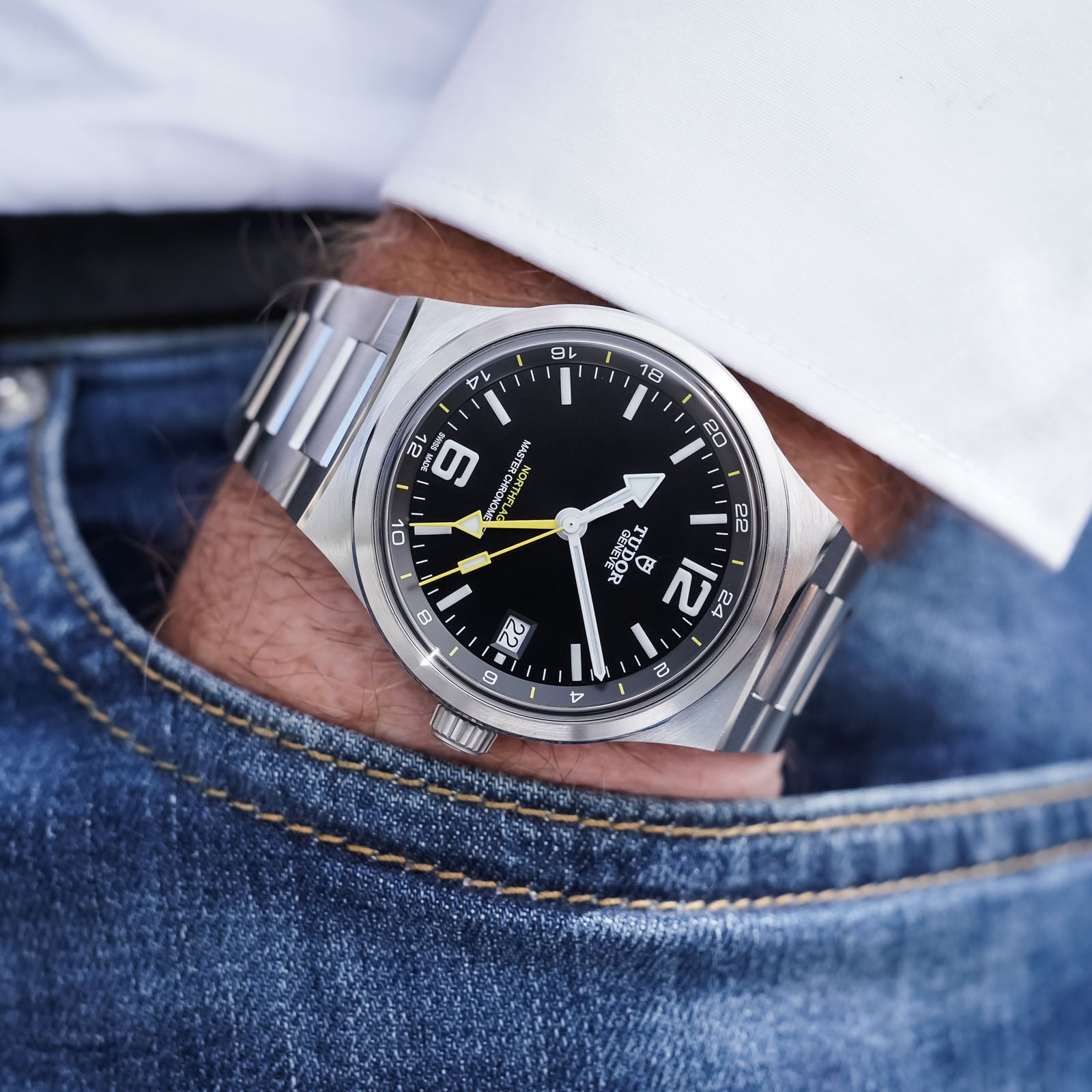
During an era defined by bold, integrated steel sports watches, the Ranger II stood out with its distinctive tonneau-shaped case, prominent fluted bezel, deep-dished dial, and heavy reliance on geometric lines. It was designed as an uncompromising tool watch built for exploration.
2015: The Modern Rebirth
Fast forward to Baselworld 2015. Tudor resurrected the spirit of the Ranger II in a thoroughly modern package. The original North Flag captured attention with its stark black-and-yellow color scheme, 40mm integrated case, and groundbreaking Calibre MT5621. However, its aesthetic was somewhat divisive; it was unapologetically chunky, featuring a prominent black ceramic ring beneath the steel bezel and a rotating disc power-reserve indicator at the 9 o’clock position.
2021: The Quiet Discontinuation
Despite its historical importance as the vanguard of Tudor’s in-house manufacturing movement era (developed alongside industrial partner Kenissi), the North Flag was quietly phased out in 2021 after six years of zero updates or line extensions. Collectors assumed the experiment had run its course.
2026: The Northflag GMT Era
The introduction of the 2026 Northflag GMT marks a strategic evolution. By trimming excess bulk, swapping the power-reserve indicator for a true traveler’s GMT function, and introducing Master Chronometer certification, Tudor has successfully transformed a niche enthusiast darling into a highly refined, daily-wearable sports watch.
Supporting Data: Specifications and Technical Architecture
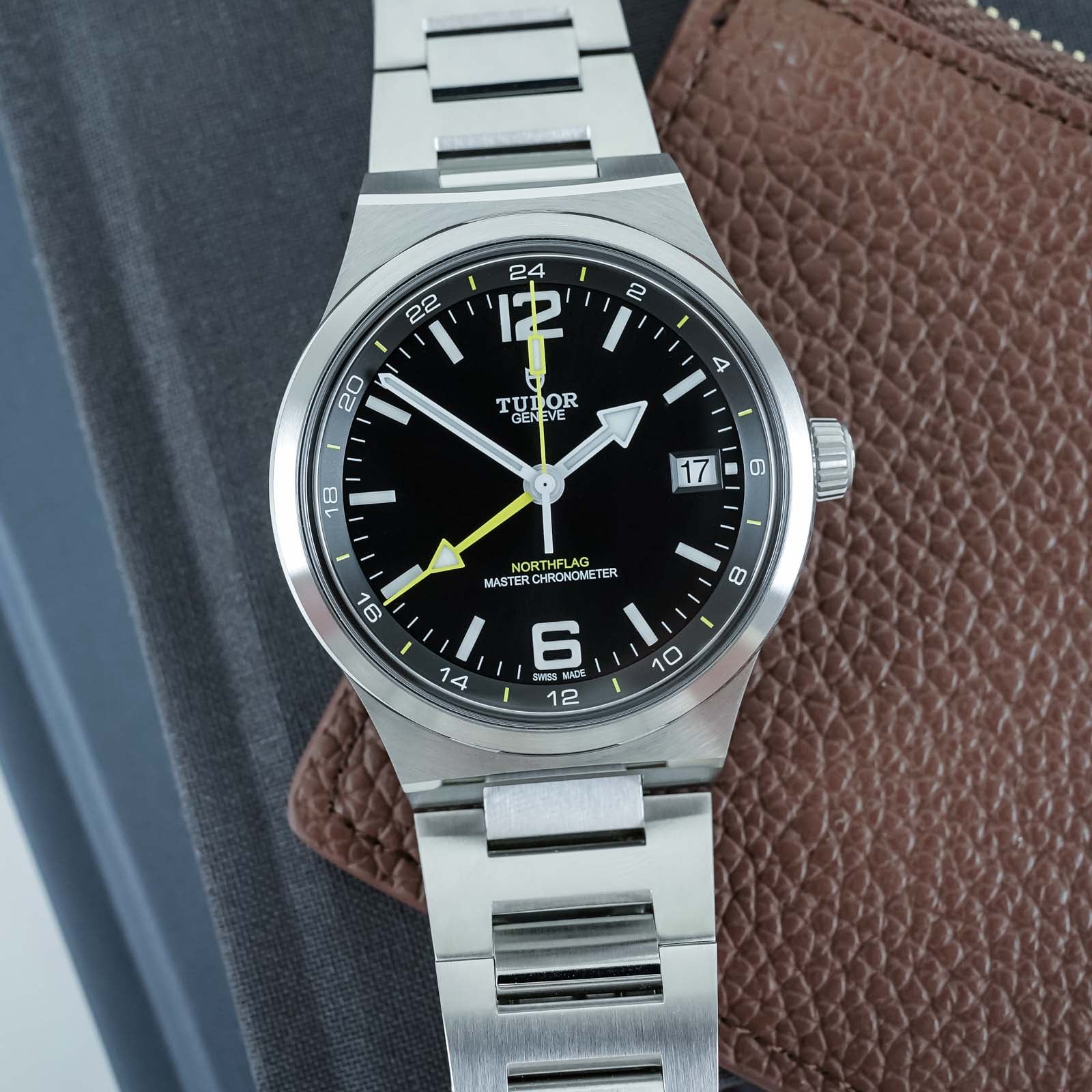
The 2026 Northflag GMT boasts a sweeping list of mechanical and structural updates that separate it from its 2015 ancestor. Below is a detailed breakdown of its specifications:
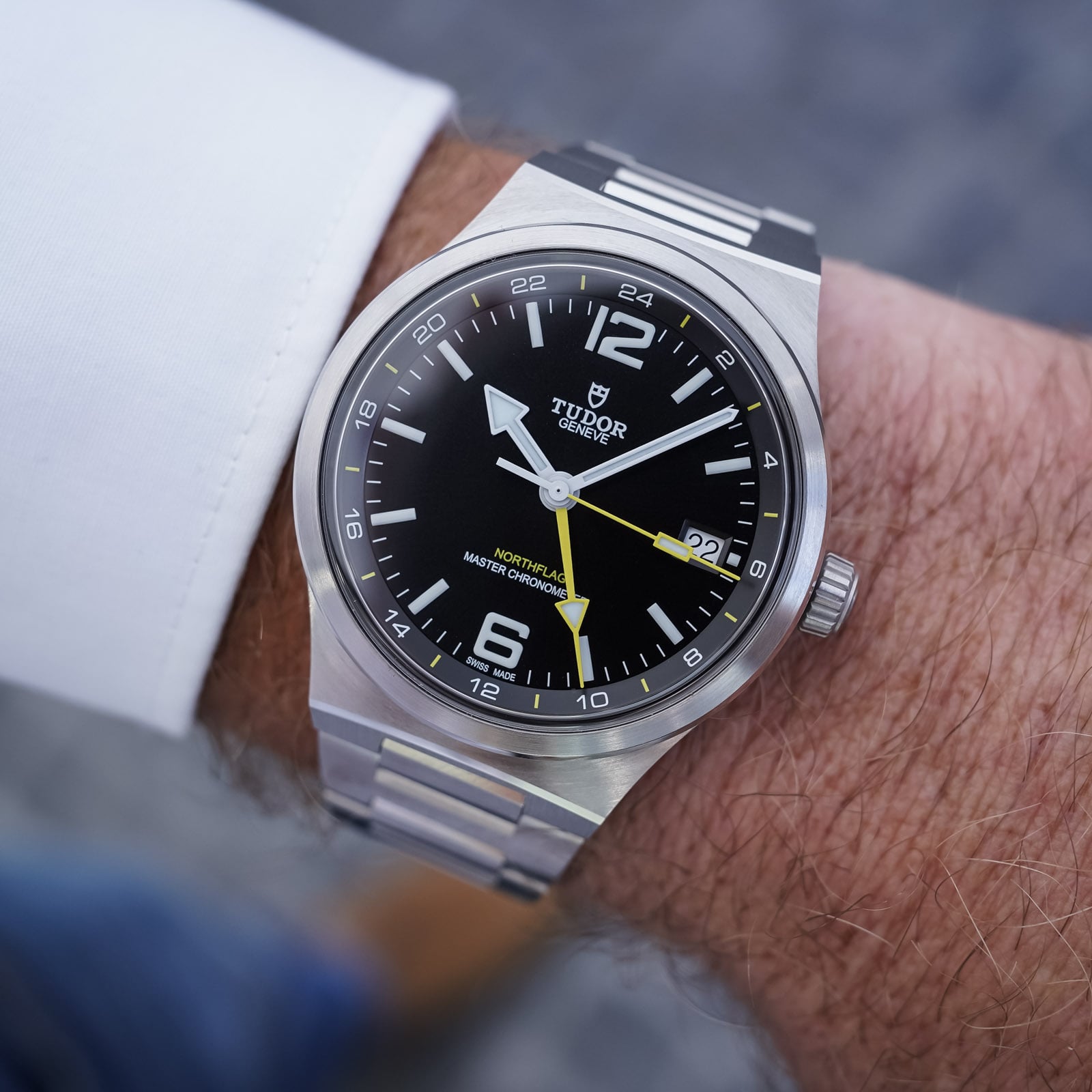
- Case Material: Stainless steel with predominantly brushed finishes, accented by polished bevels on the bezel edges and at the 6 and 12 o’clock case corners.
- Dimensions: 40mm diameter, 12.7mm thickness (down from 13.4mm), and 48.8mm lug-to-lug (reduced from 50mm).
- Water Resistance: 100 meters (330 feet), equipped with a traditionally shaped screw-down crown that retains subtle echoes of the original’s unique personality.
- Crystal & Caseback: Box-shaped sapphire crystal paired with a fluted-edge sapphire display caseback.
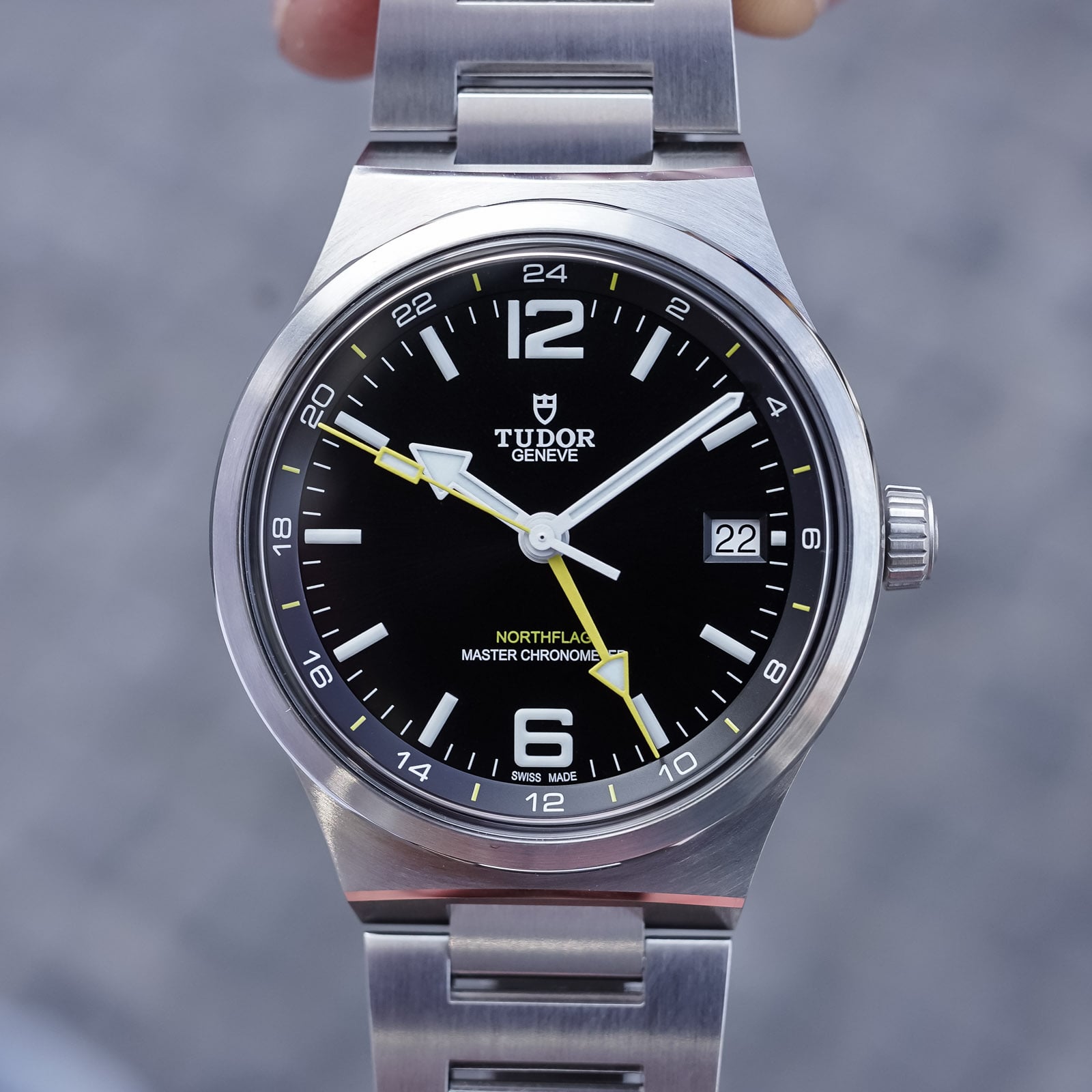
- Dial: Sunray-brushed black dial (replacing the previous matte finish) featuring strong white and yellow accents. Monobloc ceramic hour markers and numerals filled with high-grade Super-Luminova. The minutes/seconds track now sits closer to the center, framed by a fixed 24-hour scale.
- Movement: Manufacture Calibre MT5652-U (produced via Kenissi). Automatic, beating at 28,800 vph (4 Hz) with a 65-hour power reserve. Features a true/traveller GMT function with an independent local hour hand, a variable-inertia balance, a silicon balance spring, and dual COSC and METAS Master Chronometer certifications.
- Bracelet: Integrated-style steel bracelet featuring broad, H-shaped brushed links, secured by Tudor’s proprietary T-Fit rapid adjustment clasp.
- Availability & Pricing: Permanent collection, available exclusively at Tudor boutiques. Priced at CHF 4,500, EUR 5,050, or USD 5,525.
Official Responses and Brand Philosophy
While Tudor’s executive leadership often lets their product launches speak for themselves, the design philosophy behind the 2026 Northflag clearly aligns with the brand’s overarching modern trajectory: marrying historical exploration aesthetics with uncompromising state-of-the-art mechanical standards.
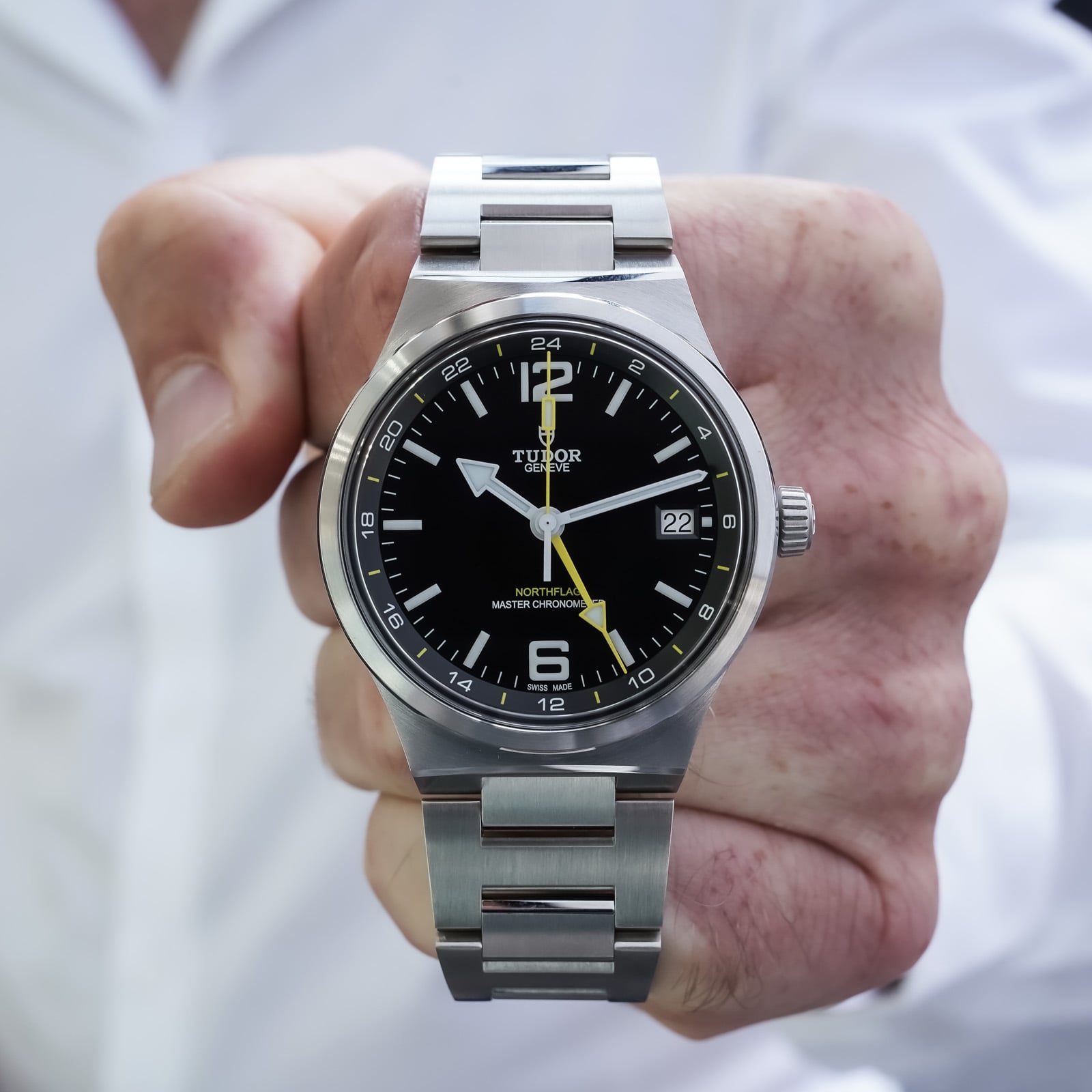
When the original North Flag launched in 2015, Tudor was eager to prove its independence through in-house manufacturing. The power-reserve disc was a direct visual celebration of the MT5621’s robust 70-hour autonomy. However, in contemporary interviews and press briefings surrounding Tudor’s recent technical rollouts—such as the Pelagos FXD GMT and the Black Bay GMT lines—brand representatives have emphasized user-centric practicality.
The integration of the Calibre MT5652-U into the Northflag ecosystem reflects a maturation of this philosophy. By replacing a specialized, lifestyle-centric power reserve indicator with a universally useful "true" GMT complication, Tudor is positioning the Northflag not merely as a museum piece for purists, but as a reliable, globe-trotting companion for the modern traveler. Furthermore, achieving METAS Master Chronometer certification signals an institutional commitment to withstanding extreme magnetic fields (up to 15,000 gauss) and rigorous daily precision testing, elevating the Northflag far beyond its utilitarian roots.
Implications: Where the Northflag GMT Fits in the Market
The arrival of the 2026 Tudor Northflag GMT carries several significant implications for both the brand and the broader luxury watch market.
1. Enhanced Wearability and Commercial Appeal
The original North Flag was widely praised for its bold design, but critics often pointed out its blocky dimensions. By shaving down the thickness to 12.7mm and shortening the lug-to-lug distance to 48.8mm, Tudor has dramatically improved the ergonomics. Combined with the addition of the T-Fit clasp—arguably one of the most beloved modern bracelet innovations in the industry—the Northflag GMT transitions from a weekend novelty to a highly viable daily wearer.
2. A Nod to Purists vs. Mainstream Refinement
Die-hard collectors will undoubtedly experience a twinge of nostalgia for the eccentricities of the 2015 model. The removal of the black ceramic bezel ring and the iconic disc power reserve means the watch has lost a fraction of its singular weirdness. In its place, however, is a much cleaner, more cohesive design. The polished bevels on the case corners, the shift to a sunray-brushed dial, and the symmetry of the GMT hand elevate the watch’s perceived value and visual execution.
3. Strengthening the Boutique Experience
By restricting availability exclusively to Tudor boutiques, the brand is deliberately cultivating a more curated retail experience. At a price point hovering around the $5,500 USD mark, the Northflag GMT offers an extraordinary value proposition: a true traveler’s GMT complication, a METAS-certified manufacture movement, and integrated sports-watch styling that competes aggressively against rivals in higher pricing brackets.
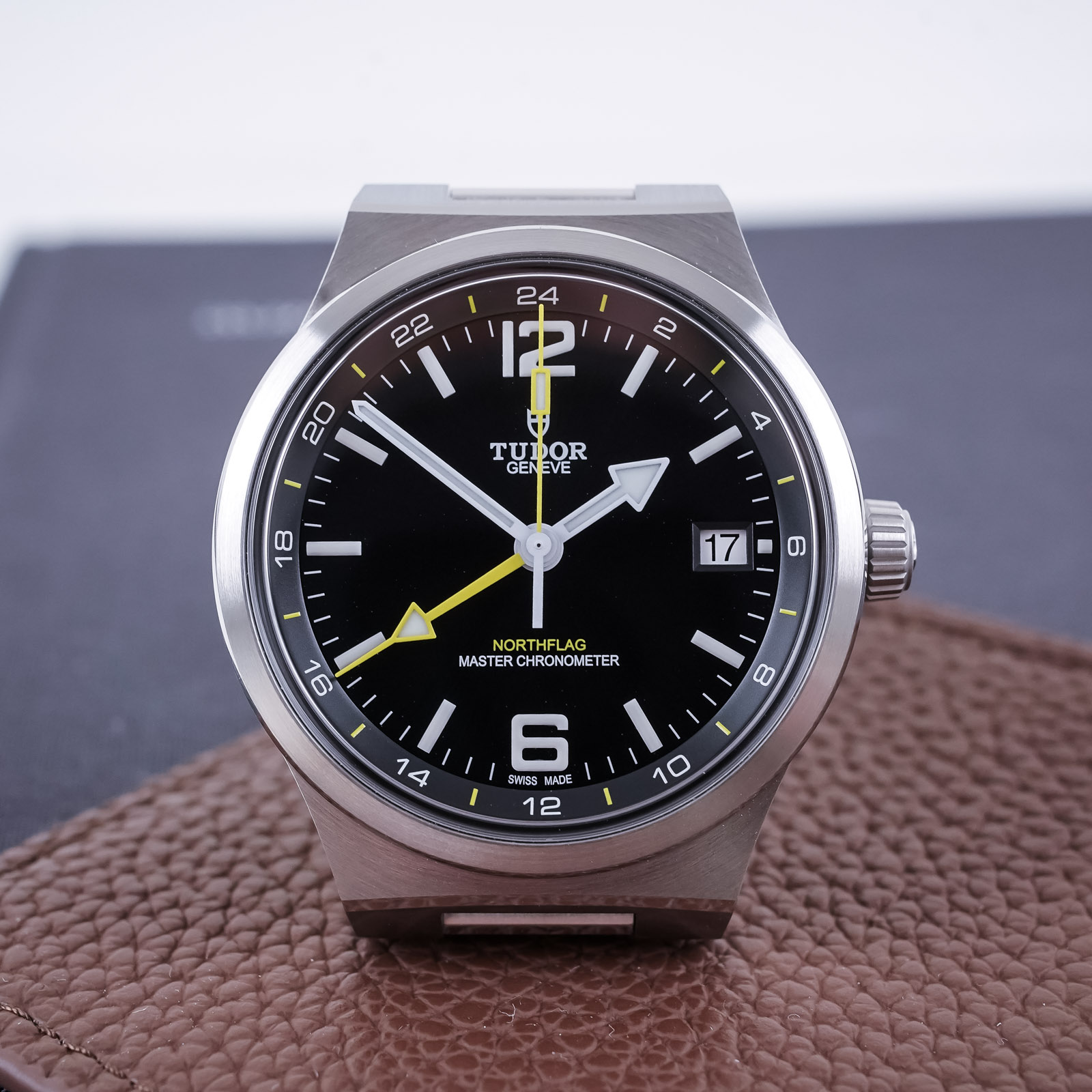
Ultimately, the 2026 Tudor Northflag GMT is more than just a resurrected reference. It is a masterclass in how a brand can honor its past while ruthlessly refining its product based on a decade of manufacturing experience and consumer feedback. For those who missed out on the 2015 original—or those who found its proportions too demanding—the new Northflag represents the definitive realization of Tudor’s 1970s-inspired exploration dream.