
While three-quarters of large enterprises now engage in startup investments to bolster their strategic roadmaps, a significant gap often exists between financial backing and actual operational implementation. Amazon is attempting to bridge that divide with a pivot in its sustainability strategy: the Amazon Sustainability Deep Tech Accelerator. Unlike traditional corporate venture capital (CVC) arms that prioritize equity stakes and financial returns, this initiative is laser-focused on the tangible integration of decarbonization technologies directly into the company’s supply chain and product manufacturing processes.
Main Facts: A Shift Toward Operational Integration
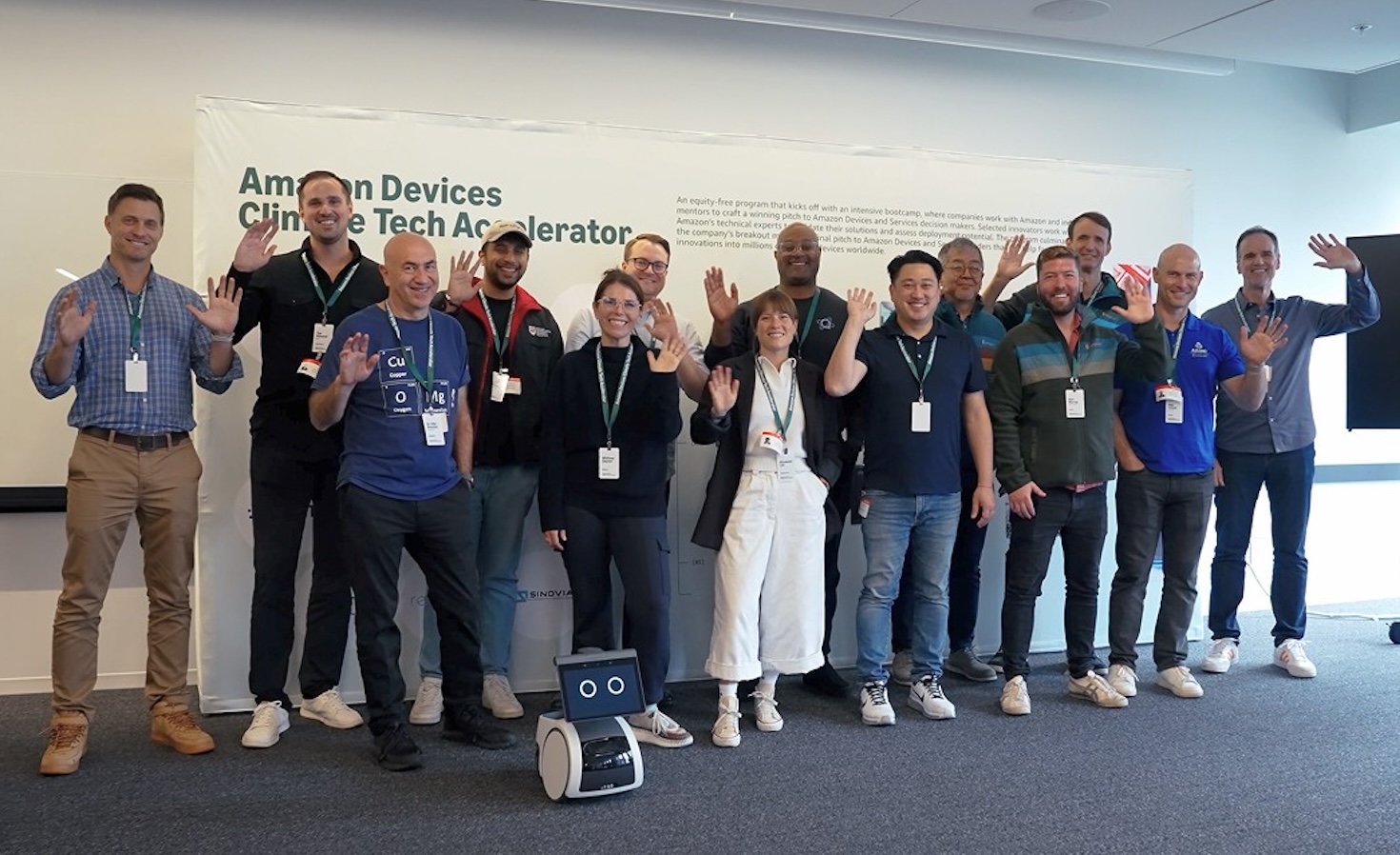
Launched in 2025, the Amazon Sustainability Deep Tech Accelerator represents a departure from the "invest-and-wait" model. The initiative, now entering a significant expansion phase as of November 3, moves beyond the purview of a single business unit to become a cross-divisional engine for emissions reduction.
The program currently functions as a bridge between high-potential startups and three critical pillars of the Amazon empire:
- Amazon Devices: The division responsible for the hardware ecosystem, including Alexa and Kindle.
- Amazon Private Brands: A massive entity encompassing over 100 product lines across electronics, apparel, and home goods.
- Amazon Web Services (AWS): The company’s cloud computing powerhouse, which faces significant challenges in cooling and hardware sustainability.
Crucially, the accelerator does not take equity in the startups it mentors. Instead, it provides a "sandbox" for entrepreneurs to prototype, stress-test, and commercialize technologies that can be deployed at the scale of Amazon’s global operations. By focusing on direct commercial application, the program creates a win-win: startups gain an anchor customer and technical validation, while Amazon gains access to the next generation of materials and processes needed to meet its ambitious climate goals.
The Chronology of a Corporate Evolution
The evolution of Amazon’s approach to climate-tech innovation has been steady, moving from broad financial commitments to targeted technical collaboration.
- 2019-2020: Amazon establishes The Climate Pledge, committing to reach net-zero carbon across its business by 2040. To support this, the company launches the $2 billion Climate Pledge Fund. This fund remains a cornerstone of Amazon’s strategy, operating as a traditional investment arm that takes equity in early-stage entrepreneurs.
- 2025 (Q1): The Amazon Sustainability Deep Tech Accelerator is born. Initially funded and managed exclusively by the Devices business unit, the goal is to solve specific hardware-level carbon challenges.
- November 3, 2025: A pivotal expansion. The program announces it will incorporate the expertise and funding of Amazon Private Brands and AWS. This expansion signals a shift toward a broader organizational commitment to decarbonizing the entire lifecycle of consumer goods and digital infrastructure.
- January 2026: The next cohort of startups is slated to begin, marking the first time the three divisions will collaborate on a unified acceleration cycle.
Supporting Data and the "Commercial Outcome"
The logic behind the accelerator is driven by a desire for rigor. As Maiken Moeller-Hansen, director of energy and sustainability for Amazon Devices & Services, explains, the shift is about moving from exploratory interest to "commercial outcomes."
"We just got to a point where we felt like we could be more rigorous and really put more structure around evaluating these opportunities with the goal of really accelerating that process to the benefit of both," Moeller-Hansen noted.
The efficacy of this model is supported by the success of its precursors. Nearly 30 startups have already cycled through the initial phases of the program. Notable participants include:
- Elephantech: A pioneer in more sustainable printed circuit board (PCB) production, which uses less energy and fewer raw materials than traditional chemical-heavy processes.
- Amprius Technologies: A developer of high-density battery cells, critical for reducing the carbon footprint of portable consumer electronics.
The program’s 16-week intensive cycle provides startups with access to internal subject matter experts—materials scientists, quality engineers, and product managers—who help these companies move from the lab to the factory floor. By the end of the six-month engagement, startups are equipped to pitch to senior Amazon leadership, not just for funding, but for commercial contracts that could provide the scale necessary to survive in the competitive deep-tech landscape.
Official Responses and Strategic Parallels
The model of the Amazon Sustainability Deep Tech Accelerator bears a striking resemblance to the 100+ Accelerator, a pioneer in the industry-specific acceleration space. Started in 2018 by Anheuser-Busch InBev, the 100+ Accelerator has since expanded to include corporate giants like Coca-Cola, Colgate-Palmolive, Danone, Mondelēz International, and Unilever.
The common denominator between the 100+ Accelerator and Amazon’s program is the focus on "direct emissions." These companies are not looking for general environmental software; they are looking for ways to reduce the carbon intensity of their specific products, whether it is a beer bottle, a detergent, or a smart speaker.
"The outcome we want is a commercial one," Moeller-Hansen emphasizes. This pragmatism is the defining characteristic of the new wave of corporate sustainability. It acknowledges that while venture capital is essential for innovation, it is the integration of that innovation into global supply chains that actually moves the needle on greenhouse gas emissions.
Implications: The Future of Industrial Decarbonization
The implications of this strategy for the broader tech and manufacturing sectors are profound.
1. The Death of "Greenwashing" Through Investment
By moving away from passive equity stakes and toward direct integration, companies like Amazon are effectively "de-risking" the adoption of new, cleaner technologies. For startups, the "Valley of Death"—the phase where a company has a prototype but no clear path to mass production—is often the end of the road. By acting as a launchpad and potential first customer, Amazon provides a pathway that pure capital cannot offer.
2. Democratizing Access to Expertise
Startups often lack the manufacturing and quality assurance data necessary to optimize their products for global scale. By opening its doors to internal subject matter experts—product managers who understand the realities of shipping millions of devices, and quality engineers who know the stringent requirements of consumer hardware—Amazon is essentially sharing its institutional "secret sauce" to accelerate the decarbonization of its own ecosystem.
3. The Shift to "Materials-First" Sustainability
Many of the startups participating in the accelerator are focused on material science, such as more efficient batteries or sustainable PCB manufacturing. This highlights a shift in focus from the traditional tech obsession with software optimization to a hardware-heavy approach. Decarbonizing the physical world—the devices we touch and the infrastructure that powers them—is arguably the most difficult aspect of meeting climate goals, yet it is the area where Amazon is placing its biggest bets.
4. A New Standard for Corporate Accountability
As stakeholders and regulators continue to demand greater transparency regarding Scope 3 emissions (those produced in the supply chain), the accelerator provides a measurable way for Amazon to prove it is actively seeking solutions. If the program succeeds, it could set a new standard for how Fortune 500 companies approach their climate pledges: not as a separate philanthropic fund, but as a core business function.
Looking Ahead: The 2026 Cohort and Beyond
As Amazon prepares to accept applications for the next cohort starting in January, the industry will be watching closely to see which technologies are prioritized. With AWS now in the mix, the focus may broaden to include innovations in cooling technology, data center power efficiency, and circular hardware management.
While Amazon has yet to disclose which specific participants have successfully negotiated commercial contracts, the underlying message is clear: the era of speculative sustainability is giving way to an era of operational integration. For the startups that can prove their technology is scalable, the partnership offers a chance to participate in one of the most complex industrial decarbonization efforts in human history.
In conclusion, Amazon’s move reflects a maturation of the corporate sustainability movement. By aligning the incentives of line-of-business teams—who care about performance, cost, and reliability—with the goals of sustainability teams, the company is ensuring that its path to net-zero is built on the foundation of profitable, scalable technology rather than just abstract investment portfolios. If the trend continues, the future of the climate transition will likely be driven by these deep-tech partnerships, where the laboratory meets the assembly line to rewrite the rules of industrial manufacturing.