Main Facts
In the fast-paced, often cyclical world of independent watchmaking, survival usually depends on finding a profitable niche and sticking to it. For many contemporary micro-brands, that formula translates directly to retro-styled dive watches, vintage field pieces, or mid-century racing chronographs. It is a formula that minimizes risk while maximizing immediate consumer appeal.
However, New York City-based micro-brand Wren—founded in 2024 by Craig Karger, the industry mind behind Wrist Enthusiast—has decided to throw convention out the window. Just two years after its inception and following a successful rollout of traditional, vintage-inspired dive watches like the Diver One and Diver 38, Wren has executed a sharp, high-stakes pivot.
Enter the Wren Vessel collection: an unapologetically futuristic, integrated-bracelet steel sports watch that bears virtually no design DNA from its predecessors, save for the brand logo on the dial.
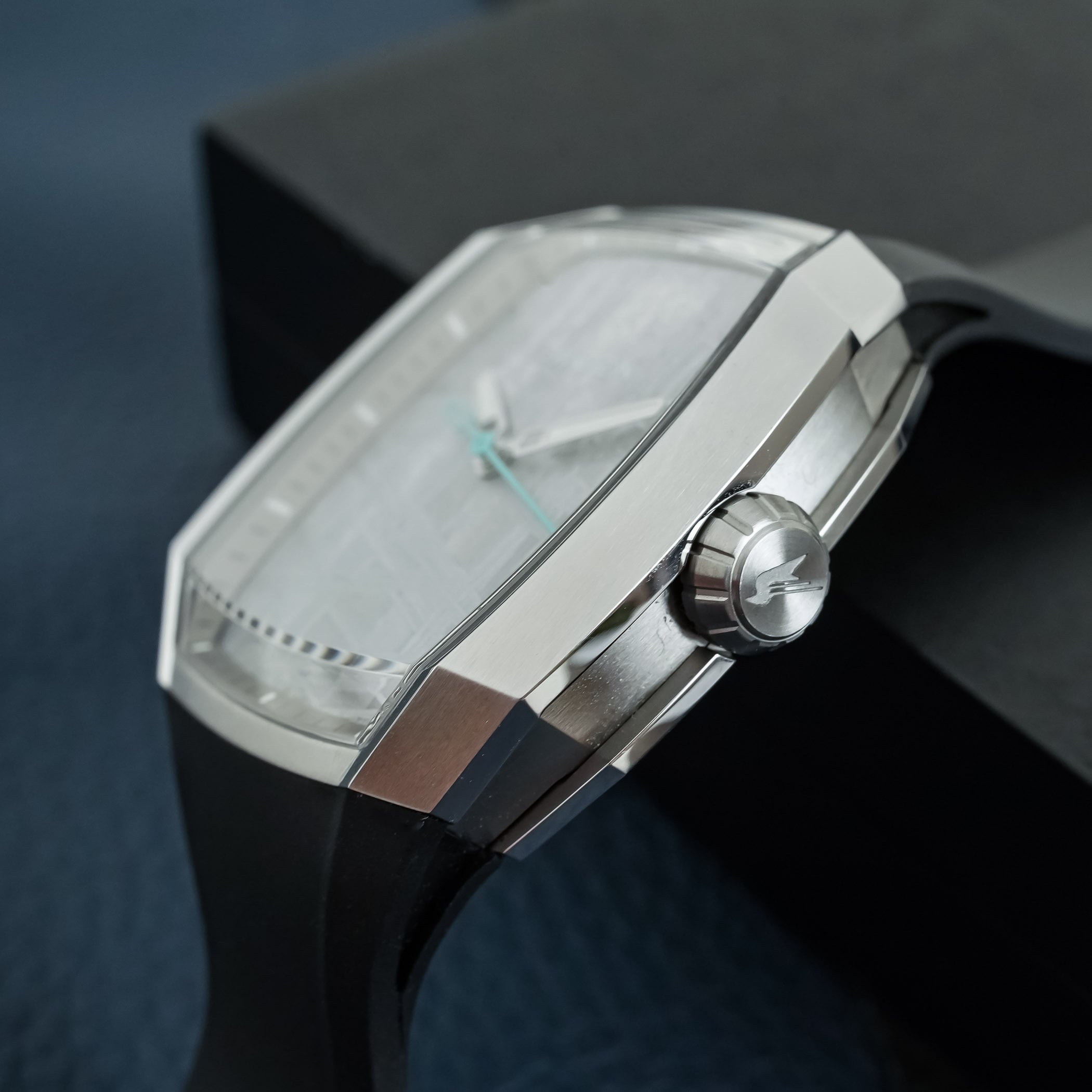
Conceived by designer Max Resnick under Karger’s direct supervision, the Vessel is an audacious attempt to rewrite the rules of modern independent watch design. Rather than looking backward to the golden age of 1970s sports watches, the design brief aimed significantly further down the timeline. The objective was clear: create an integrated sports watch that looks like it was plucked straight from the year 2075, anchoring its entire visual identity around a remarkably complex, faceted sapphire crystal.
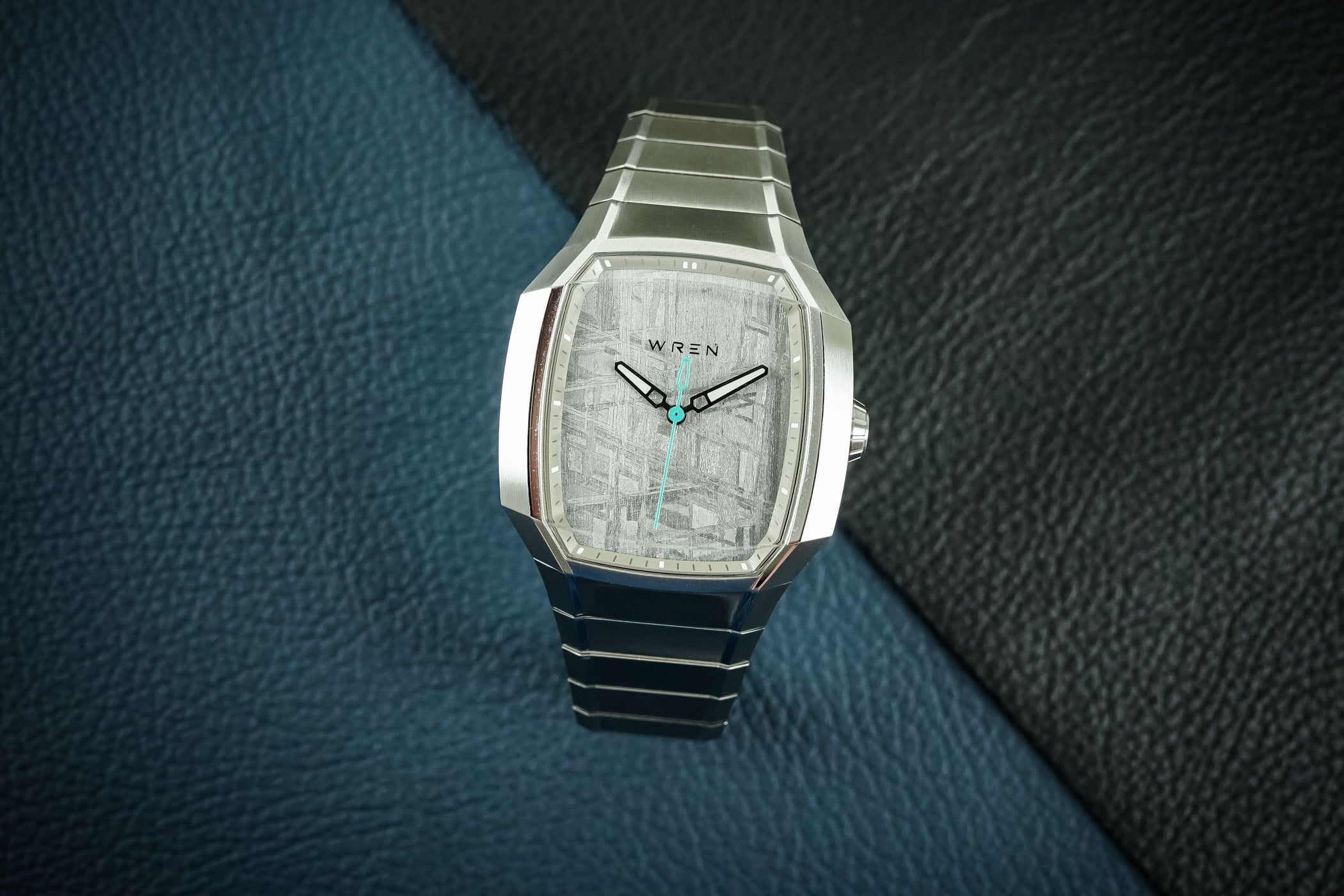
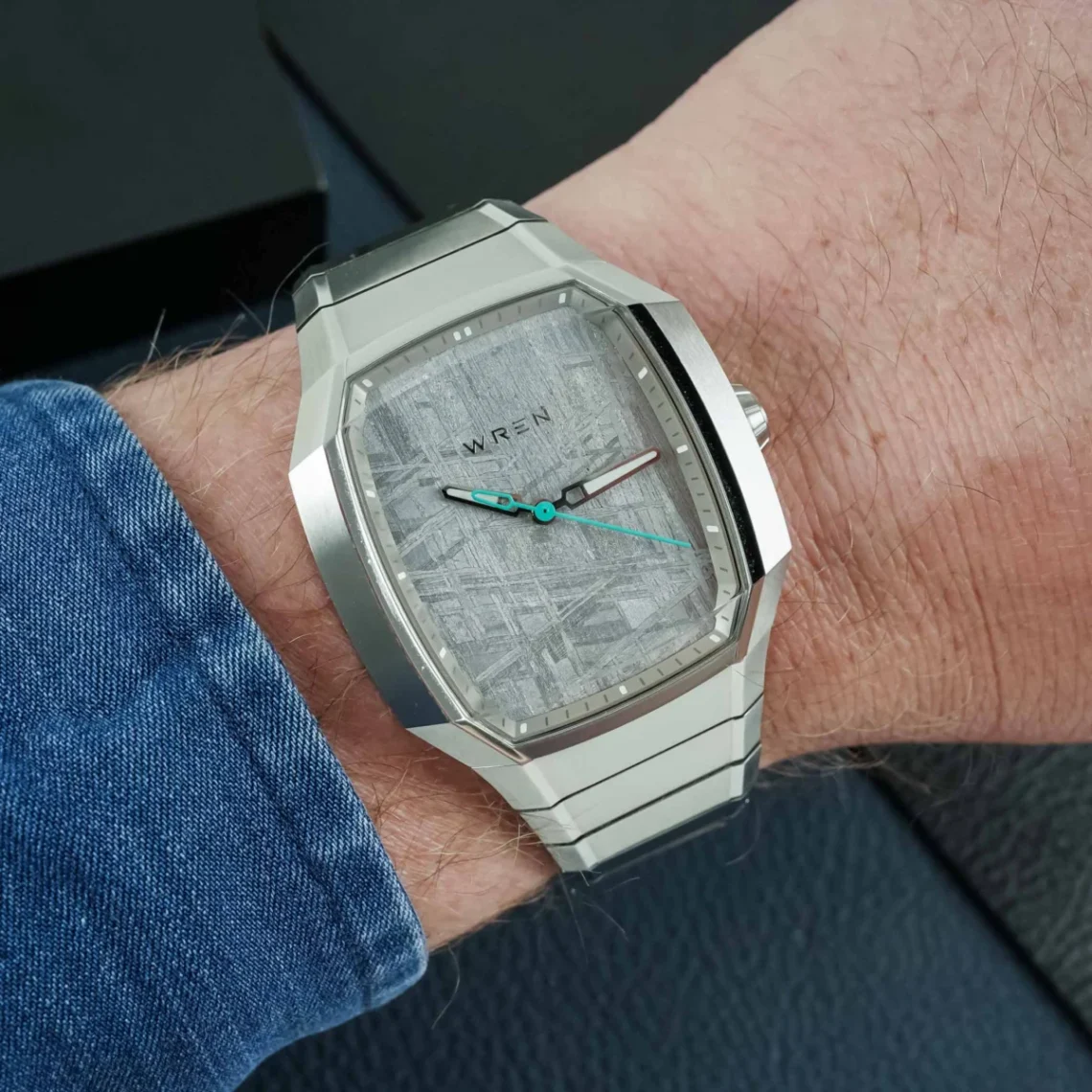
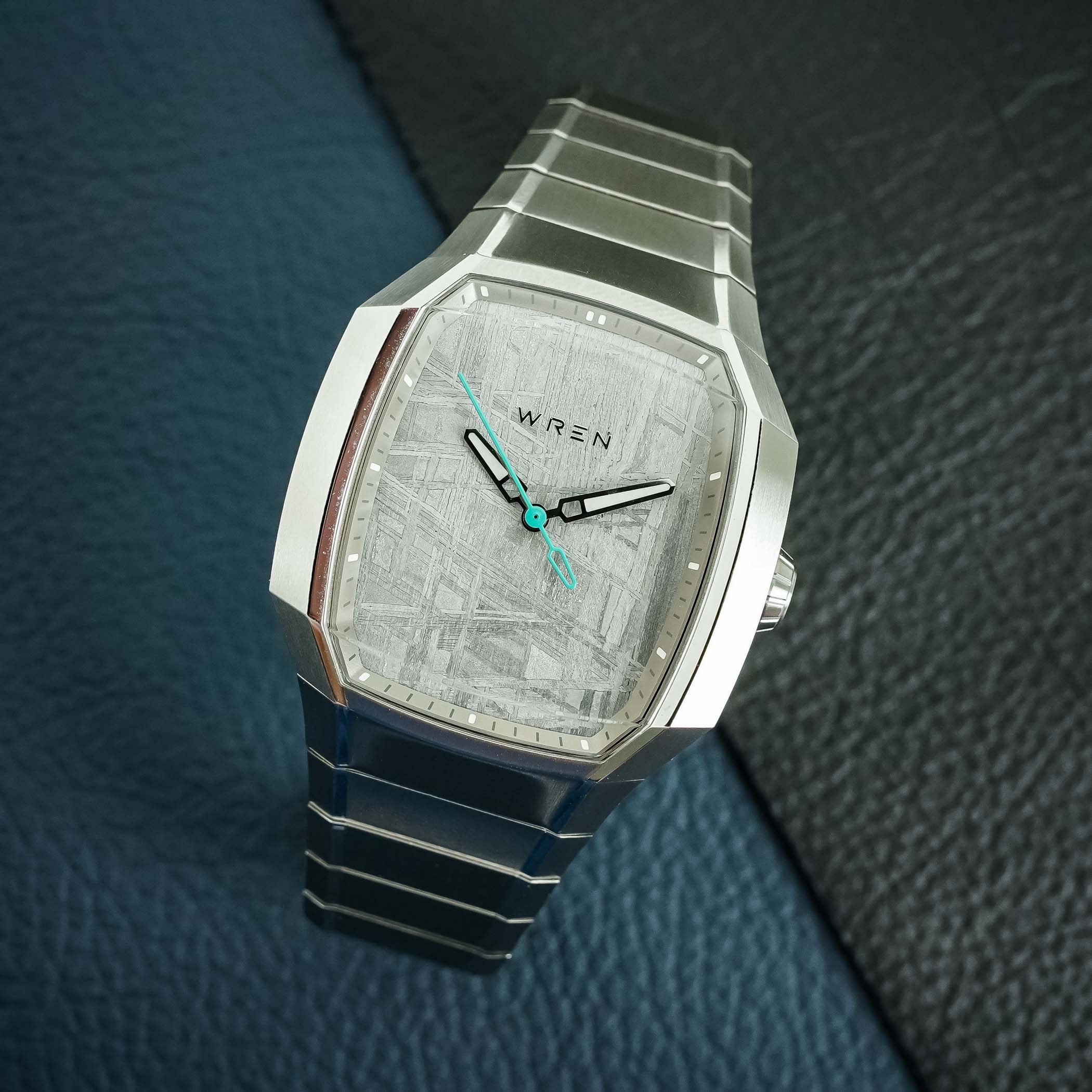
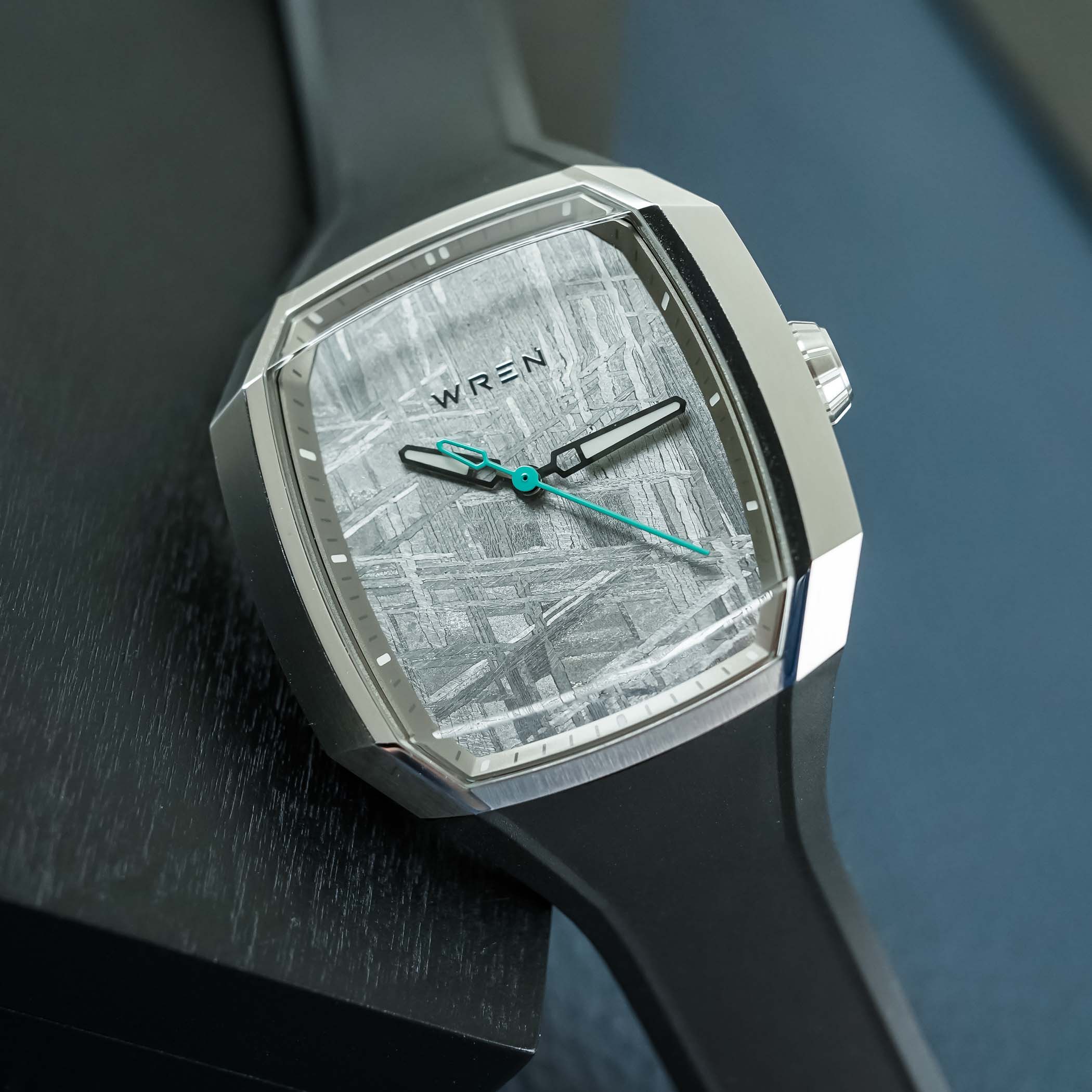
Available initially in limited launch editions featuring either a sunray-brushed silver dial or a striking silver-toned meteorite dial, the Vessel marries cutting-edge geometry with high-end mechanical execution. Driven by the ultra-thin Swiss Sellita SW300 automatic movement and housed in a 904L stainless steel case, the watch represents a massive evolutionary leap for a young American brand.
Pre-orders for the launch editions—each strictly limited to 150 pieces worldwide—are open now, with deliveries slated for the first quarter of 2027. Pricing is positioned well above typical micro-brand entry points, with the silver dial variant retailing at $2,900 USD and the meteorite iteration commanding $3,400 USD.
Chronology of Development: From Vintage Divers to 2075 Futurism
To understand just how radical the Vessel collection is for Wren, it is essential to trace the brand’s rapid, calculated trajectory since its founding.
2024: The Birth of Wren
Craig Karger launched Wren in 2024, leveraging his deep industry insights gained through running the prominent watch publication Wrist Enthusiast. Knowing the immense popularity of the retro-styled dive watch category, Karger chose a safe, highly commercial entry point. The brand debuted with the Diver One and Diver 38. These timepieces received positive reviews from enthusiasts for their clean proportions, dependable construction, and classic skin-diver aesthetics. They successfully established a loyal community of early adopters and gave the fledgling company financial stability and immediate market recognition.
2025: The Turning Point and the Brief
Buoyed by early success, many industry watchers anticipated that Wren’s logical next step would be a conservative evolution: perhaps a rugged field watch, a vintage-inspired dress model, or a 1960s-style bi-compax racing chronograph.
Instead, behind closed doors, Karger and designer Max Resnick were plotting a stark departure. Rejecting the well-trodden path of retro pastiche, Karger established a revolutionary design brief. The objective was explicitly stated: “Design an integrated-bracelet sports watch with a futuristic character from 2075, not 1975,” with the caveat that “the faceted glass serving as the definitive design element.”
2026: The Conception and Refinement of the Vessel
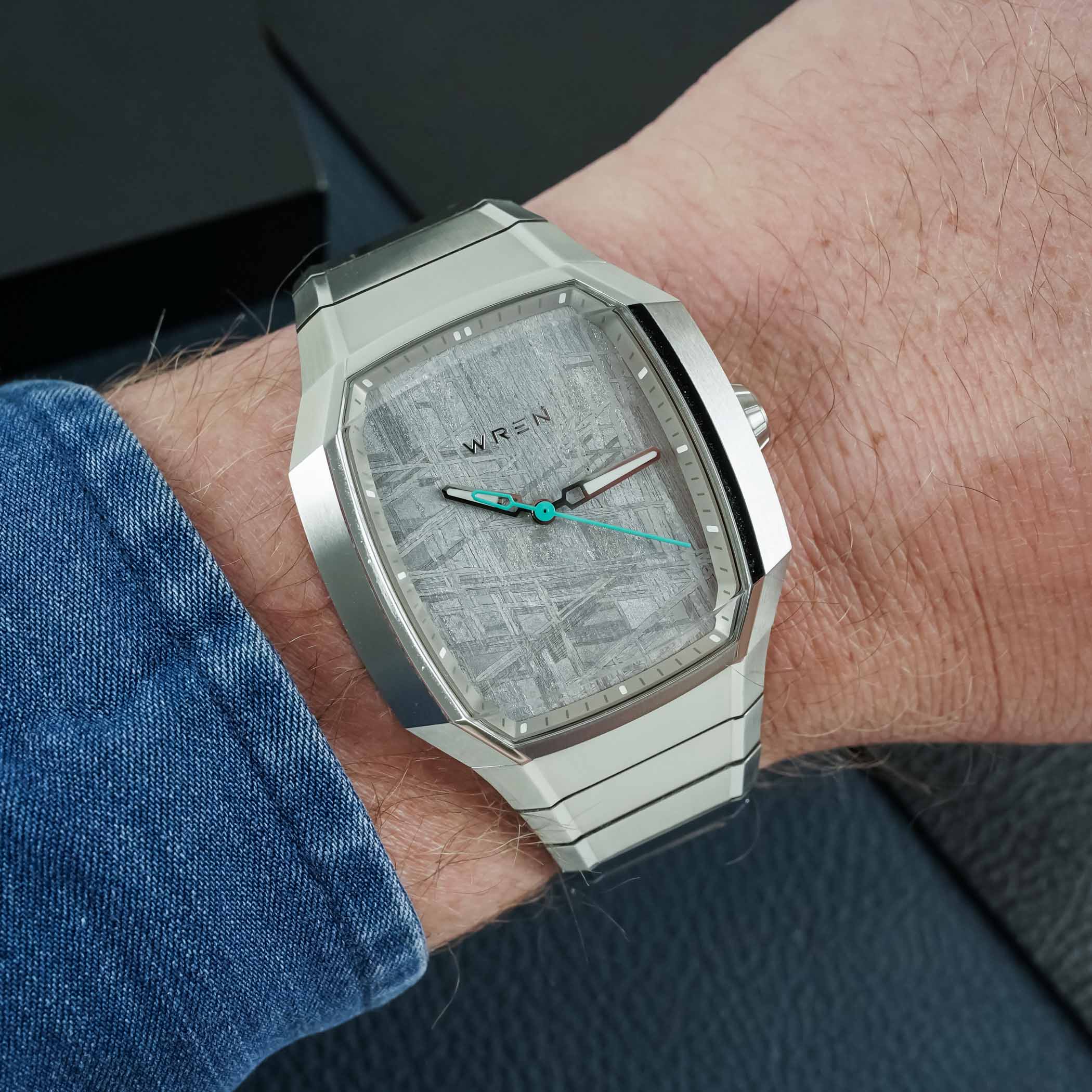
The development phase required overcoming significant engineering hurdles, particularly regarding the sapphire crystal. Traditional faceted crystals feature geometric cuts on top while maintaining a flat or conventionally domed underside to prevent severe optical distortion of the dial. Wren, however, demanded absolute symmetry: top and bottom crystal facets that mirror one another precisely.
This required a painstaking, unprecedented manufacturing process where every internal facet is aligned flawlessly with its corresponding external counterpart. The case and bracelet had to be meticulously engineered around this central crystalline feature, utilizing corrosion-resistant 904L stainless steel to achieve an unbroken, monolithic visual effect.
Late 2026: Official Unveiling and Pre-Order Launch
In October 2026, Wren officially pulled the curtain back on the Vessel collection. The watch industry took notice immediately, recognizing the release as a calculated, high-risk gamble. By stepping into the hyper-competitive integrated steel sports watch segment—a market crowded with offerings from high-end Swiss independents to entry-level Japanese powerhouses—Wren signaled that it refused to be pigeonholed as a one-trick retro pony.
Q1 2027 (Projected): Deliveries Begin
With pre-orders currently live, the first wave of 150 silver models and 150 meteorite models is scheduled to land on the wrists of collectors in the first quarter of 2027, marking the true test of whether the market is ready to embrace Wren’s futuristic vision.
Supporting Data & Technical Specifications
The Wren Vessel is not merely a cosmetic exercise; its spec sheet reveals a level of mechanical and material sophistication that justifies its elevated price point.
| Specification | Details |
|---|---|
| Brand & Model | Wren Vessel (Silver Launch Edition & Meteorite Launch Edition) |
| Founder / Designer | Craig Karger (Founder) / Max Resnick (Designer) |
| Case Material | 904L Stainless Steel (high corrosion resistance and brilliant polish) |
| Case Dimensions | 39mm x 39mm square footprint; 10.6mm thickness |
| Crystal | Symmetrical top-and-bottom faceted sapphire crystal (custom engineered) |
| Dial Options | Monochromatic sunray-brushed silver OR silver-toned meteorite; angled inner flange with geometric profile |
| Hands & Markers | Polished, luminous hour and minute hands; no date; no applied hour markers; aqua-toned central seconds hand |
| Movement | Swiss-made Sellita SW300 automatic movement (ultra-thin architecture) |
| Rotor | Custom 360-degree full rotor matching the aqua-tone of the seconds hand |
| Bracelet / Strap | Integrated 904L steel bracelet with built-in comfort release (adds ~2mm at the clasp) and secure quick-release system; optional aqua/black rubber strap with quick-release ($195 USD) |
| Availability | Pre-order now; delivery scheduled for Q1 2027 |
| Production Limits | Strictly limited to 150 pieces per dial variant (non-reproducible launch editions) |
| Retail Price | $2,900 USD (Silver Dial) / $3,400 USD (Meteorite Dial) |
Deep-Dive Ergonomics and Component Analysis
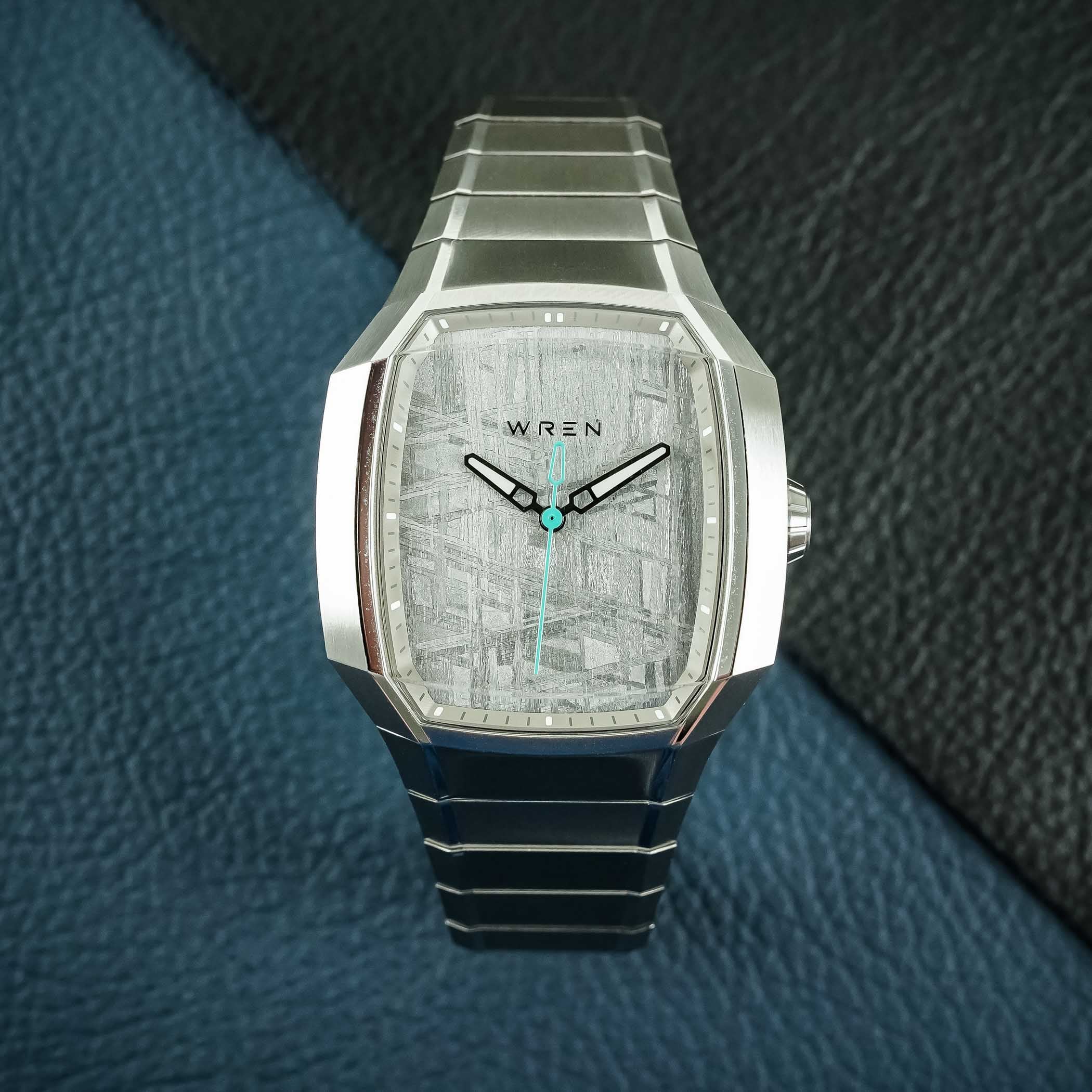
- The Case & Crystal: Measuring 39mm by 39mm with a slender profile of just 10.6mm, the Vessel wears remarkably compact on the wrist. Despite the substantial heft of solid 904L stainless steel, the weight distribution is exceptional, offering a comfortable wrapping effect. One minor ergonomic quirk noted by early evaluators is the large push-pull crown, which is neatly recessed into the caseband for aesthetic continuity but proves slightly difficult to manipulate for time-setting while the watch is actively worn.
- The Movement & Rotor: Beneath the solid exterior beats the Swiss Sellita SW300—a revered, ultra-thin mechanical workhorse often cited as the premier alternative to the classic ETA 2892. Rather than relying on a standard half-rotor that leaves the mechanics exposed, Wren implemented a custom 360-degree full rotor coated in a vibrant aqua tone, matching the central seconds hand and injecting a playful pop of color into an otherwise stark, monochromatic palette.
- The Integrated Bracelet: Often the Achilles’ heel of micro-brand integrated sports watches, the Vessel’s bracelet stands out as a triumph of engineering. Featuring a proprietary quick-release system that is both secure and remarkably easy to operate, it also incorporates a built-in "comfort release" mechanism. This clever clasp extension allows the wearer to instantly release a couple of millimeters of slack on either side—an invaluable feature for warm summer days.
Official Responses and Industry Reception
Reactions from horological journalists, independent collectors, and industry insiders have been intensely scrutinized since the Vessel’s debut. Because the watch represents such a sharp pivot away from the brand’s historical output, reactions are inherently polarized, though critical acclaim leans heavily positive.
The Founder’s Perspective
Craig Karger has been vocal about the strategic necessity of the Vessel. In early statements accompanying the launch, Karger emphasized that Wren cannot—and should not—be defined strictly as a manufacturer of retro dive watches.
"With the Vessel, we wanted to prove that Wren possesses the design maturity and technical ambition to compete at a higher level," Karger noted. "We didn’t want to build another watch that looked like it belonged in a museum case from fifty years ago. We wanted to build something provocative, futuristic, and entirely original."
Critic and Collector Reactions
Independent watch reviewers examining prototype models have expressed admiration for the brand’s fearlessness. Writing for major watch commentary platforms, critics noted that “being novel and singular isn’t a walk in the park” in a crowded market where legacy houses and entry-level brands alike have flooded the integrated sports watch category.
Industry analysts have particularly praised Wren for avoiding off-the-shelf hardware solutions. By investing in custom-milled 904L steel cases, symmetrical dual-faceted sapphire crystals, and proprietary quick-release bracelet mechanisms with comfort extensions, Wren has elevated itself far above the typical "parts-bin" micro-brand ecosystem.
However, some conservative collectors have questioned whether the radical aesthetic shift might alienate the core community that supported the brand’s initial dive watch releases. The polarizing nature of the 2075-inspired geometry means the Vessel demands a confident, avant-garde collector base—a gamble that Karger appears more than willing to take.
Implications for Wren and the Independent Watch Market
The launch of the Wren Vessel carries significant implications, both for the trajectory of the brand itself and for the broader independent watchmaking landscape.
1. Elevating Brand Perception
By breaking away from the safety of vintage dive watches, Wren has successfully repositioned itself from a niche community favorite into a serious, forward-thinking independent watchmaker. The Vessel proves that the brand possesses the design chops to conceptualize complex architectures and see them through to high-end manufacturing. This elevates Wren’s brand equity, opening doors to a more discerning tier of collectors who prioritize original design over nostalgic reissues.
2. Redefining Micro-Brand Pricing Thresholds
At $2,900 to $3,400 USD, the Vessel tests the psychological price ceiling for American micro-brands. While traditional enthusiasts are accustomed to spending under $1,000 for independent offerings, Wren is challenging the market to evaluate watches based on proprietary engineering, material grade (904L steel), and avant-garde sapphire construction rather than historical pedigree alone. If the launch editions sell out and successfully deliver in Q1 2027, it could pave the way for other indie brands to invest heavily in original design and premium pricing.
3. A Catalyst for Futuristic Design
For years, the watch industry has suffered from acute "retromania," endlessly recycling aesthetic codes from the 1950s, 60s, and 70s. By explicitly looking ahead to 2075 and centering an entire design around a symmetrically faceted crystal, Wren and designer Max Resnick have thrown down a creative gauntlet. The Vessel serves as a timely reminder that independent watchmaking is uniquely positioned to take risks that conservative legacy conglomerates cannot afford to make.
Whether the Vessel sparks a wider industry trend toward futuristic, geometry-driven sports watches remains to be seen. What is certain, however, is that Wren has firmly placed itself on the map as an indie brand unafraid to boldly go where no one has gone before.