Main Facts: Stripping Away the Excess for the Modern EV Buyer
In an automotive landscape increasingly dominated by six-figure, rolling-computer electric vehicles, heavyweight truck platforms, and screens that span the entirety of the dashboard, a quiet rebellion is taking shape. Enter the Slate electric pickup—a pint-sized, fiercely utilitarian, and radically back-to-basics vehicle designed to challenge everything the modern car market considers standard.
With an estimated starting price hovering around $25,000, the Slate has captured the attention of automotive enthusiasts and everyday consumers alike. By offering a stripped-down interior, a simple single-motor electric powertrain, and a refreshing lack of digital gimmicks, the company is betting heavily that buyers are fatigued by rising vehicle costs and over-engineered complexity.
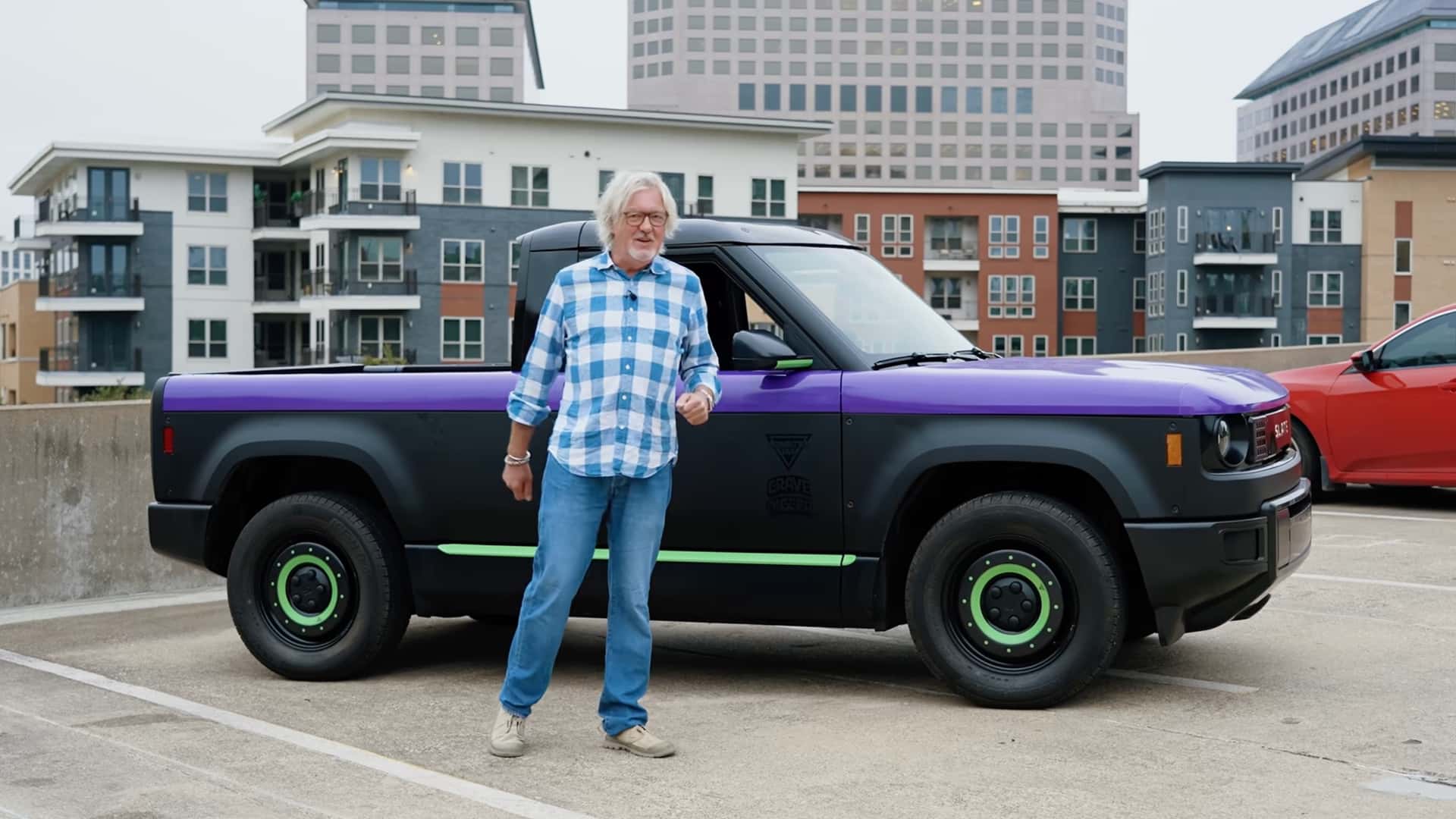
The truck’s minimalist philosophy extends to every corner of its design. It features a compact two-seat cabin, a small yet functional cargo bed, manual roll-down windows, physical toggle switches and knobs, and a complete absence of a built-in infotainment screen. Instead of forcing drivers to navigate proprietary software, Slate relies on a simple, integrated dashboard phone mount, leaving navigation, streaming, and communication entirely to the owner’s personal mobile device.
Performance metrics are equally modest yet practical for daily urban and suburban duties. The standard configuration relies on a single rear-mounted electric motor powered by a battery pack estimated to deliver around 150 miles of driving range on a single charge. For buyers needing extra legs for longer commutes or light-duty work, an available larger battery pack promises to push that range up to an estimated 240 miles.
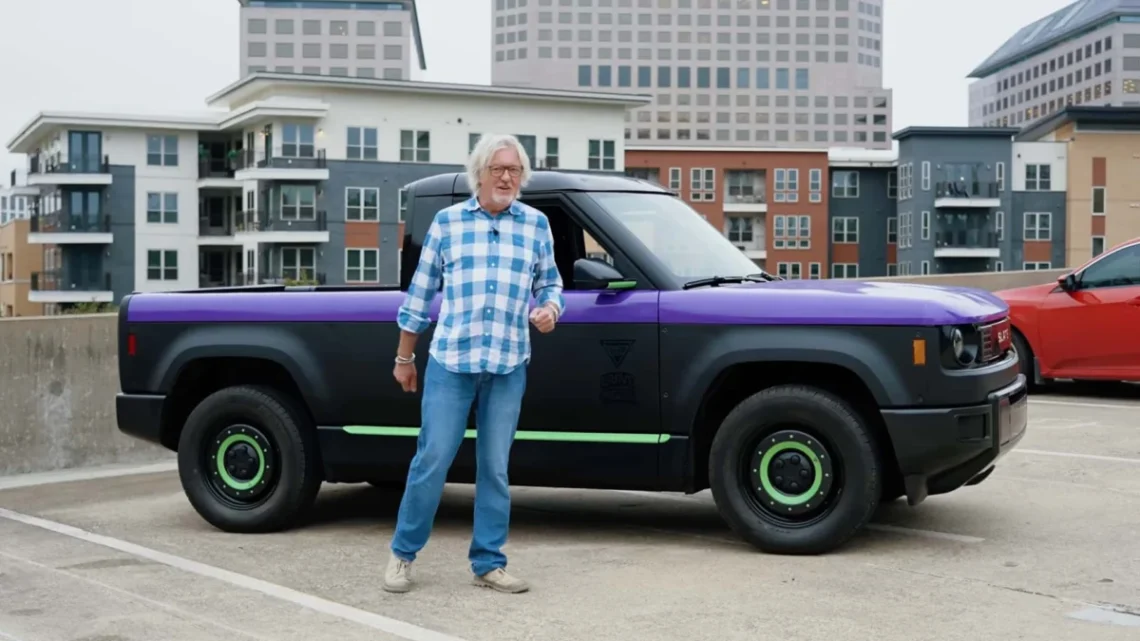
Perhaps the highest-profile validation the Slate has received thus far comes from former Top Gear and The Grand Tour presenter James May. Known globally for having driven virtually every rare, exotic, and bizarre vehicle on the planet, May recently climbed behind the wheel of the Slate pickup to evaluate its merits. His verdict? A surprisingly enthusiastic endorsement: "You know what, I think I would—I’d have one."
Chronology: From Concept Whispers to James May’s Seal of Approval
To understand how the Slate electric pickup arrived at its current wave of cultural and industry momentum, it is helpful to trace the vehicle’s developmental and public trajectory through recent months.
The Rise of the Anti-Truck
As average transaction prices for new pickup trucks in North America soared well past the $50,000 and even $60,000 marks, a glaring gap emerged in the market. Everyday consumers, small business owners, and city dwellers found themselves priced out of traditional utility vehicles. Automotive startups began exploring alternatives to the massive, multi-ton electric trucks championed by legacy manufacturers. Slate positioned itself at the vanguard of this movement, prioritizing affordability, compact dimensions, and mechanical simplicity over maximalist performance specs.
Early Reveal and Pricing Adjustments
As details regarding the Slate truck trickled out, public curiosity spiked. Early announcements generated immense buzz regarding the target $25,000 entry point, though subsequent updates and fluctuating economic realities highlighted the challenges of hitting that aggressive price floor. Nevertheless, the brand maintained its core identity: a lightweight, functional workhorse that avoids the heavy, expensive battery packs plaguing other segments of the EV market. The company also leaned into playful personalization, teasing color options inspired straight from a classic Crayola crayon box to inject personality into an otherwise utilitarian machine.
Regional Limitations and Market Realities
As production milestones approached, Slate faced tough decisions regarding global distribution. While US-based buyers tracked the truck’s development closely, announcements confirmed that the vehicle would not initially cross the northern border into Canada, focusing instead on domestic validation and localized regulatory approval. Concurrently, automotive media outlets began analyzing its position relative to traditional market giants—even as established players like Ford dominated headlines in awards circuits like North American Truck of Year shortlists.
The James May Enactment
The defining moment of the Slate’s recent public relations campaign arrived when automotive journalist James May took delivery of a prototype for testing. Known for his dry wit, skepticism toward industry trends, and deep appreciation for honest, unpretentious engineering, May put the tiny EV through its paces. His recorded drive showcased the vehicle’s maneuverability, quirky styling, and unpretentious cabin. When the cameras rolled and May delivered his unscripted conclusion—stating he would genuinely purchase and own one—the Slate instantly transitioned from a niche startup project to a global conversation piece.
Supporting Data: Specifications, Pricing, and Market Context
To evaluate whether the Slate can survive in a market hostile to unproven automotive startups, one must look closely at the numbers governing its engineering and commercial strategy.
| Feature / Specification | Standard Configuration | Optional / Upgraded Configuration |
|---|---|---|
| Estimated Starting Price | ~$25,000 USD | Varies with trim and battery selection |
| Powertrain Layout | Single rear-mounted electric motor | Single rear-mounted electric motor |
| Estimated Range | ~150 miles per charge | ~240 miles (larger battery pack) |
| Seating Capacity | 2 occupants | 2 occupants |
| Infotainment System | None (Dashboard phone mount) | None (Dashboard phone mount) |
| Windows & Controls | Manual windows, physical switches | Manual windows, physical switches |
Analyzing the Battery and Range Strategy
The decision to offer a baseline 150-mile range is a calculated gamble by Slate’s engineers. In an era where consumers are conditioned to demand 300+ miles of range—largely to alleviate range anxiety on infrequent road trips—a 150-mile battery pack might seem restrictive. However, this smaller capacity is the primary mechanism enabling the truck’s low price point and featherlight curb weight. Smaller batteries require fewer raw materials (such as lithium, cobalt, and nickel), which drastically reduces manufacturing costs and vehicle weight. For urban tradespeople, municipal fleets, delivery drivers, and suburban homeowners who possess secondary vehicles for long-distance travel, 150 miles is more than sufficient for daily operations.
The Economics of Minimalism
By eliminating computerized touchscreens, complex multi-zone climate control actuators, power-adjustable seating mechanisms, and excessive driver-assistance sensors, Slate minimizes both manufacturing complexity and future maintenance headaches. Modern vehicles are frequently hobbled by software glitches and expensive component failures out of warranty. A vehicle designed around physical toggles and user-supplied computing power (via a smartphone) inherently sidesteps many of these long-term reliability and obsolescence traps.
Official Responses and Industry Reception
The automotive industry’s reaction to the Slate electric pickup has been a fascinating mix of cautious skepticism and genuine intrigue. Established legacy automakers have spent billions of dollars developing massive, heavy-duty electric trucks like the Ford F-150 Lightning, Chevrolet Silverado EV, and Rivian RT1. These vehicles cater to American preferences for imposing road presence, massive towing capacities, and luxury-tier cabin appointments.
In stark contrast, industry analysts have pointed out that the Slate represents the exact opposite philosophy: a "kei truck" spiritual successor tailored for Western infrastructure. Reactions from trade publications and consumer forums highlight a deep-seated weariness among buyers regarding skyrocketing vehicle prices. For years, consumers have pleaded with manufacturers to build simple, affordable, small-scale work trucks. Slate is one of the few companies actually attempting to answer that call.
James May’s endorsement served as a critical turning point for public relations. Unlike paid brand ambassadors or digital influencers with limited mechanical background, May’s decades of experience evaluating everything from hypercars to lawnmowers lend immense credibility to his appraisal. When May noted that he would personally own a Slate, it signaled to traditional car enthusiasts that driving a minimalist, low-cost EV does not require sacrificing the fundamental joy of motoring.
Furthermore, community feedback gathered through ongoing automotive surveys—such as enthusiast engagement platforms run by major automotive outlets—indicates a surging appetite for alternative vehicle formats. Consumers are actively expressing a desire for options that break away from cookie-cutter crossover SUVs and bloated pickup trucks.
Implications: What the Slate Means for the Future of Mobility
The success or failure of the Slate electric pickup carries profound implications for the wider automotive ecosystem. If Slate proves that a profitable business model can be built around a $25,000, stripped-down utility vehicle, it could inspire other manufacturers to reevaluate their product planning pipelines.
1. Democratizing EV Ownership
Electric vehicle adoption has historically skewed toward affluent buyers who can afford vehicles priced well above the national average for new cars. By targeting the $25,000 price point, Slate addresses the severe equity gap in the current EV transition. If electric mobility is to become universal, vehicles must become accessible to working-class families, young drivers, and budget-conscious buyers who cannot justify spending $50,000+ on personal transport.
2. Redefining Utility and Luxury
For decades, the automotive industry operated under the assumption that consumers always want more features: larger screens, more leather, more horsepower, and more automated driving aids. The Slate challenges this paradigm by suggesting that "less" can be a luxury in its own right—specifically, the luxury of simplicity, lower maintenance costs, ease of repair, and freedom from digital distraction.
3. Regulatory and Logistical Hurdles Ahead
Despite the enthusiastic reviews and viral media moments, significant hurdles remain. Producing automobiles profitably at a low price point is notoriously difficult, as numerous EV startups have painfully discovered. Supply chain fluctuations, regulatory compliance crash testing, production scaling, and service network establishment will all test Slate’s resilience in the coming years.
Whether the Slate truck ultimately achieves mainstream commercial dominance or remains a beloved cult classic for a distinct subsect of buyers remains to be seen. However, one thing is certain: by proving that a major automotive critic like James May would willingly park one in his garage, Slate has already proven that the appetite for honest, back-to-basics motoring is far from dead.