By Tom Achoki, Nebiyu Dereje, and Jean Kaseya
Published: October 30, 2026
Section: Human Development / Global Health
Introduction: A Catastrophic Threat at the Heart of Africa
The exponential trajectory of the latest Ebola outbreak is a stark and urgent reminder that infectious diseases do not wait for ideal geopolitical alignments, favorable economic forecasts, or balanced budgets. Pathogens operate with a singular, relentless drive, exploiting every fracture in public health infrastructure, every delay in bureaucratic funding, and every vulnerability in human mobility. Global leaders must urgently fund and support the Africa-led regional response today, or risk paying an immeasurably higher price in human lives, societal trauma, and economic devastation tomorrow.
Nairobi—A catastrophic public health emergency is unfolding at the heart of the African continent. The Democratic Republic of the Congo (DRC) is currently battling the deadliest, fastest-moving Ebola virus outbreak in its turbulent epidemiological history. What began as a localized cluster of unexplained hemorrhagic fevers has metastasized into a crisis of continental and international security, challenging the resilience of health systems already strained by chronic underinvestment, conflict, and concurrent disease burdens.
As of October 27, 2026, the epidemiological data paints a grim picture: the outbreak has surged to 10,193 confirmed and probable cases, resulting in an alarming 4,960 deaths. The mortality rate, combined with the sheer velocity of transmission, has outpaced previous historical benchmarks, pushing local responders, international agencies, and frontline healthcare workers to their absolute limits.
The gravity of the situation prompted swift, albeit sobering, administrative actions earlier this year. In mid-May, the World Health Organization (WHO) and the Africa Centres for Disease Control and Prevention (Africa CDC) jointly declared the outbreak a Public Health Emergency of International Concern (PHEIC) and a matter of continental security. Yet, months into the declaration, the gap between international pledges and delivered resources remains wide, leaving communities on the frontline vulnerable to a virus that respects no borders.
Main Facts: Anatomy of an Unprecedented Crisis
To understand the severity of the current crisis, one must examine the unique convergence of factors driving this outbreak. Unlike previous epidemics in West Africa or earlier localized flare-ups in the eastern DRC, this wave combines hyper-transmissible viral strains, deeply complex geographic terrain, and an entrenched environment of socio-political insecurity.
1. Epidemiological Scale and Velocity
The velocity of transmission in this outbreak is unprecedented. Reaching over 10,000 cases in a matter of months signifies an R0 (basic reproduction number) and transmission chain efficiency that has overwhelmed traditional contact-tracing models. The virus has penetrated densely populated urban trading hubs as well as remote, forested communities, creating a dual-front battle for epidemiologists.
2. The Human Toll
With nearly 5,000 fatalities, the human cost extends far beyond the mortality statistics. Entire family structures have been decimated, leaving behind generations of orphans and communities grappling with profound psychological trauma. Healthcare workers—the irreplaceable vanguard of any epidemic response—have suffered disproportionately high infection and mortality rates due to early shortages of personal protective equipment (PPE) and overwhelming patient loads.
3. Operational Complexities
The DRC’s vast geography poses a formidable logistical barrier. Large swathes of the affected regions lack paved roads, reliable electricity, or stable telecommunications infrastructure. Transporting cold-chain-dependent vaccines, rapid diagnostic tests, and therapeutic treatments requires complex air-and-boat corridors, driving up the cost of response operations exponentially. Furthermore, localized armed conflict and civil unrest severely restrict access for medical teams, forcing humanitarian workers to negotiate safe passages in active conflict zones just to deliver life-saving care.
Chronology of the Outbreak: From Index Case to Continental Emergency
The timeline of the 2026 Ebola crisis illustrates how rapidly a localized health event can evolve into an international catastrophe when early warning signals encounter institutional friction.
- Early April 2026: Initial clusters of acute hemorrhagic fever symptoms are reported in a rural health zone within the eastern provinces of the DRC. Local clinicians note atypical clinical presentations and rapid clinical deterioration among patients, prompting specimen collection and transport to reference laboratories.
- Late April 2026: Genomic sequencing confirms the presence of the Ebola virus. Public health authorities initiate preliminary contact tracing and set up localized isolation wards, but face immediate supply shortages and community apprehension rooted in historical mistrust of state interventions.
- Mid-May 2026: Recognizing the explosive spread of the virus across provincial boundaries and its threat to neighboring nations, the World Health Organization and Africa CDC formally declare the outbreak a Public Health Emergency of International Concern (PHEIC) and a continental security crisis. International borders are placed on high alert.
- June – July 2026: The outbreak breaches several major transit hubs, causing a sharp spike in case numbers. International funding appeals are launched, but cash flow is sluggish. Field hospitals are established, and mass vaccination campaigns targeting frontline workers and high-risk contacts begin in earnest.
- August – September 2026: Cumulative cases cross the 5,000 threshold. The crisis coincides with the rainy season, washing out critical supply routes and complicating safe burial operations. Clinicians begin deploying newly optimized monoclonal antibody treatments, showing promising results among patients treated early in the disease course.
- October 2026: As of October 27, official figures reach 10,193 cases and 4,960 deaths. While containment efforts successfully suppress transmission in select urban centers, persistent hotspots in remote, conflict-affected areas continue to fuel the epidemic’s downward tail, prompting renewed calls from African health leaders for immediate, unhindered financial and logistical support.
Supporting Data & Epidemiological Metrics
Rigorous data analysis is essential for directing limited resources where they can achieve maximum impact. Public health agencies, including the U.S. Centers for Disease Control and Prevention (CDC) and the Africa CDC, have closely monitored the statistical trajectory of the outbreak.
Key Epidemiological Indicators (As of October 27, 2026)
- Total Reported Cases: 10,193
- Total Confirmed and Probable Deaths: 4,960
- Estimated Case Fatality Rate (CFR): Approximately 48.6% (varying by region and timeliness of clinical intervention)
- Healthcare Worker Infections: Over 450 documented cases, highlighting systemic occupational exposure risks.
- Geographic Spread: Active transmission documented across multiple health zones in the DRC, with spillover surveillance active in at least four neighboring Central and East African nations.
The Treatment and Prevention Gap
Public health data underscores a critical correlation: patients who receive therapeutic interventions within the first 48 hours of symptom onset exhibit survival rates exceeding 85%. However, due to delayed seeking of care—driven by fear, misinformation, and physical distance—the average time from symptom onset to hospital admission remains stubbornly high at 4.5 days. Bridging this gap through community engagement and decentralized treatment units remains the single most effective intervention for driving down mortality.
Official Responses and Strategic Interventions
The response to the 2026 Ebola crisis has redefined regional health governance, putting African institutions firmly in the driver’s seat while testing the architecture of multilateral global health cooperation.
The Africa-Led Regional Response
In a departure from past epidemics where external actors dictated the terms of engagement, the Africa CDC, working in tandem with the DRC Ministry of Health, has spearheaded a sovereign, regionally coordinated strategy. This approach emphasizes local ownership, deployment of African epidemiologists and emergency responders through the Africa Volunteers Health Corps, and integration of community-led trust-building mechanisms.
Dr. Jean Kaseya, alongside regional public health leaders, has continuously stressed that disease security in Africa is indivisible from global security. "We cannot rely on sporadic charity or reactive emergency funding," health leaders noted in joint briefings. "Building sustainable manufacturing capacity for vaccines, therapeutics, and diagnostics on the African continent is the ultimate insurance policy against future pandemics."
Multilateral and International Mobilization
The WHO, UNICEF, and international non-governmental organizations like Médecins Sans Frontières (MSF) have mobilized significant operational backing. Financial commitments from donor nations have begun to trickle in, though humanitarian coordinators warn that current funding covers only 60% of the projected response budget needed through the end of the year.
Key pillars of the ongoing operational response include:
- Ring Vaccination Campaigns: Utilizing proven recombinant vesicular stomatitis virus-Zaire Ebola vaccine (rVSV-ZEBOV) supplies to immunize contacts and contacts-of-contacts, creating a biological firewall around transmission chains.
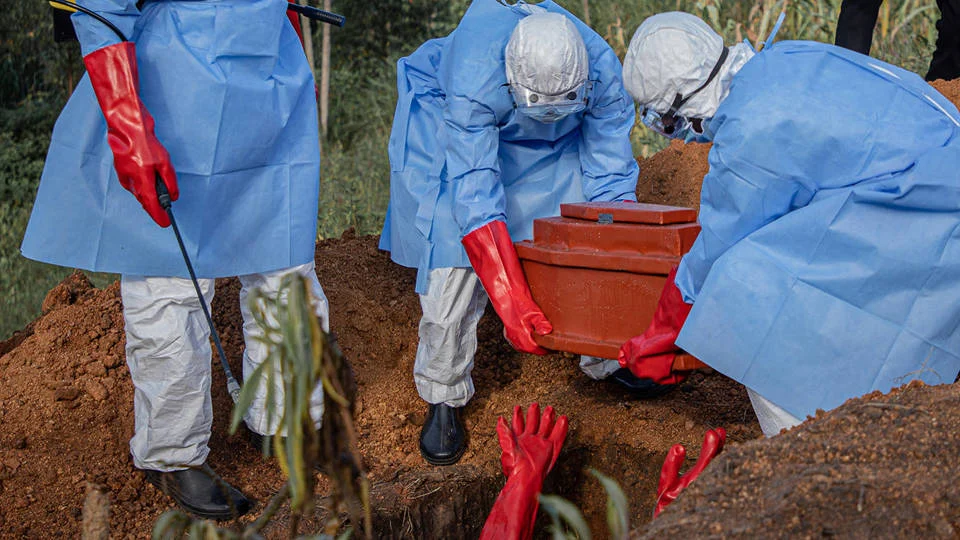
- Safe and Dignified Burials (SDB): Training and equipping local community burial teams to handle remains safely, respecting cultural traditions while eliminating a primary vector of transmission.
- Infection Prevention and Control (IPC): Equipping hundreds of peripheral health clinics with clean water, sanitation facilities, and PPE to transform potential amplifiers of the disease into safe outposts of care.
Wider Implications: Lessons for Global Health Security
The tragedy unfolding in the DRC offers profound, sobering lessons for the international community. As the world navigates an era defined by climate change, urbanization, and ecological disruption—drivers that inevitably increase zoonotic spillover events—our collective preparedness framework requires a radical overhaul.
1. From Reactive Aid to Proactive Capacity
For decades, global health financing has operated on a "pay-as-you-go" disaster model: wait for an outbreak to explode, panic, mobilize emergency funds, and withdraw once the immediate crisis subsides. This model is fundamentally broken. Investing in resilient, primary healthcare systems, local diagnostic laboratories, and regional manufacturing hubs in Africa is infinitely more cost-effective than financing emergency responses after thousands of lives have been lost.
2. Geopolitical Alignment and Health Diplomacy
Pathogens do not recognize geopolitical fault lines. In an increasingly fragmented global order, health security must remain a bipartisan and cross-border priority. Medical countermeasures—including vaccines, therapeutics, and personal protective equipment—must be treated as global public goods, accessible equitably to nations regardless of their wealth or diplomatic alignment.
3. Community Engagement as the Core Pillar of Defense
Technology, vaccines, and advanced therapeutics are useless if a community does not trust the people delivering them. The most successful interventions in this outbreak have been those led by trusted local leaders, traditional healers, and youth networks who demystify the disease, combat dangerous misinformation, and ensure that public health measures respect local dignity.
Conclusion: A Call to Action
The 2026 Ebola outbreak in the Democratic Republic of the Congo is a watershed moment for global health. The data is clear, the human cost is unbearable, and the roadmap for containment is well-established. What is lacking is not technical knowledge, but the political will and financial resolve of the international community.
Global leaders face a stark choice: fully fund and empower the Africa-led regional response today, or watch passively as preventable deaths mount and a localized epidemic threatens global stability. The time for deliberation has passed; the time for decisive, courageous, and sustained action is now.