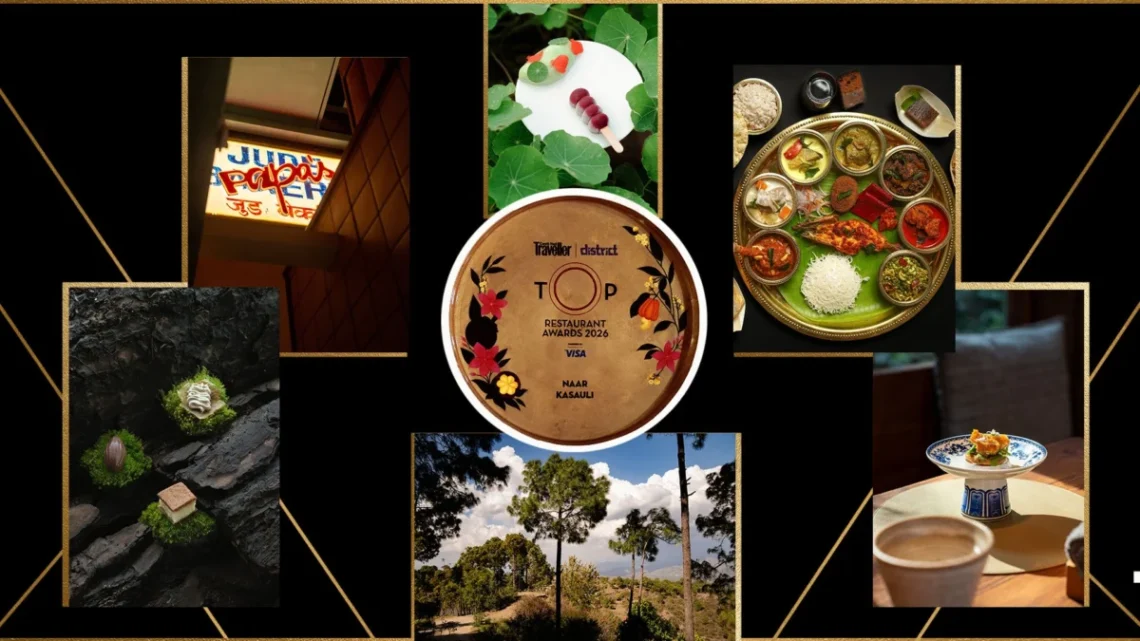
The seventh edition of the Condé Nast Traveler x District Top Restaurant Awards has officially concluded, marking a pivotal moment in the evolution of India’s culinary landscape. Powered by Visa, this year’s list of the top 50 restaurants in India offers more than just a directory of elite dining; it serves as a definitive barometer of how the nation’s chefs, restaurateurs, and mixologists are synthesizing tradition with radical innovation.

The announcement, hosted at a gala ceremony at The Grand Hyatt, Bambolim, in Goa, highlighted a significant shift in the geographic center of gravity for fine dining. For the first time in the awards’ history, Goa has achieved parity with Mumbai, each placing 13 establishments on the list. This development signals that India’s dining culture has matured well beyond the metropolitan hubs of the past, with secondary cities and holiday destinations now serving as hotbeds for high-concept, ingredient-led gastronomy.

The 2026 Rankings: A New Hierarchy
The top of the 2026 list is dominated by venues that prioritize narrative, terroir, and experimental technique.

1. NAAR, Kasauli: Claiming the top spot is NAAR, Prateek Sadhu’s daring venture on a cliffside in Himachal Pradesh. Seating just 16 guests, the restaurant is a testament to the "jump without a parachute" philosophy. By focusing on the six seasons of the Himalayas and cooking over a juniper-smoked hearth, Sadhu has created a sanctuary that forces diners to disconnect from the urban grind and reconnect with the land.

2. The Table, Mumbai: A long-standing titan of the Mumbai scene, The Table secured second place. Under the guidance of head chef Louis Gomes and the bold creative vision of Will Aghajanian, the restaurant continues to balance institutional classics like the SoBo Salad with avant-garde offerings such as lamb brain and morel vol-au-vent.

3. Papa’s, Mumbai: Rounding out the top three is the ultra-exclusive 12-seater, Papa’s. Known for its monthly reservation scramble and a menu that defies fine-dining etiquette—featuring dishes like "Bugs Bunny" with literal ants—Papa’s represents the playful, rule-breaking future of Indian dining.

A Rigorous Methodology: How the Best Were Chosen
The prestige of the Condé Nast Traveler x District list is rooted in its exhaustive selection process. The curation begins with a shortlist of over 1,000 restaurants nationwide, allowing for both established institutions and emerging local favorites to nominate themselves via an open application process.

The final rankings are determined by a 105-member jury comprised of India’s most influential tastemakers—including renowned food critics, avant-garde chefs, celebrated fashion designers, and cultural curators. To ensure the integrity of the results, the voting process was overseen by Deloitte Touche Tohmatsu India LLP as process advisors. Jurors were strictly screened for conflicts of interest, and regional diversity was explicitly built into the panel to ensure that the list reflects a balanced, national perspective rather than a skewed urban bias.

Chronology of Regional Dominance
The 2026 data provides a clear snapshot of where the country’s culinary energy is currently concentrated:

- Mumbai & Goa: 13 restaurants each.
- Bengaluru: 6 restaurants.
- Chennai & Kolkata: 4 restaurants each.
- New Delhi: 3 restaurants.
- Shillong: 2 restaurants.
- Single Entries: Kasauli, Hyderabad, Jaipur, Gurugram, and Karaikudi.
This distribution indicates that while Mumbai remains a powerhouse, the "holiday destination" of Goa has transformed into a year-round culinary laboratory. Simultaneously, the doubling of Shillong’s presence and the sustained relevance of heritage-focused spots like The Bangala in Karaikudi suggest a growing appetite for indigenous ingredients and regional storytelling.

Supporting Data: The Rise of Niche Gastronomy
The 2026 list highlights a marked transition away from pan-Indian generic menus toward highly specialized, niche concepts.

- Ingredient-Forward Dining: Restaurants like FarmLore (Bengaluru) and The Farm (Chennai) are leading the farm-to-table movement by integrating 30-to-40-acre agricultural plots directly into their kitchens, using wood-fired stoves and hyper-local ingredients like fire ants and heirloom millets.
- Cross-Cultural Fusion: Establishments like INJA (New Delhi) and Baan PhadThai (Bengaluru) are pushing boundaries. INJA has sparked a national debate with its Indian-Japanese fusion, while Baan PhadThai has successfully translated Bangkok’s Michelin-bib-gourmand style of Thai street food into a precise, table-side experience for the Indian palate.
- Sustainability and Heritage: Amar Khamar (Kolkata) and Rynsan (Shillong) serve as cultural projects rather than just restaurants. They act as essential support systems for small-scale farmers and indigenous producers, ensuring that rare heirloom rice varieties and ancestral cooking techniques do not vanish under the pressure of industrialization.
Official Perspectives: The Philosophy Behind the Food
In discussions following the ceremony, the consensus among the winning chefs was that the modern Indian diner is more informed and adventurous than ever.

Prateek Sadhu of NAAR noted that the award is "a validation of the effort required to go back to our roots," while the teams behind long-standing fixtures like Trishna (Mumbai) emphasized that consistency remains the bedrock of success. The jury’s selection reflects this dichotomy: they rewarded both the experimental, disruptive newcomers (like Papa’s) and the steadfast guardians of regional tradition (like Kappa Chakka Kandhari).

Implications for the Future of Indian Dining
The 2026 awards imply a permanent shift in the expectations placed on restaurateurs. The "white tablecloth" era of fine dining is rapidly being replaced by "experiential dining." Whether it is the card tricks performed between courses at Papa’s, the vinyl listening sessions at For the Record in Goa, or the personalized menu cards at Avartana (Chennai), the focus has shifted toward creating a holistic memory.

Furthermore, the prominence of smaller, chef-led, boutique establishments—many with fewer than 20 seats—suggests that scalability is no longer the primary marker of a "best" restaurant. Instead, intimacy, exclusivity, and the ability to maintain a direct connection between the chef and the guest are now the most valued currencies in the Indian hospitality industry.

As the industry looks toward 2027, the success of this year’s list suggests that the next frontier for Indian gastronomy will be deeper integration with local ecosystems. Restaurants that continue to source from their own gardens, highlight indigenous grains, and tell the specific stories of their geography will likely continue to dominate the top 50.

For the traveler and the local diner alike, this year’s list is more than an invitation to eat; it is a map of a country that is finally, confidently, and deliciously telling its own story. From the hills of Kasauli to the backstreets of Kolkata, the message of the 2026 Condé Nast Traveler x District Top Restaurant Awards is clear: Indian cuisine has never been more vibrant, diverse, or essential to the global stage.