Main Facts: The Art and Architecture of the Kiwame Tokyo Kubo Momiji
Independent watchmaking continues to find fertile ground in unexpected places, and few areas are as vibrant as Asakusa, the historic heart of Tokyo. It is here that Kiwame Tokyo, a boutique watch brand founded in 2025, has firmly planted its flag. Known for combining classic horological silhouettes with deep cultural narratives and accessible pricing, the young manufacturer has quickly garnered a following among enthusiasts seeking authenticity and refined finishing.
Following the success of its inaugural Kurotsuki and Usuki collections, as well as the earlier rollout of the Kubo series, Kiwame Tokyo is expanding its portfolio with a striking new iteration: the Kubo Momiji.
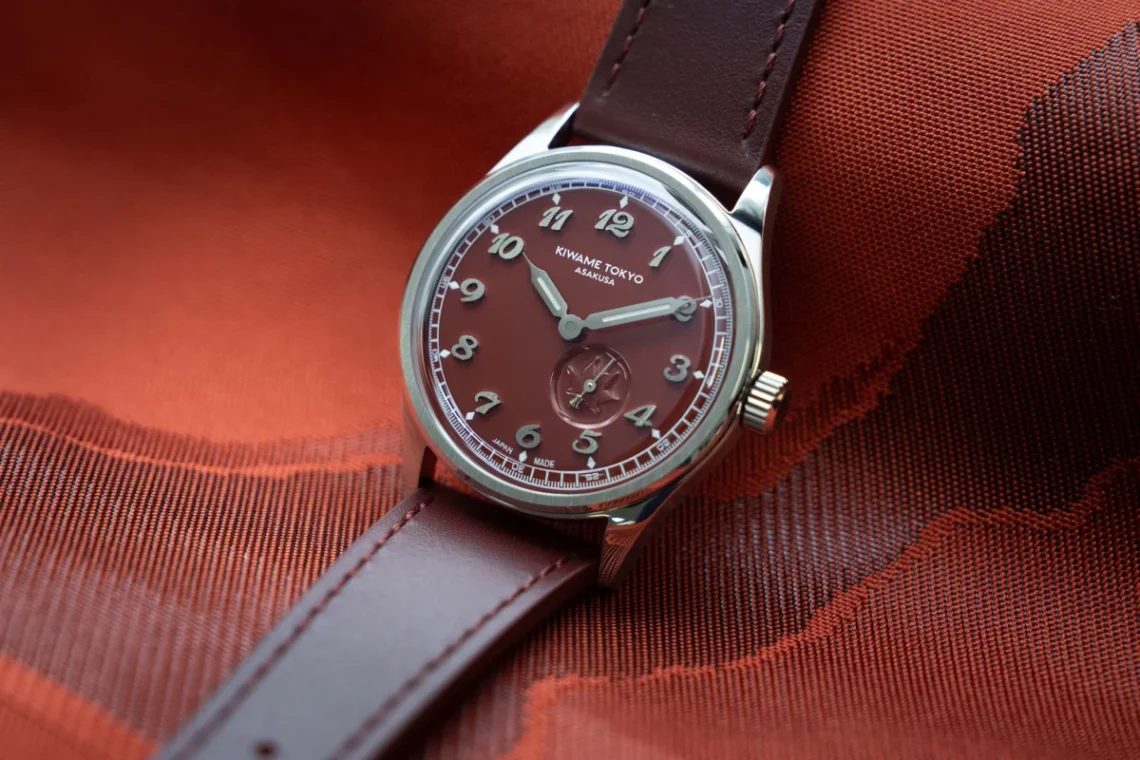
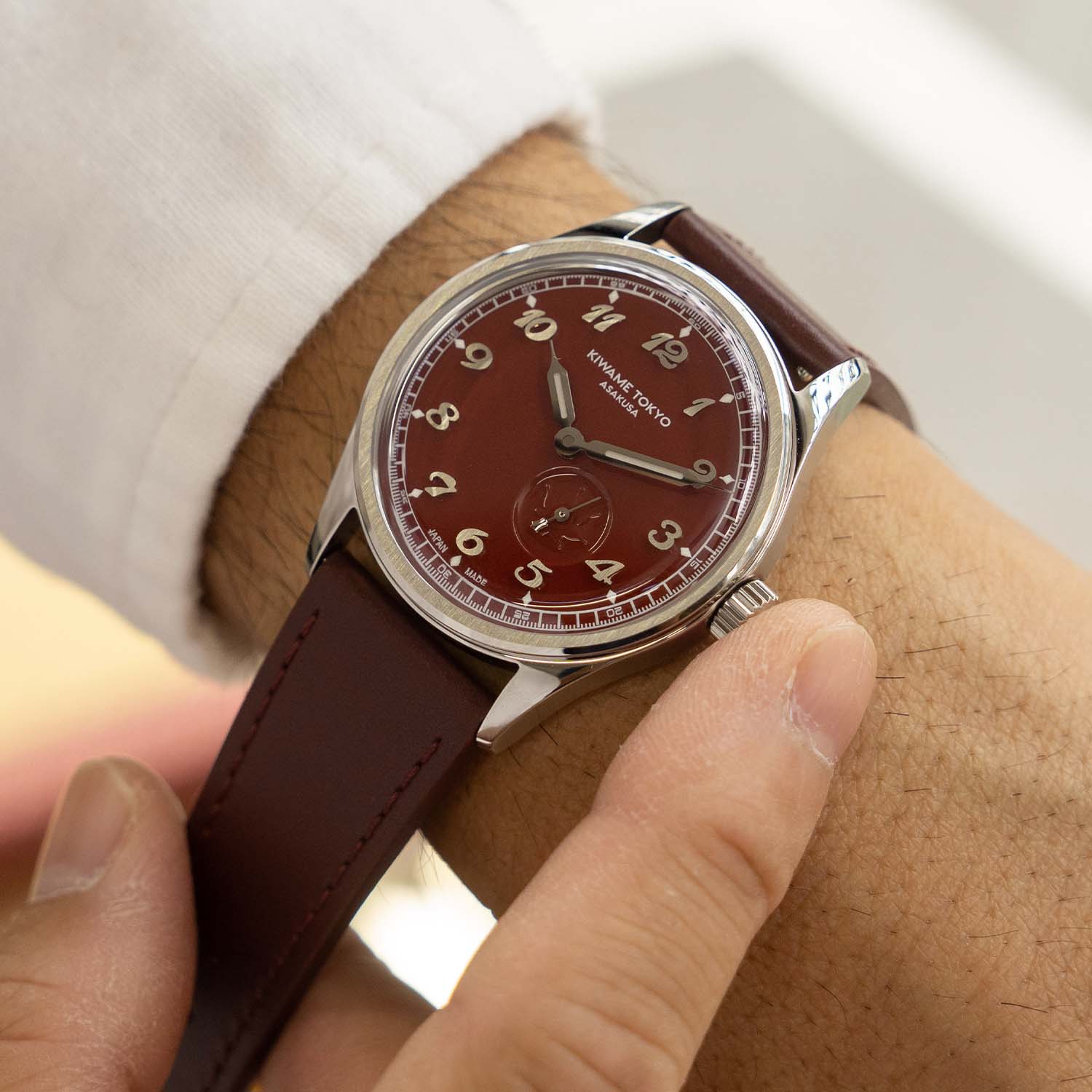
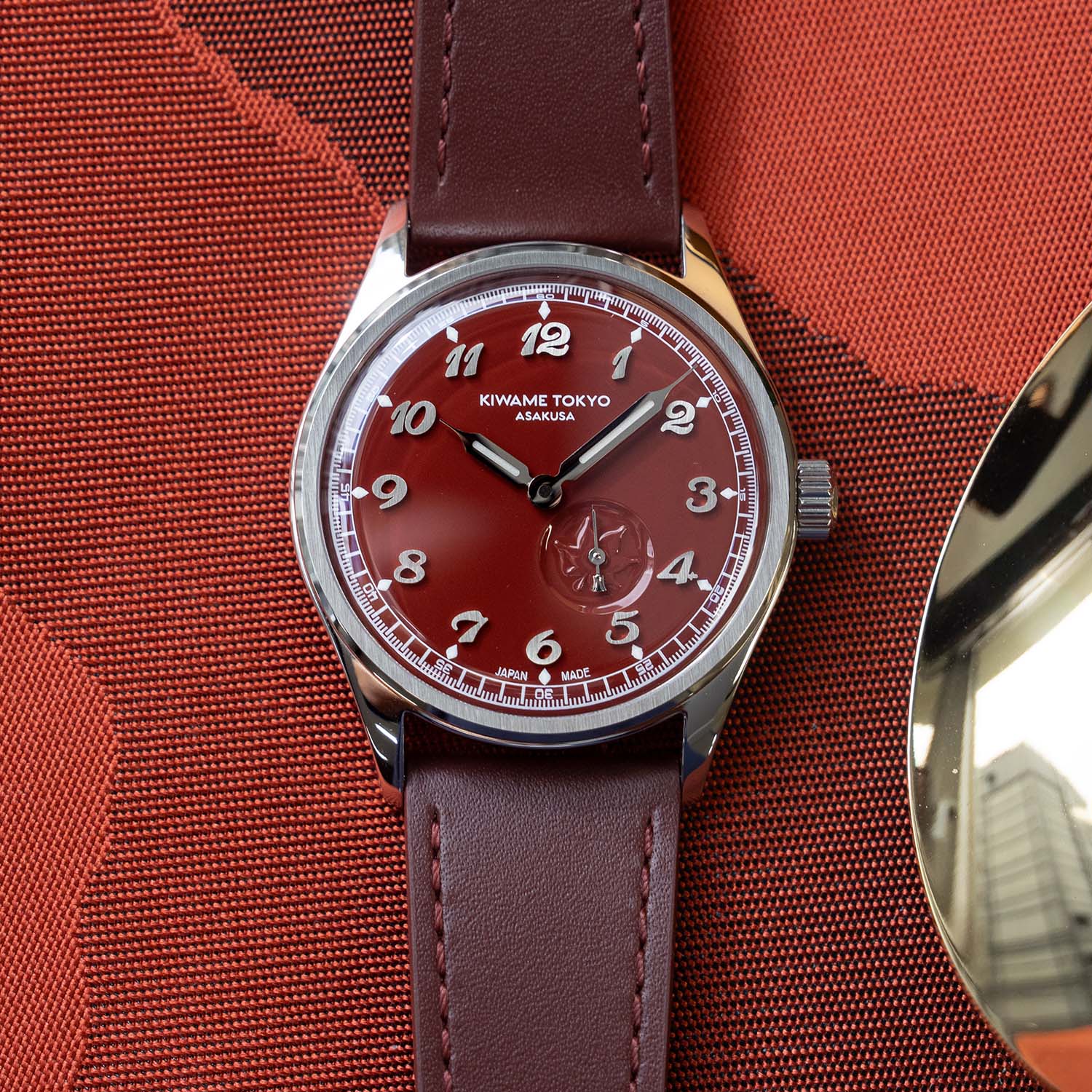
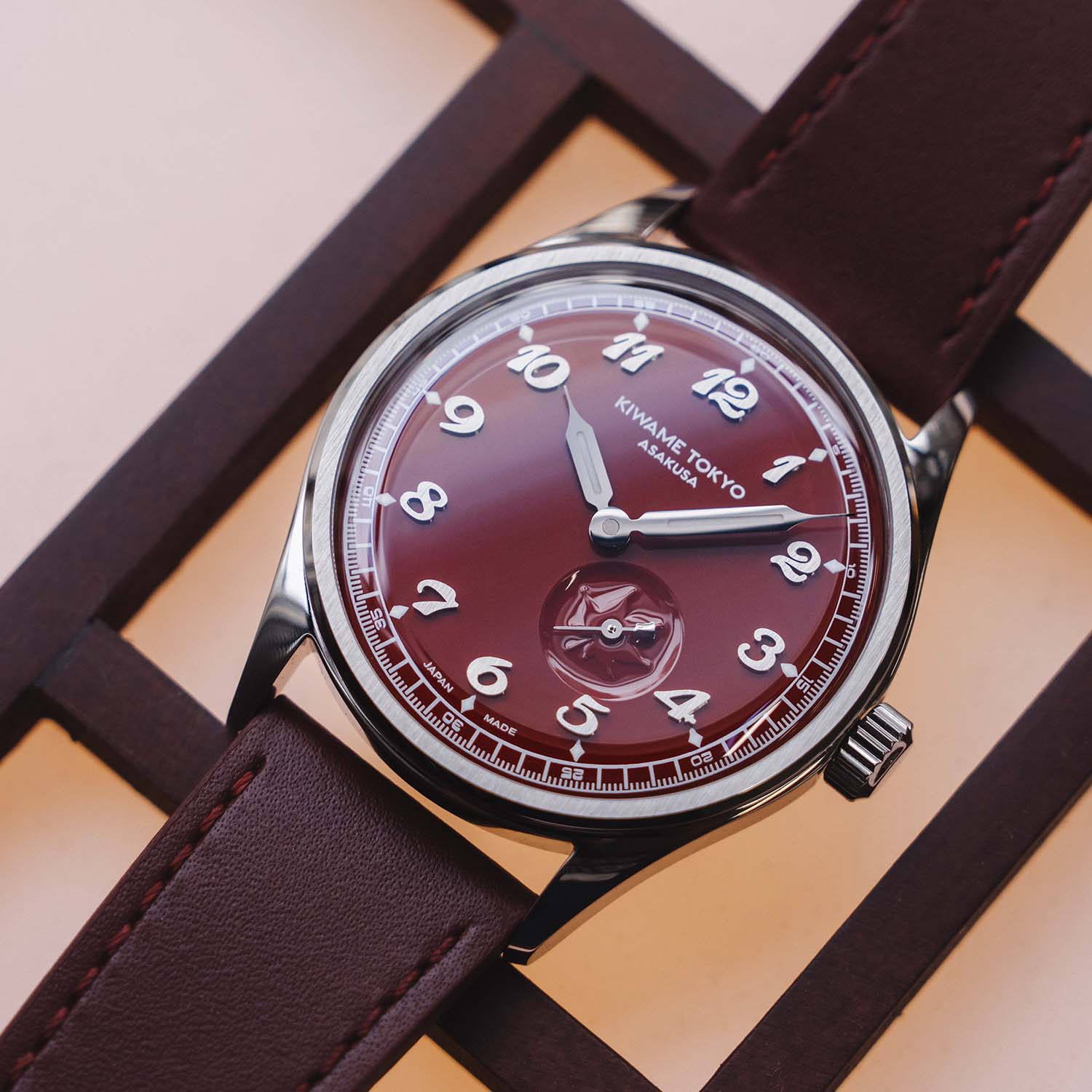
At the center of this new release is its dial, inspired by Koimomiji, a traditional Japanese color that evokes the deep, fiery red of autumn foliage. Coated in a glossy red lacquer, the dial serves as a canvas for subtle cultural homages. Most notably, a raised maple leaf motif emerges from within the off-centred, recessed small-seconds subdial positioned at 4:30.
The watch is housed in a compact, highly wearable stainless steel case measuring 37mm in diameter and just 9.3mm thick (expanding to 10.7mm when accounting for the box-shaped domed sapphire crystal). With a lug-to-lug distance of 45mm, the Kubo Momiji is proportioned to fit a wide variety of wrist sizes comfortably, bridging the gap between a dress watch and an everyday utilitarian piece. A vertically brushed flat bezel adds a distinct field-watch character to the otherwise classic geometry.
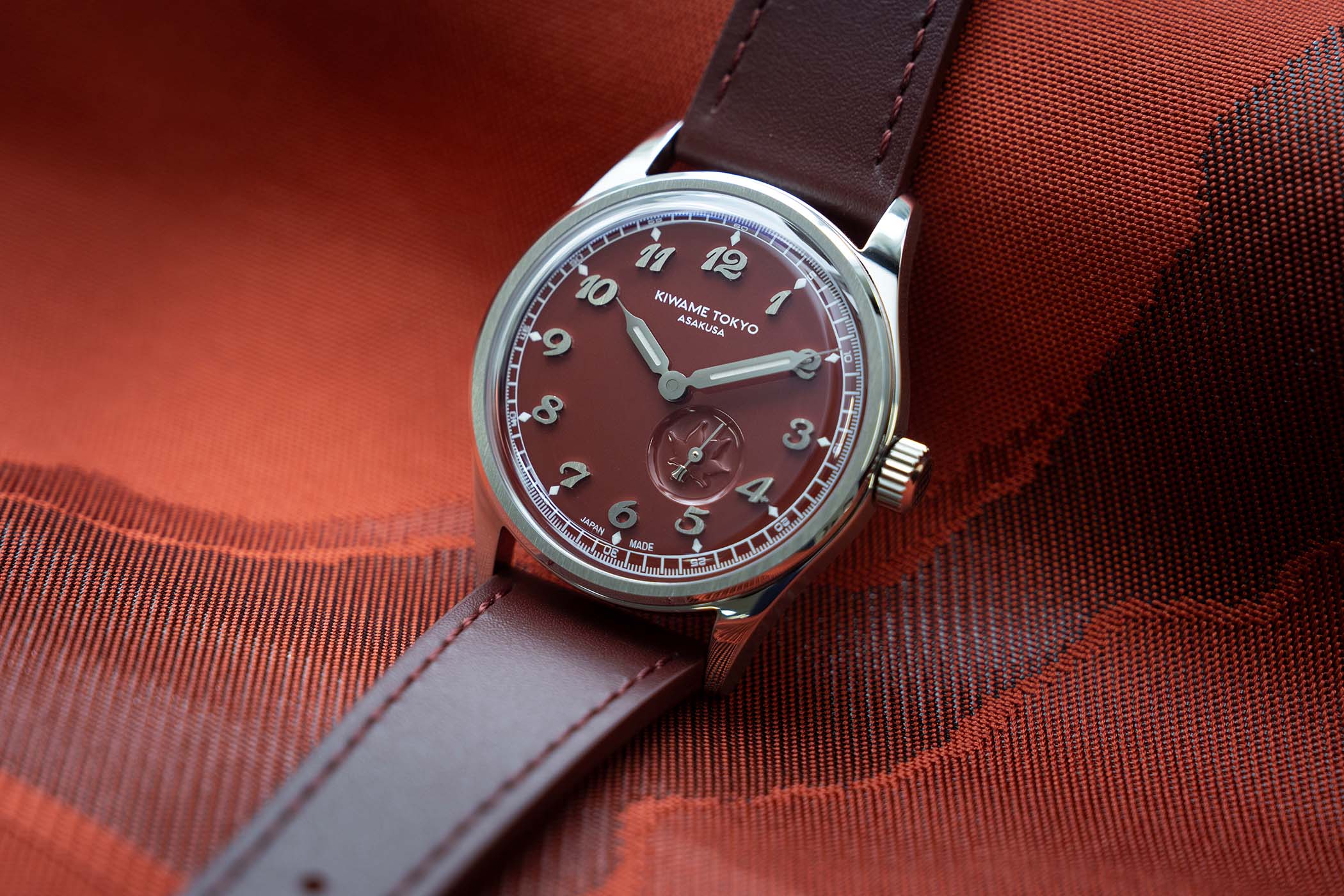
Driven by the reliable automatic Miyota Calibre 82S5—which beats at a frequency of 21,600 vibrations per hour and delivers a 42-hour power reserve—the watch is paired with an Italian genuine calf leather strap featuring quick-release spring bars. Set at an accessible retail price of USD 630 (excluding taxes), pre-orders are scheduled to open on November 17, 2026, with global deliveries expected to commence in January 2027.
Chronology: The Evolution of Kiwame Tokyo
To understand the trajectory of the Kubo Momiji, it is essential to trace the rapid evolution of Kiwame Tokyo since its inception.
2025: The Birth of a Micro-Brand
Kiwame Tokyo entered the horological landscape in 2025 with a clear mission: to democratize high-end design aesthetics by offering classically styled, meticulously finished timepieces rooted firmly in Japanese culture. Operating out of Asakusa—a district famous for preserving Tokyo’s traditional shitamachi (old town) atmosphere—the brand drew immediate comparisons to traditional Calatrava-style dress watches, but with a distinctly localized soul.
Its initial releases, the Kurotsuki and Usuki models, established the brand’s reputation for value proposition and dial craftsmanship. These early pieces demonstrated that independent micro-brands could offer sophisticated lacquer work and balanced proportions without entering luxury price brackets.
Early 2026: The Introduction of the Kubo Series
Earlier in 2026, Kiwame Tokyo broadened its design language with the launch of the Kubo collection. Departing from strictly symmetrical central-seconds layouts, the Kubo series introduced an off-centred, recessed small-seconds display at the 4:30 position. This layout injected a contemporary asymmetry into an otherwise classic framework. Models such as the Sakura, Tetsukon, and Usuki variants proved immensely popular, quickly selling out their initial allocations and establishing the Kubo case architecture as a mainstay for the brand.
Late 2026: The Momiji Expansion
Entering the autumn season of 2026, Kiwame Tokyo turned its seasonal inspiration into a physical product. Recognizing the deep cultural resonance of momiji-gari (the Japanese tradition of visiting viewing spots to see the autumn leaves turn red), the brand conceptualized the Kubo Momiji. Scheduled for pre-order release on November 17, 2026, this model represents a maturation of the Kubo line, fusing natural seasonal motifs with micro-mechanical watchmaking. Alongside the launch of the Momiji, Kiwame Tokyo has announced a renewed pre-order window for existing Kubo series models to meet ongoing consumer demand.
Supporting Data: Specifications and Technical Breakdown
The technical specifications of the Kiwame Tokyo Kubo Momiji reveal a carefully considered balance between vintage aesthetics, modern durability, and accessible mechanics.
| Feature | Technical Specification |
|---|---|
| Case Material | 316L Stainless Steel with vertically brushed flat bezel |
| Case Dimensions | 37mm diameter, 9.3mm thickness (10.7mm with domed sapphire crystal), 45mm lug-to-lug |
| Crystal | Domed sapphire crystal with inner anti-reflective coating; solid steel caseback |
| Water Resistance | 30 meters (3 ATM) |
| Dial | Koimomiji deep red lacquer; recessed small-seconds counter at 4:30 with raised maple-leaf motif; applied Arabic numerals with fine vertical brushing |
| Hands & Markers | Luminous hour and minute hands; diamond-shaped luminous markers at all 12 positions; small-seconds hand featuring a counterweight inspired by the roofline of Asakusa’s Kaminarimon gate |
| Movement | Miyota Calibre 82S5 (Automatic, 21 jewels, 21,600 vph, 42-hour power reserve, hours, minutes, small seconds) |
| Strap | Italian genuine calf leather strap with pin buckle (20mm lug width, quick-release spring bars) |
| Availability | Pre-orders open November 17, 2026 (9:00 a.m. JST); deliveries expected January 2027 |
| Price | USD 630 (excluding local taxes) |
Official Responses and Brand Philosophy
In statements accompanying the release of the Kubo Momiji, representatives for Kiwame Tokyo emphasized the brand’s dedication to storytelling through horology. While many entry-level micro-brands rely heavily on generic catalog cases and standard off-the-shelf dials, Kiwame Tokyo has strived to infuse every component with local narrative significance.
"Our goal has never been merely to assemble watches, but to translate the poetry of Tokyo into a wearable format," a brand spokesperson noted during the initial unveiling of the Kubo architecture. "Asakusa is a place where history and modernity coexist seamlessly. Every detail—from the lacquer hues to the architectural counterweights on our hands—is an homage to our surroundings."
The incorporation of the Kaminarimon gate roofline into the small-seconds counterweight serves as a prime example of this philosophy. Rather than utilizing a generic baton hand, Kiwame Tokyo integrates micro-architectural elements that require specialized tooling and design oversight, elevating the perceived value of a watch retailing well below the thousand-dollar threshold. Furthermore, the decision to strictly limit purchases to one watch per person during the initial pre-order phase underscores the brand’s commitment to curbing speculative flipping and ensuring that pieces reach genuine collectors and enthusiasts.
Implications: What the Kubo Momiji Means for the Micro-Brand Market
The release of the Kiwame Tokyo Kubo Momiji carries several broader implications for the independent and micro-brand watchmaking sector, particularly within the Asian market.
1. Elevating Entry-Level Dial Craftsmanship
For years, artisanal dial techniques such as grand feu enamel, specialized lacquer, and complex guilloché were strictly the domain of high-horology Swiss and independent ateliers commanding five- or six-figure price tags. The ability of brands like Kiwame Tokyo to offer deep-lacquer finishes, integrated cultural motifs, and complex multi-level subdials at a USD 630 price point signals a seismic shift in manufacturing accessibility. Consumers are no longer willing to settle for flat, printed dials in the sub-$1,000 category, raising the baseline expectations for the entire industry.
2. The Power of Hyper-Local Storytelling
Generic "field watches" and "dress watches" face fierce competition in a saturated digital marketplace. Kiwame Tokyo’s success highlights the viability of hyper-local storytelling. By tying its product lines directly to Japanese aesthetics (Koimomiji, Sakura, Tetsukon) and specific Tokyo landmarks (Asakusa, Kaminarimon), the brand creates an emotional bridge with international buyers who view these timepieces as souvenirs of a culture they admire.
3. Sizing Rationalization
The watch industry’s pendulum has swung decisively back toward restrained proportions. While the 40mm-plus case sizes of the 2010s still hold space in sports watch categories, everyday and dress-oriented pieces are rapidly shrinking. With a 37mm diameter, a 9.3mm thickness, and a 45mm lug-to-lug, the Kubo Momiji proves that micro-brands can successfully cater to the growing demographic of collectors demanding vintage-appropriate dimensions without sacrificing modern reliability.
As pre-orders open on November 17, 2026, the Kubo Momiji is positioned to cement Kiwame Tokyo’s status as one of the most exciting young names in contemporary watchmaking—proving that thoughtful design, cultural heritage, and mechanical accessibility can exist in perfect harmony.