Introduction: The Independent Renaissance
In the upper echelons of contemporary horology, a quiet revolution is taking place. While legacy houses and heritage conglomerates continue to dominate mainstream luxury markets through mass appeal and iterative design, true collectors are increasingly shifting their gaze toward the avant-garde domain of independent watchmaking. This sector—built on the vision of master artisans, micro-ateliers, and ambitious entrepreneurs—is where the most innovative, uncompromised, and emotionally resonant watchmaking occurs today.
Independent watchmaking thrives on unrestricted creativity. Free from the corporate bureaucracy and commercial safety nets that often dictate mainstream manufacturing, independent watchmakers channel their passion directly into metal, sapphire, and enamel. The results range from ultra-traditional, hand-finished haute horlogerie priced well into the six-figure territory to clever, mechanically inventive timepieces accessible to a broader audience.
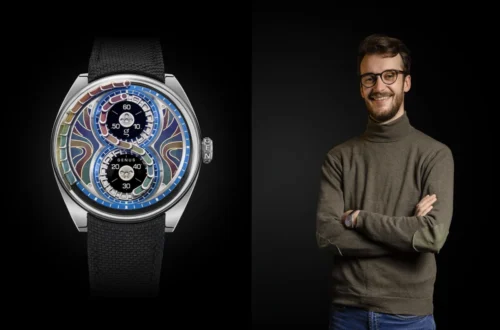
Building upon our previous exploration of independent ateliers earlier this year, we return to the vanguard to spotlight five more extraordinary projects. From seasoned veterans launching eponymous brands to young prodigies reviving vintage movements and architects turning their spatial expertise to micro-mechanics, these five watchmakers deserve your undivided attention.
Main Facts: The Five Standout Timepieces at a Glance
Before delving into the chronological evolution and structural nuances of these independent triumphs, it is essential to map out the core specifications and pricing models of the collection. These five timepieces represent wildly divergent price points, design philosophies, and mechanical complications, yet they share a common thread: uncompromising individuality.
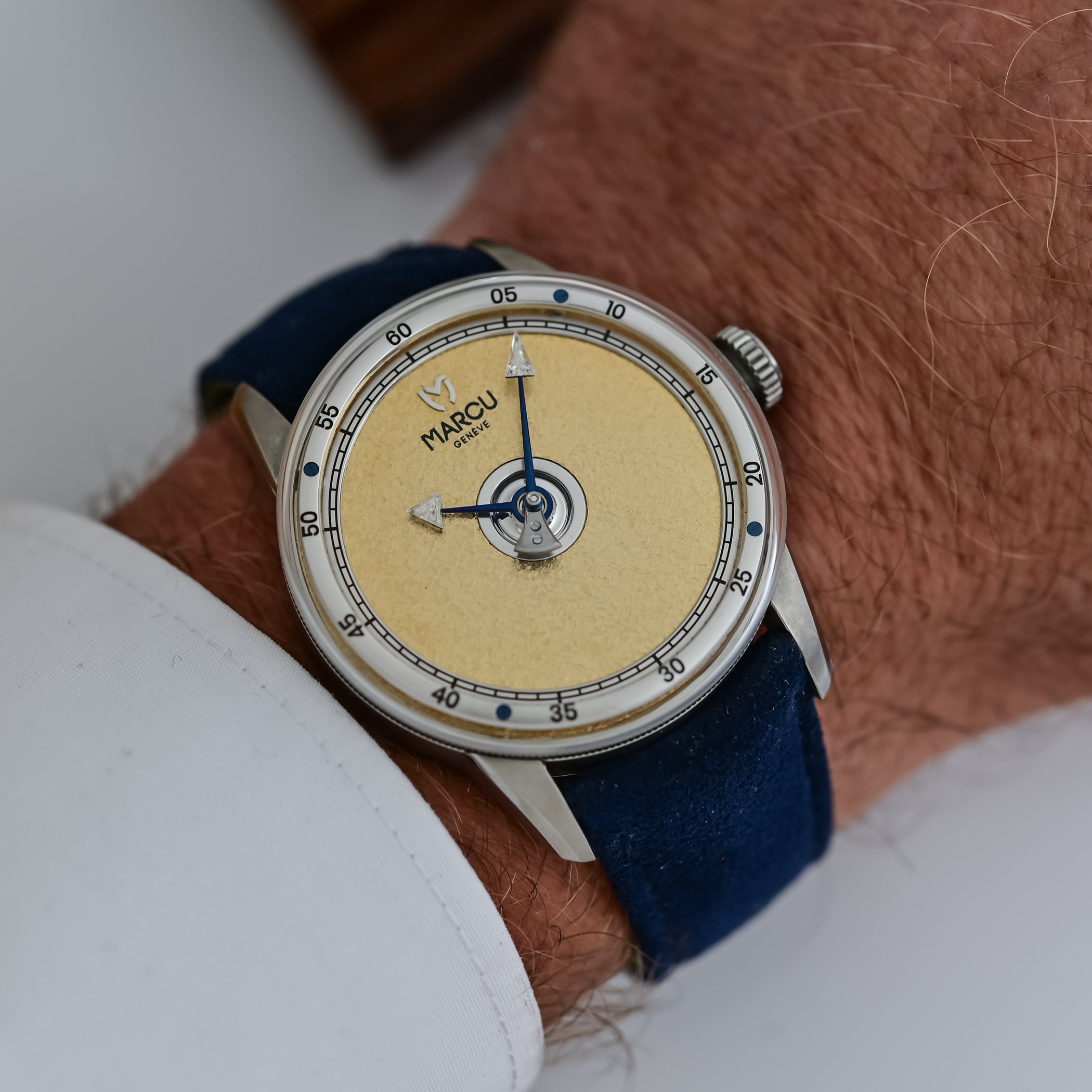
- Marcu Initial: A masterclass in traditional high-end finishing, featuring a 40mm titanium case, a striking pine-needle motif dial, and the manually wound calibre JM01 with 75 inward hand-bevelled edges. Limited to 33 pieces (11 per colorway) at CHF 59,000 (excl. VAT).
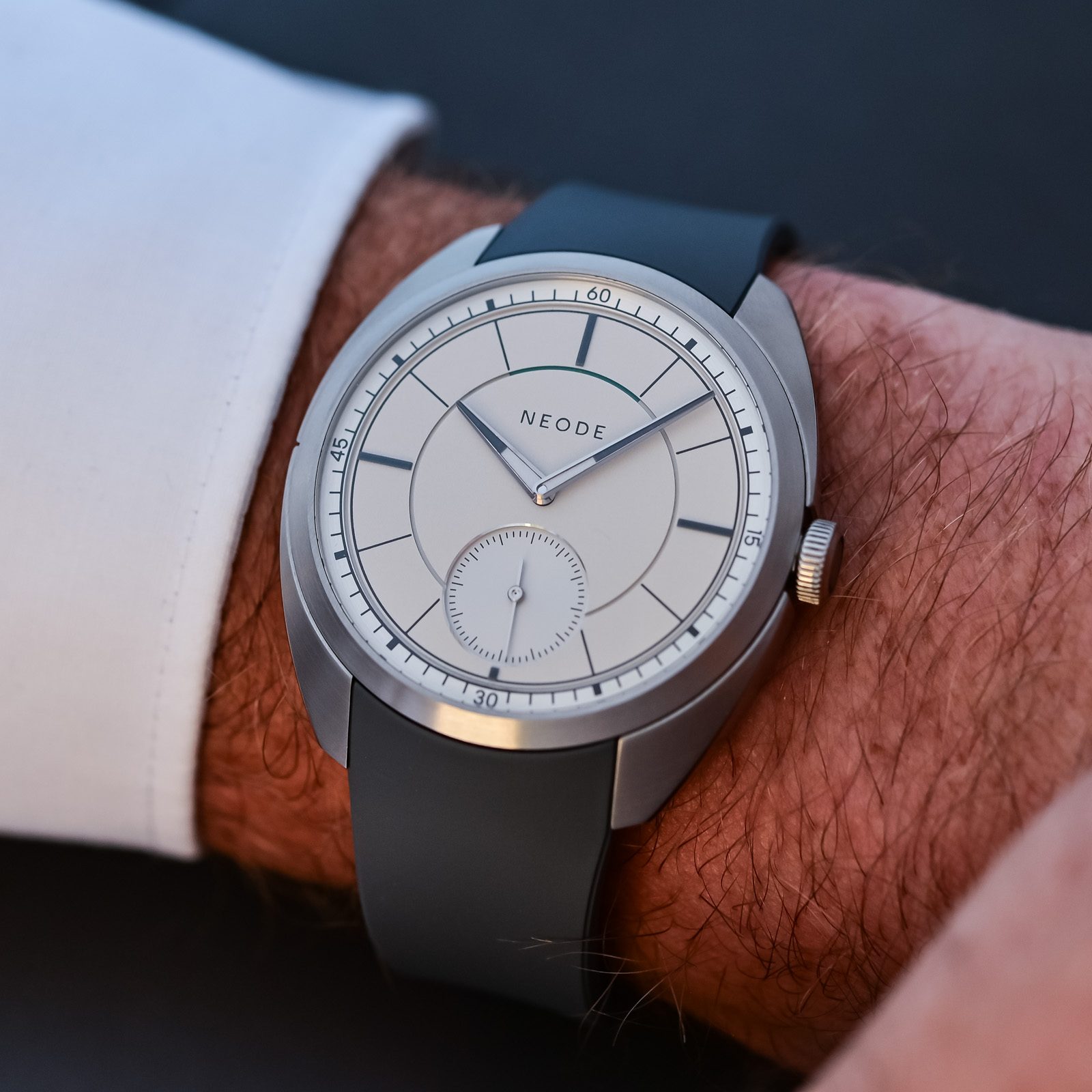
- Neode N01 First Edition: A contemporary, architectural take on the sector dial, developed by architect Marius-Daniel Dumitrascu. It utilizes a heavily reworked Chronode movement, a 925 silver dial crafted by Les Cadraniers de Genève, and a titanium case by Voutilainen. Limited to 25 pieces at CHF 26,400 (excl. VAT).
- Atelier Pieters Atelier 1 Founders’ Series: A breathtaking, ultra-exclusive tourbillon timepiece featuring a three-piece platinum case, dual planetary power reserve indicators, and German Silver bridges with frosted textures. Limited to 8 pieces per colorway with an annual capacity of 4 pieces, priced at CHF 148,500 (excl. VAT).
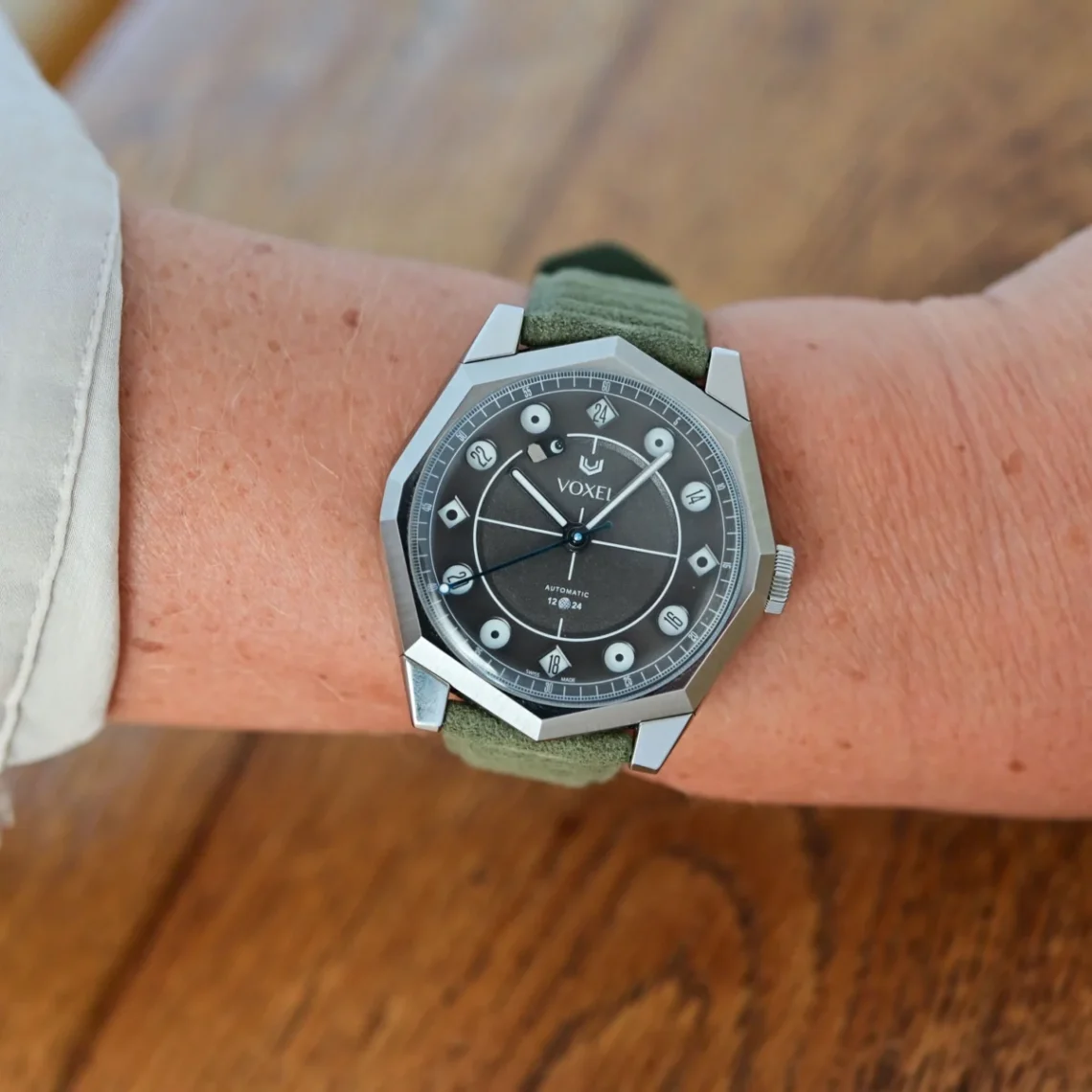
- Voxel Meridion VX01-E: An inventive, face-changing daily wearer featuring a clever 12/24-hour jumping display module developed in-house atop a Soprod Newton automatic movement. Housed in a 904L steel octagonal case, it is limited to 300 pieces total, retailing from EUR 2,500 on a strap to EUR 2,850 on a steel bracelet (excl. VAT).
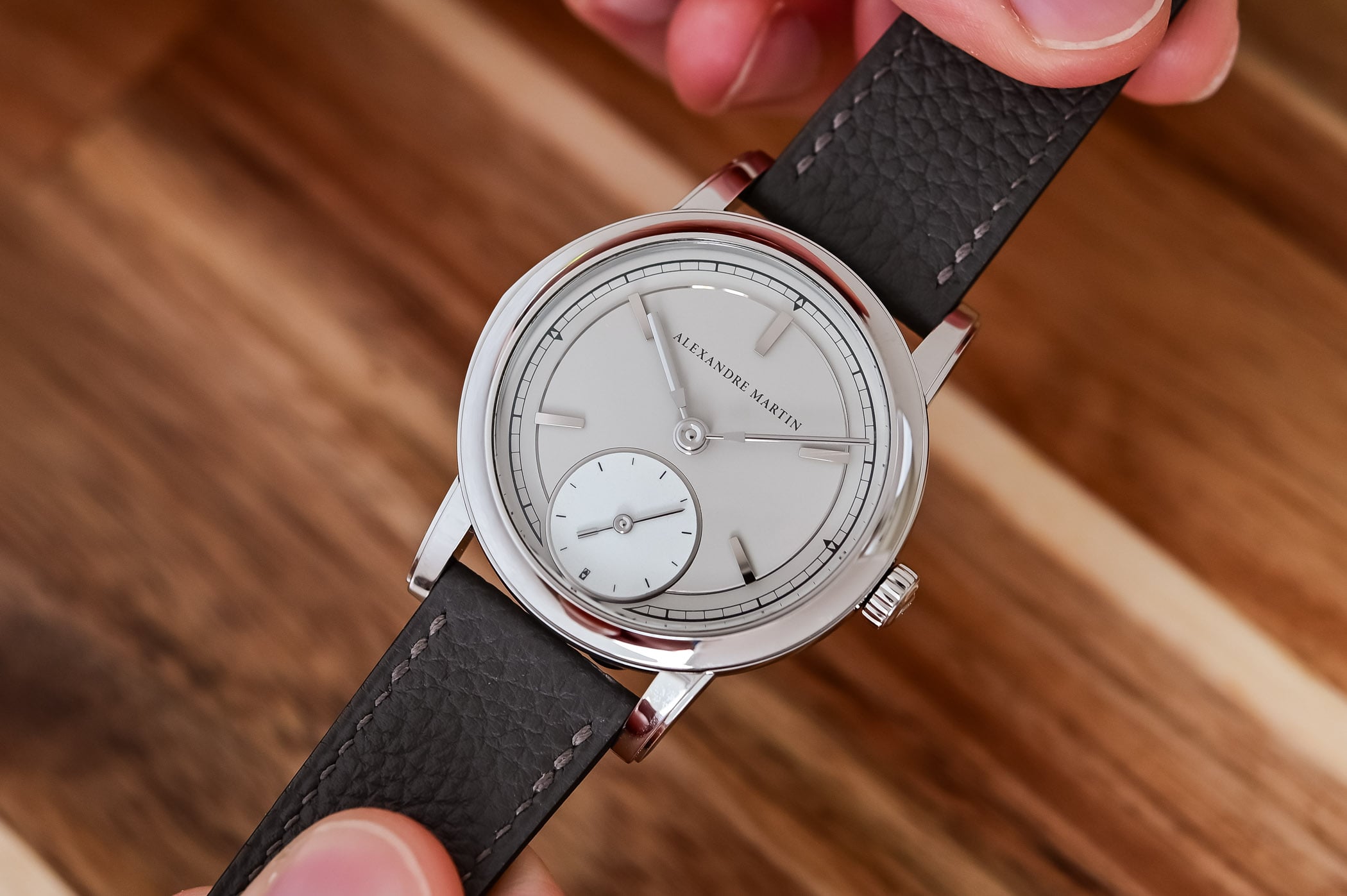
- Alexandre Martin 1965: A sublime tribute by a 28-year-old Belgian watchmaker, featuring a 38mm stainless steel case, a three-part gold dial, an enamel small seconds subdial, and an extensively reworked, hand-finished vintage CYMA 586 movement. Limited to 12 pieces in steel at CHF 65,000.
Chronology and Evolution: From Concept to Micro-Atelier
The timeline of how these five independent projects reached the global stage reflects the diverse paths modern watchmakers take. While some enterprises are born from multi-generational watchmaking lineages, others represent sudden, passionate pivots from entirely different professional disciplines.
The Veteran’s Opus: Marcu Initial
Jérôme Marcu’s journey to founding Marcu Genève is rooted in decades of collective industry experience. Rather than rushing to market, Marcu spent years mastering the intricate nuances of haute horlogerie before unveiling the Initial. Debuting as a time-only dress watch, the Initial taps into a booming market segment within indie watchmaking. However, Marcu elevates the genre through obsessive attention to detail, spending countless hours perfecting elements such as the junction where the crystal meets the 40mm titanium case and executing an astonishing 75 inward hand-bevelled edges on the movement plates alone.
Architectural Precision: Neode N01
The genesis of Neode offers a fascinating look at cross-disciplinary design. Marius-Daniel Dumitrascu, an architect by training operating out of London, approached watchmaking not with the traditional toolkit of an ébauche maker, but with the spatial and structural sensibilities of a spatial designer. The development of the N01 First Edition required extensive coordination with some of the most respected independent suppliers in Switzerland, establishing partnerships with Chronode for movement architecture, Les Cadraniers de Genève for dial production, and Voutilainen for case manufacturing.
Family Craftsmanship: Atelier Pieters
Husband-and-wife duo Maarten and Jessica Pieters established Atelier Pieters to create uncompromising, highly artistic expressions of mechanical time. Their inaugural release, the Atelier 1 Founders’ Series, represents the culmination of years of technical refinement. Operating at an astonishingly small scale—with a production capacity capped at just four pieces per year—Atelier Pieters represents the absolute apex of independent watchmaking exclusivity.
Entrepreneurial Ingenuity: Voxel Meridion
In stark contrast to the ultra-exclusive, six-figure pricing of traditional haute horlogerie, entrepreneur Thibault Lux and technical director Bruno Herbet set out to create something entirely democratic yet mechanically surprising. The Voxel Meridion VX01-E was conceived to challenge the monotony of standard time-only daily wearers. By developing a proprietary 12:24 time indication module to sit atop a reliable Soprod Newton automatic caliber, the team spent months prototyping a face-changing mechanism that shifts between AM and PM scales via 12 precise dial cutouts.
Youthful Reverence: Alexandre Martin 1965
At just 28 years of age, Belgian watchmaker Alexandre Martin has captured the attention of the horological community with his breakout creation, the 1965. Working from his workshop in Morges, Switzerland, Martin chose to honor his father’s birth year by crafting an exceptionally proportioned, vintage-inspired timepiece. Rather than manufacturing a generic modern caliber, Martin sourced, overhauled, and meticulously hand-finished vintage CYMA 586 movements, proving that youthful ambition can successfully harmonize with historical reverence.
Supporting Data: Deep-Dive Technical Specifications
To fully appreciate the mechanical and aesthetic gravity of these five timepieces, we must examine their underlying specifications and construction methodologies.
+---------------------------+-------------------+----------------------+-------------------+-------------------+
| Model                     | Case Material     | Dimensions           | Movement          | Price (Excl. VAT) |
+---------------------------+-------------------+----------------------+-------------------+-------------------+
| Marcu Initial             | Grade 5 Titanium  | 40mm x 13.10mm       | Calibre JM01 (Man)| CHF 59,000        |
| Neode N01 First Edition   | Grade 5 Titanium  | 39.5mm x 7.9mm       | Neode N01 (Man)   | CHF 26,400        |
| Atelier Pieters Atelier 1 | Platinum          | 43.5mm x 13mm        | Cal. T2-03RM (Man)| CHF 148,500       |
| Voxel Meridion VX01-E     | 904L Steel        | 41.4mm diameter      | Soprod Newton P092| EUR 2,500 - 2,850 |
| Alexandre Martin 1965     | Stainless Steel   | 38mm x 9.35mm        | Reworked CYMA 586 | CHF 65,000        |
+---------------------------+-------------------+----------------------+-------------------+-------------------+
Mechanical Highlights and Finishing Nuances
- The Marcu Initial’s Calibre JM01: Beating at a traditional 18,000 vibrations per hour (vph) with a 50-hour power reserve, this manually wound movement utilizes German Silver plates and bridges alongside a steel balance bridge. The 75 inward hand-bevelled edges represent a level of hand-finishing typically reserved for centuries-old Geneva seal houses.
- The Neode N01’s Power Reserve: While the 925 silver sector dial with its grenage finish commands immediate visual respect, the movement packs a staggering 192-hour (8 days) power reserve derived from the heavily modified Chronode C101 base, cleverly concealed from plain sight.
- Atelier Pieters’ Dual Planetary System: The calibre T2-03RM features a suspended tourbillon under a black-polished bridge and introduces a unique dual power reserve setup—one indicator visible on the frost-textured German Silver caseback, and a second, subtle dot integrated into the anthracite or rose gold dial at the 3 o’clock position.
- Voxel Meridion’s Face-Changing Display: Utilizing 12 distinct dial cutouts, the 12/24-hour switching disc provides an intuitive day/night and AM/PM reading without cluttering the clean aesthetic of the grained or sunburst dial.
- Alexandre Martin 1965’s Vintage Heart: By adapting the vintage CYMA 586 movement and equipping it with German Silver bridges and an enamel small seconds subdial, Martin bridges the gap between antique pocket-watch robustness and modern wrist-watch refinement.
Official Responses and Creator Insights
The philosophy driving these independent projects is best understood through the perspectives of their founders, whose statements reveal a shared dedication to uncompromising artistic expression.
Discussing the painstaking hand-finishing processes required for the Marcu Initial, Jérôme Marcu emphasized the importance of human touch in an increasingly automated world: "A machine can cut metal with microscopic precision, but it cannot impart soul. The soul of a watch lives in the unhurried drag of a hand-file, the deliberate angle of a bevel, and the invisible hours spent polishing steel until it mirrors the light."
Marius-Daniel Dumitrascu, founder of Neode, reflected on the challenges of bringing an architect’s eye to micro-mechanical engineering: "Architecture is about shaping space for human experience. In watchmaking, you are doing the exact same thing, just on a scale measured in fractions of a millimeter. Every component must serve a structural and aesthetic purpose simultaneously. Working with masters like Voutilainen and Les Cadraniers de Genève allowed us to translate architectural restraint into horological reality."
Thibault Lux of Voxel addressed the accessibility of independent watchmaking: "There is a perception that independent watches must cost a small fortune to be valid. With the Meridion VX01-E, Bruno Herbet and I wanted to prove that mechanical creativity, robust 904L steel construction, and inventive complication modules can be brought to market at a price point that invites younger, enthusiastic collectors into the independent fold."
Market Implications: The Future of Independent Ateliers
The success and proliferation of brands like Marcu, Neode, Atelier Pieters, Voxel, and Alexandre Martin carry significant implications for the broader luxury watch industry.

1. Decentralization of Prestige
For decades, geographic prestige was heavily concentrated in specific Swiss valleys and historic manufacturing hubs. Today, independent watchmaking is becoming increasingly decentralized. With architects from London, entrepreneurs from various business backgrounds, and young watchmakers operating in small Swiss workshops, the monopoly on high-end watch design has been decisively broken. Collectors no longer buy purely for a centuries-old marquee name; they buy for personal narrative, transparency, and direct connection to the artisan.
2. The Polarization of Value
The market is polarizing into two distinct tiers of independent success. At one end, ultra-exclusive creations like the Atelier Pieters Atelier 1 (capped at four pieces a year) and the Marcu Initial cater to the highest tier of ultra-high-net-worth collectors who view watches as kinetic fine art. At the other end, brands like Voxel are democratizing mechanical innovation, offering complex displays and robust materials at sub-EUR 3,000 price points. This dual expansion squeezes traditional mid-tier brands that fail to offer distinct emotional or mechanical value.
3. Supply Chain Collaboration as a Badge of Honor
The modern independent watchmaker rarely operates in a total vacuum. As demonstrated by Neode—which leverages Chronode for movements, Les Cadraniers de Genève for dials, and Voutilainen for cases—cooperative micro-manufacturing has become a badge of honor. Rather than masking outsourcing as an in-house secret, modern indie brands celebrate their collaborative networks, elevating the entire independent supply chain in the process.
Conclusion
The five independent timepieces explored here—ranging from the high-art refinement of Marcu and Atelier Pieters to the architectural poise of Neode, the clever mechanical ingenuity of Voxel, and the youthful reverence of Alexandre Martin—demonstrate that the future of watchmaking is exceptionally bright. As long as passionate creators continue to challenge convention and prioritize human artistry over corporate expediency, the independent sector will remain the beating heart of horological innovation.