Main Facts: The SEMA Showstopper That Bridged Eras
The automotive aftermarket is no stranger to restomods. Every year, convention centers and exhibition halls play host to an army of vintage classics injected with modern horsepower, updated interiors, and state-of-the-art chassis engineering. From supercharged Chevrolet C10s to custom-built Dodge Rams, the pickup truck segment remains a blank canvas for automotive artisans. Yet, every once in a while, a build transcends the standard definition of a "custom truck" and emerges as a genuine work of fine art.
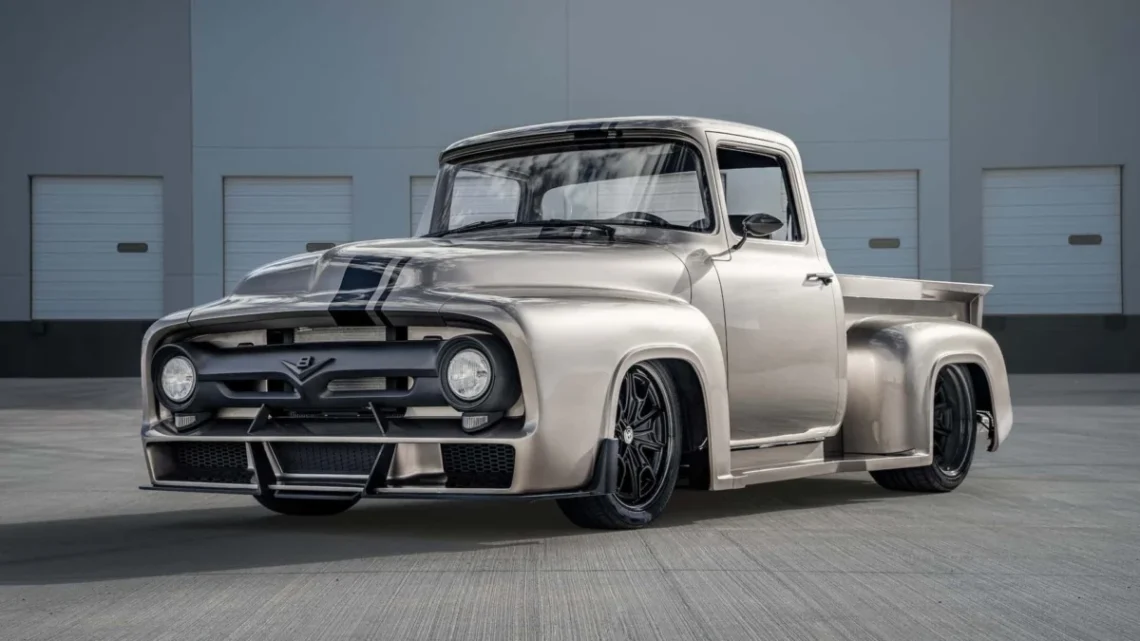
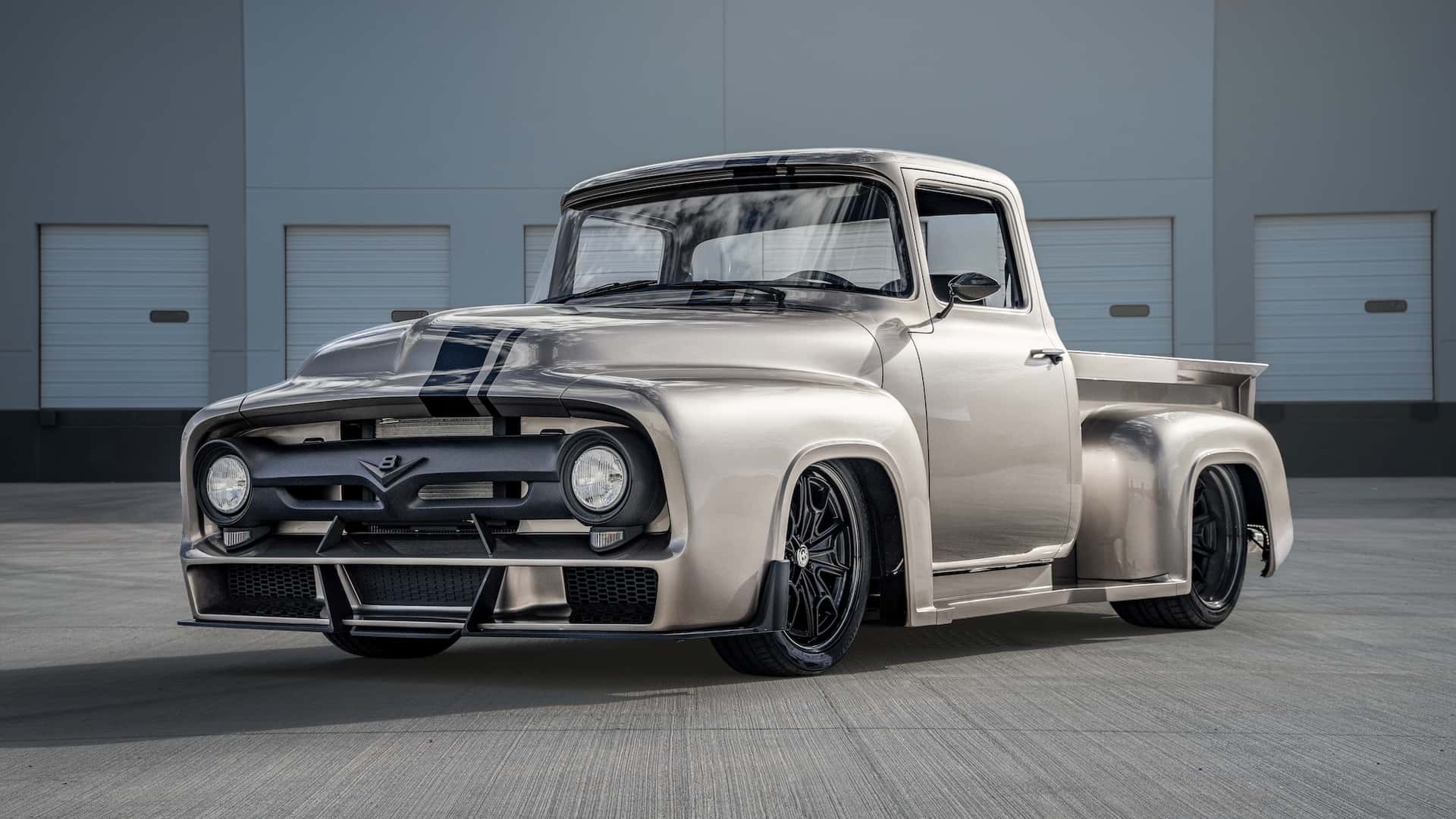
Enter the GT/FX, the latest masterpiece from Arizona-based custom builder Fat Fender Garage. Unveiled at the prestigious SEMA Show in Las Vegas, the GT/FX is a heavily modified 1956 Ford F-100 that successfully merges the nostalgic, rugged utility of classic American pickup styling with the explosive performance, aggressive aerodynamics, and supercar-baiting attitude of a modern Ford Mustang GT.
At the heart of this rolling sculpture lies a third-generation Ford 5.0-liter Coyote V8 engine, aggressively force-fed by a 3.0-liter Whipple supercharger. The resulting powerplant churns out an astonishing 800 horsepower and 750 pound-feet of torque, channeling its fury through Ford’s robust 10R80 10-speed automatic transmission. Underneath the meticulously smoothed sheet metal sits Fat Fender Garage’s flagship FF1 Performance Coilover Chassis, ensuring that the truck corners with the agility and composure of a modern track machine rather than the wallowing disposition of a mid-century workhorse.
However, the most staggering statistic associated with the GT/FX is not its horsepower figure, nor its torque curve. It is the time investment: more than 15,000 hours of design, engineering, and meticulous hand-fabrication were poured into bringing the GT/FX to life. The result is a jaw-dropping fusion of muscle car DNA and classic truck heritage that completely stole the spotlight in Las Vegas.
Chronology of Craftsmanship: Anatomy of a 15,000-Hour Build
Transforming a utilitarian 1956 Ford F-100 into a high-performance luxury cruiser requires an extraordinary level of vision and execution. The build process for the GT/FX was not merely a restoration; it was a total reimagining of what a vintage pickup could achieve when constrained only by the bounds of modern engineering and artistic imagination.
Phase 1: Conceptualization and Exterior Manipulation
The journey of the GT/FX began on the drawing board, where designers sought to blend the classic proportions of the mid-fifties F-100 with the aggressive aerodynamic cues of Ford’s contemporary performance portfolio. The all-steel body underwent extensive, painstaking modifications by hand:
- The Roof and Hood: Both panels were "pancaked," a traditional hot-rod technique used to lower their profile and give the vehicle a sleeker, more aerodynamic silhouette.
- The Cab: The cabin itself was sectioned by two inches, subtly altering the greenhouse proportions to eliminate the tall, boxy look of the original truck.
- The Fenders: Both the front and rear steel fenders were widened to accommodate a much wider track and massive rolling stock, establishing a planted, aggressive stance.
- Aero Enhancements: Custom running boards flow seamlessly into the rear fenders. Meanwhile, a bespoke front air scoop, custom chin splitters, and a genuinely radical modification—a grafted-in Ford Mustang Shelby GT350 rear diffuser—lend the rear end a distinctive track-ready aesthetic.
- The Grille Exception: In a surprising nod to originality, the truck’s factory grille remains the only major exterior component left un-modified, serving as a nostalgic anchor to the vehicle’s 1956 roots.
Phase 2: Fabrication, Detailing, and Surface Finish
With the silhouette established, the fabrication team turned their attention to the finer details. The custom double-walled bed received its own distinctive side flares and a motorized tailgate that opens at the simple push of a button. To clean up the exterior lines further, the front and rear glass were flush-mounted into the bodywork, paired with custom one-piece side windows, sleek carbon-fiber side mirrors, and custom-designed LED taillights that mimic vintage housing with modern illumination.
The entire exterior was then coated in a custom-formulated BASF paint, highlighted by a racing stripe design that was painstakingly painted and hand-finished entirely in-house. To tie the aggressive exterior together, various trim pieces, hardware, and custom stainless-steel bumpers were treated to a durable, low-luster Cerakote finish.
Phase 3: Powertrain Integration and Chassis Engineering
With the exterior aesthetics locked in, Fat Fender Garage shifted focus to the mechanical core. Dropping a supercharged Coyote V8 into a 1950s engine bay is no small feat. The team fabricated a custom three-inch exhaust system equipped with Borla XR-1 Raceline mufflers, JMD resonators, and electric cutouts that allow the driver to uncork the V8’s full acoustic fury on demand. Custom valve covers stamped with bespoke branding complete the visual presentation under the hood.
To handle the 800-horsepower output, the chassis had to be completely overhauled. The GT/FX relies on Fat Fender Garage’s proprietary FF1 Performance Coilover Chassis. Engineered specifically to bridge the gap between classic leaf-spring truck dynamics and modern sports car handling, the suspension focuses heavily on superior body control, crisp cornering turn-in, and unshakeable straight-line stability under heavy acceleration and braking. The package rolls on custom HRE wheels wrapped in sticky Toyo Proxes Sport 2 tires.
Supporting Data & Technical Specifications
To fully appreciate the scope of the Fat Fender Garage GT/FX, one must examine the hard numbers behind the build:
| Component / Metric | Specification |
|---|---|
| Base Vehicle | 1956 Ford F-100 |
| Builder | Fat Fender Garage (Arizona, USA) |
| Development Time | 15,000+ Hours |
| Engine | 3rd-Generation Ford 5.0L Coyote V8 |
| Supercharger | 3.0-Liter Whipple Supercharger |
| Horsepower | 800 HP |
| Torque | 750 lb-ft |
| Transmission | Ford 10R80 10-Speed Automatic |
| Chassis | Fat Fender Garage FF1 Performance Coilover Chassis |
| Exhaust | Custom 3-inch with Borla XR-1 mufflers & electric cutouts |
| Wheels & Tires | Custom HRE Wheels wrapped in Toyo Proxes Sport 2 tires |
| Exterior Finish | Custom BASF Paint with in-house hand-finished racing stripes |
Interior Luxury: Merging Vintage Nostalgia with Modern Amenities
While the exterior commands attention with its aggressive bodywork and thunderous exhaust note, the interior of the GT/FX is an exercise in restrained, high-end luxury.
Fat Fender Garage discarded the spartan metal-and-vinyl confines of the 1950s in favor of a fully custom, black-hued cabin draped in premium leather. The driver and passenger settle into custom-upholstered bucket seats, facing a leather-wrapped dashboard pad that houses a blend of modern digital-analog gauges and high-end audio equipment.
Thoughtful ergonomics and clean design define the cockpit. Modern door actuators and subtle comfort features elevate the interior experience to match ultra-luxury grand tourers. Perhaps most impressively, the builders engineered a hidden climate control system that directs airflow seamlessly through a single, concealed dashboard vent. This ingenious packaging decision preserves the clean, uncluttered architectural lines of the original dash without sacrificing modern thermal comfort.
Official Responses and Industry Reception
The debut of the GT/FX at the SEMA Show generated an immediate wave of acclaim from automotive journalists, fabricators, and show attendees alike. While custom builders rarely disclose the exact financial investment required for bespoke, six-figure-plus creations, the sheer scope of the project speaks volumes.
"When you invest over 15,000 hours into a single platform, you aren’t just building a car—you’re writing a manifesto on what is possible in the modern custom automotive space," noted industry analysts at the event.
Fat Fender Garage representatives emphasized that the GT/FX was built to challenge preconceived notions about truck geometry and capability. By fusing the iconic styling cues of the ’56 F-100 with the Shelby GT350 diffuser, Mustang V8 power, and supercar-level chassis tuning, the shop aimed to create a vehicle that feels equally at home parked on a concours lawn or carving through sweeping canyon roads.
Implications: Setting a New High-Water Mark for Truck Restomods
The unveiling of the GT/FX carries several significant implications for the thriving restomod industry:
- The Escalation of Craftsmanship: For years, restomods have focused heavily on big horsepower numbers and engine swaps. Projects like the GT/FX shift the benchmark toward holistic engineering, where body modifications, aerodynamics, chassis dynamics, and interior packaging receive an equal share of obsessive attention.
- Cross-Pollination of Automotive Subcultures: By grafting a Shelby GT350 rear diffuser onto a 1956 Ford pickup and powering it with a Whipple-supercharged Coyote V8, Fat Fender Garage has effectively erased the imaginary boundary lines separating muscle cars, sports cars, and classic trucks. This cross-pollination is likely to inspire future builders to experiment further with mixed-era components.
- The Collector Market Valuation: With more than 15,000 hours of specialized labor poured into its creation, the GT/FX represents a tier of bespoke automotive art that commands astronomical valuations. While Fat Fender Garage has not attached a public price tag to the truck, it is clear that builds of this caliber are destined for elite private collections, high-end auctions, and museum displays rather than traditional commercial showrooms.
Ultimately, the GT/FX stands as a rolling testament to the dedication of modern custom fabricators. It proves that with enough vision, time, and engineering prowess, the ghosts of automotive history can be successfully awakened, re-engineered, and launched into a thrilling modern era.