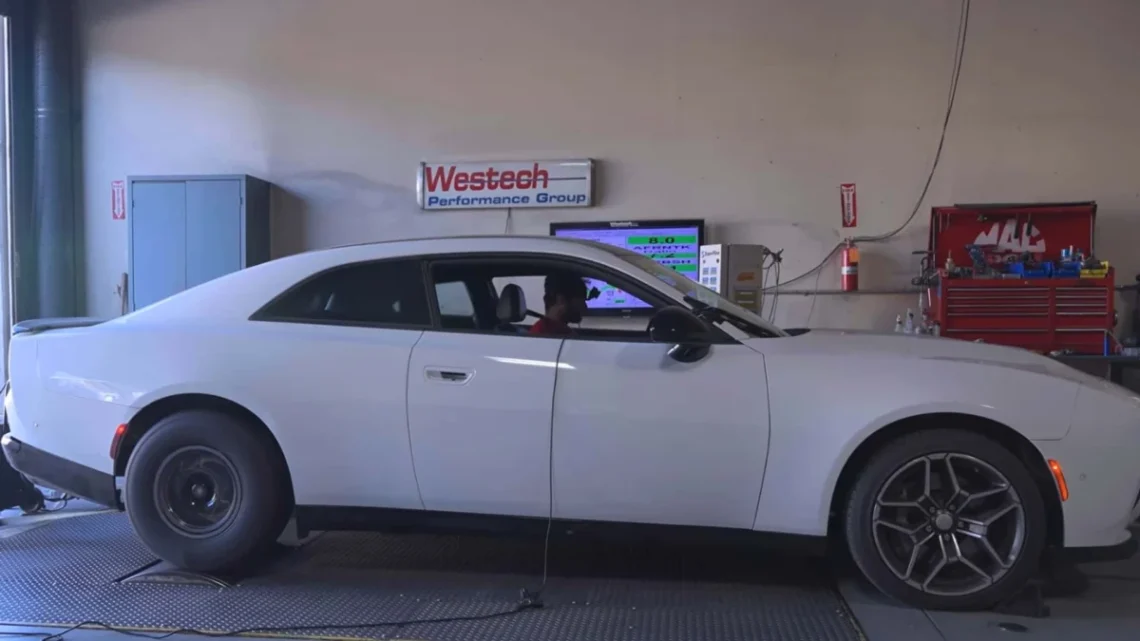
Opinions have flown thick and fast ever since Dodge unveiled the next-generation Charger, spanning fierce debates over its battery-electric variants and its traditional internal combustion engine options. Yet, any lingering skepticism regarding the viability, strength, or performance ceiling of the gas-powered, inline-six variants is being thoroughly dismantled in the workshop. Enter renowned fabricator and project-car aficionado Rob Dahm, who took a brand-new 2026 Dodge Charger Sixpack and shoved it headfirst into four-figure horsepower territory.
Remarkably, Dahm achieved this phenomenal output without touching a single internal component of the engine block. The formula relies on forced induction, supporting fuel system modifications, and aggressive tuning. While the results on the dyno are nothing short of breathtaking, the experiment also exposed the fine line modern automakers walk when balancing mechanical limits with factory transmissions.
Main Facts: The 970-Horsepower Setup
In standard factory trim, the high-output version of the Dodge Charger’s twin-turbocharged 3.0-liter Hurricane inline-six-cylinder engine is hardly a slouch. Out of the box, it pushes out a very respectable 550 horsepower and 531 lb-ft of torque—figures that comfortably eclipse many of yesterday’s V8 muscle cars.
However, Dahm’s customized iteration completely redefines the parameters of the platform:
- Peak Power Output: 968 horsepower at the wheels.
- Peak Torque: 863 lb-ft of torque.
- Internal Modifications: Completely stock engine block and factory rotating assembly.
- Key Hardware Changes: Removal of the factory twin-turbo setup in favor of a single, large aftermarket turbocharger paired with a custom billet intake manifold.
- Fuel and Power Enhancements: Runs on E85 fuel, operates with a gutted/removed exhaust system for maximum flow, and utilizes a supplemental splash of nitrous oxide to extract peak performance.
Before introducing nitrous oxide and while still utilizing a complete exhaust system, Dahm’s Charger was already churning out a staggering 850 horsepower. Once the boost was cranked up to an intense 46 psi and the nitrous system was brought online, output surged to nearly 970 wheel horsepower.
Chronology of the Build: From Stock to Screaming
The transformation of the 2026 Charger Sixpack did not happen overnight, following a calculated escalation of modifications typical of high-end automotive engineering and project fabrication.
Phase 1: Baseline Assessment and Teardown
Upon taking delivery of the 2026 Dodge Charger Sixpack, Dahm and his team initially evaluated the car in its factory state. The Hurricane inline-six has already earned praise from tuners for its robust closed-deck aluminum block, forged steel crankshaft, and forged connecting rods. Recognizing the inherent structural integrity designed into the engine by Dodge’s powertrain engineers, Dahm opted to test the limits of the factory metallurgy rather than immediately tearing down the engine for a custom build.
Phase 2: Single-Turbo and Billet Intake Swap
The first major structural deviation from stock involved discarding the factory twin-turbo configuration. While efficient for factory response and daily drivability, twin stock turbos face significant airflow ceilings when chasing extreme power goals. Dahm plumbed a single, massive turbocharger into the engine bay, routing compressed air through a high-flow billet intake manifold designed to withstand extreme boost pressures without ballooning or cracking.
Phase 3: Fuel System Adaptation and Exhaust Removal
To support the massive volumetric efficiency demanded by the larger turbocharger, the fueling system was optimized to consume E85 (high-ethanol blend fuel), which provides higher octane ratings and substantial cooling benefits under high-boost conditions. Additionally, the exhaust system was temporarily removed to eliminate backpressure, allowing the turbine to spool freely and breathe unhindered.
Phase 4: Dyno Tuning and the 46-PSI Push
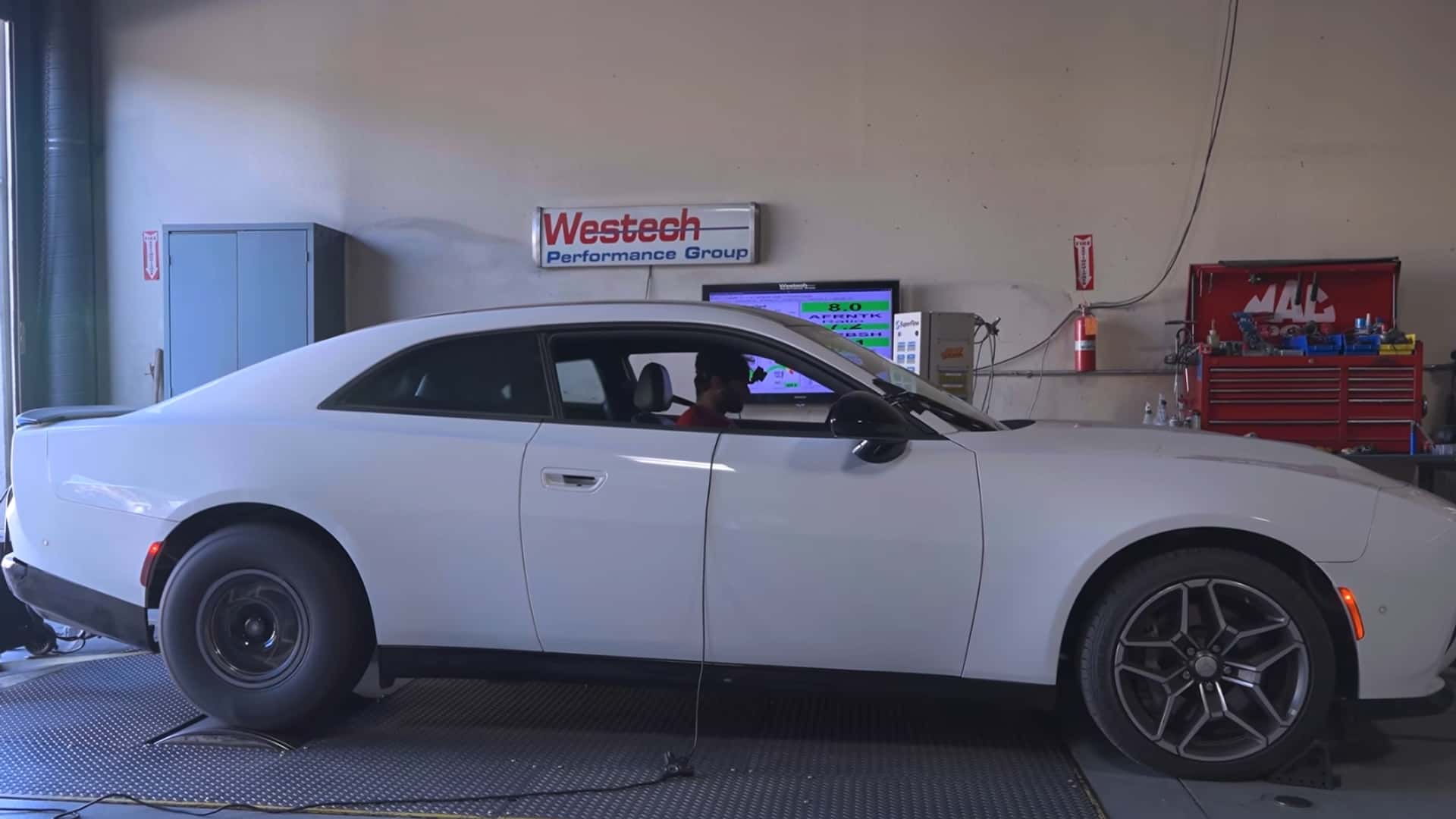
With the mechanical architecture secured, the car was strapped to the chassis dyno. Initial baseline pulls with the single turbo and full exhaust yielded roughly 850 horsepower. Emboldened by the engine’s uncomplaining composure, the team increased the boost controller settings progressively until reaching a blistering 46 pounds per square inch of boost. Combined with a controlled shot of nitrous oxide, the dyno registered a peak reading of 968 horsepower and 863 lb-ft of torque at the wheels.
Supporting Data: The Hurricane Engine’s Hidden Potential
The success of Dahm’s project shines a bright spotlight on Stellantis’s Hurricane engine family. Built to replace the legendary Hemi V8 in many applications, the 3.0-liter twin-turbo inline-six was engineered from day one to handle demanding duty cycles and high specific outputs.
| Metric | Factory High-Output Spec | Rob Dahm Modified Spec |
|---|---|---|
| Engine Configuration | 3.0L Twin-Turbo Inline-6 | 3.0L Single-Turbo Inline-6 |
| Fuel Type | Gasoline (91/93 Octane) | E85 + Nitrous Oxide |
| Boost Pressure | Factory Regulated | 46 PSI |
| Wheel Horsepower | ~550 HP (Crank) | 968 WHP |
| Wheel Torque | ~531 lb-ft (Crank) | 863 lb-ft |
| Internal Components | Stock | Stock Block & Rotating Assembly |
The ability of the stock pistons, rods, and crankshaft to absorb nearly 1,000 wheel horsepower without failure speaks volumes about modern metallurgy and computer-aided engineering (CAE). In previous decades, doubling the factory output of a production engine almost invariably required immediate replacement of the internal rotating assembly with forged aftermarket components. That the Hurricane’s factory internals held together under 46 psi of boost changes the calculus for modern Mopar tuning.
The Weak Link: Transmission Self-Preservation
While the engine block and its internals survived the punishing dyno sessions, the experiment did encounter a mechanical boundary: the factory transmission.
As the car approached its peak power output, the stock eight-speed automatic transmission began exhibiting erratic shifting patterns. Rather than experiencing catastrophic mechanical failure—such as shredded gearsets or a ruptured case—the transmission’s internal control module appeared to initiate protective measures. Automakers program complex torque-management protocols into modern transmissions, and when inputs drastically exceed designed safety thresholds, the software will often alter shift timing, slip clutches intentionally, or restrict operation to prevent total destruction.
Fortunately, once the extreme dyno runs concluded, the transmission settled back into normal operation, leaving the entire powertrain intact. However, the limitation makes one thing clear: had the gearbox been rated to handle four-figure power continuously, Dahm very likely could have pushed the setup past the magical 1,000-horsepower threshold on the dyno sheet.
Implications for the Aftermarket and the Future of Mopar Performance
Rob Dahm’s high-boost 2026 Dodge Charger project carries profound implications for the automotive aftermarket and the enthusiast community’s acceptance of the post-V8 era.
1. Easing the Transition Away from the V8
Purists mourning the loss of the supercharged Hemi V8 have frequently claimed that inline-six engines lack the character, modifiability, and brutal power ceiling associated with traditional American muscle. Dahm’s build thoroughly dismantles that narrative. By proving that the new Hurricane engine can produce near-1,000 horsepower on stock internals with relatively straightforward bolt-on modifications, the car demonstrates that the Charger’s performance lineage remains very much alive.
2. The Rise of Aftermarket Drivetrain Upgrades
As engines like the Hurricane prove their durability under extreme stress, the aftermarket spotlight will inevitably shift toward supporting infrastructure. Companies specializing in transmission upgrades, heavy-duty torque converters, and reinforced clutch packs for modern multi-speed automatics will find a lucrative market among owners looking to unlock the full potential of these inline-six powerplants without triggering transmission limp modes.
3. A New Frontier for Tuners
The success of high-boost, E85-fueled inline-six setups signals a return to the golden age of turbo-tuning, reminiscent of the legendary Toyota 2JZ or Nissan RB engines, but wrapped in modern chassis dynamics and electronic architecture. As tuning platforms mature, expect to see even more radical builds emerge from shops across the country, proving that the 2026 Dodge Charger is a blank canvas ready to be pushed to absolute extremes.