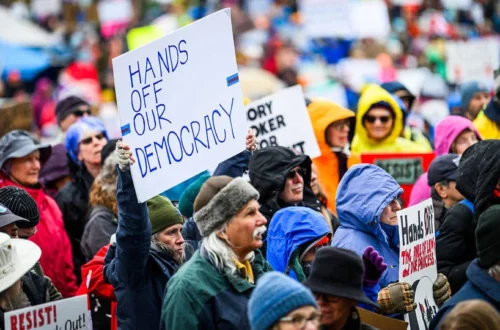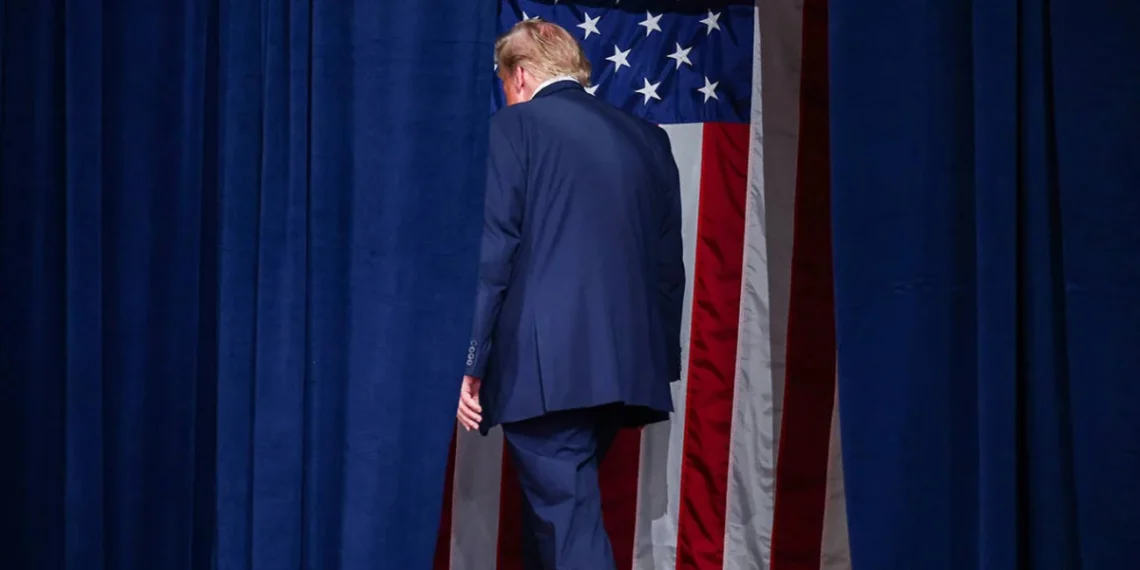
LJUBLJANA — In the immediate aftermath of the United States midterm elections, a wave of profound relief washed over Western capitals, liberal institutions, and international markets. The anticipated constitutional crisis—fueled by fears of contested outcomes, civil unrest, and authoritarian entrenchment—failed to materialize.
Donald Trump’s party suffered a resounding and historic defeat at the ballot box. In a surprising display of institutional norms, the former president accepted the results and extended a rhetorical olive branch, promising cooperation with the incoming Democratic majority in Congress. For millions, the nightmare scenario of an aborted democratic transition was averted.
Yet, looking out from Ljubljana, the renowned cultural theorist and philosopher Slavoj Žižek argues that the world must resist the intoxicating pull of euphoria. Rather than signaling a return to political normalcy, Trump’s lame-duck status and legislative defeat remove a convenient psychological shield. They strip away the excuses that citizens, policymakers, and global leaders have used to avoid confronting the deep-seated systemic crises plaguing modern liberal democracies.
Beneath the surface of political celebration lies a stark reality: the conditions that birthed the populist wave remain entirely intact. If anything, the clock is ticking faster on the systemic challenges—ranging from economic inequality to ecological collapse—that require radical, structural intervention.
Main Facts
The political landscape of the United States has shifted dramatically following a high-stakes midterm election cycle defined by unprecedented voter turnout and intense ideological polarization.
- The Electoral Outcome: The opposition Democratic Party secured decisive majorities in both chambers of Congress, capitalizing on voter fatigue with economic instability and democratic friction.
- Trump’s Response: In a departure from his post-2020 rhetoric, Donald Trump publicly acknowledged the electoral defeat, attributing it to localized economic anxieties rather than systemic fraud, and signaled a willingness to negotiate with the newly empowered legislative branch.
- The Philosophical Diagnosis: Writing from a critical perspective, Slavoj Žižek warns that treating this electoral outcome as a definitive victory against authoritarianism is a dangerous illusion. The result is merely a temporary reprieve, not a cure for the maladies eroding democratic institutions worldwide.
- The Core Thesis: The removal of Trump as an immediate, acute threat risks lulling the global populace back into a state of complacent reformism. This leaves societies utterly unprepared for the next wave of systemic shocks.
Chronology of Events Leading to the Midterm Realignment
To understand how the United States arrived at this fragile political crossroads, it is essential to trace the trajectory of the post-2024 political landscape.
- Late 2024–2025: The Consolidation of Populist Momentum
Following the preceding presidential cycle, populist factions retained a formidable grip on legislative agendas, weaponizing inflation, supply-chain vulnerabilities, and cultural anxieties. Political discourse grew increasingly transactional, centered heavily on executive defiance of traditional norms. - Spring 2026: Economic Pressures and Voter Fatigue
Persistent cost-of-living crises, coupled with climate-induced supply shocks, began to weigh heavily on suburban and working-class constituencies. Public sentiment shifted away from grand ideological confrontations toward demands for administrative competence and economic relief. - September–October 2026: The Campaign Crescendo
The midterm campaign transformed into a referendum on democratic governance. While the administration in power defended its legislative record, the populist opposition sought to nationalize the elections around themes of systemic decline and cultural displacement. - Early November 2026: Election Day and the Peaceful Concession
Voter turnout shattered midterm historical averages. As early returns indicated a sweeping rejection of the incumbent populist slate, international markets stabilized. When Trump conceded the legislative losses and pledged cooperation, global sighs of relief echoed from Brussels to Tokyo.
Supporting Data and Political Metrics
A quantitative examination of the 2026 midterms reveals a complex portrait of an electorate that is deeply divided yet desperate for institutional stability.
- Turnout Metrics: Overall voter turnout reached an estimated 58% of eligible voters, the highest for a midterm election in modern American history, driven primarily by youth mobilization and suburban demographic shifts.
- Economic Indicators: Exit polls indicated that 64% of voters cited inflation and housing affordability as their primary considerations, overshadowing cultural wedge issues by a significant margin.
- Congressional Margins: The Democratic Party secured a narrow but workable majority in the House of Representatives and expanded its footprint in the Senate by three seats, effectively neutralizing the legislative obstructionism that defined the previous two years.
- Global Approval Ratings: Trust in American democratic resilience, which plummeted following previous electoral disputes, saw a temporary 14-point rebound among key G7 allies, according to cross-national polling data released immediately following the concession.
Official Responses and International Reactions
The global response to the midterm results was characterized by an immediate, collective exhale, quickly followed by cautious warnings from political analysts and international diplomats.
The Western Alliance
European leaders were quick to praise the resilience of American democratic institutions. Officials in Brussels and Berlin emphasized that the peaceful transfer of legislative power reaffirms the stability of the transatlantic alliance. However, behind closed doors, diplomatic corps acknowledged that European security cannot rely indefinitely on the cyclical oscillations of American domestic politics.
Domestic Political Establishments
In Washington, congressional leaders from both sides of the aisle framed the results as a mandate for bipartisan compromise. The incoming Democratic leadership stressed the need to address healthcare costs, infrastructure modernization, and technological regulation. Meanwhile, populist figures within the opposition recalibrated their strategies, positioning themselves as martyrs of a rigged economic system while preparing for the next presidential cycle.
Critical Intellectuals
Countering the mainstream political narrative, intellectuals like Žižek have cautioned against mistaking institutional survival for social progress. From this perspective, the establishment’s celebration is an exercise in ideological denial—an attempt to convince the public that the system works simply because a catastrophic rupture was narrowly avoided.
Implications: The Hard Conversations We Must Not Avoid
The true danger of Donald Trump’s lame-duck status is not that he remains too powerful, but that he has been rendered temporarily impotent in a way that relieves the broader political ecosystem of its responsibility to change.
1. The Trap of "Return to Normalcy"
Liberal democracies have developed a dangerous addiction to negative politics—rallying not for a visionary future, but against a specific populist bogeyman. With Trump sidelined as an active legislative threat, the liberal establishment is primed to declare victory and return to pre-crisis business-as-usual.
Yet, it was precisely this "business-as-usual"—marked by widening wealth gaps, hollowed-out industrial towns, and unaddressed climate vulnerabilities—that generated the populist revolt in the first place. Pretending that the disease has been cured simply because the symptom has temporarily subsided is a recipe for political suicide.
2. The Ecological and Economic Imperatives
The crises defining the twenty-first century do not care about the rhythms of the American electoral calendar. Climate change accelerates regardless of who controls the House of Representatives; artificial intelligence transforms labor markets irrespective of partisan majorities.
Solving these problems requires moving beyond the constraints of orthodox market capitalism and incremental reform. It demands a mobilization of resources and a reimagining of social contracts on a scale not seen since the post-war era. If Americans and their global allies use Trump’s defeat as an excuse to exhale and rest, they will squander the precious window of time remaining to avert irreversible ecological and economic tipping points.
3. The Crisis of Left-Liberal Imagination
The ultimate failure highlighted by Žižek’s critique lies within the progressive and liberal camps. Lacking a bold, utopian horizon of their own, they are reduced to defending a decaying status quo. They offer the electorate managed decline wrapped in institutional rhetoric, contrasting it with the raw, destructive energy of the populist right.
Until the political mainstream can articulate an alternative that transcends mere managerial competence—an alternative that genuinely addresses the alienation, insecurity, and exploitation experienced by ordinary citizens—every electoral defeat of a populist figure will merely be the prelude to a stronger, more dangerous resurgence.
Conclusion
The world can afford to breathe a sigh of relief for precisely twenty-four hours. After that, the real work begins. Trump’s defeat in the midterms is not a resolution; it is an extension on a loan that society cannot afford to repay.
To honor the relief felt across the globe, we must abandon the comforting delusions of the past and engage in the agonizing, radical conversations necessary to build a world resilient enough to survive the next catastrophe. Anything less is merely sleepwalking toward the precipice.