By Shlomo Ben-Ami
November 6, 2026
Main Facts
The political landscape of Israel remains deeply fractured following the general elections concluded in late 2026. Despite mounting international pressure, an economy strained by prolonged conflict, and a severe deterioration of Israel’s standing on the global stage, veteran Prime Minister Benjamin Netanyahu and his right-wing religious bloc managed to avoid a decisive electoral defeat.
Instead of producing a clear mandate for change or reform, the ballot box delivered a familiar political deadlock. The electorate remains rigidly divided along tribal, cultural, and ideological lines. While critics and progressive factions had hoped that the cumulative crises of recent years—including prolonged military campaigns, allegations of international war crimes, and deep democratic erosion—would prompt a sweeping political reckoning, the voters instead retreated into their respective political silos.
However, political analysts and opposition strategists argue that the very deadlock preventing a traditional, stable right-wing coalition from forming could inadvertently open an unconventional pathway toward political renewal. Specifically, proponents of democratic restoration argue that the opposition bloc could engineer a paradigm shift by integrating Arab-led political parties into a coalition framework. Doing so would not only unseat Netanyahu but could also permanently challenge and neutralize the violent, ethno-nationalist, and exclusionary ideologies that have come to dominate Israeli governance over the past decade.
Chronology of the 2026 Electoral Crisis
To understand how Israel arrived at its current political precipice, it is necessary to examine the sequence of events leading up to and immediately following the 2026 vote:
- Early 2026 / Pre-Election Phase: As mounting security operations and prolonged multi-front conflicts strained the Israeli public, political tensions reached a boiling point. Civil society groups and opposition figures organized massive demonstrations in Tel Aviv, Jerusalem, and Haifa, demanding early elections and accountability for the government’s management of security and foreign policy.
- October 2026: Prominent political commentators and former diplomats issued continuous warnings cautioning the public against expecting a miraculous transformation in foreign policy or domestic governance, predicting that entrenched tribal voting patterns would blunt the impact of progressive campaigns.
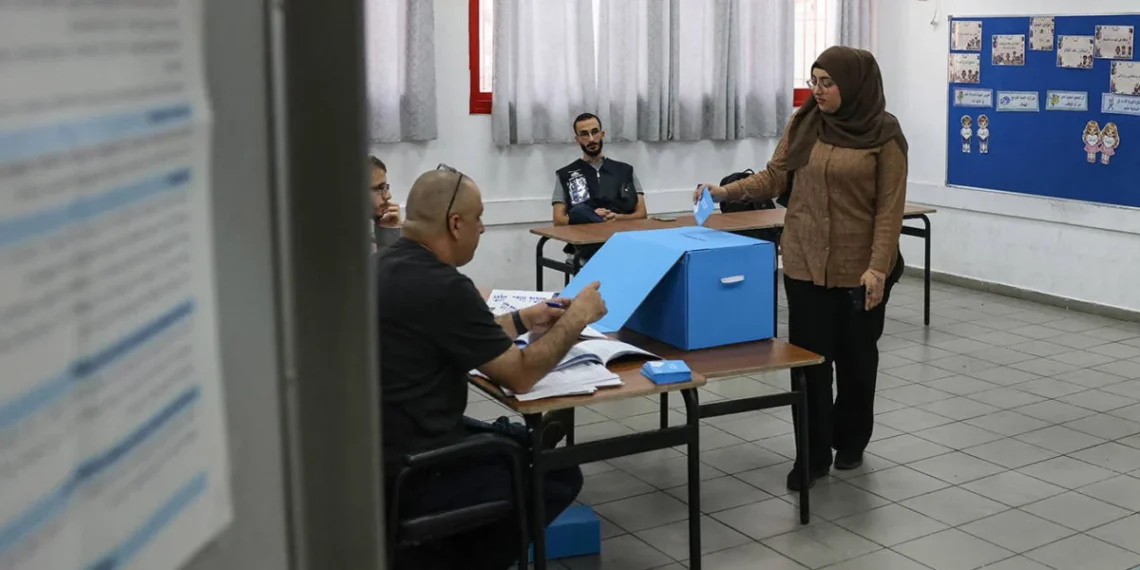
- Early November 2026: Israelis went to the polls in a high-stakes national election. Turnout was brisk, fueled by intense polarization over judicial independence, the cost of living, and the nation’s security doctrine.
- November 6, 2026: Final election results confirmed a deadlocked Knesset. Neither the pro-Netanyahu right-wing/religious bloc nor the fragmented center-left opposition secured the requisite 61 seats to form a stable majority government independently, plunging the country into protracted coalition negotiations.
Supporting Data and Sociopolitical Metrics
The 2026 election results reflect a society caught in a multi-dimensional structural crisis. Quantitative data from polling agencies, human rights organizations, and international monitors underscore the depth of the challenge:
- The Electoral Split: The Knesset remains divided into near-equal blocs, with neither side able to achieve a functional majority without relying on kingmaker factions or cross-ideological cooperation.
- Global Standing: According to recent international indexes tracking diplomatic standing, international court scrutiny, and global public opinion, Israel’s soft power and diplomatic alliances have experienced a historic downward trajectory over the preceding years of continuous warfare.
- Tribal Polarization: Demographic studies indicate that voting behavior in Israel is increasingly dictated by cultural and communal affiliation—secular versus ultra-Orthodox, Ashkenazi versus Mizrahi, and Jewish-majority communities versus Arab-Israeli towns—leaving very few swing voters in the center.
-
Economic Strain: Years of continuous mobilization, defense budget
expansions, and international trade complications have weighed heavily on the national economy, creating fertile ground for public discontent that, paradoxically, failed to fully translate into anti-incumbent votes at the ballot box.
Official Responses and Political Reactions
The inconclusive outcome of the election has triggered rapid maneuvers and fierce rhetoric across Israel’s political spectrum:
The Incumbent Bloc
Representatives of Benjamin Netanyahu’s right-wing religious alliance hailed the resilience of their voter base, framing the electoral deadlock as a mandate to maintain a firm hand on national security. Netanyahu’s allies argued that any attempt by the fractured opposition to form a government relying on Arab parties would constitute an illegitimate betrayal of Zionist principles. They maintain that only a robust, nationalist government can protect Israel from existential threats in a hostile regional environment.
The Opposition Bloc
Moderate and center-left leaders, meanwhile, find themselves at a strategic crossroads. While mainstream opposition figures have historically shied away from formal partnerships with Arab-led factions for fear of alienating nationalist-leaning Jewish voters, the 2026 deadlock has forced a pragmatic re-evaluation. Prominent voices within the opposition have begun arguing that treating Arab citizens and their elected representatives as legitimate political partners is not merely an electoral strategy, but a fundamental prerequisite for saving Israeli democracy from permanent authoritarian drift.
Civil Society and Minority Leadership
Leaders of the Arab-led parties responded to the election results by emphasizing that their communities hold the key to breaking the cycle of right-wing hegemony. Representatives noted that genuine democratic reform in Israel is impossible as long as 20% of the population is treated as a permanent political opposition or security threat. They reiterated their willingness to engage in pragmatic political maneuvering to unseat Netanyahu, provided that any prospective coalition partner commits to ending institutional discrimination, combating rising internal violence, and supporting a renewed peace track.
Implications for Israeli Democracy and Regional Stability
The implications of the 2026 electoral deadlock extend far beyond the immediate arithmetic of forming a government coalition. Israel stands at a historical fork in the road, with profound consequences for its democratic character and its place in the Middle East.
1. The Domestic Democratic Experiment
For years, critics have warned that the erosion of judicial checks and balances, coupled with the mainstreaming of racist and exclusionary rhetoric, has pushed Israel toward an illiberal democracy or an apartheid-like reality in the occupied territories. Breaking this trajectory requires more than just replacing an individual leader; it requires dismantling the systemic ideology of supremacy and division.
By incorporating Arab parties into a governing coalition or a blocking majority, the opposition would shatter the taboo that has long sidelined Arab Israelis from executive power. This normalization of shared political citizenship could serve as a powerful antidote to the tribalism poisoning Israeli society, fostering a civic nationalism based on shared rights rather than ethnic exclusivity.
2. Foreign Policy and Regional Realities
Externally, Israel’s diplomatic isolation poses an acute strategic threat. The continuation of hardline policies under Netanyahu or figures further to his right risks turning Israel into an international pariah, straining historic alliances with Western democracies and complicating regional normalization agreements. A coalition built on democratic renewal and a moderate foreign policy could recalibrate Israel’s international standing, opening channels for renewed dialogue regarding regional security, Palestinian statehood, and economic integration.
3. The Road Ahead: Risk and Opportunity
The path forward is fraught with political peril. Any attempt to form a coalition dependent on Arab support will face fierce, vitriolic opposition from right-wing media outlets and nationalist pressure groups, who will spare no effort in delegitimizing the government. Furthermore, bridging the ideological gaps between center-left Zionists and Arab nationalists requires immense diplomatic skill, mutual trust, and policy compromises.
Yet, as Shlomo Ben-Ami notes, the alternative is far grimmer: a permanent entrenchment of political paralysis, deepening social decay, and the final erosion of Israel’s democratic foundations. If the opposition seizes this moment to forge a bold, inclusive coalition, the 2026 election—initially written off as a disappointing stalemate—might be remembered historically as the turning point where Israeli democracy stepped back from the brink and reclaimed its foundational ideals.