By Aziz Huq
Published: November 6, 2026
Chicago, Illinois
Main Facts
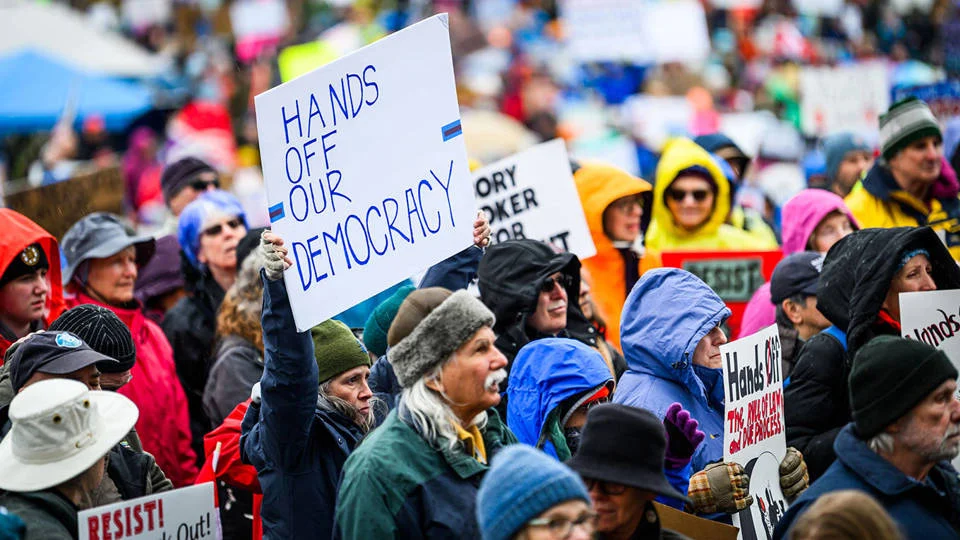
The political landscape of the United States has undergone a seismic realignment following a historic cycle of midterm elections that defied traditional political gravity. While exit polls consistently indicated that economic anxiety and the cost-of-living crisis ranked foremost in voters’ minds, the underlying driver of the electoral outcome was a profound, systemic rejection of authoritarian governance.
The sweeping, generational victories secured by Democrats across both chambers of Congress fundamentally disrupted the trajectory of Donald Trump’s second presidential term. Political analysts note that the election served as a de facto referendum on the rule of law, institutional integrity, and the limits of executive power. Rather than serving as a rubber stamp for a polarizing administrative agenda, the electorate utilized the ballot box to dismantle the political momentum of the MAGA movement.
Crucially, political scientists and economists argue that the two primary voter concerns—economic affordability and democratic preservation—are inextricably linked. Addressing inflation, housing costs, and wage stagnation ultimately depends on the health, transparency, and functionality of democratic institutions. Without a stable constitutional framework anchored in the rule of law, sustainable economic recovery remains out of reach.
Chronology of the 2026 Midterm Turning Point
To understand the magnitude of the 2026 midterms, it is necessary to trace the trajectory of the political climate leading up to November.
- January – April 2026: Persistent inflation and high interest rates dominate the national conversation. Early polling suggests a standard mid-term backlash against the incumbent administration, with analysts predicting modest gains for the opposition party based purely on historical precedent and economic discontent.
- May – July 2026: High-profile legal battles involving executive overreach and conflicts over federal authority capture public attention. Civil society organizations and legal scholars ramp up public awareness campaigns focusing on the erosion of democratic norms and institutional checks and balances.
- August – September 2026: Campaign dynamics shift. While opposition candidates maintain a strong focus on kitchen-table economics, they increasingly connect soaring costs and corporate impunity to cronyism and the dismantling of regulatory oversight bodies. Grassroots mobilization hits record highs, with voter registration numbers surging among suburban and young demographics.
- October 2026: The final month of campaigning sees unprecedented voter turnout during early voting periods. Independent voters, traditionally swing constituencies, break decisively toward candidates championing institutional stability and constitutional guardrails.
- November 6, 2026: Election night yields generational Democratic gains. The margin of victory shatters expectations, securing not just a narrow majority in the House of Representatives, but a decisive firewall in the Senate. The scale of the defeat forces a profound reckoning within the MAGA movement.
Supporting Data and Electorate Dynamics
A deeper dive into post-election data reveals the mechanics behind the political earthquake in Chicago and nationwide. Quantitative analysis of the 2026 midterms highlights several critical trends:
- Voter Turnout Surges: Overall turnout exceeded typical midterm figures by nearly 14 percentage points, driven heavily by voters aged 18–34 and suburban women—demographics that historically exhibit lower participation rates in non-presidential election years.
- The Dual-Priority Voter: According to comprehensive exit polling conducted by major research consortiums, 64% of voters listed "cost of living" as their top personal concern. However, 81% of those same respondents stated that "preserving democracy and the rule of law" was either "extremely important" or "very important" in determining their vote, indicating that voters did not separate economic struggles from governance standards.
- Independent Realignment: Unaffiliated voters broke for institutionalist candidates by a margin of 18 points, a stark reversal from previous cycles where anti-establishment rhetoric held stronger sway over the political center.
- Legislative Shifts: The resulting congressional balance effectively strips the executive branch of its unilateral implementation capacity, returning the federal government to a state of functional legislative equilibrium.
Official Responses and Political Reactions
The fallout from the election night results has sent shockwaves through Washington and state capitals across the country.
In a hastily arranged press conference at his residence, President Donald Trump contested the national narrative, framing the election results as a temporary setback caused by macroeconomic headwinds rather than a rejection of his administration’s philosophy. Insisting that his policy goals remain popular, executive spokespersons signaled that the White House would seek alternative executive actions and judicial avenues to advance its core agenda despite the new congressional landscape.
Conversely, congressional leaders who spearheaded the opposition campaign delivered a unified message centering on institutional restoration. Speaking from Capitol Hill, newly empowered legislative figures emphasized that the results mandate a return to regular order, congressional oversight, and bipartisan cooperation on economic relief.
"The American people have spoken clearly," said a senior congressional leader during the post-election briefing. "They are exhausted by chaos, lawlessness, and the weaponization of government against its citizens. Our immediate mandate is twofold: lower the cost of living for working families and restore the unbreakable foundation of our constitutional republic."
State-level officials, particularly attorneys general who had spent the previous two years mounting legal challenges against federal overreach, hailed the results as a vital vindication of federalism and the separation of powers.
Implications for the Future of American Democracy
The decisive outcome of the 2026 midterms carries profound implications for the remainder of the presidential term and the broader trajectory of American politics.
1. The Erosion of the MAGA Paradigm
For years, the MAGA movement relied on a strategy of continuous escalation, institutional disruption, and the cultivation of grievance politics. The generational rejection at the ballot box demonstrates the hard limits of this approach. When pushed to choose between systemic disruption and institutional stability, the American electorate opted decisively for the latter. The movement now faces an identity crisis, with factions within the broader conservative coalition openly questioning whether populist disruption remains a viable path forward.
2. The Economic-Democratic Nexus
A central thesis emerging from political analysts is that economic recovery and democratic health are interdependent. High inflation, supply chain vulnerabilities, and market distortions often thrive in environments characterized by regulatory capture, political favoritism, and the erosion of independent oversight. By demanding a restoration of the rule of law, voters have laid the groundwork for more transparent, accountable economic policymaking. Restoring trust in public institutions is viewed by economists as a vital precursor to long-term fiscal stability and middle-class revitalization.
3. Institutional Resilience Tested and Proven
The events leading up to and culminating in the November 2026 elections provide a powerful case study in the resilience of American democratic architecture. Despite sustained pressure on voting rights, judicial independence, and electoral integrity, the mechanics of democracy functioned as designed. The peaceful transfer of legislative power and the corrective capacity of the ballot box underscore that the foundational norms of the republic possess deep systemic depth.
Looking Ahead
As Washington prepares for a divided government and a newly empowered legislative branch, the work of rebuilding has only just begun. The 2026 midterms will be remembered not merely as an ordinary mid-term correction, but as a pivotal historical moment where the American electorate reaffirmed its commitment to constitutional governance, decisively steering the nation away from the precipice of democratic backsliding.