
As the global race for artificial intelligence dominance intensifies, the tech industry’s environmental footprint has become a focal point of intense scrutiny. Amazon, the world’s largest cloud services provider, has unveiled a new, highly specific climate commitment: a pledge to slash the carbon intensity of its electricity consumption by 65 percent by 2030, using 2019 as the baseline.
While the company frames this as a vital step toward transparency and accountability, environmental experts and industry analysts are questioning the efficacy of the target. By focusing on "intensity"—the emissions per unit of energy—rather than absolute emissions, critics argue that Amazon may be creating a metric that allows for continued, or even accelerating, growth in total power consumption while theoretically hitting its climate targets.
The Core Mandate: Parsing the 65 Percent Goal
The new directive, announced in a November 17 statement by Amazon’s Chief Sustainability Officer, Kara Hurst, arrives at a critical juncture for the tech giant. As Amazon expands its global operations to support the massive energy requirements of AI data centers, its electricity demand has skyrocketed.
"A near-term measurable goal keeps us focused and gives customers a clear trajectory to track our progress against," Hurst noted in the statement. The goal applies to Amazon’s entire global operation, encompassing not just its energy-hungry server farms but its massive retail logistics network and physical infrastructure.
However, the "intensity" model is a controversial tool in climate accounting. Unlike absolute emissions targets—which measure the total amount of greenhouse gases entering the atmosphere—intensity metrics measure the efficiency of energy use. If Amazon doubles its total electricity consumption but cuts the carbon content of that energy by 65 percent, the company could claim success even as its total impact on the climate remains high or increases.
A Chronology of Amazon’s Climate Strategy
To understand the significance of this new goal, one must look at the arc of Amazon’s climate commitments over the last several years:
- 2019: Amazon establishes the baseline year for its current carbon footprint reporting. At this time, the company begins an aggressive expansion into renewable energy procurement.
- 2023: Amazon reports that it has successfully met its previous goal of matching 100 percent of its electricity consumption with renewable energy credits and power purchase agreements (PPAs).
- 2024: The company grapples with the fallout of the AI boom. As data center expansion accelerates, the realities of grid constraints force some operators, including Amazon, to consider or implement natural gas-fueled turbine solutions to meet reliability requirements.
- 2025: Amazon’s total carbon footprint is reported to have risen by 16 percent, marking a cumulative increase of 58 percent since the 2019 baseline year.
- November 17, 2025: Amazon announces its 65 percent intensity reduction goal, alongside a $4 billion investment in renewable projects in India, signaling a continued reliance on large-scale infrastructure investment to offset growth.
The Data Dilemma: Why Transparency Remains Elusive
The primary critique of Amazon’s announcement is the lack of historical context. Despite the company’s assertion that it has been tracking this internal metric for some time, it has never before disclosed this specific data point to the public. Without a published baseline for the intensity of its 2019 energy use, investors and climate scientists are left to wonder whether the target is ambitious or merely a reflection of the current grid decarbonization trends.
Scope 2 Emissions and the Accounting Gap
Under the Greenhouse Gas Protocol, Scope 2 emissions relate to the electricity purchased by a company. For Amazon, this category accounts for approximately 5 percent of its total greenhouse gas inventory. Because this is a relatively small slice of the overall footprint, some analysts argue that focusing on intensity within this narrow category diverts attention from the much larger Scope 3 emissions—the indirect emissions generated throughout the company’s vast supply chain and product lifecycle.
Comparing the Titans
Amazon stands apart in this specific announcement. Neither Microsoft nor Google has publicly committed to a similar intensity goal for purchased electricity. While all three giants are struggling to reconcile their aggressive AI deployment strategies with their net-zero pledges, Amazon’s move to codify intensity targets is a distinct strategic pivot. It suggests that Amazon is attempting to decouple its growth from its carbon output, a feat that has yet to be successfully demonstrated at this scale by any major tech firm.
Official Perspectives and Expert Skepticism
The reaction from the climate science community has been mixed, characterized largely by skepticism regarding the long-term impact of intensity-based targets.
Thomas Day, a senior analyst at the New Climate Institute, has been a vocal critic of the company’s recent trajectory. "In our 2022 and 2025 analyses of Amazon’s climate strategy, we found that the company has made significant investments in low-carbon technologies, but very weak pledges for future action," Day stated.
Day argues that the new goal is part of a broader, concerning trend of lobbying for softer accounting rules. "It targets lower emissions per unit of electricity used, not a reduction in absolute emissions," he added. This distinction is vital: if absolute emissions continue to rise, the net benefit to the atmosphere is zero, regardless of how efficiently that energy is produced.
Conversely, Amazon leadership maintains that the metric is scientifically grounded. Chris Roe, Amazon’s director of worldwide carbon, noted that the methodology was developed in partnership with experts from the Massachusetts Institute of Technology (MIT) and Carnegie Mellon. "We think carbon intensity, especially when linked to the physical thing we are trying to decarbonize, is a really important signal," Roe said. He emphasized that the goal aligns with the International Energy Agency’s (IEA) net-zero roadmap for the power sector.
The Implications: AI, Energy, and the Grid
The rise of artificial intelligence has fundamentally altered the power requirements of the tech sector. Modern data centers require constant, high-voltage, and reliable power—a demand that intermittent solar and wind energy, on its own, struggles to meet without massive battery storage or backup.
The "Natural Gas" Paradox
As Amazon and its peers scramble to secure enough power to fuel their AI chips, there is a growing trend toward the installation of on-site natural gas turbines. This creates a direct contradiction with public climate pledges. While these turbines provide the reliability required for 24/7 AI workloads, they also lock in fossil fuel dependence for decades. Amazon’s new intensity goal must be viewed through this lens: can they feasibly reduce the carbon intensity of their grid usage while simultaneously relying on new, fossil-fuel-based peaking plants to ensure AI uptime?
Global Expansion and Infrastructure
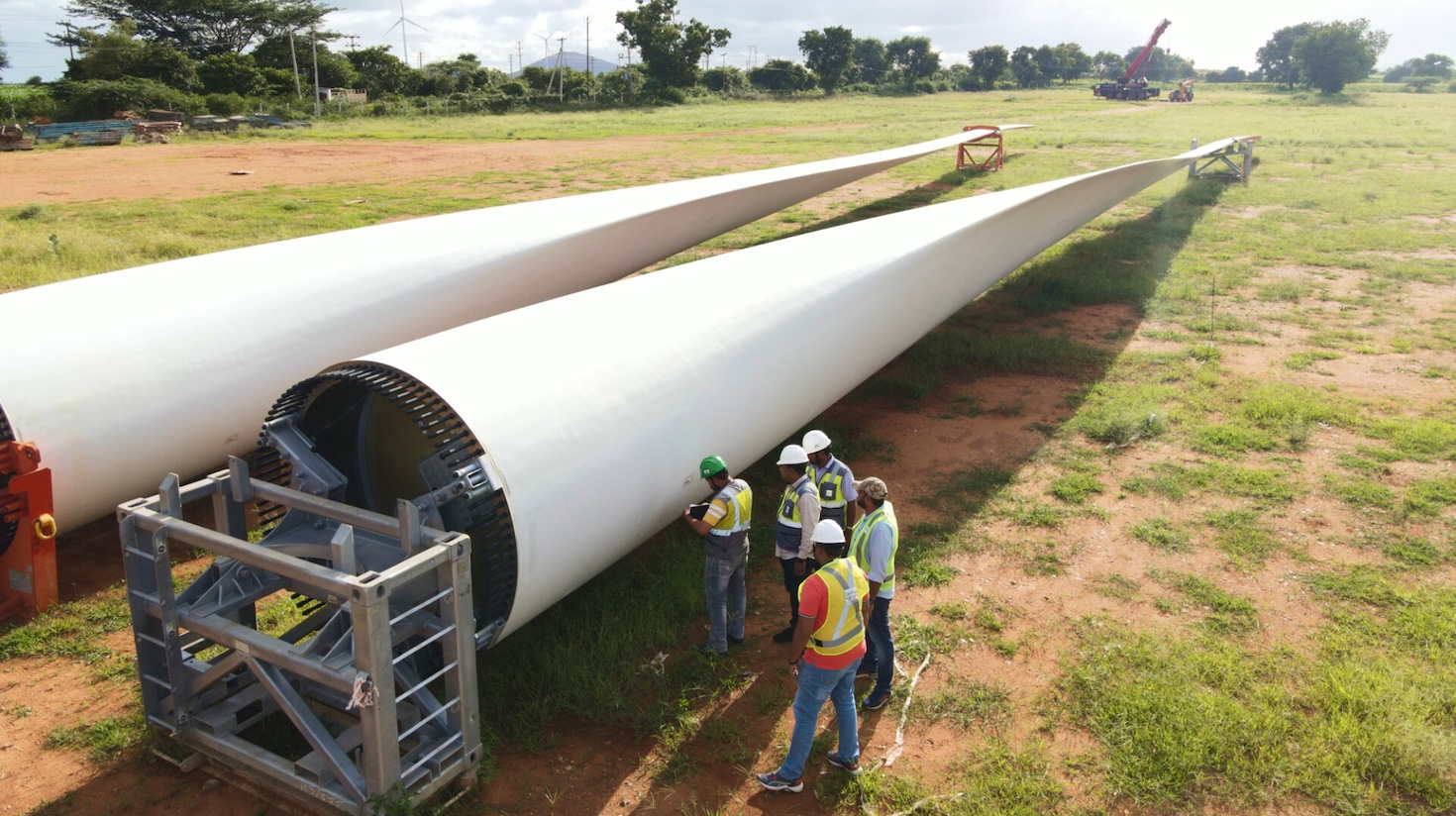
Amazon’s recent $4 billion investment in India’s renewable energy sector, bringing 2 gigawatts of capacity to the grid, is a testament to the company’s sheer scale. With plans for an additional $7 billion in similar investments, Amazon is undeniably a major player in the global energy transition. However, critics ask if these investments are truly "additional"—meaning they would not have happened without Amazon’s intervention—or if they are simply a way to purchase "green" credentials in markets where the grid is already undergoing a transition.
Looking Forward: Can Intensity Equal Sustainability?
The path to 2030 will be the ultimate test for Amazon’s climate strategy. If the company achieves a 65 percent reduction in carbon intensity but its absolute carbon footprint continues its current upward trend, the company will likely face increased pressure from regulators and shareholders to adopt more rigorous, absolute-reduction mandates.
The company has pledged to report the new metric annually alongside its absolute emissions inventory. This transparency, while currently limited by the lack of disclosed historical baselines, could eventually provide a clear picture of whether Amazon is succeeding in its effort to "decarbonize the commodity" of electricity or simply finding more efficient ways to grow its carbon-intensive footprint.
Ultimately, the challenge for Amazon is not merely technical, but philosophical. In an era where corporate environmental, social, and governance (ESG) goals are increasingly scrutinized, the move toward intensity targets may be seen as a strategic retreat from the more difficult, absolute reductions required to truly mitigate the impacts of climate change. As the AI revolution continues to reshape the energy landscape, the world will be watching to see if Amazon can reconcile its growth with the planet’s finite limits.