Main Facts: The Shift to Immersive Remote Exploration
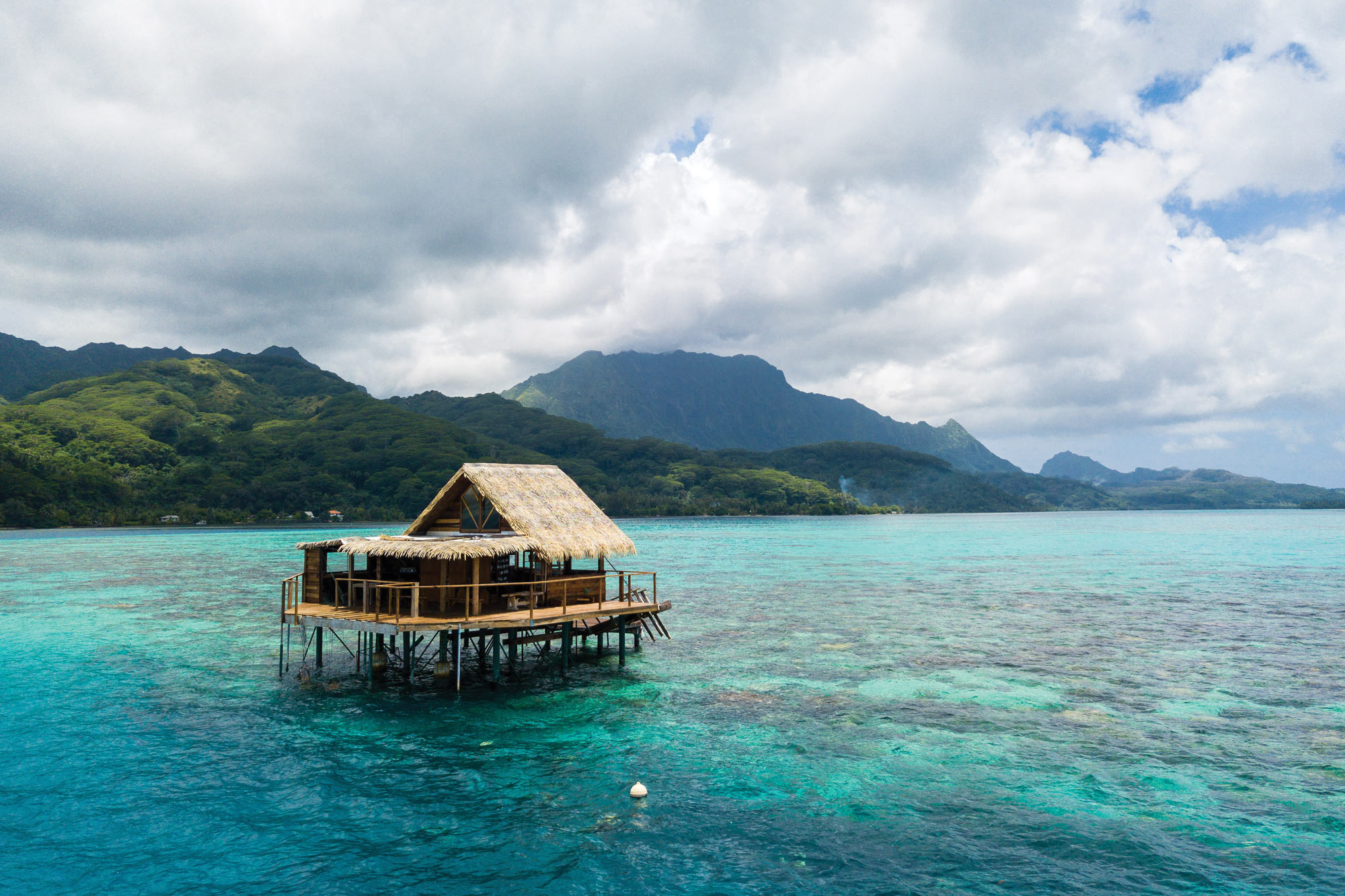
For decades, the standard luxury yacht charter experience followed a well-worn script. High-net-worth travelers looking for sun, sea, and service would routinely book vessels in the bustling waters of the Mediterranean or the Caribbean, anchoring in crowded bays, dining at celebrity-chef hotspots, and tracing predictable routes popularized by glossy tourism brochures. While the South Pacific has long occupied a mythical place in the global imagination—conjuring up images of emerald peaks, crystalline lagoons, and distant atolls—it was rarely treated as a primary charter destination. Instead, vessels in the region were typically "just passing through," utilized sporadically by private owners before being made briefly available to charter clients on a catch-as-catch-can basis.
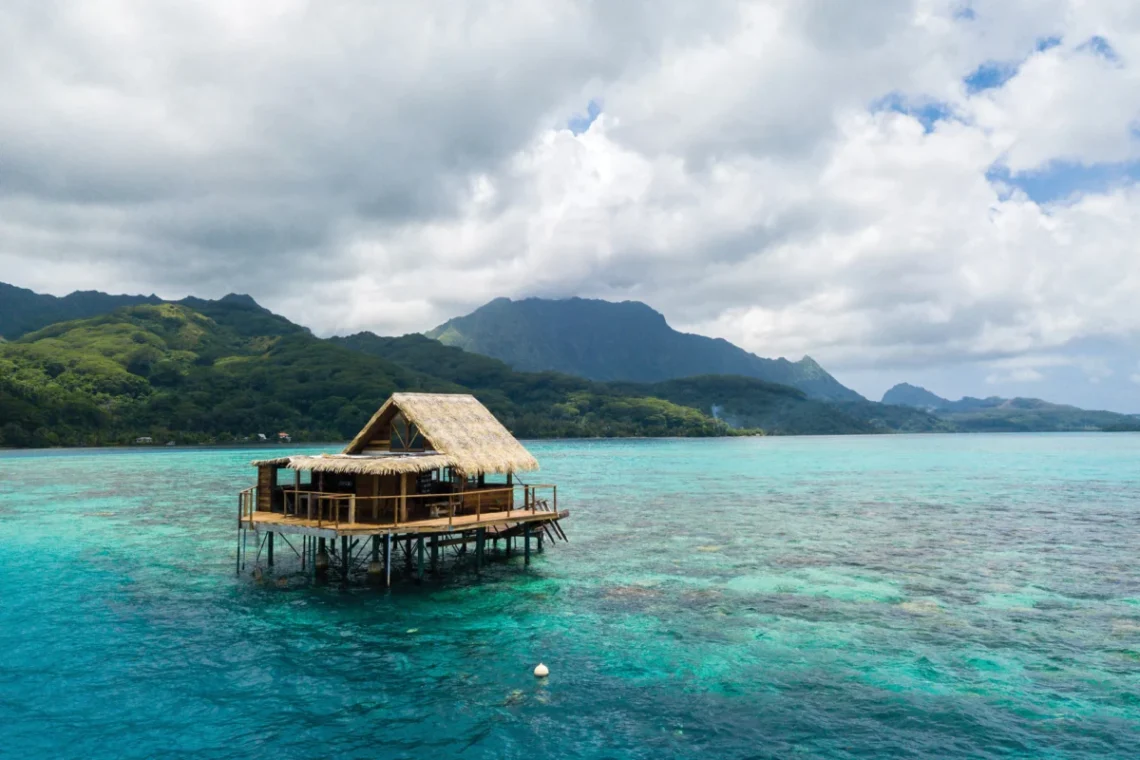
Today, that paradigm is undergoing a fundamental transformation. A growing fleet of elite, fully crewed charter yachts is choosing to base themselves in South Pacific island nations for entire seasons rather than transient stopovers. This shift has given rise to a new standard of luxury expedition cruising: one where deep regional immersion replaces the standard "milk run."
Brokerage houses like Northrop & Johnson are spearheading this movement, highlighting a distinct class of specialized vessels capable of navigating remote archipelagos. These charters rely heavily on crews who have forged deep roots in local communities—captains and deckhands who know the morning market vendors by name, understand the nuanced protocols of traditional village protocols such as the kava ceremony, and possess an intuitive grasp of regional weather patterns and shifting archipelago logistics. Far from the homogenized luxury of traditional yachting hubs, these journeys offer travelers an authentic encounter with remote island cultures backed by uncompromising five-star amenities.
Chronology: From Transitory Passages to Dedicated Regional Basing
The Era of the Transient Passage (Pre-2020)
Historically, the logistics of South Pacific yachting made consistent charter operations difficult. The vast distances between island groups—such as Fiji, Vanuatu, French Polynesia, and the Solomon Islands—meant that most superyachts visited only during global circumnavigations. Owners would sail their vessels through the region, occasionally opening the calendar for opportunistic charters. However, because crews were unfamiliar with local nuances, itineraries were often restricted to easily accessible ports of call. Safety margins were conservative, and cultural engagements were frequently superficial, lacking the vital connections needed to access restricted or deeply traditional communities.
The Post-Pandemic Pivot (2020–2023)
The global health crisis served as a profound catalyst for change within the ultra-luxury travel sector. As traditional cruising grounds in Europe and the Americas faced varying degrees of restriction, congestion, and predictability, high-net-worth travelers began reevaluating what luxury meant to them. Safety, isolation, and unscripted discovery emerged as primary travel drivers. Inquiries for remote, off-the-grid itineraries surged. Brokerage firms noted a distinct spike in clients explicitly asking to "get away from it all." Yacht owners responded by committing their vessels to extended deployments in the Southern Hemisphere, recognizing the pent-up demand for genuine exploration over routine luxury.
The Modern Era of Dedicated Seasonal Bases (Present)
In the current landscape, full-season basing has become the benchmark for premier South Pacific yachting. Yachts no longer treat the islands as a seasonal afterthought; they anchor down for months at a time, allowing captains and crew to establish residency-level familiarity with the terrain. This continuity has unlocked an entirely new tier of experiential travel. Crews coordinate daily provisioning with local fishermen and agricultural markets, build mutual trust with village chiefs, and map out cruising routes that remain untouched by commercial mass tourism.
Supporting Data: The Anatomy of Remote Luxury
The evolution of South Pacific yachting is underpinned by specific operational data, vessel specifications, and shifting demographic preferences within the luxury travel market.
- Connectivity in Isolation: The integration of low-earth-orbit satellite internet, such as Starlink, has revolutionized remote cruising. Guests can now venture hundreds of miles away from cellular networks while maintaining uninterrupted access to global communications, corporate oversight, and entertainment. This technological safety net addresses the modern traveler’s paradoxical desire: absolute physical isolation coupled with instant digital connectivity.
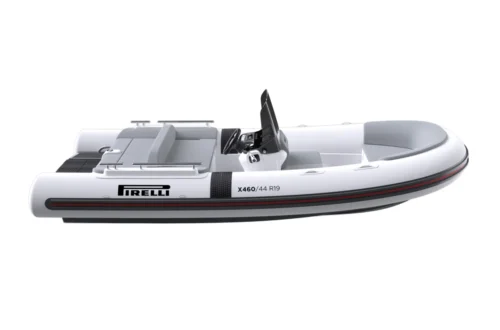
- Vessel Range and Endurance: Exploring the South Pacific demands hardware built for extensive ocean passages. Unlike Mediterranean cruisers designed for short hops between ports, South Pacific charter yachts require immense fuel capacity, robust autonomy, and specialized tender fleets.
- Crew-to-Guest Ratios: Due to the complexity of operating in remote environments—often requiring specialized dive guides, fishing masters, and cultural liaisons—vessels operating in this region frequently maintain high crew-to-guest ratios, ensuring personalized, one-to-one service even in the most isolated archipelagos.
Official Responses: Industry Perspectives on the New Frontier
Industry leaders emphasize that this shift is not merely about changing coordinates, but about fundamentally redefining the relationship between the traveler and the destination.
"Having boats that actually know the area and people who know the area, and they shop at the same markets every day, they know the locals, they know the chiefs for the kava ceremony—this is what makes it different," explains Nicole Terry, charter marketing manager in Monaco for Northrop & Johnson.
Terry points out that while the Mediterranean and the Caribbean will undoubtedly retain their crowns for sheer volume and social nightlife, the psychological profile of the modern luxury traveler has permanently evolved. The appetite for discovery has eclipsed the desire for social validation found in crowded ports.
"People are looking for experiences that are less crowded, that are less familiar," Terry says. "They want to be in places where they still feel like they’re doing something that’s different and adventurous and discovery, as opposed to the milk run and the usual restaurants and things like that."
Addressing concerns regarding safety in regions where modern medical infrastructure can be hours or days away, Terry notes that modern technology bridges the gap between wilderness and wellness.
"You’re not completely isolated," she says. "They’ve all got Starlink. You know you’re safe. If something goes wrong, you’re not going to be completely on your own. There’s that kind of safety net to ensure what we all expect, being accessible all the time now."
The Fleet: Premier Vessels Engineered for the South Pacific
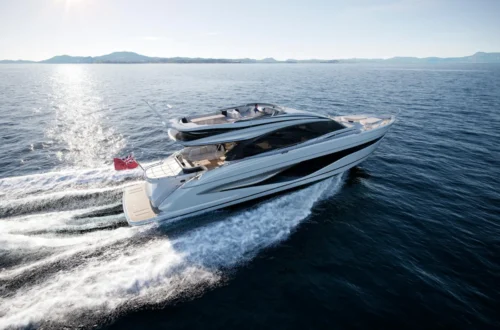
To support this demand for immersive, long-range adventure, Northrop & Johnson has curated a select fleet of world-class yachts uniquely equipped for South Pacific deployment.
Triton (163-Foot Delta Marine)
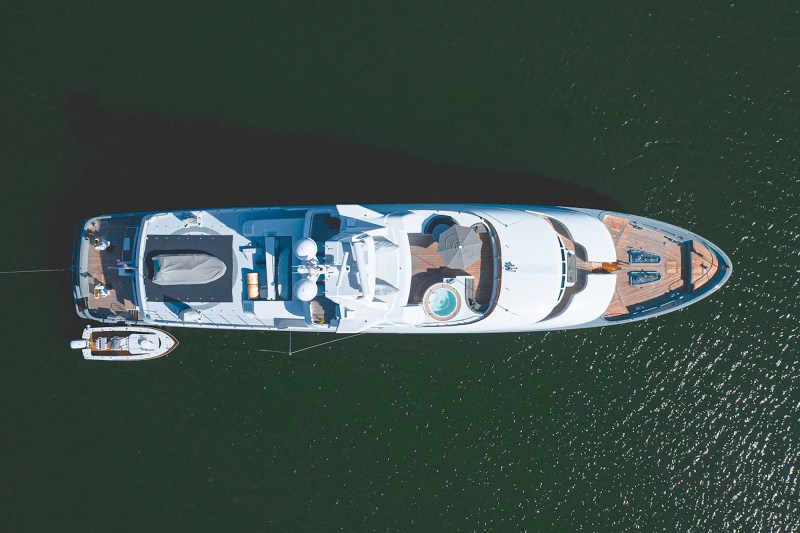
Built explicitly for real, long-distance exploring, the 163-foot motor yacht Triton is an engineering marvel designed to conquer vast oceanic expanses. Boasting a staggering range of more than 6,000 nautical miles, Triton can traverse remote island chains without the constant need for shoreside refueling infrastructure. Furthermore, its specialized tender inventory is tailored for the region’s unique topography, featuring dedicated craft optimized specifically for deep-sea fishing expeditions and advanced scuba diving in untouched coral reefs.
Radiance (121-Foot Dubois Design)
A masterpiece of naval architecture penned by the renowned Dubois studio, the 121-foot sailing yacht Radiance bases seasonally between Fiji and New Zealand. Owned by American proprietors who share a deep, personal passion for the Fijian archipelago, Radiance offers an intimate connection to the water. The yacht’s sailing pedigree allows for silent, eco-conscious cruising through pristine lagoons, while its deep local roots ensure that guests are introduced to the best-kept secrets of the South Pacific’s windward shores.
Valinor (164-Foot Westport)
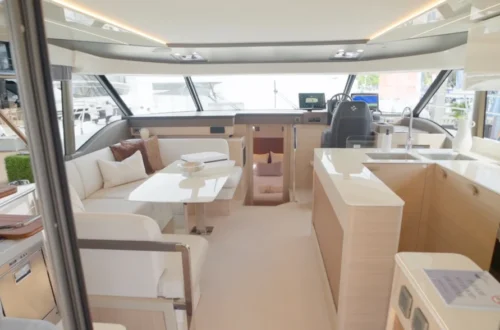
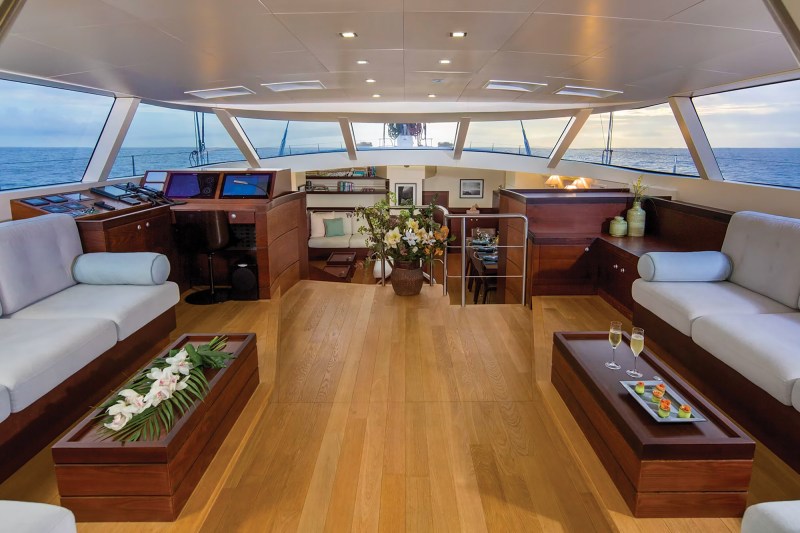
For travelers who refuse to compromise on space or opulence while exploring the edge of the map, the 164-foot Westport Valinor delivers uncompromising luxury. Accommodating up to 12 guests across six meticulously appointed staterooms—including a magnificent master stateroom on the bridge deck complete with a private balcony—Valinor matches its guests with a dedicated crew of 12, ensuring a one-to-one service ratio. Whether anchored alone in a secluded Fijian bay or cruising past volcanic peaks in French Polynesia, Valinor proves that true adventure and absolute five-star refinement can coexist seamlessly.
Implications: The Future of Experiential Superyacht Tourism
The pivot toward immersive South Pacific chartering carries profound implications for the global yachting ecosystem, local island economies, and the future definition of luxury travel.
Sustainable Tourism and Cultural Preservation
As more superyachts establish long-term relationships with indigenous communities, the nature of tourism in the region is shifting from extractive exploitation to respectful partnership. By working closely with local chiefs and utilizing community-led guides, charter operations help inject high-value economic capital directly into rural island economies. This model encourages the preservation of traditional arts, crafts, and ceremonial practices, proving to local populations that their heritage holds intrinsic value in the modern global economy.
Environmental Stewardship
Operating in pristine, isolated ecosystems places a heavy ethical burden on yacht crews and charter guests alike. Because these vessels often drop anchor in fragile marine environments far removed from municipal waste and environmental oversight, operators are increasingly implementing rigorous eco-protocols. Zero-discharge policies, advanced wastewater management systems, and reef-safe operating guidelines are becoming baseline requirements for any yacht marketing itself as a South Pacific explorer.
The Evolution of Ultra-Luxury Expectations
Ultimately, the rise of the South Pacific expedition charter signals a generational changing of the guard among ultra-high-net-worth individuals. The currency of luxury has shifted away from conspicuous consumption—such as securing a coveted table at a trendy Mediterranean beach club—toward time, space, and narrative. To tell a story of anchoring entirely alone in a cobalt bay, of participating in a sacred kava ceremony by lantern light, and of navigating coral mazes guided by a captain who calls the local fishermen friends—that is the new apex of modern wealth. And as long as dedicated crews continue to bridge the gap between untamed wilderness and refined luxury, the South Pacific will remain the ultimate frontier for the discerning traveler.