By Automotive News Desk
Published by BBC Studios / Feature Analysis
Introduction: A High-Octane Comeback
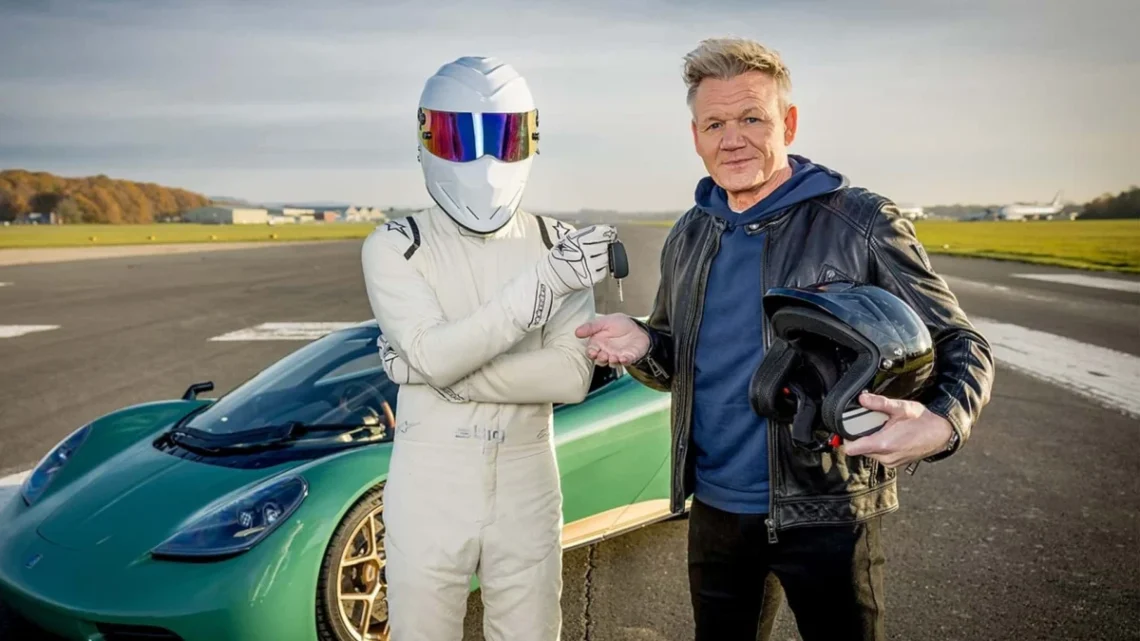
BBC Studios has officially broken years of silence surrounding the future of its crown-jewel motoring franchise, announcing that world-renowned Michelin-starred chef, television personality, and lifelong petrolhead Gordon Ramsay will step in as the new lead host of Top Gear.
The announcement marks a monumental shift for the legendary series, which has been on an indefinite hiatus since late 2022. Ramsay is set to helm a completely reimagined lineup of co-hosts when brand-new episodes officially air in 2028. Filming for the upcoming reboot is scheduled to commence next year, giving production teams ample time to construct a fresh vision for a franchise that has weathered immense turbulence, dramatic executive shakeups, and near-fatal tragedy over the past decade.
For millions of fans worldwide who feared the Dunsfold Aerodrome test track had seen its final lap, the news breathes new life into one of the most recognizable entertainment brands in television history. Ramsay, whose passion for high-performance automobiles is nearly as legendary as his fiery kitchen demeanor, promises to inject a much-needed dose of high-octane energy, ambition, and global appeal into the format.
Main Facts: What We Know About the 2028 Revival
The resurrection of Top Gear is arguably the most anticipated—and scrutinized—television reboot of the decade. BBC Studios has carefully doled out details regarding the structural changes, leadership, and timeline for the upcoming series:
- The Lead Host: Gordon Ramsay has been locked in as the primary presenter, bringing his decades-long obsession with supercars and motorsport to the forefront of the show.
- The Launch Window: New episodes are scheduled to premiere in 2028, with principal photography and testing slated to kick off next year.
- The Co-Host Lineup: While Ramsay is confirmed to lead the show, the identities of his supporting cast remain under wraps. BBC entertainment executives are currently keeping details of the wider talent pool tightly guarded.
- Format Adjustments: Traditionally anchored by a trio of presenters, BBC insiders have hinted that the 2028 revival may experiment with a restructured format to accommodate Ramsay’s distinct dynamic and a modern, multi-platform audience.
- The Path to Return: The announcement follows a self-imposed "rest period" announced by the BBC in late 2023, designed to allow the network, the production crew, and the injured parties time to heal and reevaluate the show’s safety protocols.
Ramsay addressed his new appointment with characteristic enthusiasm, noting that his love affair with internal combustion engines began at an exceptionally early age. He has vowed to deliver "fresh energy and ambition" aimed directly at capturing a brand-new generation of automotive enthusiasts who consume media differently than the audiences of the Jeremy Clarkson era.
Chronology: The Rise, Fall, and Rebirth of Modern Top Gear
To understand the magnitude of Gordon Ramsay stepping into the driver’s seat, one must examine the tumultuous timeline that brought the world’s most famous motoring show to this historical juncture.
The Golden Era and Sudden Collapse (2002–2015)
Modern Top Gear became a global phenomenon under the leadership of Jeremy Clarkson, Richard Hammond, James May, and executive producer Andy Wilman. Transforming a stagnant consumer-advice program into a multi-million-pound global entertainment powerhouse, the trio defined the genre through ambitious overseas specials, absurd challenges, and polarizing yet magnetic banter.
However, the golden era came to a screeching halt in March 2015. Following a well-documented "fracas" involving Clarkson and a show producer, the BBC chose not to renew the host’s contract. Hammond, May, and Wilman subsequently resigned in solidarity, leaving the BBC with a massive vacancy and millions of alienated fans. The trio eventually reunited to launch The Grand Tour on Amazon Prime Video, maintaining a massive global following.
The Transitional Years and Chris Harris Era (2016–2022)
Desperate to salvage the franchise, the BBC embarked on a revolving-door experiment with talent. The network initially paired radio personality Chris Evans with Friends star Matt LeBlanc, alongside a sprawling supporting cast that included racing driver Chris Harris, former F1 team owner Eddie Jordan, German racing icon Sabine Schmitz, and automotive journalist Rory Reid.
When Evans stepped down after a single, poorly received season, Matt LeBlanc took the reins, eventually handing them over to a more cohesive, critically praised trio: Chris Harris, comedian Paddy McGuinness, and former England cricket captain Andrew "Freddie" Flintoff. This iteration finally stabilized the show’s ratings and recaptured some of the easygoing camaraderie of the Clarkson years.
The Tragic Accident and "Resting" the Show (2022–2023)
The stability was shattered on December 13, 2022. During filming for the 34th series at the Dunsfold Aerodrome test track, co-host Andrew Flintoff was involved in a high-speed crash while driving an open-top three-wheeled Morgan Super 3. Flintoff suffered severe, life-altering facial injuries and broken ribs.
The BBC immediately suspended production out of respect for Flintoff and to conduct a comprehensive Health and Safety audit. Independent investigations highlighted significant safety shortcomings regarding non-standard vehicle testing. In November 2023, the BBC officially announced it was "resting" the show for the foreseeable future, casting doubt on whether the BBC would ever greenlight another petrol-fueled lap.
The Rebirth Announcement (August 2024 – Present)
In August 2024, BBC Studios surprised the television and automotive worlds by quietly announcing that Top Gear would eventually return to screens. Ed Harvard, the studio’s director of entertainment, initially played cards close to his chest, refusing to discuss talent or timelines. Nearly a year later, the puzzle pieces have begun to fall into place with the revelation that Gordon Ramsay will lead the charge in 2028.
Supporting Data: The Commercial and Cultural Weight of Top Gear
Top Gear is not merely a television show; it is a sprawling commercial ecosystem that has dictated global automotive culture for decades. Evaluating the scale of the franchise contextualizes why the BBC is willing to invest so heavily in its rehabilitation:
- Global Audience Reach: At its peak, Top Gear was broadcast in over 200 territories worldwide, boasting an estimated regular global audience of 350 million viewers, earning a Guinness World Record as the most-watched factual television program in the world.
- Merchandising and Licensing: The brand extends far beyond the television screen, encompassing live stadium tours (Top Gear Live), a globally recognized magazine, video games, board games, and branded consumer merchandise generating tens of millions annually for BBC Commercial.
- The "Clarkson Effect": Economic analyses historically showed that featured cars experienced dramatic shifts in secondary market valuation and public interest simply by appearing on the Top Gear leaderboard or undergoing a Power Lap review by "The Stig."
- Digital Ecosystem: YouTube channels, social media clips, and digital extensions pull in billions of lifetime views, proving that appetite for automotive entertainment remains insatiable, even as traditional television viewing habits shift.
Official Responses and Industry Reactions
The announcement of Gordon Ramsay as the new frontman of Top Gear has generated immense chatter across both the entertainment and automotive journalism sectors.
Speaking on the casting choice, industry insiders have pointed out that Ramsay is a masterclass in high-pressure, unscripted television. Having built a global media empire through intense formats like Hell’s Kitchen, MasterChef, and Gordon Ramsay’s 24 Hours to Hell and Back, Ramsay possesses the authoritative screen presence required to hold a large production together. Furthermore, his personal garage—which famously includes rare hypercars such as a Ferrari LaFerrari, a Porsche 918 Spyder, and a McLaren Senna—lends him genuine credibility among hardcore automotive enthusiasts.
Prior to Ramsay’s confirmation, internet rumor mills were flooded with speculation regarding potential hosts. Comedian and television personality Jimmy Carr was heavily rumored throughout the summer of 2024 to be in serious talks for one of the primary presenting roles, given his known penchant for fast cars and sharp wit. While the BBC has not yet confirmed whether Carr or other rumored names will join Ramsay, executive producers are reportedly evaluating a diverse roster of comedians, racing drivers, and automotive journalists to balance the abrasive, high-energy persona of the famous chef.
Ed Harvard and other high-ranking BBC Studios executives have maintained a disciplined silence regarding the broader supporting cast, emphasizing that the multi-year runway leading up to the 2028 premiere gives them the luxury of careful casting and meticulous safety protocol overhaul.
Implications: Can Top Gear Reclaim Its Throne?
The decision to hand the keys of Top Gear to Gordon Ramsay carries profound implications for the BBC, the automotive media landscape, and the future of car culture on television.
1. A Shift Away from Traditional Motoring Journalism
During the tenure of Chris Harris, the show leaned heavily into deep-dive technical reviews, track driving dynamics, and engineering appreciation. With Gordon Ramsay at the helm, the 2028 reboot is expected to lean much heavier into high-stakes entertainment, international travel, food culture integration, and high-adrenaline challenges. Ramsay’s brand is built on visceral reactions, high stakes, and unfiltered commentary, suggesting the new show may resemble a hybrid of travelogue, culinary adventure, and supercar destruction derby.
2. Safety and Accountability Under the Microscope
The shadow of Andrew Flintoff’s 2022 accident will hang over the production of every single segment. The BBC cannot afford a repeat of the safety failures that led to the show’s multi-year hiatus. Consequently, the 2028 production will operate under unprecedented regulatory scrutiny, with insurance underwriters and internal safety boards closely monitoring every stunt, track test, and overseas expedition.
3. Competing in a Streaming Era
When Top Gear returns in 2028, the media landscape will look drastically different than it did when the show went dark. Streaming giants, independent YouTube automotive creators (such as Carwow, Hoonigan, and The Grand Tour alumni), and social media algorithms have redefined how younger demographics consume car content. By choosing a globally recognized cross-over celebrity like Gordon Ramsay, the BBC is explicitly betting that mainstream star power can pull linear television viewers and digital natives back into the fold.
Conclusion: The Road Ahead
The road to 2028 is long, but the blueprint is set. By pairing one of the world’s most recognizable television personalities with the most iconic motoring badge in history, BBC Studios has signaled that it is unwilling to let Top Gear fade into automotive history.
As production ramps up next year, all eyes will be on Gordon Ramsay and the yet-to-be-announced co-hosting team. Whether they can recapture the lightning-in-a-bottle magic of decades past while navigating the modern demands of safety, digital media, and hyper-critical fans remains to be seen. One thing is certain: when the lights go green in 2028, the entire automotive world will be watching.