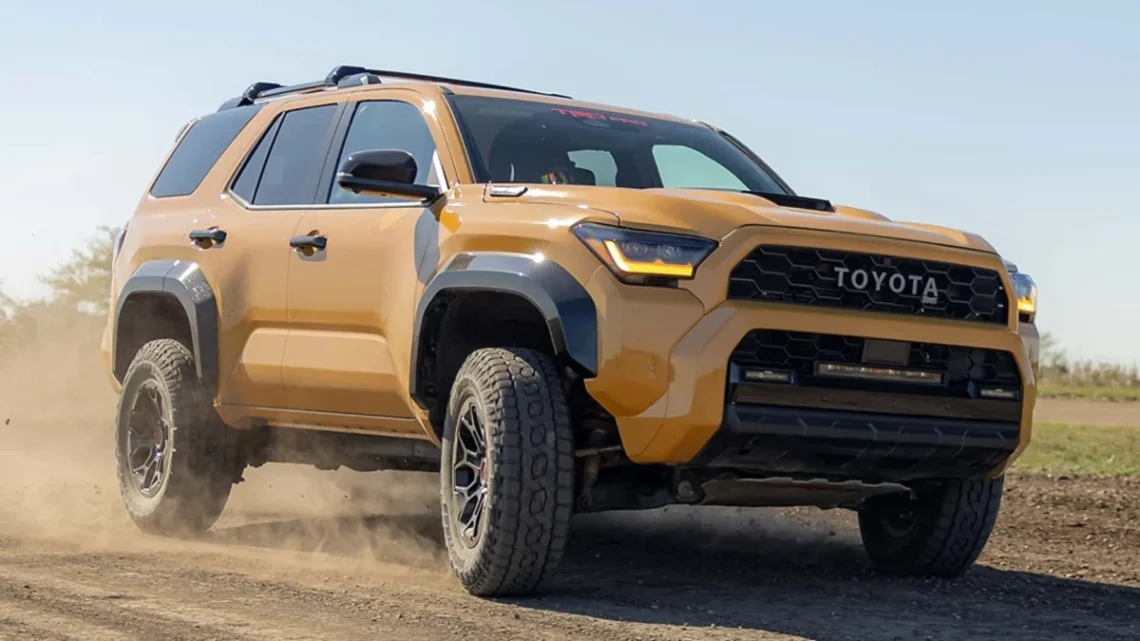
DETROIT — Toyota has officially announced a sweeping pricing revision across its entire 2027 4Runner lineup. While the updates introduce subtle cosmetic tweaks and notable standard equipment adjustments, the headline-grabber is clear: the rugged, body-on-frame SUV is getting more expensive across the board.
Leading the charge is the entry-level SR5 trim, which has absorbed the most substantial dollar-value jump of the model year. For the first time since the nameplate’s inception, the base-level 4Runner SR5 has officially pierced the $45,000 threshold. Yet, Toyota insists the price hike isn’t purely inflationary; buyers will find tangible upgrades packed into the higher sticker price to justify the heavier financial burden.
As dealerships prepare for late-year inventory arrivals, truck enthusiasts, off-road purists, and everyday consumers alike are analyzing the new cost-to-benefit ratio of Toyota’s legendary midsize adventurer.
Main Facts: What the 2027 4Runner Costs and What’s New
The baseline 2027 Toyota 4Runner SR5 now starts at $45,085, a noticeable $1,220 increase over the previous model year. This total MSRP figure comprises a base vehicle price of $43,490 coupled with a mandatory $1,595 destination and delivery charge—the exact number shoppers will encounter on window stickers nationwide.
To soften the blow of crossing the $45,000 barrier, Toyota has injected previously optional comforts directly into the entry-level recipe. Most notably, heated, eight-way power-adjustable front seats now come completely standard on the SR5. In previous iterations, buyers had to step up to higher, more expensive trim grades to secure these creature comforts.
The standard equipment changes do not stop at the base level:
- Expanded Comforts: The TRD Sport and TRD Off-Road trims also inherit the upgraded eight-way power-adjustable front seats, ensuring that heated front seats are now a universal standard across every single 2027 4Runner variant.
- Powertrain Consistency: Under the hood, the SR5, TRD Sport, and TRD Off-Road share a muscular and efficient 278-horsepower turbocharged 2.4-liter four-cylinder engine, mated to a smooth-shifting eight-speed automatic transmission.
- Safety as Standard: Every 2027 4Runner leaves the factory equipped with the comprehensive Toyota Safety Sense 3.0 suite as standard safety tech.
- Drivetrain Layouts: Four-wheel drive ships standard on the vast majority of grades, though it remains a $2,000 optional upgrade on select specific configurations where rear-wheel drive is the default setup.
Beyond the SR5, the rest of the lineup experiences varied pricing adjustments. Most mid-tier trims see a modest $200 bump, but performance-oriented configurations face steeper adjustments. Furthermore, a suite of aesthetic enhancements, exterior paint options, and minor technological additions round out the 2027 model-year refresh.
Chronology: The Evolution of the Modern 4Runner Pricing Strategy
To understand how the 2027 4Runner reached its current pricing structure, it is helpful to look at how Toyota has methodically repositioned its truck and SUV portfolio over recent cycles.
- The Generation Shift: The 4Runner entered a modern era with a ground-up redesign leveraging Toyota’s global TNGA-F truck platform—shared with the Tacoma, Land Cruiser, and Tundra. This transition introduced modern high-strength steel frames, multi-link coil rear suspensions, and sophisticated forced-induction powertrains, naturally elevating the vehicle’s baseline production costs compared to its aging predecessor.
- Initial Rollout and Pricing Benchmarks: When the next-generation architecture first debuted, Toyota targeted a competitive entry bracket to secure market share against rivals like the Ford Bronco and Jeep Wrangler. Keeping the base SR5 below the mid-$40,000 range was a strategic priority to attract traditional value-seeking buyers.
- The 2027 Model Year Adjustments: As supply chain stabilization, raw material cost shifts, and inflation metrics took effect, Toyota recalibrated its pricing matrices. By late 2025 and into 2026, corporate adjustments hit other high-volume models—such as the 2027 Camry price increases—signaling a broader company-wide strategy of incorporating higher baseline feature sets in exchange for slight MSRP adjustments.
- Current Order Windows: Toyota officially confirmed that order books for the 2027 4Runner are open as of this reporting cycle. Production schedules indicate that the first wave of physical vehicles will begin filtering into North American dealership lots toward the end of the current calendar year.
Supporting Data: Comprehensive Price Hikes and Trim Breakdown
While the SR5 absorbed the largest nominal dollar increase at $1,220, it wasn’t the only variant targeted by pricing revisions. Toyota’s adjustments varied widely depending on the specific character and mechanical makeup of each trim.
Which Trims Got Hit Hardest?
While the majority of the 2027 lineup saw modest increases hovering around $200, specific enthusiast-focused models bucked that trend:
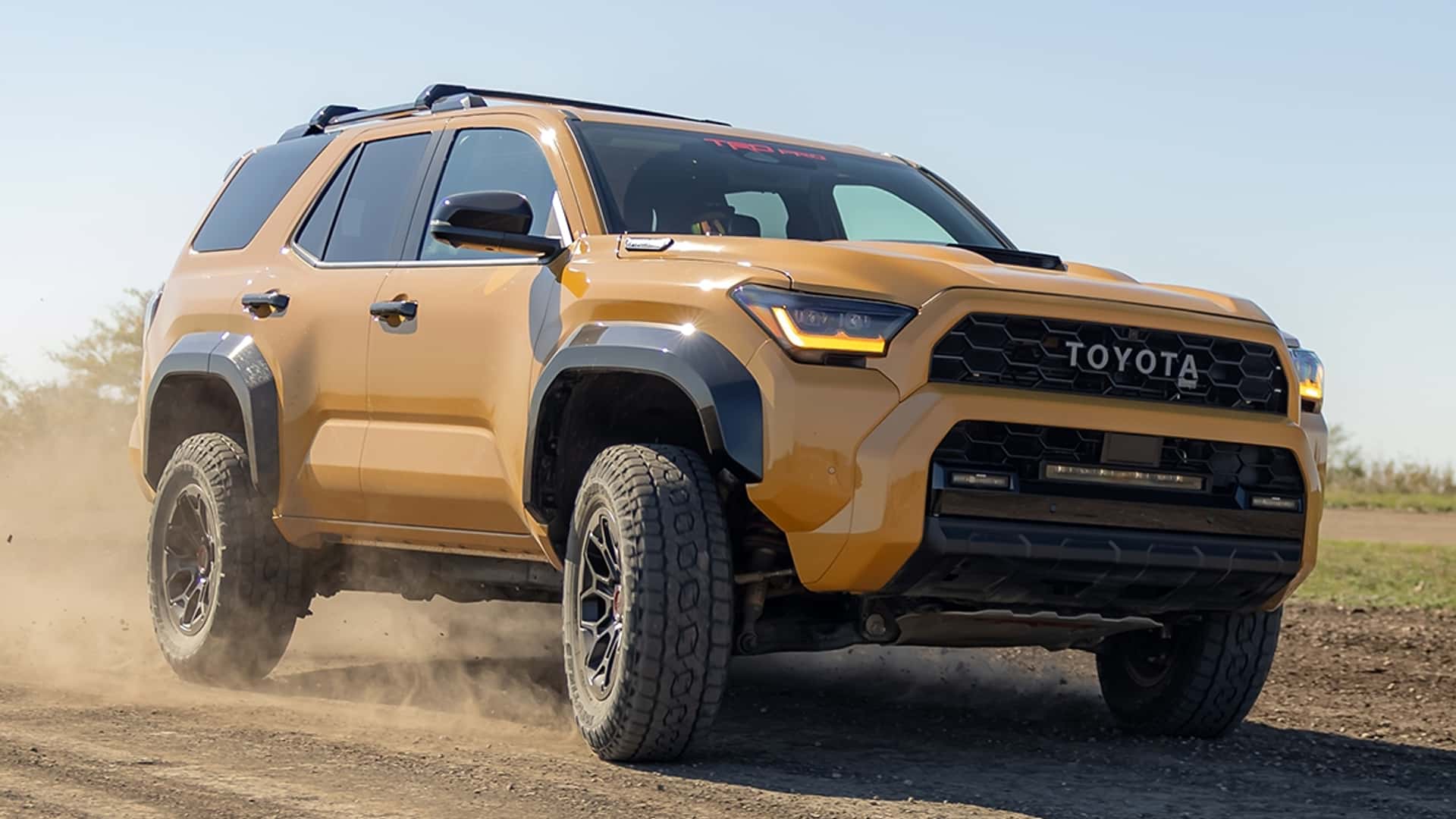
- TRD Sport: Climbed by $870.
- TRD Off-Road: Climbed by $870.
- TRD Off-Road (Hybrid): Climbed by $870.
These three variants experienced the second-largest financial adjustments in the family, reflecting high consumer demand for sporty road manners and aggressive off-road hardware.
Hybrid Performance and Pricing
At the apex of the lineup sit the electrified hybrid models, which marry the 2.4-liter turbo-four with a robust electric motor system to churn out an impressive 326 horsepower.
- The Hybrid Platinum saw its price increase by a comparatively modest $490.
- Overall, hybrid-equipped 4Runners start at approximately $55,945, placing them roughly $10,000 north of the entry-level SR5.
Aesthetic Upgrades and Minor Options
Toyota also sprinkled a series of cosmetic and functional updates across specialized trims:
- TRD Pro: Now offers an exclusive Hot Honey exterior paint option for an additional $695. It also gains newly standard red recovery tow hooks to accentuate its rugged off-road brief.
- Platinum Trim: Upgraded with high-end puddle lamps that project the iconic
4Runnerlogo directly onto the pavement whenever the front doors are unlatched and opened. - Nomenclature Changes: In a minor housekeeping move that carries zero financial penalty, Toyota has officially renamed its classic Black exterior paint option to "Inked" across all trim levels. This cosmetic title change will automatically populate on every factory order sheet moving forward.
Official Responses and Corporate Strategy
Toyota executives have framed the 2027 pricing structure not as a mere inflationary markup, but as a direct reflection of shifting consumer demands for greater baseline comfort, safety, and technological sophistication.
In official corporate statements regarding the 2027 product rollout, Toyota representatives emphasized that modern SUV buyers increasingly reject "stripped-down" base models. By making features like heated, eight-way power-adjustable front seats standard on the entry-level SR5, the brand aims to eliminate the friction buyers feel when forced to purchase expensive packages just to secure basic ergonomic comforts.
Furthermore, the integration of Toyota Safety Sense 3.0 as an uncompromised, standard inclusion across every single grade underscores the automaker’s ongoing commitment to top-tier active safety compliance—a selling point that heavily influences fleet buyers, family shoppers, and insurance risk assessments alike.
Implications: What This Means for Consumers and the Market
The crossing of the $45,000 barrier for a base-model 4Runner carries significant implications for the midsize SUV segment:
1. The Shifting Definition of "Base Model"
A starting price of $45,085 for an entry-level SR5 means that true budget-oriented off-roading is steadily creeping upward in price. However, because standard equipment levels are markedly higher than past decades—featuring turbocharged performance, advanced driver-assistance systems, and power-adjustable heated seating—buyers are receiving a fundamentally more sophisticated vehicle for their investment.
2. Market Competitiveness
The 4Runner continues to battle fierce competition from the Ford Bronco, Jeep Wrangler, and Toyota’s own expanding stable of rugged offerings (including the Land Cruiser and Tacoma). By keeping hybrid pricing relatively stable—such as the modest $490 bump on the Platinum Hybrid—Toyota ensures that its electrified powertrains remain an attractive upsell for eco-conscious or power-hungry buyers without pricing them entirely out of reach.
3. Dealership Dynamics and Resale Value
Historically, the 4Runner boasts some of the strongest residual and resale values in the entire automotive industry. Even with these price bumps, market analysts predict that consumer demand will easily outpace supply as the vehicles arrive at dealerships in late 2025. Buyers looking to secure allocations are encouraged to speak with their local dealers promptly, as specific high-demand configurations—particularly the TRD Pro in the new Hot Honey paint or well-equipped TRD Off-Road hybrids—are expected to command significant attention upon arrival.