The landscape of the American automotive market is shifting under the weight of new federal regulations, and the latest casualty is a name once synonymous with the future of premium electric mobility: Polestar. Following a sweeping regulatory change enacted by the U.S. Department of Commerce—the Connected Vehicles Rule—the Swedish-Chinese electric vehicle manufacturer will effectively cease operations in the United States, beginning with the 2027 model year. This development marks a premature conclusion for a brand that had high ambitions for the North American market, leaving behind a wave of uncertainty for current owners and a unique, if risky, opportunity for bargain hunters.
The Regulatory Catalyst: Understanding the Connected Vehicles Rule
To understand why a brand as well-capitalized as Polestar is exiting the U.S. market, one must look at the U.S. Department of Commerce’s recent stance on "Connected Vehicles." The new federal mandate imposes strict limitations on the hardware and software integrated into vehicles that rely on internet connectivity for essential functions, such as infotainment, navigation, and over-the-air updates.
The regulation specifically targets technology linked to "foreign adversaries," creating a compliance hurdle that Polestar—partially owned and technologically intertwined with Geely, a Chinese automotive giant—found impossible to bridge. By 2027, the rules mandate that vehicles operating on U.S. roads must be free of specific software and hardware components originating from prohibited jurisdictions. For Polestar, the cost and logistical complexity of re-engineering its entire global architecture to meet these unique, highly restrictive U.S. standards proved to be a bridge too far.
Chronology of a Departure: From Aspirations to Liquidation
The rise and fall of Polestar in the United States can be viewed as a microcosm of the broader challenges facing international EV startups.
- The Launch Phase: Polestar entered the U.S. market with high-performance aspirations, positioning itself as a sleek, Scandinavian-designed alternative to Tesla. The Polestar 2 was met with critical acclaim, praised for its minimalist interior and engaging driving dynamics.
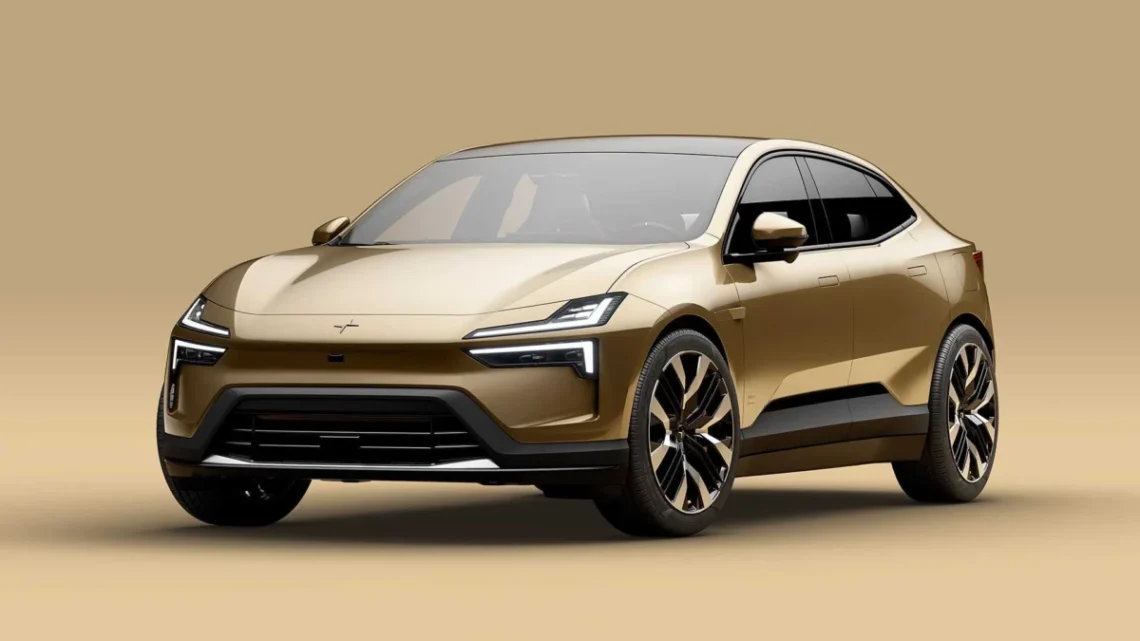
- The Scaling Struggle: As the company moved toward mass-market SUVs like the Polestar 3 and the Polestar 4, it faced a cooling EV market, intense pricing pressure, and, crucially, increasing geopolitical scrutiny regarding supply chain transparency and data security.
- The Regulatory Wall: Late 2024 and early 2025 saw the formalization of the Connected Vehicles Rule. Industry analysts noted that the legislation was not merely a trade barrier but a fundamental shift in national security policy applied to the digital automotive space.
- The Exit Strategy: Realizing that the 2027 deadline made continued investment in the North American infrastructure untenable, Polestar leadership opted for an orderly withdrawal rather than a protracted, costly battle to maintain a niche presence.
The Fire Sale: A $25,000 Opportunity?
With the decision to exit, Polestar has shifted its focus to clearing remaining inventory. This has triggered an unprecedented incentive program that is turning heads across the industry. Through July 31, 2026, the company is offering a staggering "$25,000 Polestar Clean Vehicle Incentive" on the Polestar 4.
The Math of the Discount
The economics of this offer are striking. A 2026 Polestar 4, which originally carried a starting MSRP of $57,800 for the rear-motor variant, is now effectively available for $32,800. For those seeking the performance-oriented dual-motor variant, the price drops from $64,300 to $39,300.
These price points place a premium, high-performance electric SUV in the same bracket as a base-model Toyota Camry or a mid-trim Honda Civic. However, there is a catch: the $25,000 incentive is exclusively available for cash purchases. While this limits the pool of potential buyers to those with significant liquidity, it represents perhaps the most aggressive pricing strategy seen in the EV sector to date.
The Leasing Alternative
For those who are not prepared to commit to a total purchase of a vehicle from a "defunct" brand, Polestar is also offering aggressive lease terms. Through the end of July 2026, customers can secure a long-range, single-motor Polestar 4 for $399 per month for a 39-month term, with only $1,000 down. This move is clearly designed to offload as much inventory as possible before the brand’s footprint shrinks to near-zero, effectively transferring the risk of long-term depreciation and maintenance to the manufacturer or its financing partners.

The "Vampire Car" Dilemma: Maintenance and Support
The most pressing concern for prospective buyers is the "vampire car" phenomenon—purchasing a vehicle from a brand that will no longer exist in the country. Automotive experts warn that when a brand exits a market, the secondary market value often plummets, and the supply chain for proprietary parts can become erratic.
- Service and Warranty: Polestar has historically relied on a hybrid retail model, often leveraging Volvo’s existing footprint. Because of this, many industry insiders believe that Volvo service centers may be authorized to continue servicing Polestar vehicles for the foreseeable future. However, no official "lifetime" guarantee has been issued by Volvo regarding Polestar’s legacy fleet.
- Software Updates: Perhaps the most critical issue is software. Modern EVs are effectively rolling computers. If the corporate entity responsible for the cloud infrastructure and OTA updates is no longer active in the U.S., owners may find their vehicles "frozen" in time, unable to receive critical security patches or feature enhancements.
Official Responses and Industry Implications
The broader automotive industry is watching the Polestar exit with bated breath. It serves as a stern warning to other global manufacturers that have not localized their supply chains or decoupled their software stacks from restricted jurisdictions.
- Polestar’s Stance: In limited public communications, the brand has remained focused on fulfilling existing orders and managing the transition for its current customer base. There has been no indication of a pivot that would allow for a re-entry into the U.S. market under the current regulatory framework.
- The Volvo Connection: Volvo Cars, which maintains a deep historical and technical relationship with Polestar, has been quiet on the long-term support for Polestar drivers. Dealers have expressed concern about the burden of maintaining vehicles for which parts may soon become scarce.
Motor1 has reached out to both Volvo and Polestar representatives for further clarification on the long-term viability of their service agreements, but as of this writing, no definitive roadmap for post-2027 support has been provided.
Implications for the Future of EV Adoption
The exit of Polestar is more than just a corporate restructuring; it is a signal that the era of "globalized" automotive manufacturing is facing a significant, protectionist headwind. As the U.S. government prioritizes domestic control over vehicle data and supply chain security, the cost of entry for international brands continues to rise.
For consumers, the situation is nuanced. While the prospect of buying a $60,000 vehicle for $32,000 is tempting, it requires a high tolerance for risk. A car is more than a price tag; it is a long-term commitment that relies on a robust network of parts, labor, and software support. Without a clear path forward for Polestar’s U.S. infrastructure, these vehicles are likely to become "collector’s items" in the worst sense of the word—technologically orphaned within a few years of purchase.
Conclusion
The departure of Polestar from the United States is a sobering reminder that in the modern automotive world, software and security are as vital as horsepower and handling. As the 2027 deadline approaches, the remaining inventory will likely be liquidated at increasingly aggressive prices. While these deals present a rare opportunity to acquire high-end electric mobility at a discount, potential buyers must weigh the immediate financial benefit against the long-term reality of owning a vehicle from a brand that has effectively vanished from the map.
As the industry pivots to meet the demands of a changing regulatory environment, one thing is certain: the American electric vehicle market will look significantly different in the coming years. For now, the Polestar story in the U.S. is one of missed potential, cut short by the realities of geopolitical and regulatory evolution.