Art history is frequently mapped through the lens of seismic shifts—decades defined by a collective rupture where artists dismantle the status quo to forge a new visual language. The 1970s occupies a unique, often overlooked position in this topography. It was a decade of transition, where the rigid formalities of early 20th-century movements began to dissolve, replaced by a restless, bold spirit of experimentation.
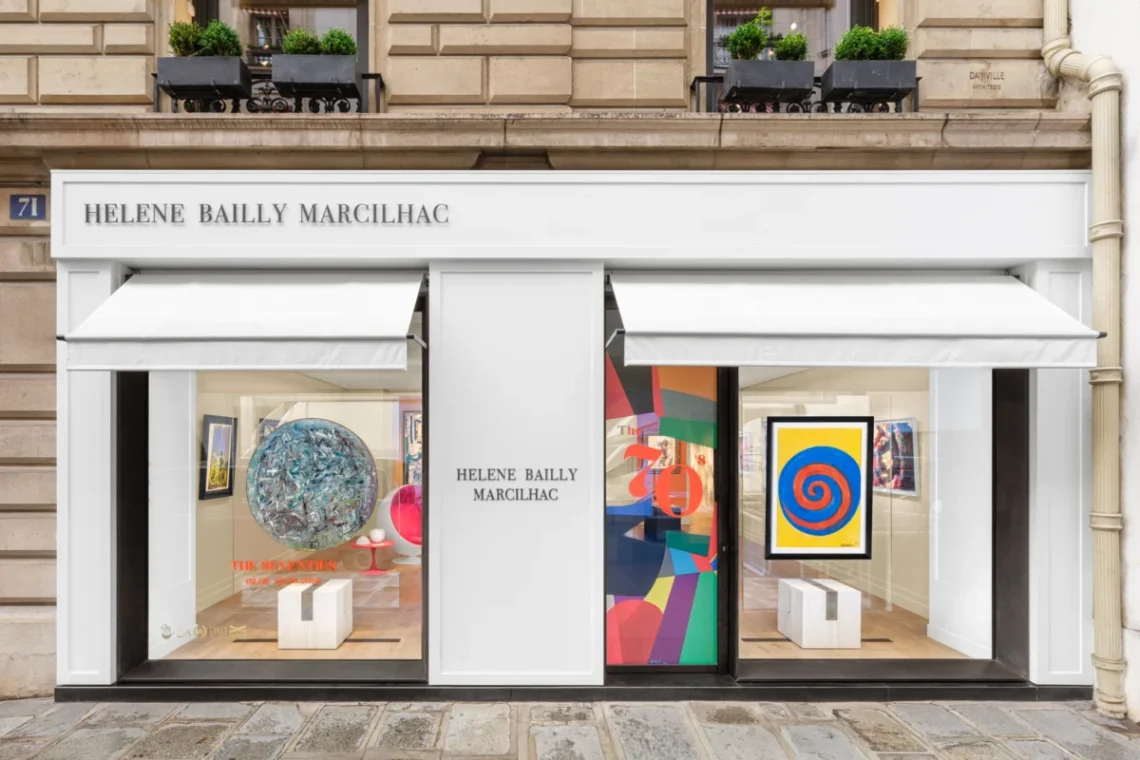
At the Paris-based gallery Helene Bailly Marcilhac, the current summer exhibition, “The Seventies,” offers a rigorous examination of this transformative period. By tracing the evolution of abstraction from its mid-century roots to its late-century flowering, the show argues that the 1970s was not merely a sequel to the heroic era of Modernism, but a pivotal moment of synthesis and reinvention.
Main Facts: The Architecture of an Exhibition
“The Seventies” serves as a curatorial bridge, connecting the established pillars of 20th-century art—Cubism, Surrealism, Lyrical Abstraction, and Art Informel—with the freer, more expressive impulses that characterized the decade. The exhibition is not a historical survey in the traditional sense; rather, it is a thematic exploration of how artists leveraged the creative momentum of their predecessors to redefine the boundaries of technique.
The gallery space itself is curated to emphasize the dialogue between disparate movements. The installation features a juxtaposition of vibrant, gestural paintings against the sharp, kinetic energy of sculpture, creating an immersive experience that mirrors the eclectic, high-energy environment of the Parisian art scene during that era. From the thick impasto of Jean-Paul Riopelle to the delicate, rhythmic compositions of Hans Hartung, the exhibition highlights a generation of artists who refused to choose between the past and the future, choosing instead to inhabit the tension between them.
A Chronological Perspective: From Manifesto to Maturity
To understand the works on display at Helene Bailly Marcilhac, one must look at the trajectory of the decades preceding them. The post-war era in Europe was marked by a search for new meaning in the wake of total conflict, leading to the rise of Art Informel and the emotive, spontaneous energy of Lyrical Abstraction.

The Mid-Century Catalyst
In the 1940s and 50s, artists like Jean-Paul Riopelle were instrumental in shifting the center of gravity in Canadian and French art. As a key signatory of the Refus Global—a manifesto that rejected provincialism and traditional academicism in favor of an uninhibited, radical Modernism—Riopelle helped set the stage for the textural breakthroughs that would define his later career. His “mosaic” technique, where paint was applied with a palette knife to build dense, structural layers, turned the canvas into a relief, challenging the centuries-old hierarchy that separated painting from sculpture.
The 1970s Synthesis
By the time the 1970s arrived, this spirit of rebellion had matured. Artists were no longer just breaking rules; they were creating entirely new systems of logic. The exhibition features works from this later period that show a move toward greater psychological depth. The intensity of color, seen in works by Sam Francis and Sonia Delaunay, suggests a departure from pure form toward an exploration of light and space that felt distinctly modern.
Supporting Data: The Pillars of the Show
The exhibition is structured around several thematic pillars that allow for a comparative analysis of the artists’ methods.
The Language of Gesture and Texture
The inclusion of Hans Hartung provides a masterclass in gestural abstraction. Known for his ability to convey movement through speed and line, Hartung’s works in the 1970s reflect a distillation of his earlier efforts. His work acts as a counterpoint to the architectural, heavy-layered style of Jean-Paul Riopelle, illustrating the diversity of the "Abstract" label during the decade.
The Bridge Between East and West
Chu Teh-Chun represents a vital cross-pollination of traditions. His work is a testament to the internationalism of the Parisian art scene in the 70s. By integrating the fluid, calligraphic strokes of Chinese landscape tradition with the structural concerns of Western abstraction, Chu developed a unique style that resonated deeply with the period’s desire for a universal, transcendent visual language.

The Late-Career Evolution
Perhaps the most intriguing aspect of the exhibition is the inclusion of works by Pablo Picasso and Marc Chagall. These artists, who were instrumental in the birth of Modernism, remained active into the 70s. Their late-period works show a striking openness to the experimentation of younger artists. Rather than clinging to their earlier, signature styles, they allowed their work to loosen, soften, and shift, proving that the drive for progress was not restricted by age or historical standing.
Official Perspectives and Curatorial Intent
The curatorial team at Helene Bailly Marcilhac suggests that the primary goal of “The Seventies” is to dismantle the idea that art history proceeds in clean, linear stages. By placing the works of masters like Joan Miró alongside the more contemporary practitioners of the 1970s, the gallery highlights a continuity of thought.
"What we are seeing here is the persistence of the avant-garde spirit," says the gallery staff in their introductory materials. "The artists in this show were not discarding the past; they were mining it for raw material. They understood that the history of art is a dialogue, not a replacement."
The gallery emphasizes that the selection process was driven by a desire to show how color, form, and texture were being re-negotiated. Whether it is the kinetic, hanging sculptures of Alexander Calder—which introduce a literal dimension of time and movement—or the rigid geometric color-blocking of Serge Poliakoff, the show argues that the 1970s provided the essential freedom that allows contemporary artists to experiment today.
Implications: Why the 1970s Matter Today
The resonance of “The Seventies” extends far beyond its physical walls in Paris. As we look at the current landscape of contemporary art, it is clear that we are still operating within the parameters defined by the developments of that decade.

The Rejection of "Provincialism"
The legacy of the Refus Global and similar movements remains a touchstone for globalized art. By championing a form of expression that transcends national borders and academic tradition, the artists of the 70s paved the way for the hyper-connected, pluralistic art world we experience today.
A Touchstone for the Future
Furthermore, the exhibition forces us to reconsider the definition of "timelessness." By demonstrating how these artists stood on the shoulders of giants—Picasso, Miró, and the pioneers of Abstraction—the exhibition serves as a reminder that all artistic innovation is rooted in a deep understanding of what has come before.
In an era where digital saturation and rapid-fire trends often dominate the conversation, “The Seventies” invites a slower, more deliberate engagement. It asks the viewer to consider the materiality of the paint, the precision of the line, and the courage required to embrace abstraction when the world is constantly demanding representation.
Closing Reflections
The exhibition serves as a profound reminder that the 1970s were not a "lost" decade of art, but a crucial laboratory of ideas. By returning to these works, we do more than just study the past; we recalibrate our understanding of the present. As we navigate the complexities of the 21st century, the radical, questioning, and deeply human spirit of these artists remains an essential beacon.
“The Seventies” is on view at Helene Bailly Marcilhac, Paris, through September 5, 2026. For those interested in the evolution of Modernism, the exhibition offers a rare opportunity to see these masters in conversation with one another, providing a comprehensive look at a decade that continues to shape our visual reality.