
The global art market has long operated under a prevailing assumption: that the path to capturing the wealth of the tech-savvy, newly minted billionaire class lay exclusively through the neon-lit corridors of contemporary art and the ephemeral, speculative world of digital assets. However, a seismic shift in the London auction landscape this week has effectively challenged that narrative. As Christie’s and Sotheby’s wrapped up their marquee "Classics" evening sales, the data revealed a compelling trend—a robust, renewed appetite for the Old Masters, fueled by an influx of collectors who are fundamentally rethinking the definition of "contemporary."
The combined total of £76.7 million ($101.6 million) achieved across these sales represents a 9.4 percent increase over the previous year’s results. This performance serves as a vital coda to a broader, $560 million week of modern and contemporary auctions in London, signaling a potential stabilization of the U.K. capital’s art market after several years of contraction.
A Tale of Two Segments: Recovery vs. Discovery
While the modern and contemporary sectors are currently defined by a cautious, high-end recovery, the Old Masters market is being propelled by something entirely different: discovery. Auction houses are witnessing a significant diversification of their client base, with "new money" moving into the historical sector with surprising agility.
Sotheby’s has been particularly vocal about this demographic shift, reporting that approximately 20 percent of the buyers at its Old Masters evening sale were entirely new to the auction house. Even more telling is the fact that nearly 25 percent of the lots sold were acquired by individuals who had never before ventured into the field of historical art. While Christie’s opted for a more understated approach, a spokesperson confirmed a similar trend, noting an influx of "new bidders and buyers across the sales on Tuesday."
This pivot is not merely incidental. It represents a fundamental shift in how the next generation of collectors views art history. The collapse of the NFT bubble, which many analysts previously viewed as the primary vehicle for tech-wealth into the art world, has not driven these collectors away from the market. Instead, it has encouraged a flight to quality and tangible, historically significant objects.

The "Zeroes and Ones" Collector
"There is a new breed of collectors coming from a ‘zeroes-and-ones’ background who want to focus on the classics," says Evan Beard, a prominent advisor whose practice has traditionally centered on modern and postwar art. Beard, who was personally active at the Christie’s sale—guaranteeing specific lots and engaging in spirited bidding—notes that the intellectual curiosity of this new cohort is profound.
These collectors are not looking for the next speculative asset; they are looking for historical weight, narrative, and, perhaps most importantly, a sense of timelessness. They are not deterred by the traditional entry barriers of the Old Masters market—which often include complex provenance and deep historical literacy requirements. Instead, they are approaching these works with a fresh, cross-category perspective, often viewing a 17th-century painting through the same lens as a contemporary Gerhard Richter.
Chronology of the Week’s Performance
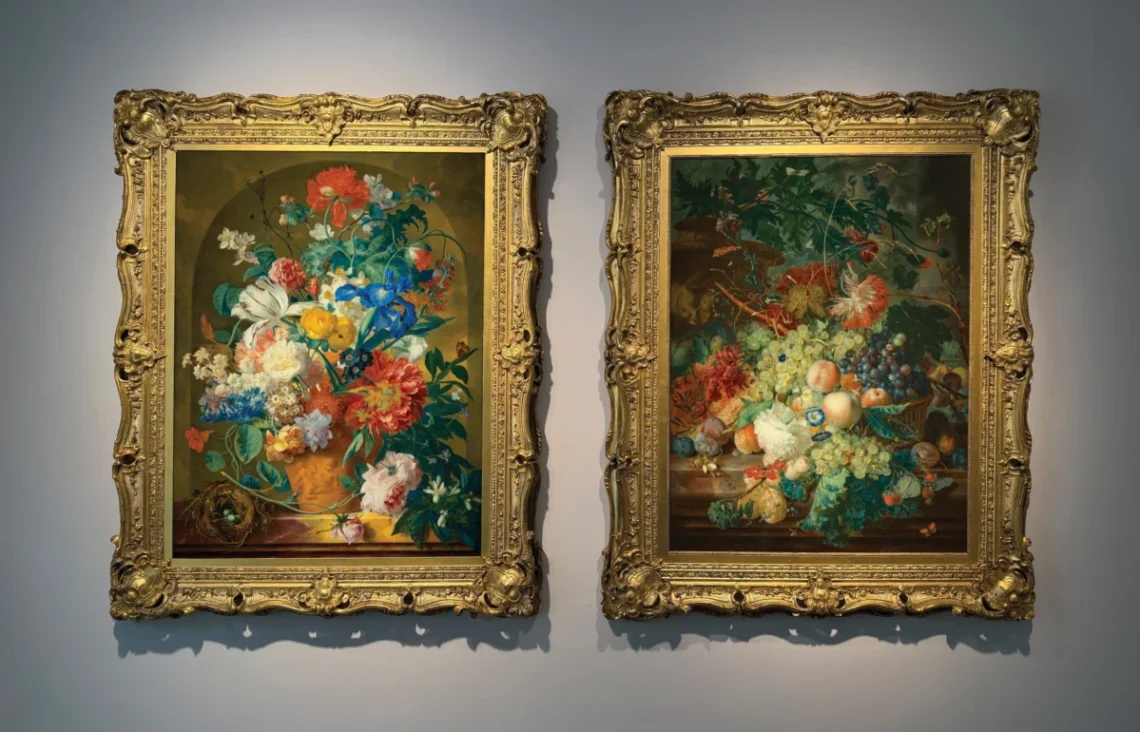
The week’s momentum began with the Christie’s evening sale on Tuesday, which brought in a total of £38.9 million ($51.4 million). The atmosphere was electric, marked by intense bidding wars that resulted in six new records. Among the highlights were the back-to-back records set for the Dutch Golden Age master Jan van Huysum. His undated still life of peaches and grapes soared to £6.52 million ($8.65 million), nearly doubling its high estimate of £4 million. Its companion piece, a 1734 floral bouquet, similarly outperformed expectations, fetching £5.54 million.
On Wednesday, the attention shifted to Sotheby’s, where the market demonstrated its volatility and its appetite for the "once-in-a-lifetime." The standout lot was an 1817 Neoclassical bronze of The Laocoön and his Sons, attributed to Auguste-Jean Marie Carbonneaux. The sculpture, which carried a modest low estimate of £2 million, ignited a bidding frenzy that pushed the final price to £13.6 million ($18.1 million), marking the highest price ever paid at auction for a Neoclassical sculpture.
Supporting Data: The Scarcity Premium
The Old Masters market has always been sensitive to supply, a factor that differentiates it sharply from the seemingly endless supply of contemporary prints and editions. Because so many of the world’s masterpieces are already held in institutional collections, the "floating" supply is exceptionally thin.

This scarcity creates a binary market: there is the "best," which commands stratospheric prices, and the "rest," which often struggles to find a home. However, this week’s results suggest that the definition of "best" is expanding. It is no longer just about the name of the artist or the historical importance of the school; it is increasingly about aesthetic impact.
Consider the 17th-century Flemish copper panels depicting the Seven Days of Creation. Sold at Sotheby’s, they realized £768,000 ($1 million), a staggering 540 percent above their low estimate. Similarly, a 17th-century memento mori painting—a skull and quill attributed only to the "Dutch School"—fetched £431,800 ($577,400), or 440 percent over its low estimate. In a traditional market, an unauthored work of this nature might have been dismissed; in this new, aesthetics-driven market, it became a star performer.
Official Perspectives and Expert Analysis
The auction houses are reacting to this shift by carefully tailoring their marketing to appeal to a younger, more tech-forward demographic. By emphasizing the visual immediacy of these works rather than just their academic pedigree, they are successfully bridging the gap between centuries.
Evan Beard’s analysis provides the most direct link between these worlds. "I can see the skull painting sitting very comfortably in a collection that also features works by Gerhard Richter," he observes. This is the crucial takeaway: the contemporary collector is no longer compartmentalizing. They are seeking a dialogue between the old and the new, finding that a 400-year-old Dutch panel can hold the same conceptual weight as a contemporary masterpiece.
Furthermore, the "non-economic" buyer—a term coined by Beard to describe collectors who purchase art to fill specific, deeply personal gaps in their collections—is becoming a dominant force. These buyers are less concerned with the "investment" potential of a work and more with the emotional and intellectual resonance of the piece. When a work is perceived as "magical," as Beard described the Van Huysums, price becomes secondary to acquisition.

Implications for the Future of the Market
What does this mean for the future of the art industry? First, it signals that the traditional boundaries between "Old Masters" and "Contemporary" are becoming increasingly porous. The market is moving toward a more holistic view of art history, where quality and aesthetic power transcend the date of creation.
Second, the success of these sales suggests that the "tech-wealth" demographic is far more sophisticated than initially feared. They are not merely looking for digital novelty; they are engaging with the canon of art history with the same intensity they apply to technological innovation. In an era defined by rapid, often destabilizing change, there is a clear psychological pull toward the "Old Masters"—a search for permanence and a meditation on mortality and human existence that feels increasingly relevant in our current climate.
As the auction houses look toward the autumn season, the challenge will be to maintain this momentum. The success of this week’s sales proves that there is a deep, untapped reservoir of interest in historical art. If Christie’s and Sotheby’s can continue to curate sales that balance the "blue-chip" masterpieces with the "aesthetic gems" that appeal to this new, cross-category collector, the Old Masters market may well be entering a period of sustained, long-term growth.
Ultimately, the lesson of this week is one of resilience. The art market has proved once again that it is not a monolith. It is a living, breathing ecosystem that constantly adapts to the interests and anxieties of its participants. Whether it is a 17th-century skull or a digital abstraction, the collector’s impulse remains the same: to find meaning, beauty, and a connection to the world—past, present, and future.