The landscape of regional transportation is on the cusp of a radical transformation. As urban congestion worsens and the environmental impact of short-haul travel comes under intense scrutiny, Virginia-based aerospace startup Electra.aero has emerged as a frontrunner in the race to redefine how we move. The company recently announced a pivotal milestone: the Federal Aviation Administration (FAA) has officially closed the G-1 Issue Paper for its EL9 aircraft, a critical step that paves the way for type certification and eventual commercial deployment.
This development signals more than just regulatory progress; it marks the maturation of "eSTOL" (electric short takeoff and landing) technology, a category that promises to bridge the gap between traditional aviation and the burgeoning, yet technically constrained, world of vertical takeoff aircraft.
The Main Facts: What is the EL9?
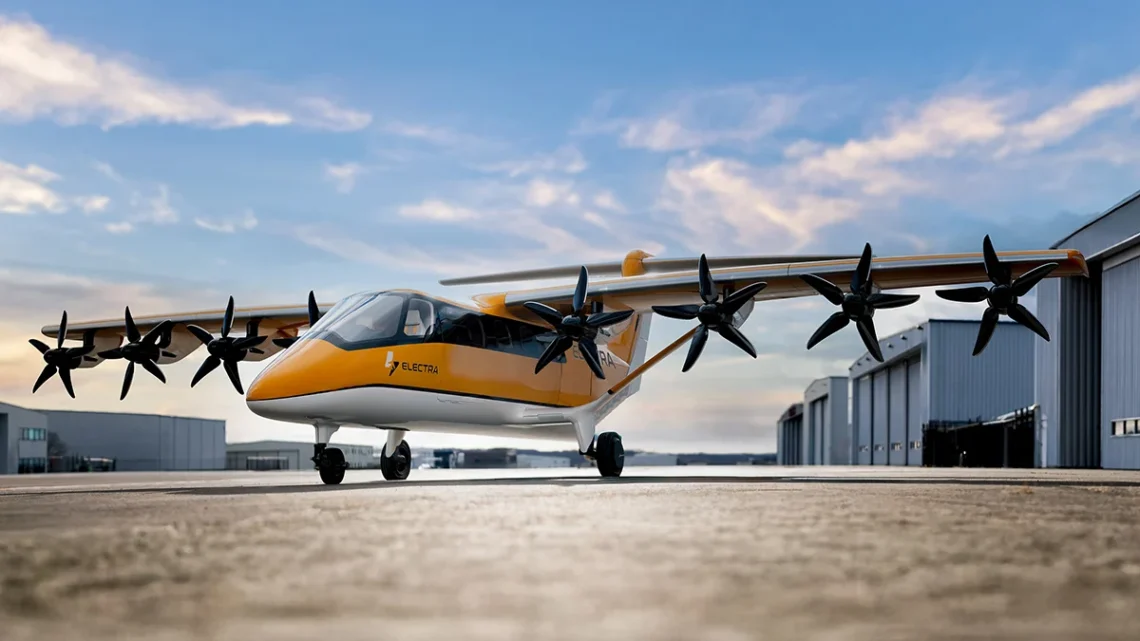
The EL9 is a hybrid-electric aircraft designed to operate in spaces once thought impossible for fixed-wing flight. While the industry has been obsessed with eVTOL (electric vertical takeoff and landing) aircraft—which act essentially like large drones—the EL9 takes a more pragmatic, physics-based approach.
By utilizing a "blown-lift" aerodynamic configuration, the EL9 generates lift by directing propeller wash over its 48-foot-long wings and flaps. This design allows the aircraft to take off and land in distances as short as 150 feet—less than the length of a standard soccer field. Despite this agility, the EL9 maintains the efficiency of a traditional airplane. It can cruise at speeds of up to 175 knots, with a takeoff and landing speed of less than 30 knots.
The core differentiator is the hybrid powertrain. Unlike pure battery-electric aircraft, which are currently hampered by limited energy density, the EL9 utilizes a turbo-generator to recharge its batteries while in flight. This eliminates the "range anxiety" and the massive, expensive charging infrastructure requirements that plague the eVTOL sector. With a payload capacity of 3,000 pounds and a passenger configuration for up to eight people plus a pilot, the EL9 is positioned as a genuine, scalable air taxi.
Chronology: A Path to Certification
Electra’s journey from a concept on a drawing board to a serious contender in the aerospace market has been characterized by rapid, methodical progress.
- Foundation and Conceptualization: Founded by aeronautical engineer John Langford, Electra leveraged decades of experience in unmanned aerial systems and high-efficiency flight to develop the EL9’s proprietary blown-lift technology.
- Proof of Concept: The company successfully flew its subscale "Goldfinch" demonstrator, proving that the blown-lift concept could perform consistently in real-world conditions. This flight test provided the empirical data necessary to convince regulators that the technology was viable.
- The G-1 Milestone: The FAA’s closure of the G-1 Issue Paper is the most significant regulatory hurdle crossed to date. The G-1 document serves as the roadmap for certification, defining the specific airworthiness standards the aircraft must meet. By finalizing this, the FAA has effectively "set the rules of the road" for the EL9.
- Future Milestones: With the regulatory framework established, Electra is moving toward full-scale flight testing, scheduled for 2027. Following successful flight evaluations, the company anticipates achieving full type certification and entering commercial service by late 2029.
Supporting Data: Why eSTOL Outperforms the Competition
The debate between eSTOL and eVTOL often boils down to thermodynamics and battery physics. Vertical flight is exceptionally energy-intensive; hovering requires a constant, massive expenditure of power. By using a short runway—even a rudimentary one—the EL9 avoids the "hover penalty."
Technical Specifications at a Glance:
- Range: Up to 1,100 nautical miles (with hybrid propulsion).
- Passenger Capacity: 8 passengers plus 1 pilot.
- Takeoff Distance: Under 150 feet.
- Noise Signature: 75 decibels at 300 feet (equivalent to a household vacuum cleaner).
- Cruise Speed: Up to 175 knots.
The ability to operate without specialized charging infrastructure is a massive economic advantage. Because the turbo-generator recharges the aircraft mid-flight, the EL9 can operate out of existing underutilized regional airports, private airstrips, or even appropriately reinforced cleared land. This versatility gives it a operational range of 330 nautical miles for its standard passenger service, making it an ideal solution for regional "commuter" routes that are currently underserved by major carriers.
Official Responses: A Collaborative Future
The atmosphere between Electra and the FAA appears to be one of unprecedented cooperation. In an era where aviation regulators are often criticized for lagging behind innovation, the speed at which the EL9 moved through the G-1 process is a testament to the clarity of the design and the robustness of the engineering.

Marc Allen, CEO of Electra, emphasized the symbiotic nature of this relationship in a recent statement: "The swift G1 achievement reflects the hard work and productive collaboration between Electra and the FAA, who are working together to make the future of aviation real."
This sentiment is echoed by the industry’s reception of the aircraft. Electra has already secured 2,200 pre-orders for the EL9, representing a backlog valued at approximately $9 billion. The client list is diverse, ranging from commercial regional airlines looking to optimize short-haul routes to helicopter operators seeking to transition to more efficient platforms. Perhaps most tellingly, the U.S. Armed Forces and NASA have also expressed interest, viewing the EL9 as a potential asset for rapid logistics, disaster relief, and specialized research missions.
Implications: The Democratization of Air Travel
The implications of a successful EL9 deployment extend far beyond the convenience of air taxis. If Electra succeeds, it will effectively lower the barrier to entry for regional air mobility.
1. Rejuvenating Regional Airports
Thousands of small municipal airports across the United States have fallen into disuse or operate at a fraction of their capacity. The EL9 could revitalize these hubs, creating an "on-demand" regional network that bypasses the hub-and-spoke model of major airlines.
2. Environmental Impact
By replacing short-haul, fuel-hungry turboprops and private cars with a hybrid-electric platform, Electra aims to significantly reduce the carbon footprint of regional travel. The quiet operation of the aircraft also allows for flight paths closer to residential areas, provided they are managed correctly, without the noise pollution associated with traditional aviation.
3. Logistics and Disaster Relief
The ability to land in 150 feet makes the EL9 an invaluable tool for emergency response. In the wake of natural disasters where runways may be damaged or nonexistent, the EL9 could land on road segments or flat clearings to deliver supplies, medical equipment, or personnel—capabilities that fixed-wing aircraft currently lack.
4. Economic Disruption
The sheer volume of pre-orders suggests that the market is ready for a change. If Electra can maintain its timeline to 2029, it will force a reckoning within the traditional aviation manufacturing sector. Large manufacturers may find themselves scrambling to develop their own hybrid-electric alternatives to compete with the efficiency and versatility of the EL9.
Conclusion: The Horizon Looks Bright
The path from a successful regulatory milestone to commercial flight is rarely a straight line, and Electra still faces the daunting challenges of final manufacturing certification, flight safety testing, and the logistical nightmare of scaling production to meet a $9 billion order book. However, the EL9 represents a shift away from the "sci-fi" idealism of vertical-only flight toward a pragmatic, engineering-first solution.
By respecting the laws of physics and working within the existing regulatory framework, Electra has positioned itself as the most likely candidate to actually deliver on the promise of an electric aviation revolution. As we look toward 2029, the humble soccer field may become the new runway of the future, turning the dream of accessible, regional, and sustainable air travel into a daily reality.