
In the high-stakes theater of global technology, Meta—the parent company of Facebook, Instagram, and WhatsApp—finds itself caught in a fundamental contradiction. To remain a leader in the race for Artificial Intelligence dominance, the company must build massive, energy-intensive data center clusters. Simultaneously, it remains tethered to ambitious net-zero climate goals set in a pre-AI-boom era.
As Meta ramps up its infrastructure to power the next generation of large language models, its sustainability department is being forced to navigate a "new terrain"—one where traditional renewable energy sourcing is no longer enough to keep pace with soaring power demands.
The Core Conflict: Scaling AI vs. Decarbonization
The challenge Meta faces is emblematic of the broader tech sector. While companies like Amazon, Google, and Microsoft have all reported double-digit emissions spikes in recent years, Meta is currently grappling with the same structural tension. According to its most recent environmental data, Meta’s location-based electricity emissions from its data centers rose 16 percent in 2024, while overall electricity consumption surged by 21 percent.
Blair Swedeen, Meta’s global head of net zero and sustainability, describes the current environment as vastly different from when the company’s original climate pledges were drafted in 2020. "What has changed is the terrain in which we are operating," Swedeen noted during the Trellis Impact 26 conference. "When we set these goals in 2020, things were very different."
For Meta, the struggle is defined by "speed to power." In an era where AI processing capacity is the primary currency of growth, waiting years for grid connections is not an option. Consequently, the company is increasingly forced to utilize natural gas-powered generation—an "unfortunate" but necessary bridge to maintain operational continuity, according to Swedeen.
A Chronology of Strategy: From Renewables to Nuclear
To understand Meta’s current predicament, one must look at the evolution of its energy strategy over the past decade.
- 2013: Meta begins its journey into clean energy procurement, establishing itself as an early adopter among big tech firms.
- 2020: The company formalizes its aggressive net-zero commitments, operating under the assumption of a steady transition to a decarbonized grid.
- 2023: Blair Swedeen, a 12-year Meta veteran with a background in business development, assumes the role of global head of net zero. He brings a pragmatic, operational approach to the sustainability team, focusing on "mobilizing against goals."
- 2024: The "AI Pivot" reaches full maturity. Meta’s data center electricity consumption jumps 21%, revealing the friction between technological expansion and carbon reduction.
- 2025: Meta emerges as one of the world’s two largest corporate buyers of clean energy, signing contracts for over 10 gigawatts of new capacity in a single year. The focus shifts toward "stable" power—specifically nuclear and advanced geothermal.
Supporting Data: The Scale of the Appetite
The numbers behind Meta’s infrastructure requirements are staggering. The company’s Hyperion data center campus in Richland Parish, Louisiana, serves as a bellwether for the new era of "giga-scale" computing. The facility is projected to consume 5 gigawatts of energy. To facilitate this, Meta is integrating new natural gas generation alongside solar and battery storage.
The grid interconnection bottleneck is the primary driver of this hybrid approach. With wait times for new grid connections currently spanning four to seven years, Meta is increasingly bypassing traditional utility timelines by investing directly in generation projects.
Key Portfolio Statistics:
- Total Global Portfolio: More than 30 gigawatts of contracted energy.
- Active Capacity: Nearly 12 gigawatts are currently online and operational.
- Nuclear Commitment: Approximately 7.7 gigawatts of capacity, making Meta the largest corporate buyer of nuclear power in the United States.
- Geothermal Investment: 150 megawatts of advanced geothermal capacity from Sage Geosystems, expected to come online in 2027.
Official Responses: Navigating the "New Terrain"
Blair Swedeen, in his capacity as a leader within Meta, emphasizes that the company is not "backing off" its climate commitments despite the operational headwinds. Instead, the strategy is shifting from mere volume to "stability."
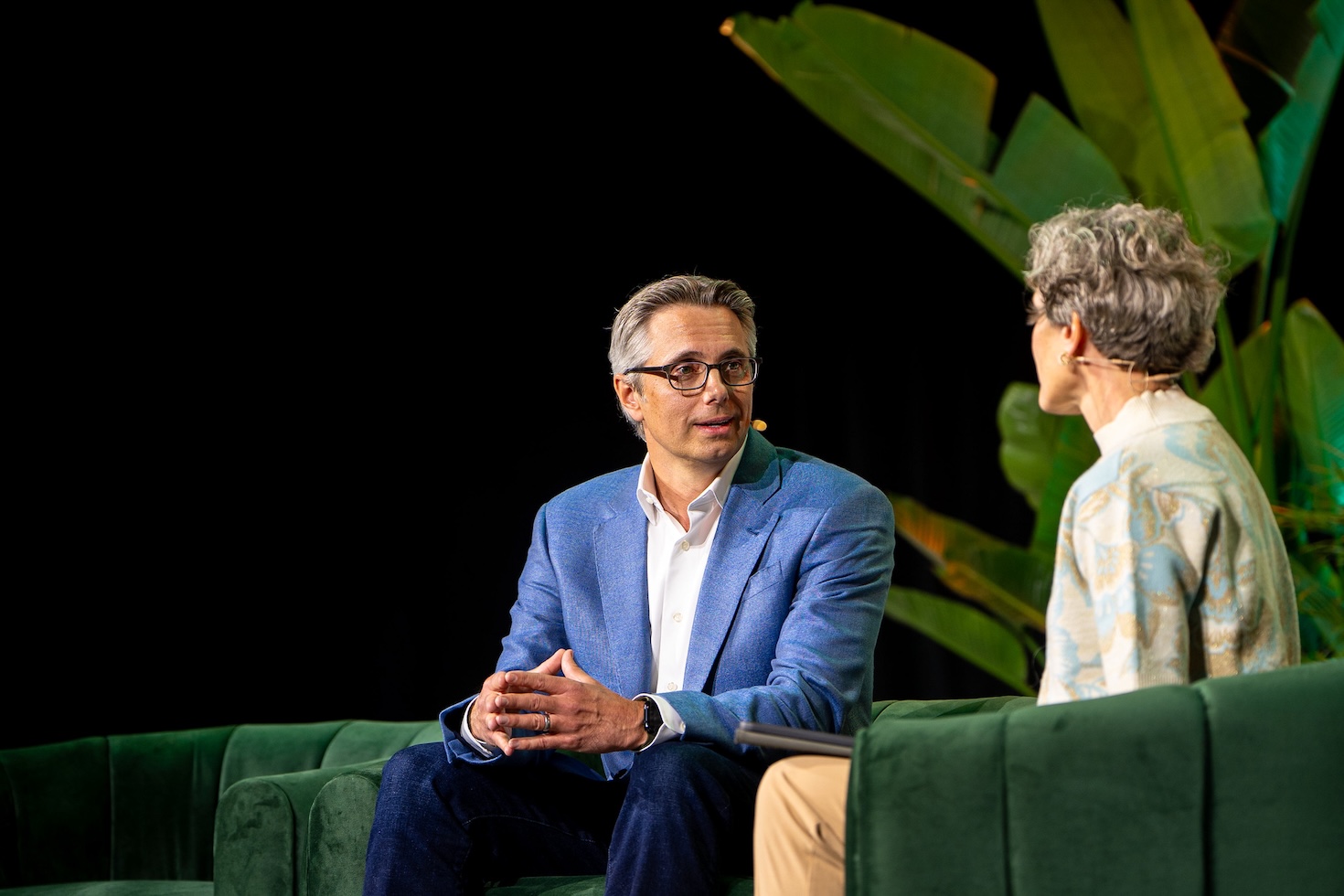
"We have a number of different ways that we structure agreements on new technology," Swedeen explained. "Everything from committing to be able to take that capacity in the future, reserving that capacity in something that’s much more structured—depending on the maturity of the technology."
This shift toward "structured" agreements represents a departure from standard power purchase agreements (PPAs). By acting as a lead financier and off-taker for next-generation technologies like advanced nuclear and geothermal, Meta is attempting to create a market for energy solutions that were previously deemed too risky or capital-intensive for commercial adoption.
Implications: The Search for "Science Fiction" Solutions
If the current reality is defined by natural gas and grid constraints, the future, according to Meta, is defined by long-duration storage and futuristic energy capture.
The Role of Long-Duration Storage
Intermittency remains the Achilles’ heel of renewable energy. To mitigate this, Meta has partnered with Noon Energy to secure up to 1 gigawatt of long-duration storage. Using modular solid oxide fuel cells, this technology can dispatch power for several days, providing a buffer when wind and solar output dips. The initial deployment of 25 megawatts is slated for 2028.
Space-Based Solar: A New Frontier
Perhaps the most ambitious—and unusual—facet of Meta’s strategy is its partnership with Overview Energy. The startup is developing technology to collect solar energy from space and beam it back to Earth as near-infrared light, effectively allowing solar farms to generate power 24 hours a day, regardless of local weather conditions or time of day.
"It sounds like science fiction," Swedeen admitted. "It’s an early-stage technology, but it’s quite exciting." Meta is currently funding the initial demonstration, with a commercial target set for 2030.
Conclusion: The Unavoidable Trade-off
Meta’s climate strategy reflects a broader societal dilemma: how to facilitate the rapid advancement of transformative technology while simultaneously addressing the urgent need for a habitable planet.
By diversifying its energy portfolio to include nuclear, geothermal, and high-tech storage solutions, Meta is attempting to "buy" its way out of the current energy impasse. However, the reliance on natural gas for immediate data center power remains a significant hurdle to achieving net-zero targets.
For Meta, the next five years will be a test of whether corporate capital and innovation can outpace the physical limitations of the power grid. As Swedeen and his team continue to navigate the "new terrain," the success of their climate journey will depend not just on the volume of energy they procure, but on their ability to transition from intermittent, fossil-dependent power to the stable, high-tech energy architecture of the future. The company remains committed to its goals, but the path forward is increasingly dependent on technologies that, for now, remain in the pilot phase.