The dream of commercial travel at the speed of sound, once thought to be a relic of the twentieth century, is accelerating toward reality. The Federal Aviation Administration (FAA) has officially signaled a paradigm shift in aviation policy, announcing a sweeping proposal to lift the decades-old ban on supersonic flights over the continental United States. This regulatory pivot, which seeks to replace a blanket prohibition with modern, noise-based certification standards, marks the most significant change in domestic flight policy since the retirement of the Concorde.
For over half a century, the thunderous "sonic boom"—the shockwave generated when an aircraft exceeds Mach 1—has kept supersonic travel confined to oceanic corridors. Now, with the backing of cutting-edge aerospace engineering and a new regulatory framework, the U.S. government is preparing to welcome the next generation of high-speed transit into its skies.
The Chronology of Speed: From Concorde to the Future
To understand the magnitude of this FAA proposal, one must look at the history of supersonic flight. In the 1960s and 70s, the race to shrink the globe was dominated by the Anglo-French Concorde and the Soviet Tupolev Tu-144. While these marvels of engineering could transport passengers across the Atlantic in roughly three and a half hours, they were plagued by excessive fuel consumption and, most critically, the disruptive sonic boom.
In 1973, in response to public outcry over the noise pollution caused by these aircraft, the FAA implemented a strict prohibition on civilian supersonic flights over U.S. landmasses. This essentially grounded the future of commercial supersonic travel within the borders of the United States. Following the final flight of the Concorde in 2003, the prospect of commercial supersonic transit seemed to vanish into the annals of history.
However, the last decade has seen a resurgence in venture-backed aerospace innovation. In 2025, the industry reached a watershed moment when the Boom Supersonic XB-1 demonstrator jet successfully broke the sound barrier during a test flight. This technical milestone, combined with advances in computational fluid dynamics and synthetic materials, proved that the noise signatures of supersonic aircraft could be managed. The FAA’s current proposal is the regulatory answer to these technological breakthroughs.
The Regulatory Framework: Setting the Standard for Mach 1 and Beyond
The core of the FAA’s proposal is a transition from a total ban to a certification-based system. Under the suggested guidelines, the FAA would establish rigorous noise-based certification standards for any aircraft capable of sustaining speeds of Mach 1 and above—the threshold where an aircraft travels faster than 770 mph.
The Mach Cutoff Technique
The most significant hurdle for any supersonic craft is the sonic boom. When an aircraft travels faster than sound, it creates a continuous cone of high-pressure air that creates a loud, explosive noise on the ground. To mitigate this, the FAA is proposing the adoption of the "Mach Cutoff" flight technique.
This operational concept relies on a sophisticated orchestration of aircraft design, local atmospheric conditions, speed, and altitude. By flying at specific altitudes and speeds, the shockwaves created by the aircraft are refracted upward into the atmosphere rather than reaching the ground at an intensity that would disturb residents. If successful, this technology promises to reduce the sonic boom from a window-rattling blast to a muffled, barely perceptible "thump."
Landing and Takeoff Standards
Beyond the cruise phase, the FAA is also drafting specific rules for takeoff and landing noise. These standards will be finalized later this year, ensuring that high-speed jets do not violate the noise ordinances of airports located near urban centers. By harmonizing these standards, the FAA aims to integrate supersonic aircraft into the existing National Airspace System without requiring a complete overhaul of ground infrastructure.
Official Responses and Strategic Implications
The push for supersonic travel is not merely a commercial endeavor; it is viewed by the current administration as a matter of national competitiveness. FAA Administrator Bryan Bedford emphasized the necessity of the shift in a recent press release, noting that the agency is looking to leverage modern innovation to unlock new efficiencies in global travel.
"Advances in aerospace engineering, materials science, noise reduction, and new operational concepts will eliminate the old sonic boom," Bedford stated. "This means we can ultimately repeal the ban from the 1970s on supersonic flight over U.S. territory while minimizing noise impacts to residents in communities along the route and near airports."

The strategic implications are vast. By fostering a domestic environment where supersonic aircraft can be tested and operated, the U.S. government hopes to retain its position as the global leader in aerospace. The FAA has also initiated preliminary talks with international aviation authorities, recognizing that for supersonic travel to be viable, it must be supported by a global regulatory framework that allows these aircraft to cross international borders seamlessly. The goal is to have the finalized rules in place by mid-2027, creating a clear "green light" for manufacturers.
The Contenders: Who Will Lead the Supersonic Race?
The promise of a revitalized supersonic market has sparked a competitive fire among several aerospace innovators. The industry is currently defined by a race to prove that these aircraft are not only fast but also quiet and economically viable.
Boom Supersonic’s Overture
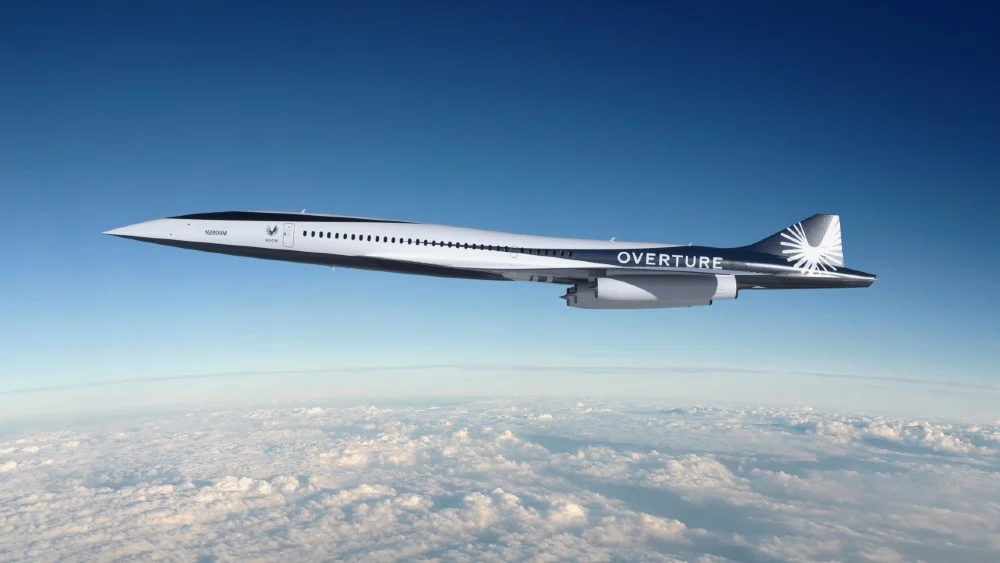
Boom Supersonic has emerged as the frontrunner. Their flagship aircraft, the Overture, is designed to cruise at Mach 1.7—roughly twice the speed of modern commercial airliners. With substantial pre-orders from major carriers including United Airlines and American Airlines, Boom is effectively betting that the demand for transcontinental and transoceanic speed will justify the premium ticket prices.
Spike Aviation’s S-512
While Boom focuses on large-scale passenger capacity, other firms are targeting the luxury and business travel markets. Spike Aviation’s S-512 Diplomat is a business jet designed specifically for low-boom supersonic flight. With a design optimized to minimize the noise footprint, the S-512 promises to connect global business hubs—such as New York to Paris—in under four hours. The focus here is on the "quiet" aspect of the engineering, aiming to make supersonic flight as unremarkable as a standard business flight.
The Path Forward: Challenges and Considerations
While the regulatory outlook is improving, significant hurdles remain. The first is public perception. The stigma associated with the sonic boom is deeply ingrained, and public acceptance will hinge on the real-world performance of the "Mach Cutoff" technology. If the public remains wary of noise, local opposition could delay the adoption of supersonic flight paths.
The second challenge is economic sustainability. The Concorde failed partly due to the high cost of fuel and maintenance. Modern manufacturers claim that composite materials and more efficient engine designs will lower the cost of supersonic flight, but these aircraft will still be inherently more expensive to operate than traditional subsonic jets. The success of these companies will depend on their ability to bridge the gap between "luxury experience" and "accessible commercial travel."
Finally, there is the question of environmental impact. Supersonic aircraft require more fuel, and critics have raised concerns about the carbon footprint of such operations. As the aviation industry pushes for "net-zero" goals, the supersonic sector will be under intense scrutiny to prove that their efficiency gains and use of sustainable aviation fuels (SAF) can offset their increased energy consumption.
Conclusion: A New Horizon for Global Connectivity
The FAA’s proposal to lift the ban on supersonic flight is a bold acknowledgment that the future of aviation cannot be defined by the limitations of the past. By setting science-based noise standards, the agency is fostering an environment where innovation can flourish while protecting the communities beneath the flight paths.
Should these regulations be finalized in 2027, the map of the world will effectively shrink. A business meeting in Tokyo could be preceded by a morning workout in San Francisco; a vacation in London could be reached in the time it currently takes to fly across the United States. We are entering an era where time, the most finite resource of all, is being reclaimed through the mastery of speed.
The race is now truly on. As the FAA, manufacturers, and international regulators align their interests, the sky is no longer the limit—it is simply the next frontier of human ambition. Whether it is Boom’s Overture or Spike’s S-512, the first carrier to clear these regulatory hurdles will not just be selling a ticket; they will be selling a return to an age of wonder, where the sound barrier is not a wall, but a gateway to a faster, more connected world.