Welcome to Taste Test, where every week our spirits critic explores the most buzzworthy, innovative, and compelling whiskeys from around the globe. This Sunday, we take a deep dive into the latest release from the James B. Beam Distilling Co., exploring how high-end experimentation thrives even as the broader commercial market faces structural headwinds.
Main Facts: Navigating Market Shifts and Liquid Innovation
For the James B. Beam Distilling Co., the overarching narrative of the past several months has been one of stark contrast. On the corporate and operational front, reality has necessitated caution. Company leadership recently announced that it will extend its planned whiskey production pause at one of its primary Kentucky distilleries into 2027. This decision, driven by a shifting macroeconomic landscape, cooling post-boom demand, and inventory rebalancing across the American whiskey sector, underscores the cyclical nature of the spirits industry.
Yet, even as macro-level adjustments dictate a temporary slowdown in certain production lines, the engine of creativity at Beam remains unstopped. The distillery’s most avant-garde branch continues to push boundaries, proving that scarcity and operational recalibration can coexist with world-class liquid artistry.
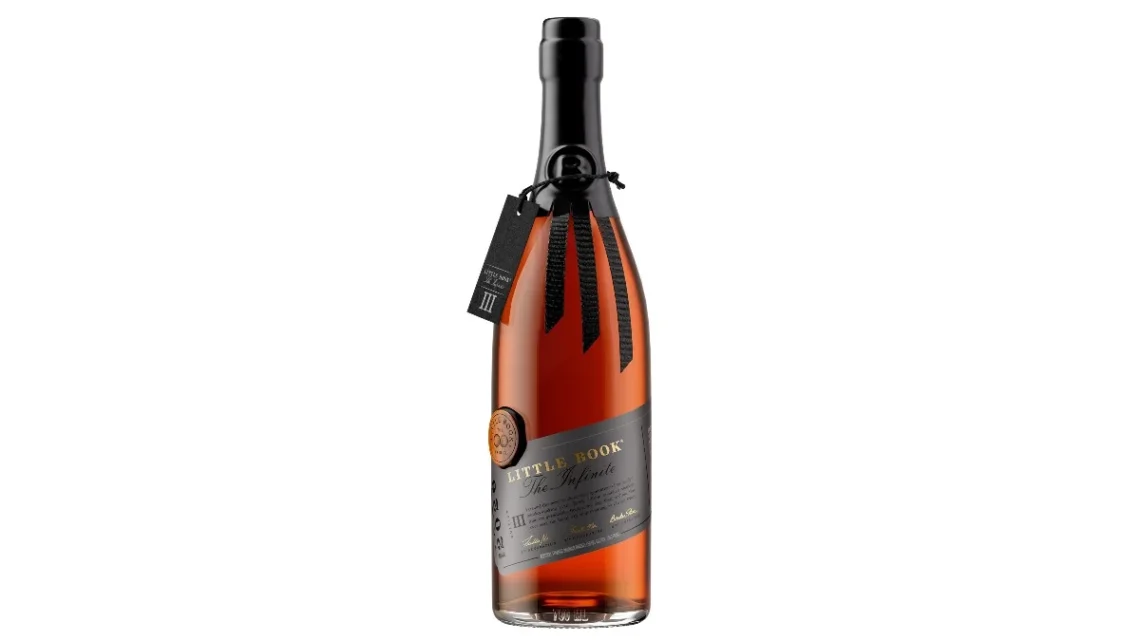
Enter the latest iteration of Little Book The Infinite (Edition III)—a masterclass in multi-generational blending crafted by eighth-generation master distiller Freddie Noe. Priced at a premium $200 per bottle and clocking in at 118.3 proof, this release serves as both a celebration of family legacy and a testament to the complex science of infinity blending. While purists often debate the merits of stepping away from single-barrel or standard-age-statement offerings, Little Book continues to carve out a unique space for adventurous drinkers willing to pay for boundary-pushing craftsmanship.
Chronology: The Making of a Dynasty and the Evolution of Little Book
To fully understand the weight and complexity of Little Book The Infinite Edition III, one must trace the lineage of the Noe family and the evolution of the brand itself.
The Foundation of a Legacy
The Noe family name is synonymous with the bedrock of Kentucky bourbon. Legendary figures like Booker Noe—Freddie’s grandfather—helped shape the modern profile of high-proof, unfiltered bourbon through the creation of Booker’s Bourbon. Fred Noe, Booker’s son, carried that torch forward, steering the massive commercial and cultural footprint of Jim Beam into the 21st century.
However, when Freddie Noe stepped up to the plate nearly a decade ago, he sought to create something that broke away from the traditional house style of standard Jim Beam white-label or traditional single-mashbill expressions. The result was Little Book, named in affectionate honor of the childhood nickname given to Freddie by his grandfather.
From Wild Blends to the Infinite Concept
From its inception, Little Book was designed as an annually changing, rolling experiment in the art of blending. Unlike traditional bourbons that rely on a static recipe year after year, Little Book releases were chameleons.
- The Early Chapters: Early releases explored unorthodox combinations, incorporating not just various ages of bourbon, but rye whiskey, malt whiskey, and even Canadian whiskies into unexpected symphonies of flavor.
- The Pivot to "The Infinite": In 2024, Freddie Noe supercharged the concept by introducing Little Book The Infinite. Rather than starting from scratch with each new chapter, The Infinite is built on a rolling "infinity blend" philosophy. Each subsequent edition adds new component whiskeys to the existing foundation, creating an evolving, continuous liquid lineage that builds directly upon its predecessor.
The Editions Build
- Edition I (2024): A tribute to four family members, featuring a 4-part blend: a 20-year-old Kentucky straight bourbon representing Booker Noe; a 14-year-old bourbon representing Fred Noe; a 7-year-old bourbon representing Freddie; and an 8-year-old shared family component.
- Edition II: Expanded the formula by layering in three additional whiskeys: a 22-year-old bourbon distilled by Booker; a 10-year-old bourbon distilled by Fred; and a 7-year-old bourbon distilled by Freddie.
- Edition III (Current Release): Maintaining the core family lineage theme, this new chapter integrates three brand-new component whiskeys into the ever-growing matrix, pushing the boundaries of balance, age interplay, and flavor complexity even further.
Supporting Data: Tasting Notes, Proof, and Architecture
Crafting an infinity blend is far more sophisticated than simply dumping new juice into an old vat. Freddie Noe and his blending team must conduct rigorous trials, calculating exact percentages to ensure that younger, punchier distillates do not overpower delicate, oak-heavy antique stocks—and vice versa.
Technical Specifications
- Brand: James B. Beam Distilling Co.
- Series: Little Book The Infinite (Edition III)
- Master Distiller: Freddie Noe
- Proof: 118.3 (59.15% ABV)
- MSRP: $200 per 750ml bottle
- Core Concept: Rolling infinity blend integrating legacy stocks from three generations of Noe distillers alongside newly introduced component whiskeys.
Sensory Evaluation & Flavor Profile
At 118.3 proof, Edition III sits slightly lower than the notoriously fiery Booker’s line—an intentional design choice that nods to Booker’s influence while ensuring the palate isn’t instantly scorched by alcohol heat.
- The Nose: Immediately aromatic, welcoming the senses with rich, decadent notes of Madagascar vanilla bean, dark maple syrup, and an undercurrent of weathered leather.
- The Palate: The mouthfeel is exceptionally rich, viscous, and textured. Mid-palate flavors reveal a complex interplay of dried Mission figs, black licorice, and buttery pecan praline. As the whiskey opens up, unexpected savory-sweet notes of creamy peanut butter emerge, harmonizing with deeper, foundational tones of damp, seasoned oak.
- The Finish: Long, warming, and remarkably balanced. Despite the inclusion of ultra-aged component whiskeys (which can sometimes introduce harsh, over-oaked tannins) and younger component stocks, the finish is devoid of single-note dominance. It is a masterclass in equilibrium.
Official Responses and Industry Perspectives
The dual reality of Beam’s current operations—curtailed production volume on one side, hyper-premium innovation on the other—reflects a broader reckoning across the Kentucky spirits landscape.

When corporate communications confirmed the continuation of the 2027 distillery production pause, industry analysts noted that major heritage houses are actively managing barrel inventories to prevent oversupply. The American whiskey boom of the 2010s and early 2020s led to unprecedented capital investment and distillation expansion. Now, brands are exercising strategic patience.
However, brand representatives and master distillers emphasize that premium, low-allocation releases like Little Book are immune to standard volume cutbacks. These specialty projects utilize liquid reserves laid down years—and in some cases decades—ago.
"Little Book was never meant to be a high-volume commercial play," notes a mid-level distiller close to the project. "It was built as Freddie’s sandbox. It gives the distillery the freedom to showcase legacy stocks that wouldn’t otherwise fit into the standard Jim Beam or Booker’s flavor profiles. When you have barrels distilled by Booker, Fred, and Freddie sitting in the rickhouses, you need a vehicle that honors that timeline."
Public reception among trade critics and consumers has largely validated this approach. While some traditionalists occasionally balk at the steep $200 price point—a notable jump from standard-tier Kentucky bourbon—collectors and blending enthusiasts view The Infinite as a liquid history book that cannot be replicated anywhere else in the industry.
Implications: What Little Book Means for the Future of American Whiskey
The release of Little Book The Infinite Edition III carries several vital implications for the future of the James B. Beam Distilling Co. and the broader American whiskey market:
1. The Pivot from Volume to Value
As the market normalizes following years of explosive growth, major heritage brands are increasingly reliant on high-margin, ultra-premium, and allocated releases. By pausing baseline production at select facilities while elevating complex blends like Little Book, Beam demonstrates a sophisticated ability to protect its bottom line while maintaining cultural cachet among connoisseurs.
2. The Rise of Blending as an Art Form
For decades, American whiskey consumers were conditioned to obsess over single-barrel picks and single-mashbill age statements. Freddie Noe’s work with Little Book has actively helped shift consumer perceptions, proving that the deliberate, artful marriage of diverse ages, mashbills, and even distillation styles can yield a product superior to its individual parts. The "infinity blend" concept takes this a step further, turning whiskey into a living, breathing archive.
3. Securing Multi-Generational Trust
In an era where craft distilleries pop up daily with aggressive marketing campaigns, heritage brands must continuously prove their authenticity. By anchoring Little Book directly in the chronological lineage of Booker, Fred, and Freddie Noe, Beam bridges the gap between historical reverence and modern innovation.
Final Verdict
Is Little Book The Infinite Edition III challenging? Absolutely. At 118.3 proof with a dizzying matrix of multi-generational components, it demands the drinker’s full attention. It is not an everyday pour, nor is it designed to be. But for those willing to invest the $200 asking price, it offers a window into the soul of Kentucky’s premier distilling dynasty—proving that even in times of corporate caution, the pursuit of liquid excellence remains entirely uncompromised.
Score: 91 / 100