By V.J. Graber
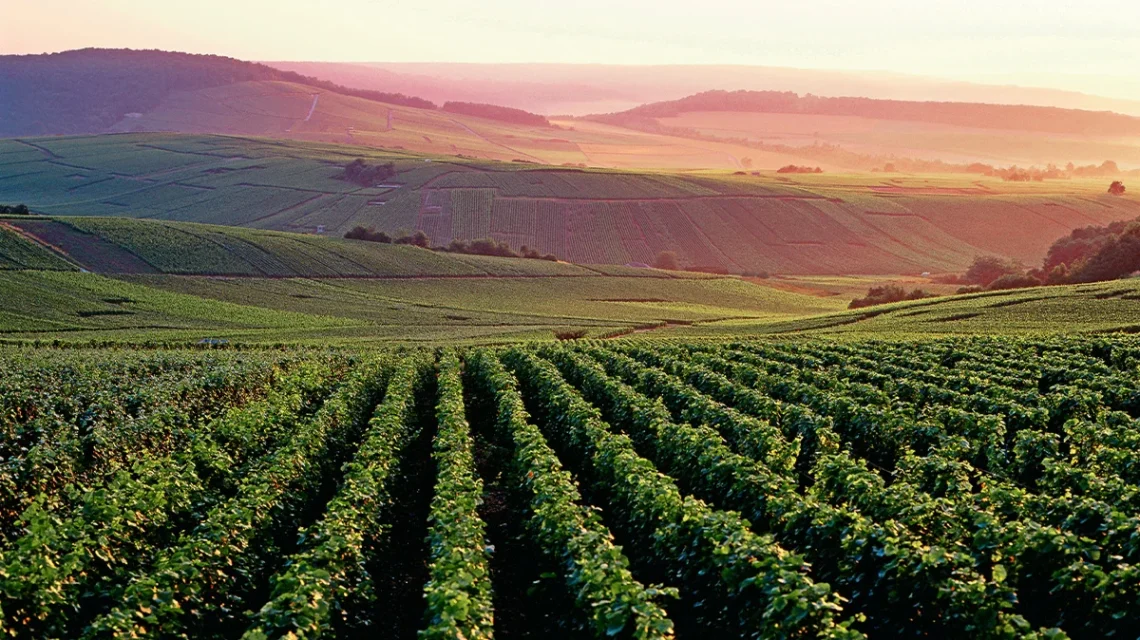
While it remains far too soon to definitively declare whether 2026 will go down in history as a legendary year for vintage Champagne—a verdict that connoisseurs know requires at least a decade of bottle age to ascertain—this growing season has already secured its place in the history books. It is being hailed as nothing short of exceptional for two distinct reasons.
The first is the extraordinary caliber of the fruit harvested across the storied chalky slopes of northern France. “The quality is fantastic, thanks to a very sunny and dry year,” says Mathieu Roland-Billecart, a seventh-generation family member and CEO of Champagne Billecart-Salmon. “There is absolutely no rot. This year was completely disease-free, like we have never seen before.”
The second reason is a direct consequence of the first. Driven by an unrelenting, sun-drenched summer that delivered some of the highest temperatures ever recorded in the region—and precipitated the earliest harvest in Champagne’s history—French regulatory authorities took the unprecedented step of temporarily raising the legal alcohol limit for the 2026 vintage from 13 percent to 15 percent.
Though overall production volumes were nearly halved due to severe spring frosts and punishing summer droughts, the collective praise for the resulting juice is universal. The 2026 vintage stands as a testament to both the fragility of modern agriculture and the remarkable resilience of one of the world’s most prestigious wine regions.
Chronology of an Atypical Growing Season
To understand the magnitude of the 2026 vintage, one must look back at a timeline that pushed winegrowers to their absolute limits. According to Lori Russo, director of the Bureau du Champagne USA—the official representative of Champagne winegrowers and producers in the United States—2026 was the most atypical growing season the region has ever encountered.
Spring: The Frosts of April
The year began with a treacherous blow. A severe spring frost swept through the region, damaging nearly 40 percent of Champagne’s vineyards. For many growers, the immediate fear was a decimated crop before the season had truly begun. However, this early shock was followed by an exceptionally rapid flowering period, setting the stage for an accelerated vegetative cycle.
Summer: The Five Heatwaves
As spring bled into summer, the weather shifted from concerning to extreme. The region endured five distinct heatwaves, characterized by intense sunshine and minimal rainfall. These conditions dramatically accelerated the ripening of the grapes, pushing sugar levels to heights normally unseen in the traditionally cool climate of northern France.
August: The Earliest Harvest on Record
The compounding effects of the summer heat forced an unprecedented decision across the region: an early August harvest. Because Champagne grapes are harvested entirely by hand, the sudden shift caught many producers off guard.
“Anyone who knows the history of Champagne knows that the region is incredibly resilient, and this year was no exception,” Russo tells Robb Report. “The entire industry came together and responded, some quickly exiting their planned August holidays to ensure the harvest, which is done entirely by hand in Champagne, was successful.”
Supporting Data and the Science of Sugar and Alcohol
The high temperatures and rapid ripening facilitated a massive accumulation of natural sugars within the grapes. To understand why this necessitated regulatory intervention, one must examine the fundamental science of winemaking.
Fermentation is the biological process by which yeast consumes sugar. As the yeast does its work, it converts that sugar into two primary byproducts: alcohol, which is retained within the liquid, and carbon dioxide, which escapes in the form of those signature, celebratory bubbles. In a cooler climate like Champagne, winemakers constantly battle to achieve sufficient ripeness so their grapes reach the baseline alcohol levels required for structure and balance.

In 2026, the inverse occurred. The extreme heat produced grapes bursting with sugar, which naturally translated into the potential for significantly higher alcohol levels in the finished wine.
As Rémi Vervier, CEO and oenologist at Champagne Palmer & Co, explains: “Warmer growing conditions can lead to higher natural alcohol levels, bringing greater richness, concentration, and aromatic intensity to Champagne. However, they can also reduce acidity, making it essential to preserve the freshness, precision, and balance that define our style.”
Statistically, the chemistry of the 2026 harvest has drawn comparisons to some of the most legendary, sun-soaked historical vintages of the past century. “The alcohol, acidity, and pH levels in the grapes from the 2026 harvest are similar to the legendary vintages from 1921, 1947, and 1959,” notes Russo.
Official Responses and Regulatory Action
With anxiety mounting across the region that natural alcohol levels would comfortably exceed the strict legal limit of 13 percent, regional authorities had to act with exceptional speed.
Russo explains that the Comité Champagne—the trade association representing winegrowers and houses—rapidly approved an amendment to the Appellation d’Origine Contrôlée (AOC) rules. This emergency measure temporarily permitted alcohol levels to rise as high as 15 percent for the 2026 vintage.
While a 15 percent alcohol ceiling is commonplace for bold, full-bodied reds like a robust Zinfandel or a high-octane Priorat, it is virtually unheard of for Champagne, where alcohol levels traditionally hover around 12 to 12.5 percent.
Despite the high ceiling, experts stress that consumers should not expect to find heavy, syrupy wines on store shelves. Russo clarifies that while the ceiling was raised to 15 percent as a safety net, the vast majority of wines from this harvest are projected to reach an actual alcohol-by-volume (ABV) of roughly 13.1 to 13.2 percent.
“This will not impact the sensory characteristics, quality, or style of the wines,” Russo assures. Instead, it merely provides the legal framework necessary to accommodate a rogue, sun-baked vintage without penalizing producers whose grapes achieved historic levels of natural ripeness.
Implications for Winemaking and Vineyard Management
While the regulatory adjustment for 2026 was introduced purely in response to exceptional circumstances, it serves as a stark reminder of the accelerating realities of climate change. Weather patterns are becoming increasingly volatile, and uncomfortably hot summers are transitioning from rare anomalies to recurring challenges.
In response, Champagne houses are deploying sophisticated winemaking techniques to minimize the impact of heat while safeguarding their vineyards. The 2026 harvest was characterized by intense concentration paired with notably low acidity—a combination that required immediate adaptation in the cellar.
“We adapted our winemaking approach accordingly, with particular attention to maintaining balance and the expression of each terroir: gentle pressing to avoid excessive phenolics, very precise débourbage [natural clarification through rest and settling] to maintain purity, and cool fermentations to retain aromatic freshness,” Vervier tells Robb Report.
Vervier notes that winemakers can also tweak parameters such as yeast selection and the management of malolactic fermentation to preserve the crisp freshness and structural balance that defines the region. However, adaptation cannot happen in the cellar alone; it must begin deep in the soil.

Decades of Proactive Climate Adaptation
Long before global warming became a daily headline, the Champagne industry was quietly preparing for it. Russo points out that for more than 40 years, the region has heavily invested in research, innovation, and long-term climate adaptation strategies.
“It was the first wine region in the world to assess its carbon footprint in 2002 to 2003 and begin to map a plan for reducing the region’s carbon footprint and adapt as much as possible to a changing climate,” Russo says.
This forward-thinking blueprint encompasses everything from how vines are planted and trained to the specific rootstocks utilized and the exploration of new, heat-tolerant grape varieties capable of thriving in a warmer world.
At Champagne Billecart-Salmon, these philosophies translate into aggressive viticultural stewardship. “That includes all our vineyards, which have been converted to organic or biodynamic farming, and the house’s requirement never to use weedkillers, so as to reinforce the root system of the vines,” Roland-Billecart explains.
Furthermore, because individual vintages carry distinct personalities, houses like Billecart-Salmon maintain extensive libraries of reserve wines in their cellars. These reserves allow winemakers to blend across multiple years, neutralizing the extremes of any single harvest and preserving the consistent, house-defining style that consumers expect.
Looking Ahead: Will 2026 Stand Alone or Fade into Blends?
The ultimate question facing collectors and critics is whether 2026 will eventually be bottled and released as a standalone, vintage-dated Champagne, or if its unique fruit will be absorbed into the intricate, multi-vintage blends that form the backbone of the region’s commerce.
“The first qualitative indicators are particularly encouraging,” says Vervier, maintaining an optimistic outlook. “All indications suggest that 2026 could give rise to wines of remarkable intensity, combining concentration, aromatic precision, and exceptional purity of fruit. Time will tell.”
Whether 2026 ultimately emerges as a celebrated vintage-dated collector’s item or plays a supporting role in the creation of complex, multi-year cuvées, one thing remains certain: the resilience of Champagne’s vignerons ensures that the region will continue to weather whatever nature throws its way.
As Lori Russo aptly reminds us, looking out toward an uncertain climatic horizon: “Many things are changing, but we are confident there will always be Champagne.”
Cheers to that.