SAN FRANCISCO — In an era where traditional digital advertising costs continue to soar and mega-influencers command exorbitant flat-rate fees for a single post, a new wave of marketing infrastructure startups is rewriting the rules of brand promotion. Leading this charge is Noise, a burgeoning marketing platform that connects companies directly with everyday content creators, allowing brands to execute massive, simultaneous campaigns at a fraction of traditional costs.
This week, Noise announced a significant milestone in its rapid growth trajectory: a $5.5 million seed funding round led by Capital Midwest, M25, and Grishin Robotics. This latest infusion of capital brings the startup’s total funding to $7.2 million, following participation from additional investors including Capitalize VC and industry operators from heavy-hitting tech firms like DoorDash.
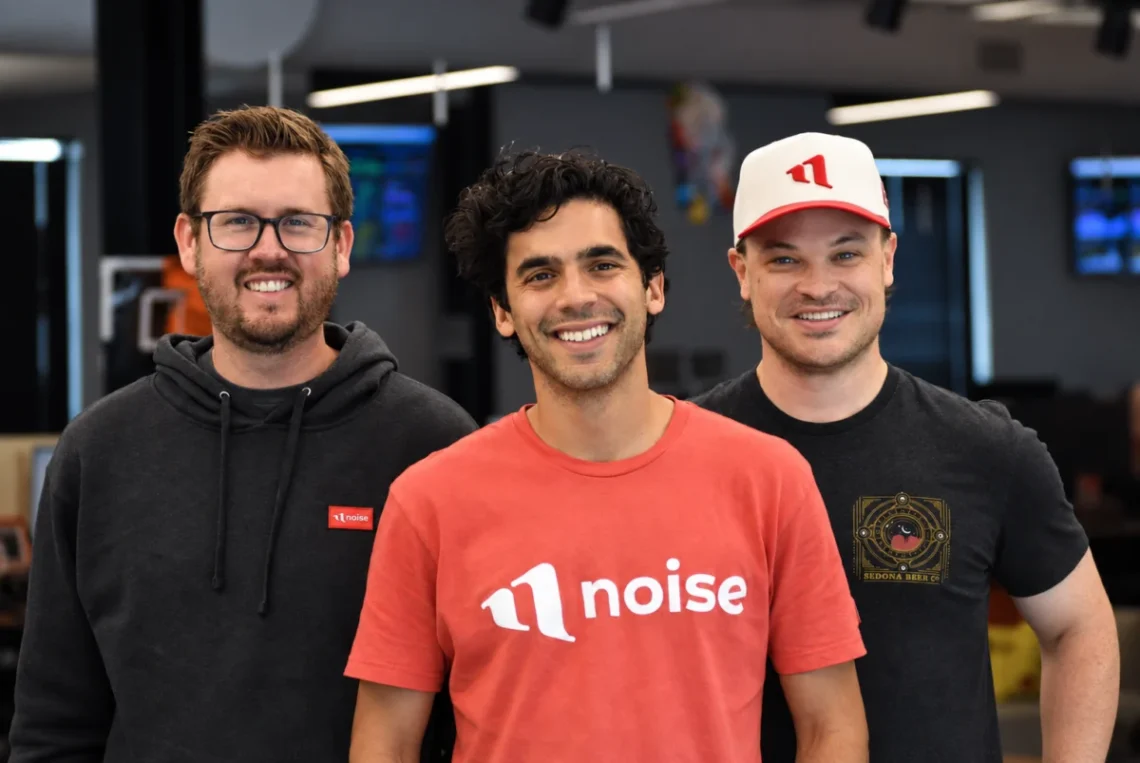
Launched officially in 2025 by co-founders Diego Kafie, Stu Feldt, and Nic Weber, Noise has already amassed a staggering community of 1.5 million creators on its platform. By shifting the paradigm away from high-priced macro-influencers and toward a performance-based model centered on everyday smartphone users, Noise is carving out a lucrative, highly scalable niche in the multi-billion-dollar creator economy.
Main Facts: What Is Noise and How Does It Work?
At its core, Noise is a bilateral platform designed to eliminate the logistical friction of influencer marketing. For brands, the platform serves as a centralized hub to post content briefs, define budgets, and launch campaigns across thousands of creators simultaneously. Rather than navigating the operational headaches of sourcing individual talent, negotiating custom contracts one-by-one, and manually dispersing payments, brands use Noise to automate the heavy lifting.
For creators, the value proposition is equally compelling: accessibility. Unlike traditional influencer marketing platforms that demand established follower counts, high engagement rates, or professional portfolios, Noise welcomes virtually anyone.
- No Follower Minimums: Anyone with a smartphone can download the Noise app, regardless of their current audience size.
- Performance-Based Payouts: Instead of paying a flat upfront fee per post—a risky gamble for brands if the content underperforms—Noise pays creators based on actual views delivered.
- Multi-Platform Reach: Creators can produce and publish content tailored to the platform of their choice, including TikTok, Instagram, Facebook, and YouTube.
- Organic-to-Ads Integration: Noise recently rolled out its "Organic-to-Ads" program, enabling brands to take top-performing organic videos created by Noise users and scale them as paid advertisements across Meta and TikTok.
According to CEO Diego Kafie, the platform’s top-performing creators are now earning upwards of six figures annually, demonstrating that ordinary people can build sustainable revenue streams without needing millions of legacy followers.
Chronology: From Mobile Gaming Experiments to a $7.2M Venture
The genesis of Noise did not happen in a vacuum; it was born out of operational necessity and real-world experimentation by its founders.
- 2023–2024: The Playbite Era. Before founding Noise, Kafie, Feldt, and Weber spent two years developing and scaling a mobile gaming app called Playbite. Like many early-stage startups with tight marketing budgets, the team struggled to find cost-effective ways to acquire users through traditional paid channels.
- The Grassroots Pivot. Desperate to find alternative growth loops, the Playbite team began experimenting with creative grassroots marketing. They recruited a handful of their own gamers—starting with just five, then ten, scaling to 25, and eventually 100 people—and taught them from scratch how to create engaging daily social media content promoting the app.
- The Viral Breakthrough. Before long, Playbite’s app installs skyrocketed. A small "army" of everyday users was posting native, authentic videos about mobile games and the Playbite app across platforms like TikTok. Most importantly, this hyper-growth happened at a fraction of the cost of traditional marketing playbooks. Partnering with established creators with massive clout would have been entirely cost-prohibitive for their scrappy startup budget.
- Early 2025: The Birth of Noise. Recognizing that other startups and lean marketing teams faced this exact same customer acquisition dilemma, the trio decided to productize their internal playbook. They stepped away from mobile gaming to launch Noise, aiming to democratize creator marketing on a global scale.
- Late 2025: Seed Funding Milestone. Following rapid organic adoption, Noise successfully closed its $5.5 million seed round, pushing its cumulative funding to $7.2 million and positioning the company for aggressive technological expansion and team scaling.
Supporting Data: Tapping Into the Gen Z Influencer Gold Rush
Noise enters the market at a historic cultural and economic inflection point. The desire to participate in the creator economy has never been higher, particularly among younger generations who view content creation not just as a hobby, but as a viable career path.
- 57% of Gen Z: According to recent data cited by CNBC, more than half of Generation Z actively aspire to become influencers.
- 40% of U.S. Adults: Broadening the scope, slightly over 40% of all U.S. adults express a desire to participate in the influencer market.
- The Supply-Demand Mismatch: While millions want to monetize their digital presence, breaking into the traditional influencer landscape has become increasingly difficult. High market saturation, algorithmic volatility, and the financial barrier to entry leave the vast majority of aspiring creators struggling to make their first dollar online.
Noise joins a growing ecosystem of content creator infrastructure and UGC (user-generated content) platforms—such as Billo and JoinBrands—that seek to bridge the gap between brands needing authentic media assets and everyday consumers looking for monetization opportunities. However, Noise differentiates itself by focusing heavily on view-based compensation and a gamified, training-driven progression system for novice creators.
Official Responses and Strategic Vision
In interviews surrounding the funding announcement, CEO Diego Kafie outlined the company’s aggressive vision for the future. Currently, Noise’s primary customer base consists of mobile app developers and lean startups operating under tight marketing constraints. These companies are desperate to acquire customers efficiently across a wide demographic range.
"They are the most interested in reaching a really wide range of potential customers, making them the prime users for something like Noise, where they can easily recruit a small army of people to become their biggest users and advocates," Kafie explained. "This gives brands an unprecedented level of content diversity and reach at a fraction of the cost of other traditional marketing playbooks."
Addressing criticisms or concerns that platforms like Noise might underpay creators compared to direct brand deals, Kafie pushed back strongly. He noted that pricing is transparently set by the market: brands establish their rates, and creators retain the autonomy to accept or decline campaigns. Furthermore, Kafie emphasized that Noise’s core mission is talent incubation—transforming absolute beginners into professional digital creators.
When users first onboard onto the platform, they are required to complete specialized Noise creator training modules. These modules educate novices on the fundamentals of producing high-performing, brand-safe social media content.
- The Tiered Opportunity System: Beginners start by accessing a curated selection of entry-level campaigns. As they complete assignments, hone their craft, and build a track record of reliable performance, they unlock access to higher-paying opportunities.
- The Organic-to-Ads Expansion: With the fresh $5.5 million capital injection, Noise plans to aggressively expand its product capabilities and hire key engineering and operational talent. A prime example of this product evolution is the newly launched Organic-to-Ads program.
"The creators still post to platforms," Kafie noted. "But in addition, the brands can now put paid ads spend behind those creatives to reach more people."
Implications: Democratizing the Internet Economy
The rise of platforms like Noise signals a fundamental structural shift in digital marketing and online labor. For decades, the creator economy operated on a winner-take-all power law distribution, where a tiny fraction of elite influencers captured the vast majority of brand sponsorship dollars.
By automating the operational overhead of mass-creator campaigns, Noise offers several profound industry implications:
- For Brands: Companies of all sizes—not just Fortune 500 enterprises with multi-million-dollar marketing budgets—can now harness the authenticity of user-generated content at scale. Instead of relying on a single polished commercial or one expensive mega-influencer, brands can deploy thousands of diverse, relatable voices overnight.
- For Everyday Consumers: By lowering the barrier to entry to a smartphone and an internet connection, Noise is actively dismantling the exclusivity of the influencer class. As Kafie eloquently summarized: "By democratizing ‘becoming a creator’ to literally anyone with a smartphone, we’re bringing costs down for brands, but enabling millions of people to make their first dollar on the internet."
- For the Advertising Industry: As ad fatigue sets in and consumers increasingly tune out traditional, highly polished corporate advertisements, the demand for raw, authentic, peer-to-peer recommendations will only accelerate. Infrastructure platforms that can reliably source, manage, and scale this type of creative output are poised to become indispensable pillars of modern digital commerce.
With $7.2 million safely in the bank, a rapidly expanding community of 1.5 million creators, and a proven product-market fit derived from their early days at Playbite, Kafie and his co-founders are well-positioned to turn Noise from a scrappy startup into the foundational operating system for the grassroots creator economy.