NEW DELHI — In an era defined by rapid technological advancement and unprecedented global connectivity, a profound political and economic crisis is quietly taking root. The extraordinary power wielded by today’s billionaires is no longer viewed merely as a symptom of economic disparity; it is increasingly recognized as an existential threat to democratic governance and the long-term sustainability of the planet.
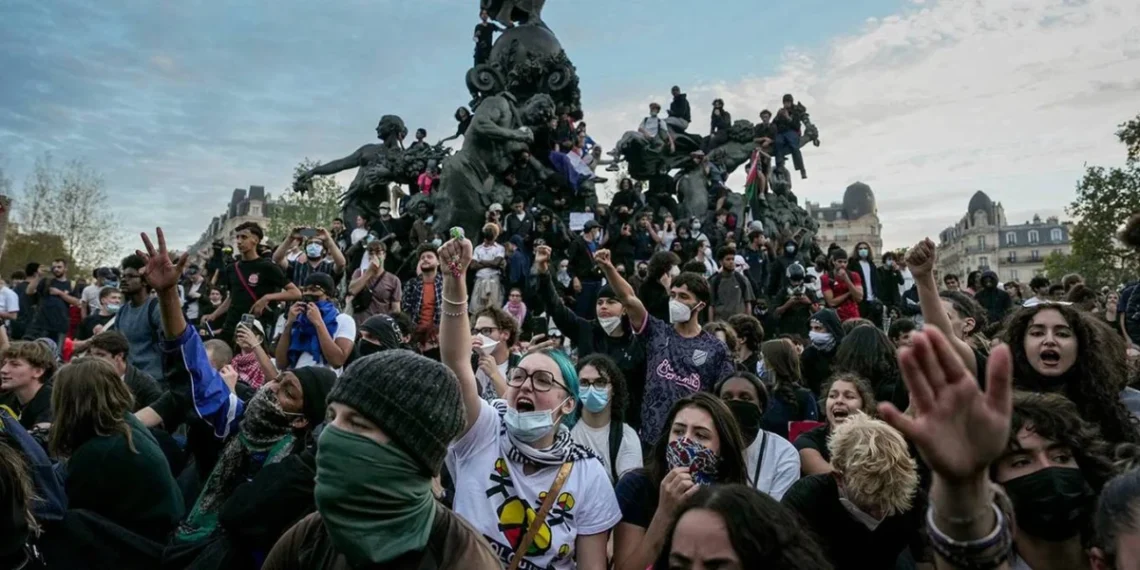
Across continents, populations grappling with a relentless cost-of-living crisis, diminishing housing affordability, and worsening job prospects are beginning to awaken to a stark reality. Frustrated citizens are discovering the latent power of collective political action, pushing back against a global economic order that many feel has rigged the game in favor of a privileged few.
The growing public backlash in many countries against extreme inequality and the unprecedented concentration of wealth and power should come as no surprise. Beneath the surface of traditional electoral politics lies a widespread, corrosive sense that modern democracies have effectively mutated into oligarchies or plutocracies. These systems are increasingly dominated not by the will of the electorate, but by a handful of mega-corporations and the predominantly male elite who control them. By leveraging vast financial resources to influence political processes, the ultra-wealthy have successfully shaped rules, tax codes, and regulatory frameworks designed to accumulate even greater fortunes—all while the daily lives of ordinary citizens grow increasingly precarious.
Main Facts: The Anatomy of Modern Wealth Concentration
The modern global economy is characterized by a wealth gap unparallelled in modern history. The concentration of capital in the hands of a microscopic fraction of the global population has transformed from an economic anomaly into a systemic pillar of international governance.
- The Super-Concentration of Capital: A minuscule percentage of the global population—often measured in billionaires and centi-billionaires—controls a volume of wealth equivalent to, or exceeding, that of the bottom half of the global population combined.
- The Fusion of Corporate and State Power: Modern corporate monoliths, particularly in technology, finance, and energy, wield economic clout that eclipses the GDPs of many sovereign nations. This allows them to effectively lobby, litigate, and legislate in their own self-interest.
- Democratic Erosion: Electoral systems worldwide face severe strains as campaign finance laws, dark money, and corporate lobbying create an uneven playing field where ordinary voters struggle to make their voices heard over the roar of vested interests.
- Planetary Toll: The pursuit of infinite growth and hyper-consolidation of resources has driven environmental degradation, accelerating climate change while those responsible insulate themselves from the ecological consequences.
Chronology: How We Arrived at the Age of Plutocracy
To understand the current groundswell of public anger, it is necessary to examine the historical trajectory that dismantled the post-war social contract and paved the way for modern oligarchic capitalism.
The Neo-Liberal Shift (Late 1970s – 1980s)
The ideological shift toward deregulation, privatization, and globalization began in earnest under administrations in the United States and the United Kingdom, led by figures like Ronald Reagan and Margaret Thatcher. Proponents argued that unfettered markets would generate universal prosperity. Instead, the dismantling of labor unions, the lowering of top marginal tax rates, and the privatization of public assets laid the groundwork for capital accumulation at the top.
The Dot-Com Boom and Financialization (1990s – 2000s)
The rapid expansion of the technology sector, coupled with the aggressive deregulation of global financial markets, created vast new fortunes. Financial engineering replaced tangible production as the primary driver of wealth creation. When the global financial crisis struck in 2007–2008, governments deployed massive bailouts to rescue systemically important financial institutions, while millions of ordinary homeowners faced foreclosure and unemployment. The message was clear: private gains were privatized, but systemic losses were socialized.
The Tech Monopoly Era and Pandemic Divergence (2010s – 2020s)
The rise of platform capitalism cemented the dominance of a few mega-corporations that control information, commerce, and communication. This trend accelerated dramatically during the COVID-19 pandemic. While billions of people faced economic ruin, supply chain disruptions, and health crises, the world’s billionaires saw their collective net worth skyrocket to historic highs, fueled by surging stock markets and government stimulus programs.
The Global Awakening and Grassroots Pushback (Present Day)
Today, a tipping point has been reached. From labor strikes in Western nations to anti-corruption protests in the Global South, citizens are mobilizing. The widespread realization that traditional political parties are failing to address systemic economic insecurity has catalyzed a new wave of political activism focused on wealth redistribution, corporate accountability, and democratic renewal.
Supporting Data: The Numbers Behind the Crisis
Empirical research from leading economic institutions and think tanks underscores the severity of the wealth divide and its correlation with democratic decay.
- The Wealth Share: According to reports by organizations like Oxfam, the richest 1% have captured nearly twice as much new wealth as the rest of the world’s population combined over the past decade.
- Wages vs. Productivity: Over the last forty years, worker productivity in major advanced economies has risen significantly, yet real wages for the median worker have stagnated or grown only marginally. The productivity-pay gap represents trillions of dollars diverted from labor to capital.
- Lobbying Expenditures: In major democracies such as the United States, corporate lobbying expenditures reach tens of billions of dollars annually. Studies consistently show a high correlation between heavy lobbying and favorable legislative outcomes, often directly contradicting public opinion polls on key issues like taxation and environmental regulation.
- Housing and Affordability Metrics: In urban centers worldwide, housing costs have outpaced income growth by multiples. Institutional investors and private equity firms buying up residential real estate have turned housing from a fundamental human right into a financial asset class, pricing out younger generations.
Official Responses: Divergent Views from Governments and International Bodies
The tension between concentrated wealth and democratic stability has elicited a wide range of responses from policymakers, international organizations, and corporate leaders.
International Institutions and Warning Voices
Bodies such as the United Nations and the International Monetary Fund (IMF) have increasingly issued stark warnings regarding extreme inequality. IMF research has repeatedly demonstrated that excessive inequality drags down long-term economic growth and destabilizes political institutions. UN officials have called for stronger global tax cooperation, including proposals for a coordinated wealth tax on ultra-high-net-worth individuals.
National Policy Shifts and Legislative Resistance
Governments find themselves deeply divided. In several developing and developed nations, progressive lawmakers are pushing for windfall taxes on corporate profits, anti-monopoly crackdowns on Big Tech, and stronger labor rights. However, these legislative efforts frequently face fierce resistance and legislative gridlock, heavily funded by corporate interest groups warning of capital flight and economic stagnation.
Corporate Philanthropy vs. Systemic Reform
In response to public scrutiny, many billionaires have embraced high-profile philanthropy, pledging portions of their fortunes to charitable causes through initiatives like the Giving Pledge. However, critics argue that private philanthropy is no substitute for democratic taxation and public policy. Wealthy donors often dictate the priorities of their foundations, bypassing accountable democratic processes to address crises of their own choosing.
Implications: The Crossroad for Democracy and the Planet
The trajectory of modern society hinges on how nations navigate the current confrontation between concentrated wealth and democratic governance. The implications of inaction are profound.
The Fragility of Democratic Institutions
When citizens feel that their votes make no difference and that political systems are entirely captured by monied elites, disillusionment sets in. This cynicism creates fertile ground for populist demagoguery, political polarization, and the erosion of democratic norms. If electoral democracies fail to deliver economic security and fairness, the appeal of alternative, authoritarian governance models will inevitably grow.
The Ecological Crisis
The existential threat of climate change is inextricably linked to corporate power. Major fossil fuel conglomerates and extractive industries have historically utilized their political influence to delay climate action, greenwash their operations, and protect subsidies. Overcoming this inertia requires breaking the political stranglehold of industries whose business models rely on ecological degradation.
The Path Forward: Reclaiming People Power
The encouraging counter-narrative to this bleak outlook is the resurgence of citizen agency. Across the globe, people are recognizing that democracy is not a spectator sport. Through unionization drives, grassroots political movements, demands for wealth redistribution, and calls for strict antitrust enforcement, the public is beginning to test its collective strength.
To preserve democratic integrity and secure a livable planet, societies must dismantle the modern oligarchic architecture. This requires robust regulatory frameworks, transparent campaign finance laws, progressive taxation, and an unwavering commitment to the principle that public welfare must always supersede private opulence. The awakening has begun; whether political systems can adapt in time remains the defining question of our era.