On a windswept, grassy plain in the Don-Aryk region of Kyrgyzstan, the air was thick with the scent of damp earth and adrenaline. Before me, men on horseback engaged in kok boru—a traditional Central Asian sport often described, with grim accuracy, as "dead goat polo." As riders violently wrenched the carcass from one another’s grasp, thundering across the field toward a cauldron-sized goal, I felt the visceral pull of the nomadic spirit. When the match concluded, a triumphant player trotted over and invited me to take a victory lap with the goat.
In that moment, I was two weeks into a Smithsonian Journeys expedition across five Central Asian countries, surrounded by a group of travelers primarily composed of retirees. As I prepared to swing into the saddle, a chorus of voices from the sidelines erupted in a unanimous, stern, "Oh, no you won’t."
Standing in the Kyrgyz countryside, being collectively talked out of one of my more impulsive "yeses" by a busload of surrogate parents, I felt like a teenager being scolded. Yet, beneath the frustration was a profound sense of warmth. These people, strangers only a fortnight ago, cared enough to save me from my own lack of judgment. It was a realization that would define my approach to travel for years to come.
The Evolution of a Traveler’s Perspective
When I first booked an Intrepid Travel tour through Uzbekistan, I harbored significant reservations. Looking at the guest list—dominated by seniors—I feared a lack of shared interests and a sluggish pace. My assumptions, however, were dismantled by the arrival of Penny, an Australian septuagenarian with a story that eclipsed any preconception I held.
Penny was a survivor. She had lived through a horrific terrorist bombing in Bali that claimed the lives of several members of her travel group. In the aftermath, her husband suffered permanent brain damage, retreating into a shell of silence. Yet, Penny refused to retreat. She continued to travel, navigating the world with a fierce, quiet grace. We spent our days scouring the markets of Khiva for intricate textiles and our evenings bonding over local cuisine. By the end of the trip, the age gap had not just narrowed; it had evaporated.
This realization was deeply personal. My own parents had spent years struggling with the crushing weight of severe depression and agoraphobia. As their world contracted, I watched their curiosity wither. Travelers like Penny offered me a different blueprint for aging—a testament to the power of remaining engaged, social, and relentlessly curious, regardless of what life has thrown in one’s path.
Chronology of a Journey: From Tragedy to Connection
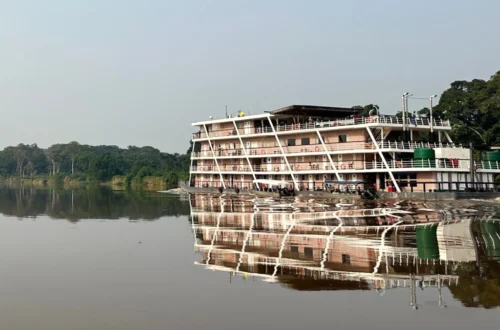
The transformative power of these journeys reached a crescendo during a Lindblad Expeditions–National Geographic cruise through the Peruvian Amazon. Among the guests were Dan and Kathy, two widowed travelers who had met online, fallen in love, and committed to a shared list of global adventures. Another companion was a woman who, having just finished caring for her husband through a terminal battle with brain cancer, had arrived on the boat having recently received her own diagnosis.
Hardship, I learned, did not blunt their zest for life; it magnified it. It was on this voyage that I received the news of my own father’s passing. The subsequent days were a blur, yet my fellow travelers were my anchor. They knew, with painful clarity, what it meant to have one’s life cleaved into "Before" and "After." They held space for my grief, listening when I needed to talk and allowing me silence when I needed to process. Watching them swim with piranhas and trek through the jungle, I realized they were living proof that joy is not a finite resource, but one that can be reclaimed even after profound loss.
The Anatomy of an Unlikely Friendship
The camaraderie I found in Central Asia mirrored these experiences. Linda, an 80-year-old retired psychoanalyst, became my partner in crime, sharing my penchant for raunchy humor and my drifting attention span during long, tedious museum lectures. Then there was Susan, 83. When she first asked about my tattoos, I detected a note of judgment—until she rolled up her sleeve to reveal a vibrant Betty Boop inked onto her biceps, acquired at the age of 81. Having survived two comas and a stroke, Susan was a force of nature who never left her room without her signature fire-engine red lipstick. It was a shade I wore myself. We were kin.
The demographic of these groups was, frankly, intimidating. They were pulmonologists, oncologists, and former heads of surgical departments. Ask for a medical professional on the bus, and half the group would raise a hand. They debated history and architecture with the rigor of academic peers. I found myself missing my late father’s tendency to turn every dinner into a lecture; hearing these experts wax poetic on the Silk Road filled a void I hadn’t realized was there.
Implications: Why We Need Intergenerational Travel
There is a misconception that traveling with seniors is a compromise. It is true that it requires patience; itineraries are necessarily paced to accommodate walkers, canes, and slower mobility. But this is a small price to pay for the depth of perspective gained.
This past summer, on a Viking river cruise from Bucharest to Budapest, my husband and I befriended Bob and Jeannie, a couple from Long Island. They asked about our work, our four-year-old son, and our life in Minnesota—a simple, genuine curiosity that struck a deep nerve. My mother, currently suffering from dementia, no longer asks about my life, my child, or my future. To be asked, to be truly seen by people who had no obligation to care, was a gift. We left the boat promising to visit them in New York, and for once, it was a promise we truly intended to keep.
Bridging the Gap
The benefits of these intergenerational connections are bilateral:
- For the Younger Traveler: We gain a "road map" for aging. We see that wisdom, humor, and intellectual vitality do not have an expiration date. We learn to cultivate resilience through the lived experiences of those who have seen the world change over eight decades.
- For the Older Traveler: They find an audience for their stories and a bridge to the contemporary world. As my Smithsonian group toasted me in Almaty for "keeping them young," I realized that while I was the one climbing onto horses and dancing with strangers, they were finding a renewed sense of adventure through my antics.
Conclusion: A New Way to Explore
At the farewell dinner of my Smithsonian trip, I was humbled by the group’s gratitude. I had arrived expecting to be the "babysitter" or the bored youth, but I left having received a masterclass in living.
Traveling with an older demographic is no longer a last resort; it is now my preference. I look forward to the bus rides where I am the youngest person on board. I look forward to the stories I will carry for decades, and the glimpses of the person I might eventually become.
In a world that often silos us by age and stage of life, these expeditions serve as a vital reminder: the horizon is meant to be shared. Whether you are navigating the Amazon or the markets of the Silk Road, the most important part of the journey is not where you are going, but who is sitting in the seat next to you. When you find people who have lived through the worst of life and still choose to wear red lipstick, laugh at bad jokes, and explore the world, you haven’t just booked a vacation—you’ve found a life philosophy.