
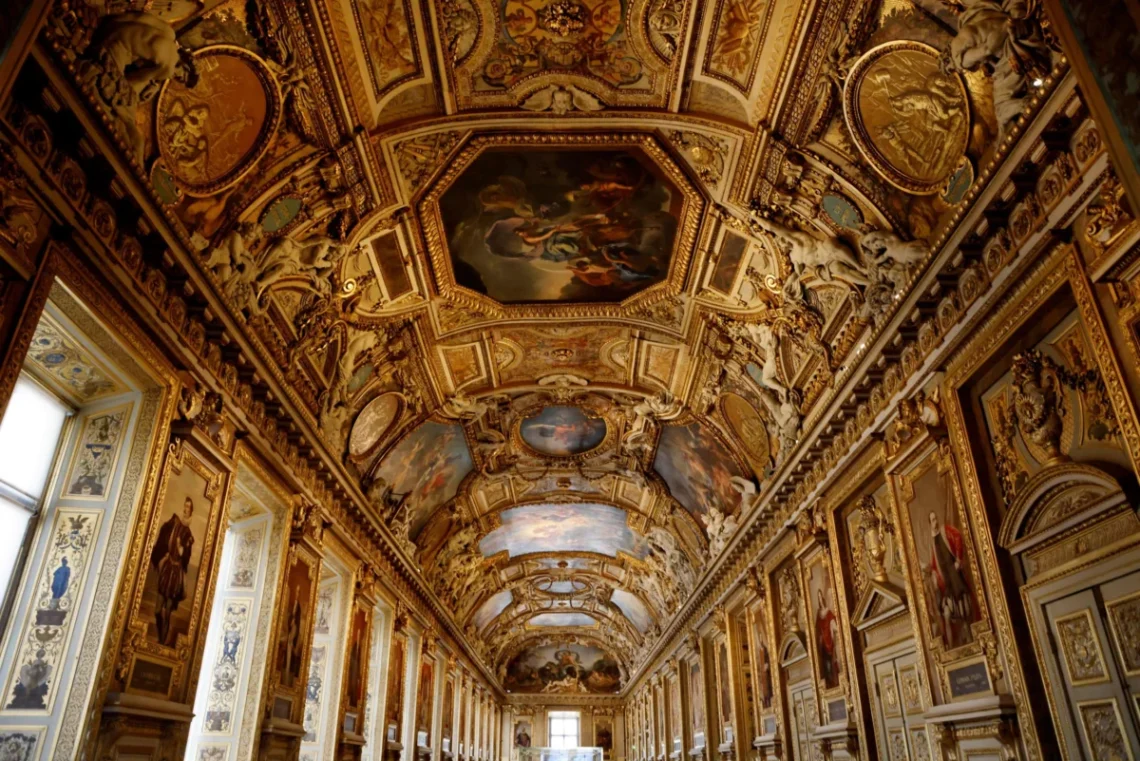
On July 22, the Louvre Museum will throw open the gilded doors of its legendary Apollo Gallery, welcoming the public back into one of the most significant architectural achievements of the 17th century. Yet, for visitors expecting to see the glittering assemblage of the French crown jewels, the experience will be profoundly different. In the wake of last autumn’s audacious $102 million heist—a crime that sent shockwaves through the global art world—the hall will stand hauntingly empty.
The decision by the Louvre’s new director, Christophe Leribault, to keep the gallery’s vitrines bare is more than a security measure; it is a profound acknowledgment of the museum’s vulnerability in an era of high-stakes art crime. As the world watches, the Louvre is attempting to pivot from a site of trauma back to a site of historical wonder.
The Anatomy of a Scandal: A Chronological Retrospective
The story of the Apollo Gallery’s current state is inextricably linked to the events of October 19, 2025. What was meant to be a routine night of security protocol transformed into a cinematic crime that bypassed the museum’s sophisticated surveillance infrastructure.
The Heist (October 19, 2025)
Under the cover of darkness, a sophisticated group of perpetrators infiltrated the Apollo Gallery. By the time the alarm was raised, the thieves had vanished, absconding with a collection of historical treasures valued at approximately $102 million. The swiftness and precision of the operation suggested a high level of premeditation, leading investigators to compare the event to the most sensational heists in cinematic history.
The Recovery of the Eugénie Crown
While the majority of the stolen artifacts remain at large, the recovery effort yielded a singular, battered triumph: the crown of Empress Eugénie. Discovered abandoned on the floor of the museum during the thieves’ frantic egress, the crown suffered significant structural damage. It is currently undergoing a meticulous, painstaking restoration process to return it to its former luster.
The Reopening (July 22, 2026)
Following months of forensic investigation and internal security audits, Director Christophe Leribault has authorized the reopening of the hall. However, the decision to leave the display cases vacant marks a departure from traditional curation, forcing the public to confront the absence of the jewels as a tangible element of the room’s history.
Architectural Grandeur: A Baroque Legacy
While the jewels are gone, the Apollo Gallery itself remains one of the most breathtaking interior spaces in Western art history. Commissioned by King Louis XIV, the “Sun King,” the gallery was designed to be the physical manifestation of his absolute power and the divinity of his reign.
The Vision of Louis Le Vau and Charles Le Brun
The initial design was the work of architect Louis Le Vau, who laid the foundation for a space that would prioritize light, perspective, and grandeur. The decorative program was executed by the master painter Charles Le Brun, who utilized the theme of the sun as a metaphor for the king’s reach across the globe. Every stucco molding, crafted by the sculptor François Girardon, was designed to amplify the sense of movement and divine light that permeates the chamber.
A Blueprint for Versailles
The Apollo Gallery served as the direct inspiration for the later, more famous Hall of Mirrors at the Palace of Versailles. It established the visual vocabulary for French royal propaganda—an environment where architecture, painting, and sculpture fuse to create an immersive, overwhelming sensory experience.
The Delacroix Addition
Two centuries after its inception, the gallery underwent a renovation that added a new layer of artistic significance. The Romantic painter Eugène Delacroix was commissioned to create the ceiling’s centerpiece, Apollo Slays the Python. This powerful, dynamic mural introduced a sense of drama and moral triumph that perfectly complemented the ornate Baroque surroundings, cementing the gallery’s status as a living dialogue between the 17th and 19th centuries.
The Henry James Perspective: A Historical Context
The impact of the Apollo Gallery on the human psyche is well-documented. In his memoirs, the acclaimed American-British novelist Henry James recounted his first encounter with the room at the tender age of 13. He described the experience with a sense of wonder that has rarely been matched in literature, calling it a “prodigious tube or tunnel through which I inhaled little by little, that is again and again, a general sense of glory.”
James’s reflection highlights the essential truth of the gallery: it was never merely a container for jewels. It was a space designed to elevate the human spirit. Today, as the museum reopens the empty hall, the administration hopes that visitors will once again inhale that “sense of glory,” finding beauty in the architecture even in the absence of the gold and diamonds that once adorned it.
Official Responses: The Philosophy of Absence
Director Christophe Leribault’s approach to the reopening has been pragmatic and, in some ways, provocative. Addressing the media, Leribault drew a startling parallel to one of the most famous art thefts in history.
“This crown will be more famous than it was before,” Leribault noted in an interview with Le Parisien. “Just as the Mona Lisa became after its theft in 1911.”
By acknowledging the notoriety that follows a heist, the director is reframing the missing crown not just as a lost object, but as a cultural icon in transition. He has confirmed that when the crown is eventually returned to public view, it will not be in the open, vulnerable setting of the Apollo Gallery, but in a new, high-security, windowless vault designed to withstand any future intrusion.
Implications for Museum Security and Curation
The current state of the Apollo Gallery raises fundamental questions about the modern museum experience. As high-value items become increasingly targeted by organized criminal syndicates, museums are faced with a difficult dilemma: how to balance the accessibility of cultural heritage with the necessity of absolute physical security.
The Shift to Virtual and Vaulted Displays
The Louvre’s decision to move the remaining crown jewels to a secure, windowless environment reflects a broader trend in global museology. Many major institutions are moving away from traditional display cases in high-traffic, historic rooms, opting instead for dedicated “security zones.” While this protects the artifacts, it changes the way art is consumed. The removal of the objects from the Apollo Gallery effectively turns the room into a site of historical reflection rather than a treasury.
The Psychological Impact on the Visitor
There is a distinct, melancholic beauty in walking through an empty Baroque gallery. It forces the visitor to look up at the vaulted ceiling and the intricate stucco work, rather than down at the vitrines. It turns the focus of the museum from the commodity of the crown jewels to the craftsmanship of the French masters.
However, the empty hall also serves as a stark reminder of the fragile nature of history. The space feels, as James might have noted, like a shell—a brilliant, golden tunnel waiting to be refilled, or perhaps, a monument to the necessity of vigilance in an age where the world’s treasures are as much liabilities as they are assets.
Conclusion: A New Chapter for the Apollo Gallery
As the doors reopen on July 22, the Louvre is inviting the public to participate in a communal act of resilience. The Apollo Gallery will continue to tell the story of the Sun King, the brilliance of Le Brun, and the romanticism of Delacroix.
While the shadows of the October heist still linger, the museum’s commitment to preserving the physical space—even without its most precious cargo—proves that the power of art transcends the objects themselves. The "prodigious tunnel" remains, and as visitors walk through it, they are reminded that even when history is stolen, the legacy of human creativity is something that can never be fully taken away. The Apollo Gallery stands, as it always has, as a testament to the pursuit of beauty, regardless of the darkness that periodically threatens to eclipse it.