After two decades of confinement within the sterile, climate-controlled silence of a French customs warehouse, a rare etching by Marc Chagall has finally been liberated. The artwork, titled L’Acrobate Au Violon (1924), has emerged from its unintended exile to find a permanent home at the Museum of Fine Arts and Archaeology of Besançon. This peculiar odyssey, which began at a roadside border crossing in 2005, concludes a long-forgotten legal saga, transforming a seized piece of contraband into a centerpiece of French cultural heritage.
The Border Incident: A 20-Year Detour
The story of L’Acrobate Au Violon began in 2005, a year marked by heightened scrutiny of international art trafficking. The etching was part of a sprawling inventory of artworks packed into a truck destined for Switzerland. As the vehicle reached the Franco-Swiss border, French customs officials conducted a routine inspection that quickly escalated into a criminal investigation.
Upon examining the cargo, authorities discovered that two specific pieces—the 1924 Chagall etching and a 1959 drawing by the celebrated Russian sculptor Ossip Zadkine—lacked the necessary export documentation required to legally leave French territory. Under French law, the unauthorized removal of cultural goods is treated with extreme gravity. The two Swiss nationals responsible for the transport were promptly arrested and charged with the concealment of cultural property.
Following a swift judicial process, the perpetrators were fined for their attempt to bypass export regulations. However, while the individuals were processed and released, the art itself remained trapped in the bureaucratic gears of the French state. Confiscated as evidence of a crime, the works were moved to a customs warehouse in eastern France. There, they entered a state of legal limbo, effectively vanishing from the public eye and the art market alike for nearly twenty years. It was only through a routine administrative review two years ago that the two treasures were rediscovered, gathering dust in the facility’s inventory.
The Artistic Significance of L’Acrobate Au Violon
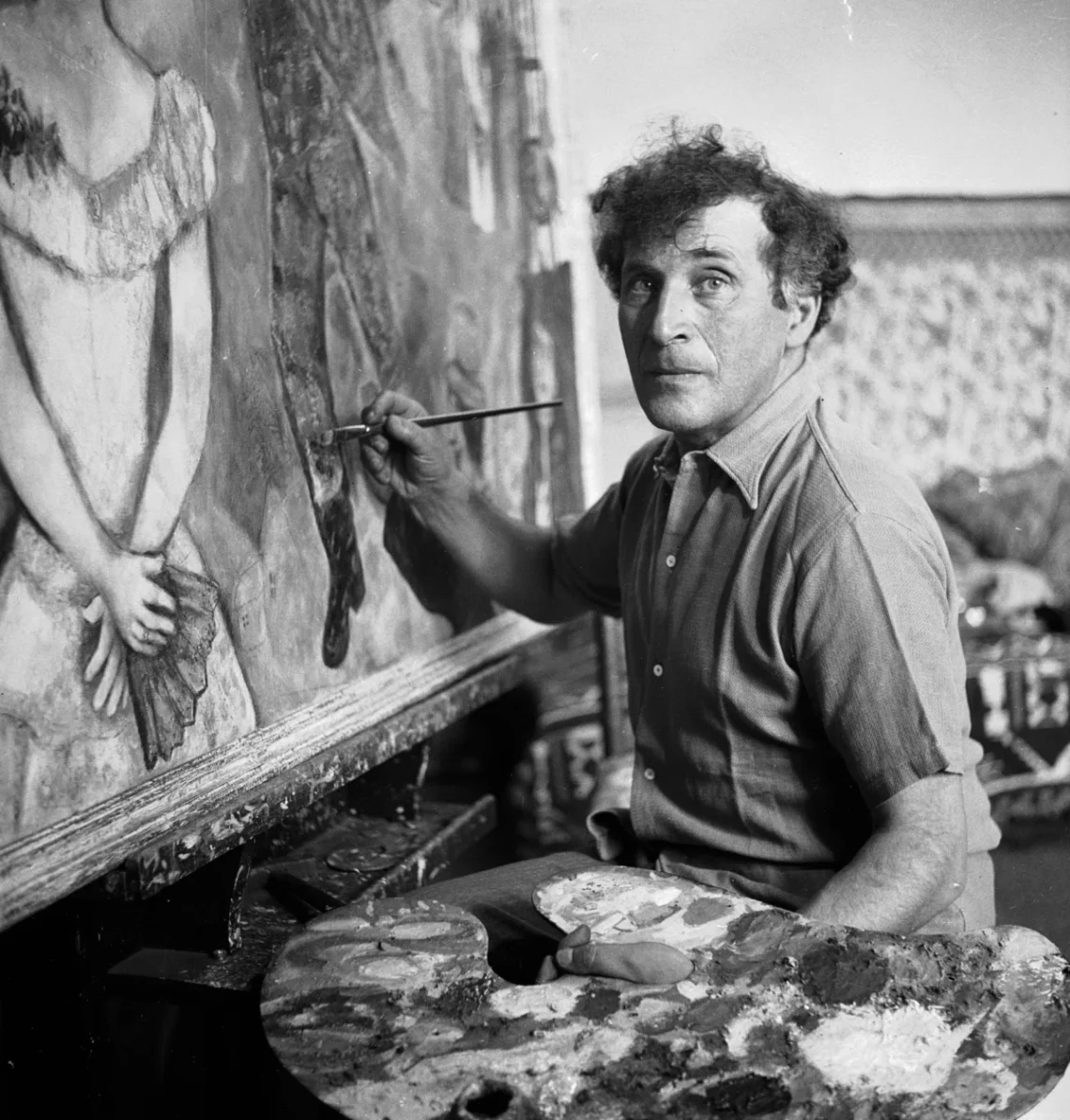
While L’Acrobate Au Violon may not carry the multimillion-dollar price tag of Chagall’s monumental oil paintings—which have reached as high as $28.4 million at auction—its cultural and artistic value is immense. The 1924 etching is a quintessential example of Chagall’s unique, gravity-defying aesthetic.
In the work, a whimsical acrobat balances precariously atop a violin, while dreamlike, floating figures drift through a composition that blurs the lines between reality and folklore. The imagery is deeply rooted in the artist’s Eastern European Jewish heritage and his penchant for blending the mundane with the miraculous.
Maël Vandewalle, the curator at the Museum of Fine Arts and Archaeology of Besançon, emphasizes the piece’s importance in understanding the artist’s evolution. "You can easily recognize Chagall with this somewhat dreamlike style," Vandewalle stated in an interview with Besançon Ici. "It is this dream world so detached from reality that defines his legacy. Even in a small-scale etching, the mastery of line and the emotional resonance are palpable."
The provenance of this specific etching ties it to one of the most influential partnerships in 20th-century art history: the collaboration between Marc Chagall and the legendary French art dealer Ambroise Vollard. Vollard, a visionary who championed artists like Cézanne and Picasso, commissioned Chagall to produce a series of etchings that would elevate the medium of illustration. L’Acrobate Au Violon was created during this fertile period, issued in an edition of 150. Given its history and the increasing scarcity of early Chagall prints, the work remains a highly coveted specimen for collectors, with individual impressions fetching thousands of dollars at premier auction houses like Christie’s.
Chronology of a Cultural Recovery
The trajectory of this artwork serves as a case study in the complexities of international art law and the slow pace of institutional recovery.

- 1924: Marc Chagall creates the etching L’Acrobate Au Violon.
- 2005: The work is intercepted at the Franco-Swiss border while in transit. The transporters are arrested for the unauthorized export of cultural property.
- 2005–2022: The etching and a companion piece by Ossip Zadkine are held in a customs warehouse in eastern France, effectively forgotten by the art world.
- 2022: A rediscovery occurs during an administrative audit of the customs facility’s holdings.
- 2024: The French government initiates the restitution process, identifying appropriate institutions for the permanent housing of the confiscated works.
- September 2024: The Chagall is scheduled to make its public debut at the Museum of Fine Arts and Archaeology of Besançon.
Official Responses and Institutional Impact
The handover ceremony, which took place this past Monday, was a moment of profound significance for the city of Besançon. Mayor Ludovic Fagaut expressed his gratitude to the French customs service for their role in ensuring the piece was ultimately directed toward a public institution rather than being returned to the private market.
"The customs service has really honored us," Mayor Fagaut told the London Times. "It is the first Marc Chagall to enter the museum. This represents a major milestone for our institution and for the cultural enrichment of our city."
For the Museum of Fine Arts and Archaeology, the acquisition is a transformative event. While the museum holds a diverse collection, the absence of a Chagall had been a notable gap in their modernist holdings. The addition of L’Acrobate Au Violon allows the institution to better represent the surrealist and expressionist movements of the early 20th century.
Simultaneously, the Ossip Zadkine drawing, which was seized alongside the Chagall in 2005, has been gifted to the Musée Zadkine in Paris. This ensures that both works, once destined for the shadow economy, are now safely preserved within the public trust.
Implications for the Art Market and Export Laws
The saga of the "Customs Chagall" highlights the ongoing friction between the global art market and national heritage protections. France, like many nations with significant cultural histories, maintains stringent export controls on "cultural goods." These laws are designed to prevent the drain of national patrimony, yet they often create legal minefields for private collectors and dealers.
The arrest of the two Swiss nationals in 2005 underscores the severity with which authorities treat these infractions. For the art market, this case serves as a cautionary tale: the provenance of an artwork is not merely about its ownership history, but also its legal status regarding international borders.
Furthermore, the "forgotten" status of the artwork for nearly two decades raises questions about the management of seized assets. While the storage of these items in customs warehouses is necessary for legal purposes, the lack of transparency regarding such inventories often prevents scholars and the public from accessing important works of art. The eventual release of the Chagall and the Zadkine signals a growing trend toward the democratization of confiscated art, where states are increasingly opting to donate recovered works to public museums rather than auctioning them off to private bidders.
Conclusion: A New Life in the Public Eye
As the Museum of Fine Arts and Archaeology of Besançon prepares to unveil L’Acrobate Au Violon in September, the artwork’s long silence has finally been broken. No longer a piece of evidence or a contraband item in a crate, it is once again an object of beauty, intended for the public to contemplate and enjoy.
This small but significant etching serves as a poignant reminder of the power of art to survive even the most complex bureaucratic and legal entanglements. It has transitioned from a dreamlike illustration on paper to a tangible symbol of cultural justice, finding its rightful place in a museum where it can inspire future generations, long after the border dispute that once detained it has faded into history.