
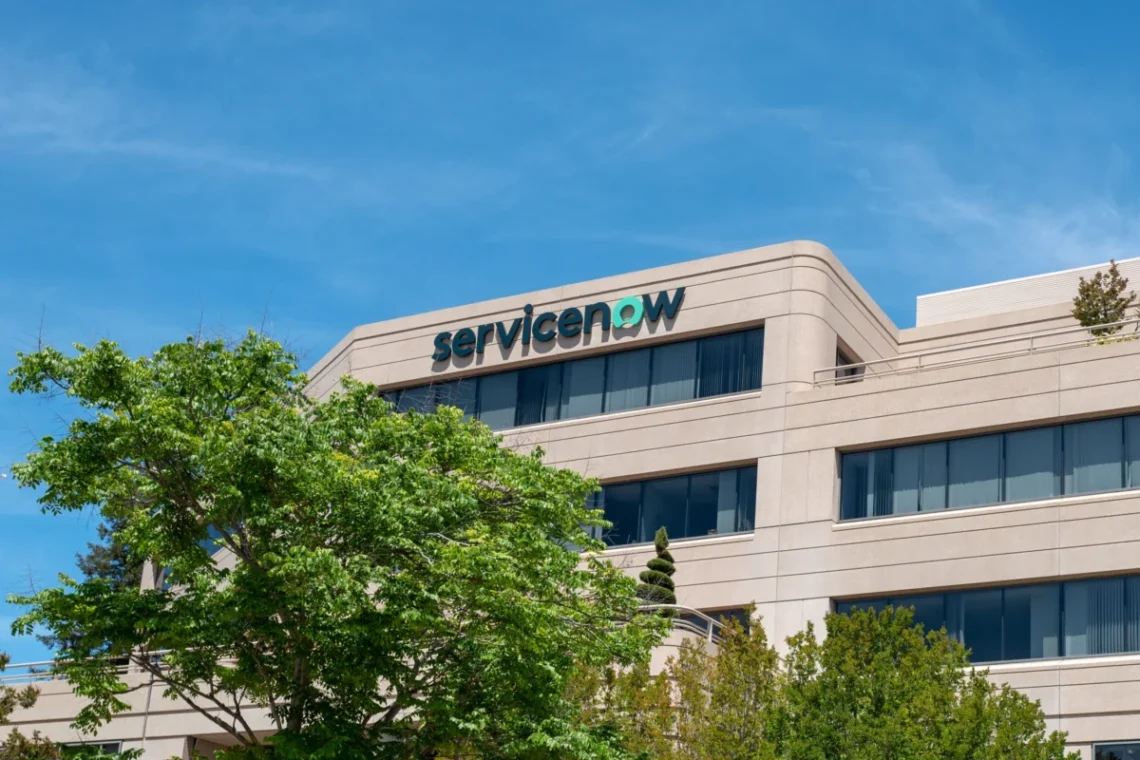
In a significant move to solidify its dominance in the global financial services technology sector, U.S. enterprise software giant ServiceNow has announced a $40 million strategic investment in BusinessNext, an Indian banking software specialist. This deal, which values the 24-year-old Noida-based company at $700 million, marks a critical intersection of global workflow automation and AI-driven banking intelligence.
By acquiring a roughly 5% stake in BusinessNext, ServiceNow is not merely diversifying its portfolio; it is integrating a highly specialized, AI-native engine into its expansive global sales infrastructure. For BusinessNext, the partnership provides an immediate gateway to international markets, allowing the company to scale its "autonomous banking" solutions far beyond its current stronghold in Asia and the Middle East.
The Core Transaction: Strategic Alignment over Financial Capital
The $40 million injection comes at a time when enterprise software vendors are facing a paradigm shift. Customers are increasingly scrutinizing traditional Software-as-a-Service (SaaS) models, demanding more value through AI-native capabilities. By choosing a strategic partner like ServiceNow over pure-play financial investors, BusinessNext founder and CEO Nishant Singh has signaled a clear intent: speed to market.
"Think of it as a strategic partnership, which is cemented with funding," Singh noted in a recent interview. He emphasized that the primary motivation for the deal was to "borrow" ServiceNow’s sophisticated go-to-market "machinery." In regions where BusinessNext has historically maintained a limited footprint, the company will now leverage ServiceNow’s established sales infrastructure to reach financial institutions that are currently clamoring for digital transformation.
A Chronology of Growth: From CRMNext to BusinessNext
The trajectory of BusinessNext is a testament to the maturation of India’s software product ecosystem. Founded in 2002 as CRMNext, the company spent two decades quietly building a robust foundation in the banking, financial services, and insurance (BFSI) sector.
- 2002: The company is founded, initially focusing on customer relationship management for the financial sector.
- 2010s: The firm expands its footprint across India, securing contracts with major institutions including the Reserve Bank of India, State Bank of India, and HDFC Bank.
- 2021: BusinessNext secures a valuation of $181 million, according to data from the market intelligence platform Tracxn, backed by investors including Avataar Ventures, Norwest Venture Partners, and Ascent Capital.
- 2022: A pivotal year for the organization. Recognizing the shift toward artificial intelligence, the company undergoes a rebranding from CRMNext to BusinessNext. During this period, the leadership team pivots to "rewrite the stack," ensuring that AI was not merely an add-on but a foundational element of its architecture.
- 2024: ServiceNow finalizes its $40 million investment, valuing the company at $700 million and setting the stage for a global push.
Supporting Data: An Analysis of Market Reach
BusinessNext’s valuation reflects its consistent profitability and its ability to land high-profile, mission-critical clients. In its most recent financial year, the company generated approximately $32 million in revenue. While its roots are firmly planted in the Indian market, its ambition is global.
- Geographic Distribution: Approximately 50% of the company’s revenue is currently generated outside of India, spanning Southeast Asia, the Middle East, and parts of the United States.
- Human Capital: The company maintains a workforce of over 1,300 employees, primarily focused on engineering and specialized banking workflows.
- Total Funding: With the latest investment, the company has raised over $60 million in external funding, successfully attracting top-tier global venture capital firms.
- Client Base: The platform serves more than 70 banks, managing everything from internal back-office operations to high-stakes, customer-facing interfaces.
Official Responses and Strategic Rationale
The partnership is being framed by both parties as a symbiotic effort to address the "inflection point" currently facing the financial services industry. Institutions are moving rapidly from the phase of digital experimentation to full-scale, AI-led operational environments.
"India’s financial services sector is at an inflection point—institutions are moving from digital experimentation to full-scale AI-led operations," said Kulmeet Bawa, ServiceNow’s group vice president and managing director for India and SAARC. Bawa underscored that the union combines ServiceNow’s broad, enterprise-grade workflow platform with the deep, domain-specific banking expertise of BusinessNext.
For his part, Nishant Singh is clear about the technological division of labor. BusinessNext’s software specializes in managing complex, customer-facing banking workflows—such as loan originations, customer onboarding, and query resolution—while ServiceNow remains the industry leader in enterprise-wide workflow automation and back-office system management. By bundling these offerings, the two companies can present a comprehensive, "end-to-end" solution to large-scale financial institutions.
Implications: The Future of "Autonomous Banking"
The significance of this deal extends beyond the balance sheet. It highlights a growing trend where AI-native software providers are becoming the "secret sauce" for legacy-burdened enterprise giants.
1. Privacy-First AI
One of the most critical aspects of the BusinessNext platform is its approach to sensitive data. As regulatory scrutiny over AI usage in banking intensifies, BusinessNext has positioned itself by keeping sensitive customer data on private AI infrastructure. This ensures compliance with regional privacy laws—a major selling point for global banks operating in highly regulated jurisdictions.
2. The Death of the "Add-on" AI
Singh’s assertion that AI was "built into the platform from the outset" serves as a warning to competitors. Many legacy software vendors are currently struggling to retrofit AI onto aging codebases. By rewriting their stack in 2022, BusinessNext has potentially gained a lead in performance and security, which is now being supercharged by the ServiceNow partnership.
3. Consolidation in Enterprise Tech
For ServiceNow, this investment is a microcosm of its broader strategy: expanding its enterprise software portfolio through a mix of organic development, acquisitions, and strategic investments. By embedding itself into the banking stack of major lenders, ServiceNow ensures its own platform becomes indispensable to the financial sector’s digital nervous system.
4. A Template for Indian SaaS
For the broader Indian startup ecosystem, the BusinessNext-ServiceNow deal provides a roadmap for success. It demonstrates that the path to a high-valuation exit (or in this case, a strategic expansion) does not always require an acquisition. Instead, it proves that deep technical expertise in a niche vertical can create enough leverage to form high-level alliances with global tech titans, effectively bypassing the need to "build the sales engine from scratch."
Conclusion: The Road Ahead
As the global financial sector continues to grapple with the demands of digital-first customers and the promise of AI-driven efficiency, the partnership between ServiceNow and BusinessNext appears well-timed. The coming quarters will be critical as the companies begin their joint go-to-market efforts in the U.S. and European markets.
If successful, the collaboration will likely serve as a blueprint for how large-scale enterprise software providers can integrate specialized, AI-native startups to remain relevant in a rapidly changing technological landscape. For BusinessNext, the journey from a local CRM provider to a global player in "autonomous banking" has reached a new, high-stakes chapter—one backed by the full weight and reach of one of the world’s most prominent software companies.