
For years, the corporate landscape was defined by an increasingly ambitious race to net-zero. Multinational conglomerates, tech giants, and industrial titans vied for headlines with bold commitments to slash greenhouse gas emissions, citing pressure from shareholders, consumers, and an evolving regulatory framework. However, a landmark study released by researchers at Harvard University suggests that this momentum has not only stalled—it has entered a period of reversal.
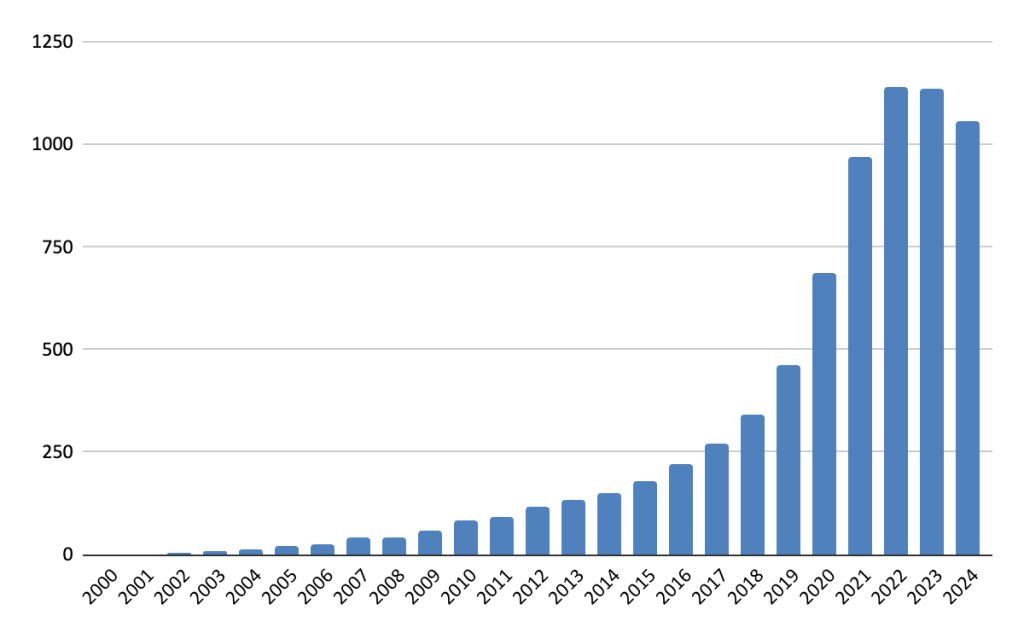
According to the newly published Salata Institute Corporate Climate Targets Database, the number of U.S. companies maintaining formal climate targets peaked in 2022 and has begun a steady, concerning decline. This analysis, representing the most comprehensive longitudinal look at corporate environmental, social, and governance (ESG) behavior to date, provides a sobering reality check for those who believed that voluntary corporate action was the primary engine of the green transition.
The State of the Data: A Quarter-Century of Corporate Pledges
The Harvard findings stand in stark contrast to the narratives often pushed by non-profit organizations and ESG advocates. While groups like the Science Based Targets initiative (SBTi) frequently tout the "growth" of the movement—highlighting, for instance, that they recently validated their 10,000th pledge across nearly 100 countries—the Harvard data offers a more surgical, restricted view.
The researchers focused specifically on the Russell 3000 index, a benchmark that encompasses roughly 98 percent of U.S. equities by market capitalization. By tracking this specific cohort over a 25-year period, the study eliminates the "survivorship bias" or "new entrant" noise found in broader, global datasets. A team of 27 researchers spent two years painstakingly auditing these companies, resulting in a database that was officially published on September 21.
The numbers tell a clear story: The number of Russell 3000 companies with climate targets reached its zenith in 2022 at 1,140—representing just over a third of the total index. While the numbers remained relatively flat in 2023, the data for 2024 shows a distinct contraction, with 79 fewer companies reporting climate targets compared to the previous year. This marks the first time since the inception of widespread corporate climate reporting that the trend has pointed decisively downward.
Chronology of a Trend: From Peak Ambition to Quiet Withdrawal
To understand the current cooling, one must look at the trajectory of the past decade. The surge in climate target setting was largely catalyzed by the 2015 Paris Agreement and the subsequent rise of ESG investing in the late 2010s. By 2020 and 2021, the social license to operate began to demand tangible environmental metrics.
- 2020–2021 (The Surge): As the U.S. political landscape shifted toward a more climate-focused federal agenda under President Joe Biden, corporations felt a dual pressure: to align with the federal government’s 2030 emissions goals and to satisfy an investor base that viewed climate risk as financial risk.
- 2022 (The Peak): The year 2022 serves as the high-water mark for corporate ambition. Despite the economic volatility of the post-pandemic era, internal sustainability teams were empowered, and boardrooms were consistently reviewing decarbonization roadmaps.
- 2023–2024 (The Reversal): The trend line broke in 2023. As geopolitical tensions rose and the macroeconomic environment tightened, the commitment to long-term, expensive decarbonization projects began to lose its priority status among C-suite executives, leading to the current decline.
The "Chilling Effect": Why Companies Are Stepping Back
Joseph Aldy, an environmental policy expert and a key member of the Harvard research team, points to a "perfect storm" of political and economic factors that have contributed to this retreat.
The Political Backlash Against ESG
Perhaps the most potent driver of the recent decline is the aggressive political campaign waged against ESG principles. Across the United States, Republican attorneys general have launched investigations into investment firms and climate-focused non-profits, alleging that coordinated efforts to reach net-zero constitute anti-competitive behavior or a breach of fiduciary duty.
"I think that has had a bit of a chilling effect for some of these companies," Aldy notes. The threat of litigation and the mounting administrative burden of responding to state-level inquiries have forced companies to perform a risk-benefit analysis. For many, the reputational gain of a climate pledge is no longer worth the potential legal exposure.
The Policy Mimicry Problem
Corporate climate goals have historically been closely tethered to federal policy signals. When the Biden administration set aggressive goals for the U.S. in 2021, many corporations adopted "mirror" targets, pledging to halve their own emissions by 2030. However, this reliance on federal policy has become a liability. When companies perceive that the policy environment is unstable or that future support is unlikely to materialize, their voluntary targets—which are often linked to projected government incentives—evaporate.
The Regulatory Disconnect
The decline in targets is particularly counterintuitive given that it occurred during a period of significant, albeit shifting, federal support for decarbonization, most notably the 2022 Inflation Reduction Act (IRA).
However, the Harvard study suggests that the IRA was not the silver bullet many expected. While the legislation provided significant tax incentives for green energy, it also created a complex, often confusing landscape for corporate compliance. Furthermore, with recent shifts in the U.S. administration, many of the provisions that companies relied upon to justify their decarbonization spending have been walked back or de-prioritized. Having realized that the "green carrot" was not as large or as permanent as initially promised, many companies have quietly scrubbed their targets to avoid being held accountable for goals they no longer have the financial incentive to meet.
Implications: What This Means for the Global Climate Agenda
The findings from the Salata Institute database carry profound implications for the future of climate governance. If the private sector cannot sustain voluntary targets, the burden of achieving climate goals falls squarely back onto the public sector—an outcome that seems increasingly unlikely in the current political climate.
The Death of Voluntary Action?
For years, the prevailing wisdom in Washington and at international climate summits was that the market would lead the way. If major corporations could show that decarbonization was profitable, the rest of the economy would follow. The Harvard data suggests this model is fragile. When voluntary targets are subject to the whims of the political cycle and legal intimidation, they lose their status as "stable" indicators of progress.
The Credibility Gap
Companies that drop their climate targets face a significant risk: the "greenwashing" backlash. Consumers and activist shareholders are increasingly sophisticated. A company that announces a net-zero target and then abandons it three years later invites scrutiny that may be more damaging than if they had never set a target at all. The Harvard data highlights a growing trend of "green-hushing"—where companies remain silent about their environmental efforts to avoid political or financial scrutiny.
Looking Ahead
The retreat of 79 Russell 3000 companies in 2024 is not just a statistical anomaly; it is a signal of a broader structural shift. As the U.S. enters a new era of industrial policy, the reliance on voluntary corporate pledges as a primary tool for climate action appears to be waning.
The Harvard research team plans to continue monitoring the database, providing a vital, objective resource for policymakers, investors, and the public. As we look toward the end of the decade, the question is no longer how many companies will sign on to the net-zero movement, but whether those who have already signed on will have the fortitude to remain when the political and economic winds shift.
For the researchers at Harvard, the message is clear: The "race to the top" is currently experiencing a steep climb, and without a more stable and less contentious regulatory environment, the decline observed in the last two years could be the beginning of a long-term trend away from corporate-led climate action.