By Automotive News Desk
Published July 24, 2026
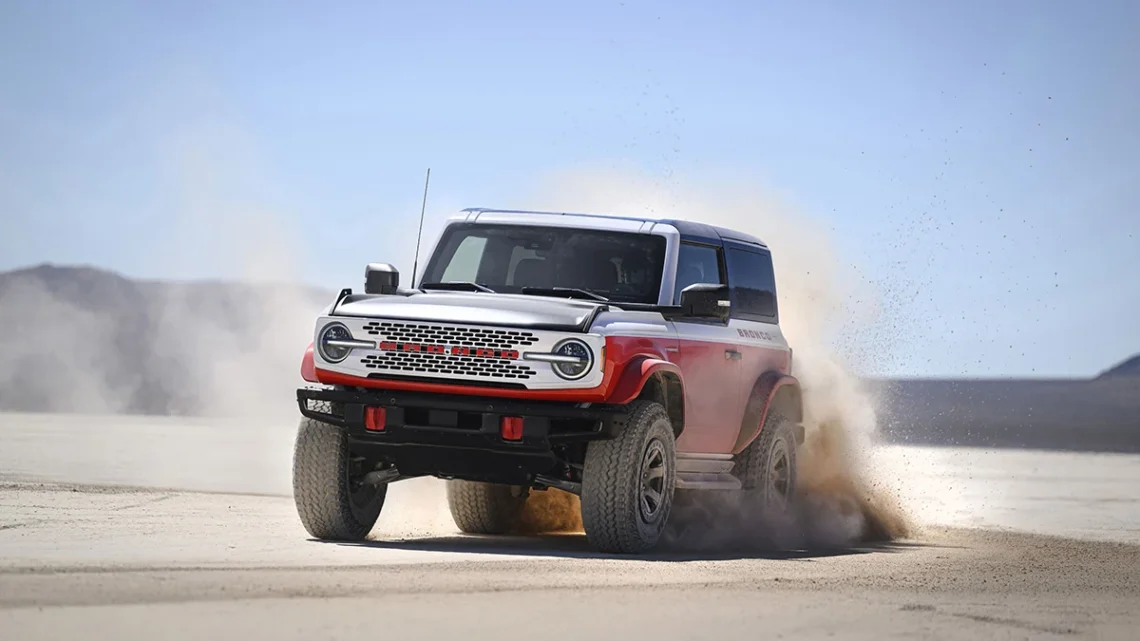
In a significant blow to one of the most successful vehicle revivals in recent American automotive history, Ford Motor Company has announced a sweeping recall affecting more than half a million Ford Bronco and Bronco Raptor SUVs. The recall, which targets vehicles produced between the 2021 and 2026 model years, centers on a critical manufacturing oversight involving the engine bay wiring harness. This defect poses a legitimate fire risk, prompting federal regulators to intervene and oversee a widespread inspection and repair campaign.
As owners of these rugged, off-road-oriented machines prepare for late-summer excursions, the news serves as a somber reminder of the complexities involved in mass-producing modern, highly electronic vehicles.
The Core Issue: Wiring Vulnerabilities in the Engine Bay
According to the official documentation filed with the National Highway Traffic Safety Administration (NHTSA) earlier this week, the recall is necessitated by a vulnerability within the engine compartment’s electrical architecture. Specifically, the wiring harness—the central nervous system of the vehicle’s electrical components—lacks sufficient abrasion protection.
In the high-vibration environment of an engine bay, this lack of shielding allows for direct, repetitive contact between the wiring harness and other rigid engine components. Over time, this friction erodes the protective insulation surrounding the wires. Once the insulation is compromised, the exposed copper wires can come into contact with metal surfaces, creating a short circuit. The resulting heat or electrical arcing carries a severe risk of ignition, potentially leading to an engine compartment fire.
Warning Signs for Owners
The NHTSA report outlines several distinct indicators that may alert a driver that their vehicle is experiencing this electrical failure. If a short circuit occurs, owners may notice:
- A lingering, acrid smell of smoke emanating from the cabin air vents.
- Visible flames or smoldering originating from the passenger side of the engine compartment.
- Dashboard warnings: A sudden appearance of a cluster warning message or "check engine" indicator signaling an electrical fault.
Ford has categorized this as a safety-critical issue. While the occurrence rate of actual fires remains low relative to the total number of vehicles recalled, the potential for catastrophic failure necessitates immediate attention.
Chronology of Discovery: From Investigation to Recall
The path to this recall began in June 2026, when Ford’s internal safety engineering teams initiated a formal investigation following a string of customer complaints and reports of field incidents.

Timeline of Events:
- June 2026: Ford launches an internal investigation into reports of electrical issues and potential fire hazards in the engine bay of various Bronco models.
- Early July 2026: Data analysis confirms 15 confirmed incidents related to the wiring harness, split between eight standard Ford Broncos and seven high-performance Bronco Raptors.
- July 2026 (Mid-month): Ford concludes that the abrasion issue is a design and manufacturing oversight requiring a fleet-wide corrective measure.
- July 22, 2026: Formal notification is provided to the NHTSA.
- July 24, 2026: The official public announcement is made, and the recall is published on the NHTSA website.
- August 24–28, 2026: The window for Ford to begin mailing notification letters to all affected registered owners.
Supporting Data and Scale of the Recall
The scope of this recall is staggering. Ford has confirmed that 565,911 vehicles are subject to the safety action. To place this in perspective, since the Ford Bronco made its triumphant return to the market in 2021, the automaker has produced approximately 589,860 units. This means that nearly every single Bronco sold during this five-year period is impacted by the recall notice.
Despite the massive number of vehicles involved, Ford’s preliminary assessment suggests that only about 1 percent of the affected fleet currently exhibits the defect. However, because the failure is progressive—meaning it worsens as the vehicle ages and is subjected to more road vibration—the company is taking a proactive stance to prevent future incidents.
The Breakdown of Affected Models
The recall encompasses:
- Standard Ford Bronco (2021–2026): The vast majority of the units involved, covering various trim levels and powertrain configurations.
- Ford Bronco Raptor (2022–2026): Given the more extreme driving conditions these high-performance off-roaders are subjected to, the wiring harness issue could theoretically be exacerbated by the heavy suspension articulation and engine stress common to the Raptor variant.
Official Response and Remediation Plan
Ford has confirmed that a remedy is already available and has been distributed to dealerships nationwide. Unlike some recalls where parts supply chain issues delay the repair process, the fix for the Bronco is relatively straightforward and requires no complex component replacement.
The Repair Process
When a customer brings their vehicle to an authorized Ford dealership, the service technicians are instructed to:
- Inspect the wiring harness for signs of wear or damage.
- Apply high-durability, abrasion-resistant tape and protective convolute (a split-loom casing) to the identified areas of concern.
- Secure the harness to ensure it no longer contacts the surrounding engine components.
The repair is provided free of charge to the vehicle owner. Ford has already begun notifying its dealer network to ensure they are prepared for the influx of service appointments expected once formal owner notification letters go out in late August.
Implications for Ford and the Bronco Brand
The Ford Bronco has been a critical component of Ford’s "Icon" branding strategy, acting as a direct competitor to the Jeep Wrangler and a symbol of Ford’s heritage. The success of the Bronco launch in 2021 was widely viewed as a masterclass in modern product positioning. A recall of this magnitude, however, threatens to disrupt that momentum.

Impact on Consumer Trust
For a vehicle marketed as a "go-anywhere, do-anything" adventurer, a fire risk is particularly damaging to the brand’s image. Owners who purchased the Bronco for its reliability in remote locations may feel hesitant about taking their vehicles off-grid until the recall repair has been performed. Ford’s challenge in the coming months will be to maintain transparency and ensure the repair process is as seamless as possible to prevent a long-term erosion of consumer loyalty.
Financial and Operational Burden
While the repair itself is simple, the logistics of servicing 565,911 vehicles are immense. Ford will incur significant costs related to dealer labor reimbursements, parts distribution, and the administrative burden of tracking the recall completion rates. Furthermore, the company faces potential scrutiny from regulators regarding why the abrasion protection was deemed insufficient during the initial vehicle design phase.
How to Check Your Status
Owners of Ford Broncos who are concerned about their vehicle’s safety status do not need to wait for the official notification letter in late August.
Ford has advised that the fastest way to confirm whether a specific vehicle is included in the recall is to utilize the official NHTSA recall portal. By entering the vehicle’s 17-character Vehicle Identification Number (VIN) or the license plate number, owners can receive an immediate confirmation of their vehicle’s status.
If a vehicle is flagged, owners should schedule an appointment with their local Ford dealership as soon as possible. Even if the vehicle is not currently exhibiting signs of electrical failure, the preventive installation of the protective shielding is strongly recommended to ensure long-term safety and to maintain the integrity of the vehicle’s electrical system.
As the automotive industry continues to grapple with the increasing density of electronics in new vehicles, this incident serves as a salient case study in the necessity of rigorous harness protection and the importance of timely intervention when design flaws are identified.