Main Facts
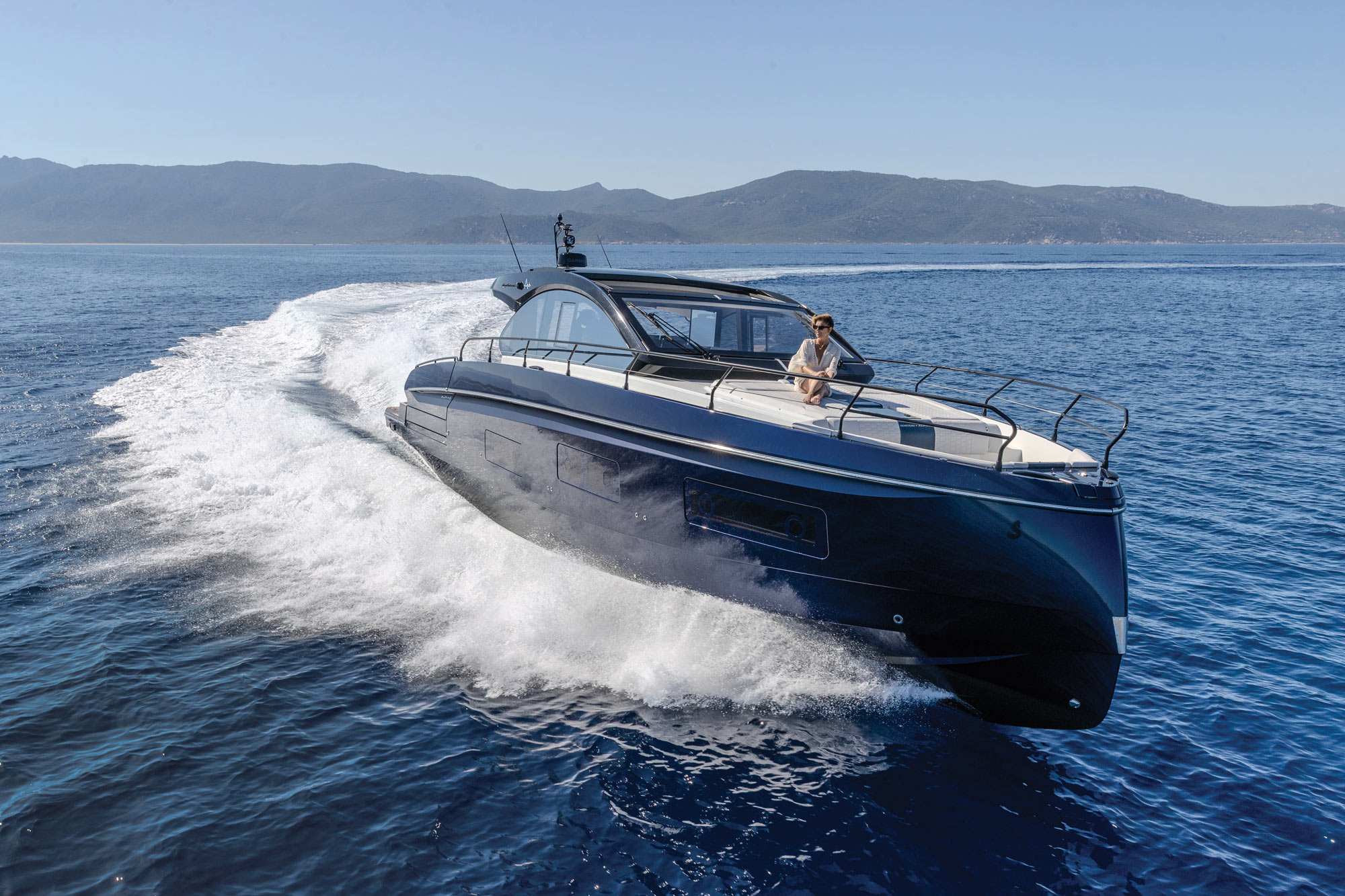
Beneteau has officially redefined its signature Gran Turismo lineup with a bold design philosophy: expand exterior living space by an astonishing 30 percent compared to previous generations, and seamlessly sculpt the interior around the remaining footprint. Spearheading this new generation of Pierangelo Andreani-designed cruisers is the flagship Beneteau Gran Turismo 50 (GT50), a hardtop coupe that marries contemporary styling with villa-style water connectivity.
Measuring as the largest in a three-model series that also includes the GT35 and GT40, the GT50 is engineered for coastal explorers, day-boaters, and weekend cruisers alike. Accommodating up to five guests across a three-stateroom, two-head layout, the yacht features a striking reverse-raked bow, a low-slung roofline, and an automotive-inspired aesthetic.
Powered exclusively by twin 480-horsepower Volvo Penta D6 engines mated to IPS650 pod drives, the GT50 achieves a top speed of 32 knots. It is optimized for efficient, long-range coastal cruising rather than raw, wide-open-throttle acceleration, offering a consistent cruising range of 225 to 230 nautical miles at speeds between 20 and 27 knots. For buyers seeking an eco-conscious edge, the vessel can be outfitted with the "Silent Boat Pack"—a comprehensive lithium-ion and solar energy upgrade—as well as an exclusive "Alpine" styling package born from a collaboration with the legendary French performance car brand.
Chronology of Development and Sea Trials
The genesis of the new Gran Turismo series represents a strategic pivot for Beneteau, moving away from traditional layout allocations to prioritize open-air alfresco living.
- Concept and Design Phase: Renowned yacht designer Pierangelo Andreani was tasked with conceptualizing a vessel that brings waterfront real estate principles to a 50-foot hardtop coupe. The exterior lines were drawn to maximize usable deck space without sacrificing the vessel’s aggressive, modern silhouette.
- Production and Assembly: While hulls are constructed in France, the GT50’s final outfitting and testing take place at Groupe Beneteau’s specialized production and delivery hub in Monfalcone, Italy. Situated at the northern tip of the Adriatic Sea—approximately 60 miles northeast of Venice and near the Slovenian border—Monfalcone serves as the company’s dedicated center for its larger, premium yacht ranges.
- Sea Trials and Performance Testing: Sea trials were conducted off the coast of Monfalcone in calm Mediterranean waters. Running with a one-third load, the GT50 effortlessly punched up to 31.2 knots. Testers noted that with minor adjustments to the integrated Zipwake trim system, the benchmark 32-knot top speed is easily attainable.
Supporting Data and Technical Specifications
Dimensions and Layout
- Length Overall (LOA): 50 feet (flagship dimensions of the GT series)
- Sleeping Capacity: 5 guests
- Accommodation Layout: 3 staterooms, 2 heads (Forward master suite with ensuite; amidships VIP twin-to-double convertible stateroom; single-berth port guest stateroom sharing a starboard day head)
- Exterior Space Increase: +30% compared to previous GT generations
Performance and Propulsion
- Engines: Twin 480 hp Volvo Penta D6
- Drives: Volvo Penta IPS650 pod drives
- Top Speed: 30–32 knots (Recorded at 31.2 knots during sea trials)
- Cruising Speeds & Range:
- 20 to 27 knots: 225 to 230 nautical miles
- 10 knots (displacement pace): Extends range by an additional 50 to 60 nautical miles
- Low-Speed Maneuvering: Equipped with Volvo Penta’s Joystick Docking System
Key Deck and Entertainment Features
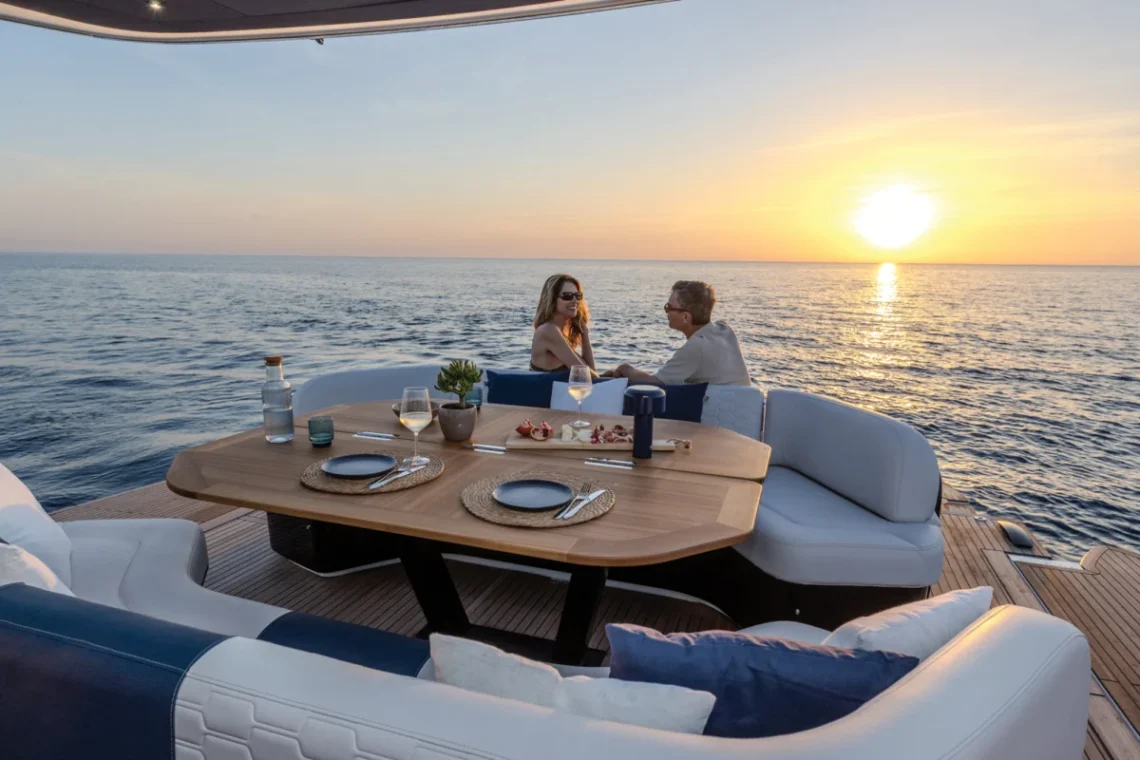
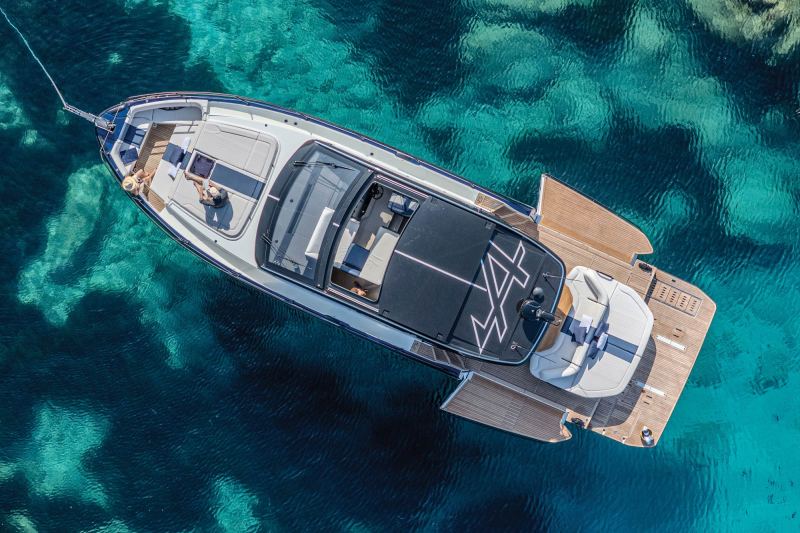
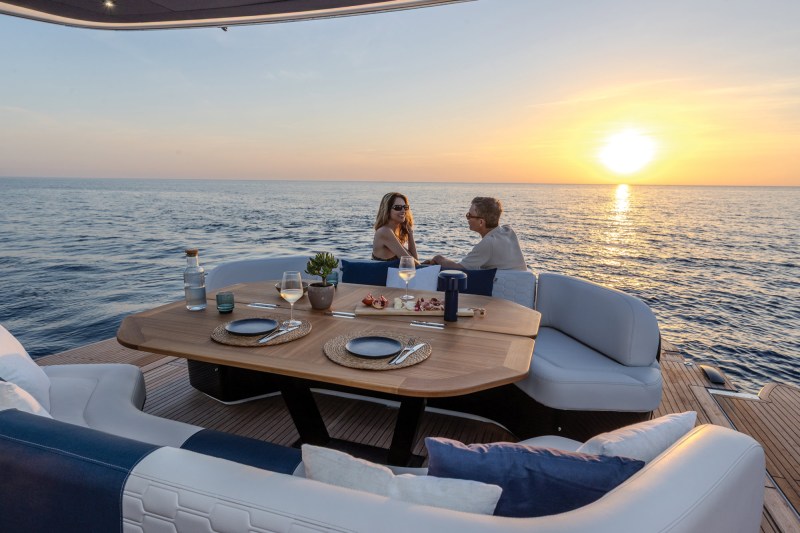
- Cockpit: Extra-long layout featuring fold-down terraces, a substantial swim platform, facing C-shaped settees around a folding teak table, and an aft settee with a flip-down backrest that converts into a sun pad.
- Tender Garage: Switch-operated locker beneath the sun pad accommodating an inflatable or paddleboard. An optional full-beam hydraulic platform (880-pound capacity) supports a Williams jet tender or PWC.
- Foredeck: Side-by-side sun beds with adjustable backrests, facing a recessed lounge area and pedestal table. The anchor is uniquely housed in a retractable bow cavity rather than a conventional bow roller.
- Main Deck Salon: Compact interior design featuring aft-situated galley, starboard single-seat helm, portside forward staircase, and a forward C-shaped dinette seating three. Includes a sliding glass door, a lift-up starboard window serving bar, and a retractable sunroof.
Optional Packages
- Alpine Styling Package: A collaboration with French automotive brand Alpine offering a metallic-blue hull, black accents, black hardware, pop-up cleats, upgraded oak/walnut interior veneers, carbon-fiber helm dash with triple Garmin MFDs, Alcantara steering wheel, and a Recaro blue performance driver’s seat.
- Silent Boat Pack: Includes solar panels, a lithium-ion battery bank, and dual high-performance inverters (5,000 and 8,000 kVA), providing up to five hours of silent, emissions-free anchored power without running engines or the 12.6-kW Mase variable-speed generator.
Official Responses and Builder Insights
Beneteau’s design philosophy for the Gran Turismo line stems from direct consumer feedback regarding how modern boaters actually utilize their vessels. According to the builder, contemporary yacht owners place a premium on outdoor connectivity, versatile entertainment zones, and spaces that emulate high-end coastal villas rather than enclosed, compartmentalized cabins.
By scaling back the enclosed main deck’s footprint, Beneteau deliberately shifted square footage to the cockpit and foredeck. The result is a layout where boundaries between the interior salon and the exterior elements blur completely. The inclusion of engineering marvels like the retractable anchor housing demonstrates the brand’s commitment to reclaiming deck space without compromising seaworthiness.
Furthermore, the partnership with Alpine highlights Beneteau’s strategy to cross-pollinate luxury automotive design cues with marine architecture. By incorporating automotive-grade ergonomics—such as the Recaro seating and carbon-fiber helm styling—Beneteau aims to capture a younger, performance-oriented demographic that appreciates meticulous interior detailing alongside adrenaline-fueled styling.
Implications for the Market and Cruising Enthusiasts
The introduction of the Beneteau Gran Turismo 50 signals a broader shift in the 50-foot coupe sector. Traditional designs have historically prioritized massive interior saloons at the expense of outdoor lounging. Beneteau’s reversal of this paradigm proves that modern buyers value the open air, seamless water access, and the flexibility of transformable outdoor spaces.
The Rise of Eco-Friendly Anchoring
The optional "Silent Boat Pack" addresses one of the most common pain points of modern cruising: generator noise and emissions at anchor. By packaging lithium-ion storage with solar harvesting and heavy-duty inverters, Beneteau meets the growing demand for sustainable, peaceful on-the-water living. Five hours of silent power generation means owners can enjoy late-night onboard dining or climate-controlled comfort without the steady hum of a fossil-fuel generator disturbing the serenity of a quiet cove.
Coastal Cruising Efficiency
Performance-wise, the decision to forego oversized engine options in favor of the twin Volvo Penta IPS650 package underscores a practical approach to modern yachting. Rather than chasing unsustainable top-end speeds that burn through fuel reserves exponentially, the GT50 is tuned for a sweet spot between 20 and 27 knots. This predictable, stable range ensures that weekenders can hop from harbor to harbor with confidence, knowing their fuel stops are minimized.
Ultimately, the Beneteau GT50 bridges the gap between a high-performance dayboat and a capable weekender. With its villa-like connection to the sea, cutting-edge automotive styling options, and clever spatial engineering, it sets a high benchmark for what contemporary mid-sized cruisers should deliver.