Money has evolved. It is no longer confined to the physical notes in a wallet or the static digits in a traditional savings account. In an era defined by decentralized finance, instantaneous cross-border settlement, and the rapid integration of generative AI into back-office infrastructure, the very definition of "value transfer" is undergoing a structural paradigm shift.
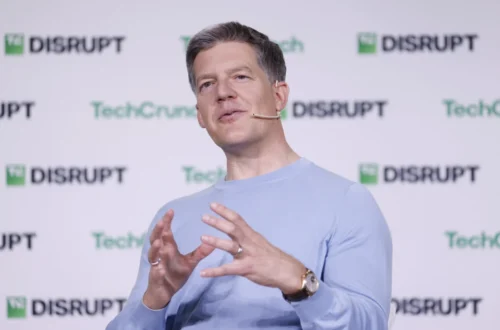
To navigate this seismic change, TechCrunch Disrupt 2026—the premier annual gathering for the global startup ecosystem—is dedicating an entire dedicated track to this evolution. The newly unveiled Smart Money Stage will serve as the epicenter where fintech, global payments, and artificial intelligence collide. Taking place from October 13–15 at San Francisco’s iconic Moscone Center, the event promises to be the definitive forum for understanding how the financial plumbing of the world is being rebuilt from the ground up.
Main Facts: The Intersection of Innovation and Regulation
The Smart Money Stage is designed to provide clarity in a sector often clouded by hype. The agenda is curated for founders, investors, and operators who require actionable intelligence—what TechCrunch calls "signal, not spin."
The core mission of this track is to demystify the high-stakes transition from legacy banking systems to AI-native, blockchain-integrated, and hyper-efficient financial infrastructures. The program will tackle three primary pillars:
- The De-bureaucratization of Payments: How stablecoins and instant settlement networks are rendering 20th-century banking cycles obsolete.
- The Rise of Agentic Finance: The transition of AI from a content-generation tool to an autonomous actor capable of executing complex financial workflows.
- Global Scalability: The logistical and regulatory hurdles of building unified financial infrastructure that operates seamlessly across borders.
Chronology: A Roadmap for the Future of Money
The three-day event at the Moscone Center is structured to provide a comprehensive look at the lifecycle of modern financial innovation—from the fundamental infrastructure to the consumer-facing applications that are disrupting the status quo.
Day 1: The Infrastructure Layer
The proceedings kick off with a deep dive into the underlying architecture of global finance. As traditional systems struggle to accommodate the 24/7 nature of modern commerce, private networks and FedNow initiatives are stepping in to fill the gap.
Day 2: The Consumer Frontier
The focus shifts to the end-user. As financial platforms evolve from single-purpose apps into "everything" financial engines, the challenge lies in maintaining trust, security, and brand loyalty while scaling to tens of millions of users.
Day 3: The AI-Driven Future
The final day addresses the most pressing technological frontier: the integration of AI agents. With trust and verification becoming the primary commodities of the digital age, experts will discuss how firms are balancing innovation with the non-negotiable requirements of fraud prevention and regulatory compliance.
Supporting Data: Examining the Titans of the Industry
The lineup for the Smart Money Stage reads like a "who’s who" of the financial revolution. Each session is grounded in the reality of companies currently managing, moving, and securing billions of dollars in capital.
The Future of Money Movement: Stablecoins and Instant Payments
The session will explore the friction-heavy reality of current international banking versus the frictionless promise of stablecoins.
- Key Participants: Nikhil Chandhok (Chief Product & Technology Officer, Circle), Rodney Robinson (Co-founder and CEO, TabaPay, Inc.), and Lotti Siniscalco (General Partner, Emergence).
- Core Inquiry: How do private networks coexist with central bank initiatives? The panel will examine where stablecoins are gaining the most traction and the regulatory hurdles that remain to be cleared.
Winning the Modern Financial Consumer
Robinhood’s trajectory—moving from a niche trading app to a comprehensive platform for banking, crypto, and prediction markets—serves as a case study for the modern fintech era.
- Key Participant: Abhishek Fatehpuria (Head of Product, Robinhood).
- Core Inquiry: With a market cap exceeding $90 billion, Robinhood’s model proves that users want unified financial experiences. Fatehpuria will detail the internal strategy required to manage such explosive growth while meeting the ever-shifting expectations of the digital-native consumer.
AI, Trust, and Verification in Financial Services
As AI begins to make autonomous decisions, the traditional models of oversight are being challenged.
- Key Participants: Hannah Bozian (VP, Agentic Partnerships & Strategy, American Express), Pedro Sanzovo (Head of Fraud and Identity, Plaid), and Victoria Zuo (Partner, QED Investors).
- Core Inquiry: How do we verify identity in an age of deepfakes and automated agents? The session will dissect the delicate balance between AI-driven efficiency and the human-in-the-loop requirement for high-stakes financial decisions.
Building the Infrastructure for Global Commerce
Airwallex, currently valued at $11 billion, provides the backbone for the modern, borderless company.
- Key Participant: Jack Zhang (Founder & CEO, Airwallex).
- Core Inquiry: Building a global "financial operating system" requires navigating hundreds of local regulatory frameworks. Zhang will discuss how AI is being utilized to automate the compliance and operational complexities of global commerce.
Official Responses and Strategic Implications
The industry-wide move toward AI-native financial systems is not merely a technological upgrade; it is a fundamental shift in the social contract between financial institutions and their users.
Industry leaders are signaling that the next five years will be defined by "regulated innovation." As firms like Airwallex and Circle move to integrate their services into the bedrock of global trade, the implication for startups is clear: the opportunity lies in the "middle mile" of finance. There is a massive demand for companies that can build the bridge between the old world of fragmented banking and the new world of unified, AI-led financial services.
For founders, the takeaway is urgent: the era of the "simple app" is fading. The winners of the next cycle will be those who can provide deep, secure, and regulatory-compliant infrastructure that hides the complexity of moving money across borders and across asset classes.
The Disruption Opportunity: Why Attendance Matters
TechCrunch Disrupt 2026 is more than a conference; it is a three-day sprint through the most vital challenges facing the startup ecosystem today. Beyond the Smart Money Stage, attendees will have access to an extensive network of venture capitalists, policymakers, and peer innovators.
The current pricing window for Disrupt 2026 is closing. Those looking to secure their place at the forefront of the financial revolution are encouraged to review the available ticket options as soon as possible. By joining the conversation in San Francisco this October, you are not just watching the evolution of money; you are gaining the insights necessary to participate in it.
Conclusion: Preparing for the Next Year of Innovation
The convergence of AI, stablecoins, and globalized fintech is creating an environment where the speed of innovation is only matched by the complexity of the risks involved. Whether you are building the next generation of payment rails, developing AI-driven fraud detection, or attempting to capture the modern retail investor, the Smart Money Stage at Disrupt 2026 is designed to be your primary resource for navigating this landscape.
As the industry moves closer to the event, the focus remains on tangible, long-term impact. The financial systems of the future are being architected today—and they are being built in the rooms of the Moscone Center. Don’t miss your chance to be part of the dialogue that will define the next decade of global commerce.
For more information on the full agenda and to secure your pass for TechCrunch Disrupt 2026, visit the official registration portal. Act now to save on your ticket before the current pricing window closes.