BRUSSELS — In a move that bridges nearly eight decades of European integration history, European Commission President Ursula von der Leyen has proposed the convening of a modern Congress of Europe. Citing the profound structural, economic, and geopolitical shocks currently testing the European Union’s resilience, von der Leyen’s initiative looks backward to move forward, channeling the spirit of the historic 1948 Hague gathering that laid the foundational stones for a post-war, unified continent.
Yet, while Brussels has welcomed the ambition, seasoned analysts and institutional observers emphasize that nostalgia alone will not suffice. To avoid the fate of previous well-intentioned reform exercises that ultimately stalled in the labyrinth of intergovernmental bargaining, the proposed 2027 Congress must confront the institutional inertia and political fragmentation that continue to plague the EU.
Main Facts
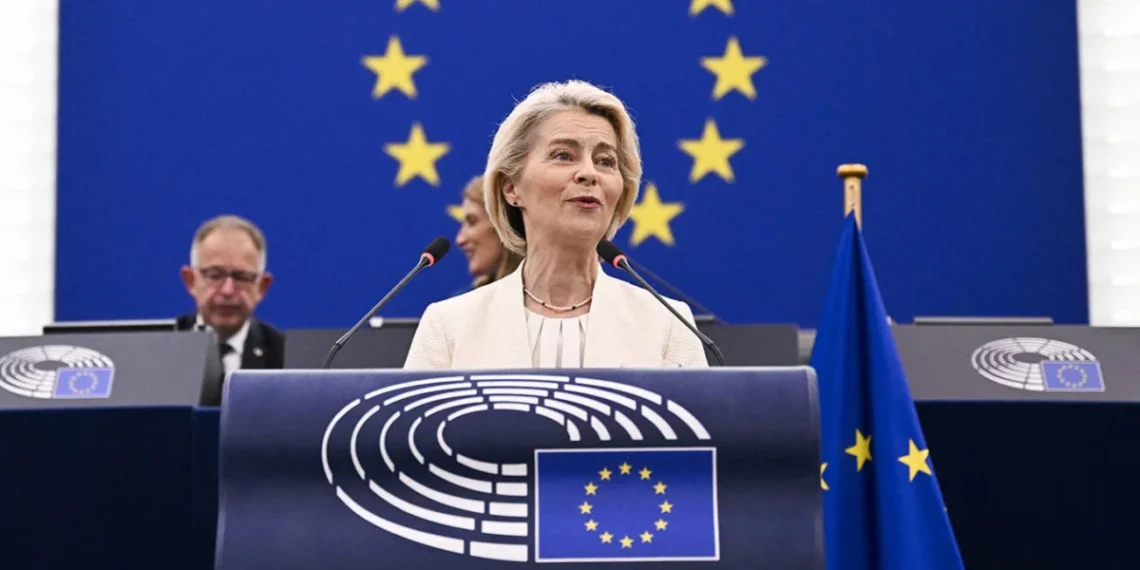
The initiative, formally introduced during von der Leyen’s annual State of the Union address, aims to summon political leaders, intellectuals, economic stakeholders, and civil-society representatives to a grand deliberative assembly. Scheduled for next year to coincide with the 70th anniversary of the landmark 1957 Treaty of Rome—which established the European Economic Community (EEC)—the gathering is designed to rethink the architecture of European governance.
- Core Objective: To forge a renewed pan-European consensus on institutional reform, security independence, and economic competitiveness amid rising global authoritarianism and multipolar fragmentation.
- The Historical Template: Modeled on the 1948 Congress of Europe in The Hague, which gathered over 800 delegates from across the continent to debate federalism, human rights, and economic cooperation.
- Timeline and Milestones: The proposed congress is slated for 2027, serving as the centerpiece of a year-long reflection on the EU’s past achievements and existential vulnerabilities.
- Key Architects: Spearheaded by the European Commission executive, with expected participation from the European Parliament, member-state governments, and a wide array of non-state actors.
The urgency driving this proposal stems from an accumulation of compounding crises. From the protracted war on the EU’s eastern border and escalating strategic decoupling between the United States and China, to the creeping erosion of democratic norms within the bloc, the European Union finds itself trapped between the necessity of deep integration and the political reality of rising nationalism.
Chronology of a Vision: From The Hague to Brussels
Understanding the weight of von der Leyen’s proposal requires tracing the historical milestones that have shaped European integration during moments of existential peril.
May 1948: The Original Congress of Europe
Convened in The Hague, Netherlands, under the honorary presidency of Winston Churchill, the original Congress brought together figures such as Konrad Adenauer, François Mitterrand, and Paul-Henri Spaak. It was a grassroots and intellectual mobilization of unprecedented scale, producing resolutions that directly led to the creation of the Council of Europe (1949) and paved the way for the Schuman Declaration (1950) and the Treaty of Rome (1957). It proved that visionary leaps were possible when the continent lay in ruins.
March 1957: The Treaty of Rome
Marking the institutional birth of the European integration project, the signing of the Treaty of Rome established the European Economic Community (EEC) and Euratom. It committed member states to a path of common market integration, laying the economic bedrock for decades of peace and prosperity in Western Europe.
May 2022 – May 2023: The Conference on the Future of Europe
The most recent direct antecedent to von der Leyen’s proposal was the Conference on the Future of Europe—a year-long citizen-led series of debates and panel discussions. While the Conference successfully mobilized thousands of ordinary citizens and produced 49 ambitious proposals covering everything from climate policy to treaty change, its ultimate impact was blunted. Many of its most transformative recommendations ran aground due to a lack of appetite for institutional overhauls among national capitals.
September 2026: The State of the Union Proposal
During her address in Brussels, von der Leyen officially announced her intention to replicate the spirit of 1948. Recognizing that incremental adjustments are no longer sufficient to navigate the tempestuous geopolitical waters of the late 2020s, she called for a structural reset.
2027 (Projected): The New Congress of Europe
Planned to coincide with the 70th anniversary of the Treaty of Rome, the upcoming congress aims to bypass traditional, rigid intergovernmental channels by injecting fresh, multi-stakeholder perspectives directly into the debate over the EU’s future trajectory.
Supporting Data and Geopolitical Context
The justification for a radical rethinking of the European project is written plainly in the data. Europe’s share of global GDP, demographic weight, and technological competitiveness has steadily declined relative to emerging economic powerhouses in the Indo-Pacific and the technological dominance of the United States.
+--------------------------------------------------------------------------+
|                 Key Metrics Underscoring the EU's Challenge              |
+---------------------------+----------------------------------------------+
| Metric                    | Indicator / Trend                            |
+---------------------------+----------------------------------------------+
| Global GDP Share          | Declined from ~25% (2000) to under 17% today |
| Defense Readiness         | Fragmentation across 27 national procurement |
|                           | systems and redundant defense arsenals       |
| Energy Vulnerability      | Historic over-reliance on imported fossil    |
|                           | fuels, accelerating green transition costs   |
| Public Support for EU     | High aggregate trust, but deeply polarized   |
|                           | along nationalist vs. federalist lines       |
+---------------------------+----------------------------------------------+
Furthermore, external shocks have exposed structural frailties. The return of high-intensity warfare to the European continent has laid bare the inadequacy of the EU’s defense-industrial base. According to recent European Defence Agency (EDA) data, while EU member states have collectively increased defense spending, duplication and lack of interoperability continue to squander billions of euros annually.
On the economic front, the Draghi report on European competitiveness warned that the EU must mobilize up to €800 billion annually in additional investments to close the innovation gap with the U.S. and China. Without institutional streamlining—such as reforming the unanimity voting rule in foreign policy and tax matters—the bloc risks structural paralysis.
Official Responses and Stakeholder Reactions
Reaction across the European political landscape has been swift, split between enthusiastic endorsement of the conceptual ambition and cautious skepticism regarding its practical implementation.
The European Commission
Proponents within the Commission view the Congress of Europe as an essential circuit-breaker. By stepping outside the institutional comfort zone of standard European Council summits and trilogue negotiations, the Commission hopes to build a broad-based coalition of reformers.
"We cannot build the Europe of tomorrow with the institutional toolkits of yesterday," a senior Commission official noted on condition of anonymity. "The world has changed around us. Von der Leyen’s proposal is an invitation to look up from our daily crisis management and design a resilient Union capable of acting as a true geopolitical player."
European Parliament
The European Parliament has largely welcomed the initiative, with prominent federalist lawmakers arguing that any new congress must possess a direct mandate to propose binding treaty reforms. Members of Parliament have repeatedly stressed that past consultative exercises failed because national governments retained a de facto veto over the implementation of citizen- and expert-led recommendations.
National Capitals
Reactions from EU member states are noticeably more nuanced. While smaller member states often favor deeper integration as a safeguard against major power dominance, several larger capitals remain fiercely protective of national sovereignty.
Diplomats from hesitant member states have privately questioned the necessity of convening a high-profile congress when existing institutional mechanisms—such as the European Council and the ordinary legislative procedure—already exist. Capital cities are wary of opening Pandora’s box to radical institutional changes, particularly at a time when eurosceptic and populist movements command significant electoral shares in several core countries.
Civil Society and Intellectuals
Civil society organizations have expressed cautious optimism, tempered by lessons learned from the Conference on the Future of Europe. Representatives have emphasized that for the 2027 Congress to retain credibility, its delegates must be genuinely representative of Europe’s diverse socioeconomic fabric, rather than serving as an echo chamber for traditional Brussels insiders and national elites.
Implications for the Future of the Union
The success or failure of von der Leyen’s proposed Congress of Europe will carry profound implications for the trajectory of European integration.
1. Overcoming the Consensus Trap
The most critical test for the congress will be its ability to address the EU’s decision-making paralysis. The requirement for unanimity in areas such as foreign policy, taxation, and security has repeatedly rendered the bloc vulnerable to individual member states holding collective progress hostage. If the congress can generate credible momentum toward qualified majority voting (QMV), it could unlock a more agile European Union.
2. Defining Europe’s Strategic Autonomy
In an era defined by great-power competition between Washington and Beijing, the EU faces a stark choice: become a sovereign geopolitical actor or risk becoming a passive economic playground for foreign powers. The congress will serve as the premier forum to debate the concrete parameters of "strategic autonomy"—spanning defense capabilities, critical supply-chain security, and technological sovereignty.
3. Bridging the Democratic Deficit
Critics of European integration have long pointed to a disconnect between Brussels institutions and the everyday concerns of European citizens. By engaging civil society, grassroots movements, and local leaders directly, the 2027 Congress offers an opportunity to revitalize democratic engagement. However, if the event is perceived as an elite-driven exercise detached from the socioeconomic pressures facing ordinary citizens, it risks deepening public cynicism.
4. The Path to Treaty Reform
Ultimately, the legacy of the proposed congress will be measured by its tangible outcomes. Will it produce another glossy report filled with aspirational rhetoric destined for a dusty archive, or will it serve as the catalyst for genuine treaty revision?
As Europe approaches the 70th anniversary of the Treaty of Rome, von der Leyen’s initiative has thrown down the gauntlet. The continent’s leaders, intellectuals, and citizens must now decide whether they possess the political courage to re-engineer the European project for a turbulent century—or risk watching the achievements of post-war integration slowly fracture under the weight of modern realities.