
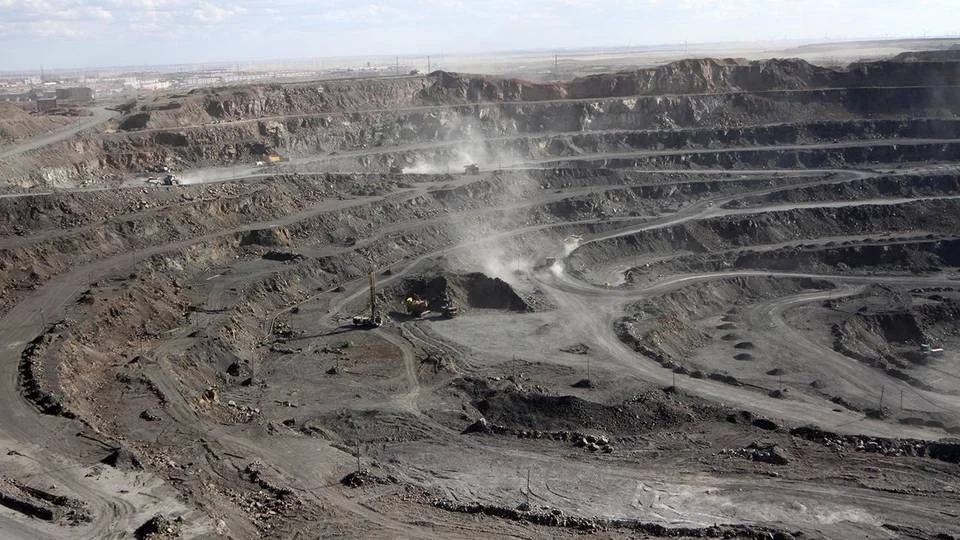
BERLIN — In the high-stakes arena of 21st-century geopolitics, few terms carry as much hidden leverage as "rare-earth elements." These seventeen chemically similar metallic elements are the invisible backbone of the modern technological revolution, essential for everything from precision guided munitions and advanced telecommunications to the permanent magnets that drive electric vehicles and offshore wind turbines.
For years, policymakers in Washington, Brussels, and other Western capitals have watched with growing apprehension as Beijing secured a near-monopoly over the extraction, processing, and refining of these critical materials. Yet, despite mounting trade tensions, export controls, and strategic posturing, a complete Chinese embargo on rare-earth exports remains an unlikely extreme. Instead, the global economy appears headed toward a tense equilibrium: China will likely keep the specter of an embargo alive as a diplomatic deterrent, while the West pursues costly capacity duplication and stockpiles to mitigate its exposure to potential supply shocks—fully aware that total self-sufficiency is a mathematical and logistical impossibility.
Main Facts: The Anatomy of a Critical Dependency
The modern economic architecture rests upon a fragile foundation. While rare earths are not genuinely scarce in the Earth’s crust—deposits can be found globally, from the sands of Australia to the mountains of Greenland and the plains of North America—the capacity to separate, refine, and magnetize these elements is intensely concentrated.
China currently controls roughly 70% of global rare-earth mining and over 90% of refined production. More critically, Beijing dominates the midstream processing stages—turning raw ore into high-purity oxides and metals—and holds an effective monopoly on the manufacturing of high-strength permanent magnets (such as Neodymium-Iron-Boron magnets).
This asymmetry gives Beijing immense strategic leverage, a reality underscored by past trade frictions. However, implementing a blanket embargo is a double-edged sword that Chinese policymakers are hesitant to wield. A total cutoff would inflict severe immediate pain on Western industries, but it would also instantly mobilize global capital, accelerate the creation of alternative supply chains, and prompt major trade partners to decouple permanently from the Chinese economy.
Consequently, China prefers a policy of calibrated ambiguity. By tightening export licensing regimes, introducing bureaucratic hurdles, and maintaining the constant threat of a total cut-off, Beijing can influence foreign policy decisions in Western capitals without having to pull the trigger.
Meanwhile, the West faces a stark economic reality. Complete self-sufficiency—the idea that the United States or the European Union could domestically mine, process, and manufacture every rare-earth component required for their green transitions and defense sectors—is practically unattainable. Environmental regulations, high labor costs, lengthy permitting processes, and the sheer technical complexity of the refining process make domestic duplication a multi-decade, astronomical financial endeavor. Instead, Western strategy has shifted toward risk mitigation: reducing vulnerability through strategic stockpiling, friendly-shoring, and subsidizing allied production hubs.
Chronology: A Decade of Escalating Resource Nationalism
To understand how the global economy arrived at this precarious juncture, it is necessary to examine the historical evolution of the rare-earth market over the past fifteen years.
- 2010: The Senkakus/Diaoyu Islands maritime dispute between China and Japan serves as a geopolitical watershed. In response to the detention of a Chinese trawler captain, Beijing informally halts rare-earth shipments to Japan. Global prices skyrocket, and Western industrial powers realize their extreme vulnerability for the first time.
- 2011–2014: The international community challenges China’s export quotas and duties at the World Trade Organization (WTO). In 2014, the WTO rules against Beijing, forcing China to dismantle its formal quota system, though domestic consolidation and environmental crackdowns continue to consolidate state control over the sector.
- 2015–2018: Prices stabilize at lower levels, causing a lull in Western investment. Projects like the Mountain Pass mine in California struggle financially, while Chinese firms consolidate their dominance over global refining capacity, absorbing know-how and acquiring foreign assets.
- 2019: Amid escalating U.S.-China trade tensions, Chinese President Xi Jinping visits a rare-earth processing facility in Jiangxi province, widely interpreted by markets as a subtle signal that rare earths could be weaponized in the trade war.
- 2020–2021: The COVID-19 pandemic exposes the fragility of global supply chains. Governments worldwide begin formulating comprehensive critical mineral strategies. The European Union launches the European Raw Materials Alliance (ERMA).
- 2022–2023: Economic security officially takes center stage in Berlin, Washington, and Brussels. The EU introduces the Critical Raw Materials Act, while the U.S. relies on the Defense Production Act to fund domestic processing projects. China responds by implementing targeted export controls on gallium, germanium, and eventually graphite, demonstrating its willingness to restrict critical material flows under the guise of national security.
- 2024–Present: A fragile status quo emerges. China enforces strict export monitoring on specific rare-earth technologies and processing machinery, while the West funnels billions into allied mining projects in Australia, Canada, and Africa, attempting to build parallel supply chains before the next major crisis hits.
Supporting Data: The Metrics of Vulnerability
Economic analysis of the rare-earth sector reveals the profound scale of the challenge facing Western policymakers.
| Indicator | Approximate Share / Metric | Strategic Implication |
|---|---|---|
| Global Mining Share (China) | ~70% | China holds the foundational lever of raw material extraction. |
| Global Refining Share (China) | ~90% | Even non-Chinese mines often ship raw ore to China for processing. |
| Permanent Magnet Production (China) | ~90%+ | Critical bottleneck for EV motors and defense electronics. |
| U.S. Import Dependency | >75% for key heavy rare earths | High exposure to geopolitical shocks. |
| EU Dependency on Single Supplier | ~98% of rare earths imported from China | Extreme vulnerability recognized in EU trade stress tests. |
Data compiled by international energy and economic agencies illustrate that while capital expenditure (CapEx) for alternative mining projects has increased by over 300% since 2020, the lead time from initial discovery to commercial refining remains between 10 to 15 years. This temporal mismatch ensures that Western industrial bases will remain exposed to Chinese market fluctuations for the foreseeable future.
Official Responses: Strategies from Brussels, Washington, and Berlin
Governments across the developed world have responded to this strategic vulnerability with a mix of industrial policy, legislative mandates, and diplomatic outreach.
The European Union: The Quest for Strategic Autonomy
In Berlin and Brussels, "economic security" has rapidly transformed from a theoretical concept into active policy. Recognizing that smaller European economies lack the market weight to negotiate individual supply agreements, the EU has pursued a bloc-wide approach.
The Critical Raw Materials Act, adopted recently, sets aggressive benchmarks for 2030:
- At least 10% of the EU’s consumption of strategic raw materials must come from domestic extraction.
- At least 40% must be processed within the EU.
- At least 25% must come from recycled materials.
- No single third-country supplier can provide more than 65% of the Union’s annual consumption of any strategic raw material.
However, European officials privately admit that hitting the extraction target will be exceedingly difficult given local environmental opposition and high energy costs. Consequently, European strategy increasingly relies on trade diversification—forging partnerships with resource-rich democracies such as Canada, Chile, and Australia.
The United States: Defense and Domestic Subsidies
In Washington, the response has been heavily driven by national security concerns. Through the Department of Defense and the Department of Energy, the U.S. government has poured hundreds of millions of dollars into domestic champions like MP Materials (operators of the Mountain Pass mine) and Lynas Rare Earths (an Australian firm building heavy rare-earth separation facilities in Texas).
The U.S. approach also emphasizes minilateralism, notably through the Minerals Security Partnership (MSP), an alliance of resource-consuming nations designed to catalyze public and private investment in ethical, secure critical mineral supply chains worldwide.
Beijing’s Perspective: Managing the Balance
From Beijing’s vantage point, export controls are viewed as a legitimate defense of national sovereignty and environmental protection. Chinese officials frequently point out that Western nations utilized similar protectionist and export-restrictive measures during their own phases of industrial development. By regulating technology transfers and controlling processing patents, China aims to retain its status as the indispensable node in the global high-tech manufacturing network.
Implications: The Future of Global Trade and Industrial Policy
The ongoing standoff over rare-earth elements carries profound implications for the global economy, international relations, and the green transition.
1. The Death of Just-in-Time Globalization
The race to secure critical minerals signals the definitive end of pure "just-in-time" global supply chain management. Corporations are hastily transitioning to "just-in-case" models, holding larger strategic reserves of critical inputs and regionalizing their supply chains. This shift inherently introduces structural inefficiencies, driving up costs for consumers and contributing to persistent inflationary pressures in high-tech and automotive sectors.
2. The Limits of Decoupling
While Western politicians frequently invoke the rhetoric of "de-risking" or "decoupling," the rare-earth sector demonstrates the profound limits of economic separation. Because modern technology is deeply interconnected, attempting to sever China entirely from the tech supply chain is economically unfeasible. Instead, the world is moving toward a bifurcated or fragmenting trade architecture, where critical materials flow through geopolitically aligned channels, but absolute isolation remains a bridge too far.
3. The Vulnerability of Smaller Economies
As noted by trade economists, while superpowers like the United States and the European Union can implement sweeping legislative packages, tariffs, and subsidies to force structural adjustments, smaller economies lack such leverage. Lacking the domestic market size to incentivize massive local refining industries, smaller nations face a stark reality: their only effective defense against resource bullying and economic coercion is aggressive, multilateral diversification. By pooling their purchasing power and aligning with larger trading blocs, smaller nations can hope to shield themselves from sudden supply shocks.
4. Technological Innovation as an Escape Hatch
Ultimately, the most promising solution to the rare-earth dilemma may not lie in mining or diplomacy, but in laboratory science. Universities and private research labs worldwide are racing to develop substitute materials—such as iron-nitride magnets or zero-rare-earth electric motors—that eliminate the need for heavy rare earths altogether. If successful, technological innovation could neutralize Beijing’s geopolitical leverage faster than any government subsidy program or trade agreement.
Conclusion
The rare-earth dilemma encapsulates the paradox of modern globalization: deeper integration has created deeper vulnerabilities. China will almost certainly refrain from executing a self-defeating total embargo, preferring instead to utilize the constant, latent threat of supply restrictions to shape geopolitical outcomes. Simultaneously, the West will continue its expensive, imperfect quest to build parallel supply capacities and stockpile vital materials.
In this new era of economic statecraft, neither total dominance nor complete self-sufficiency is attainable. Instead, the global economy must learn to navigate a permanent state of strategic friction, where critical minerals serve as both the fuel for the future and the primary currency of geopolitical leverage.