Main Facts: The Rebirth of a Motoring Icon
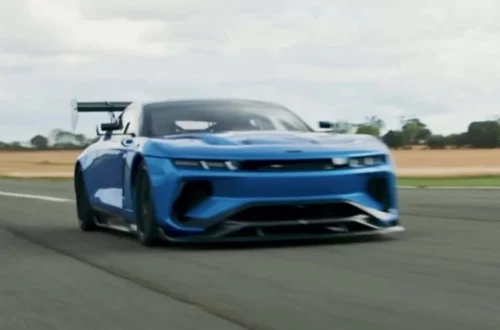
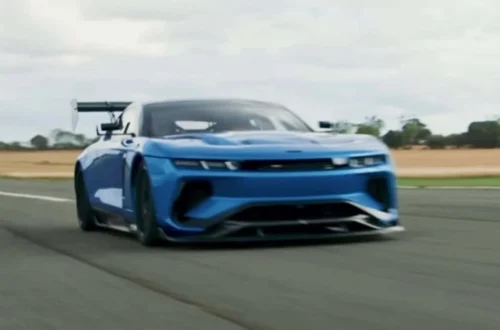
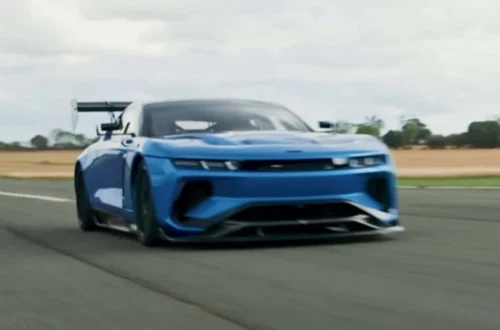
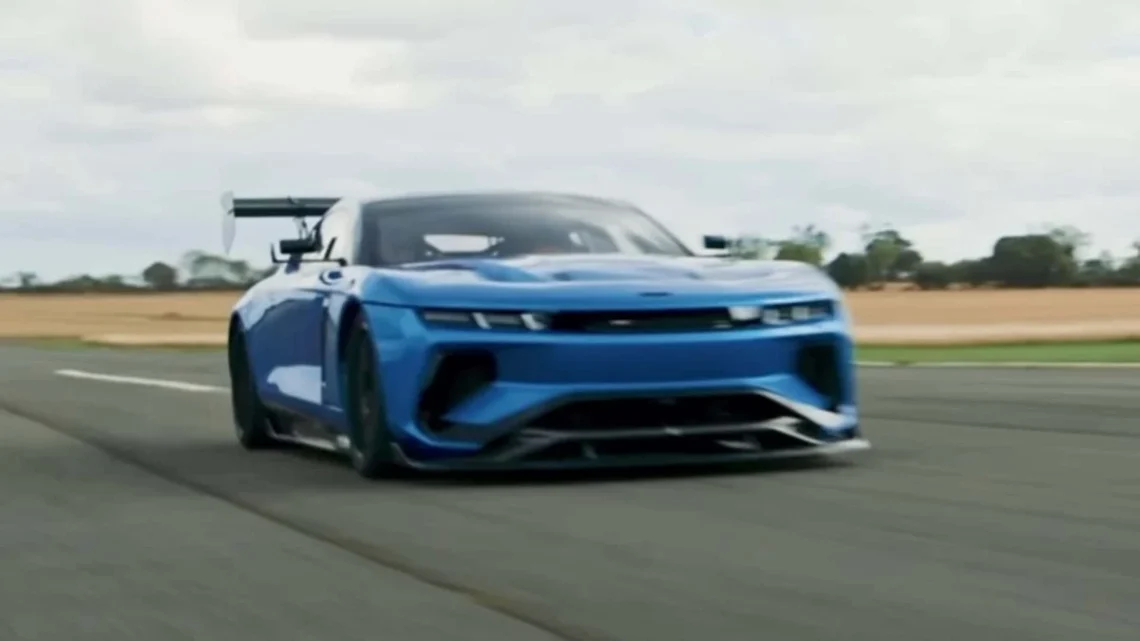
The storied British automotive nameplate Jensen is officially back, and it is making an entrance that is impossible to ignore. Headlining the brand’s revival is the Jensen Interceptor GTX, a high-performance track machine that marries classic British grand touring lineage with unapologetic, American-sourced V8 muscle.
Currently developed and showcased as a track-only prototype, the Interceptor GTX is designed to push the boundaries of mechanical performance. Beneath its aggressive, widened composite bodywork lies a heavily overhauled 6.8-liter supercharged V8 engine sourced originally from General Motors, which produces an astonishing 973 horsepower in its standard state of tune. For those seeking even more volatility, Jensen engineers confirm that the powerplant can be pushed to generate up to 1,200 horsepower with a dedicated ECU remap.
Unlike the modern wave of heavy, silent electric hypercars, the Interceptor GTX keeps analog driving alive by funneling its immense power exclusively through a traditional manual gearbox. While it currently exists solely as a circuit-focused prototype, Jensen’s ultimate roadmap points toward the public highway, with plans underway to adapt the race car’s brutal engineering into road-legal grand touring (GT) and high-performance sporting (GTR) variants.
Chronology: The Evolution of Jensen’s Modern Comeback
To understand the magnitude of the Interceptor GTX, one must look at the trajectory that brought a dormant British marque back from the history books to the bleeding edge of automotive engineering.
- The Heritage Foundation: The Jensen name is etched into automotive history through iconic models like the original Interceptor of the 1960s and 70s—a car famous for combining sleek Italian styling by Carrozzeria Touring with muscular American Chrysler V8 performance.
- The Revival Announcement: Rumors and preliminary announcements began circulating as enthusiasts caught wind that a forgotten British brand was preparing to challenge contemporary heavyweights like Aston Martin with a new, ultra-high-performance V8 sports car.
- Naming the Beast: Jensen officially confirmed the identity of its modern creation, announcing the "Interceptor GTX" moniker, signaling a direct nod to its historical past while embracing modern motorsport-derived nomenclature.
- The Track-Only Revelation: Jensen pulled back the curtain to reveal that the initial iterations of the Interceptor GTX would be built strictly for the track, prioritizing aerodynamic downforce, chassis rigidity, and uncompromised circuit performance over emissions and safety red tape required for road cars.
- The Debut and Exhaust Symphony: The prototype finally broke cover in dynamic fashion, treating enthusiasts to its first public demonstrations. The highlight for many was hearing the supercharged 6.8-liter V8 sing at full chat, confirming that the engineering philosophy prioritized auditory drama as much as raw speed.
- The Future Road-Car Horizon: With the track-only prototype proving its mettle during ongoing development, Jensen has outlined its next major phase: translating the race car platform into homologated, street-legal GT and GTR road cars.
Supporting Data: Engineering the Interceptor GTX
The performance figures associated with the Jensen Interceptor GTX read less like a spec sheet for a boutique restomod and more like the credentials of an outright Le Mans prototype. Every mechanical component has been scrutinized, upgraded, and pushed to its absolute limits.
The Powerplant: British Ambition Meets Texas Craftsmanship
While the foundation of the engine block begins with General Motors architecture, Jensen does not simply drop a stock American V8 into a British chassis. Instead, the block is shipped directly to Late Model Engine (LME) in Texas, where it undergoes a comprehensive metamorphosis.
- Displacement: 6.8-liter supercharged V8.
- Cylinder Heads: Extensively CNC-machined to optimize airflow and combustion efficiency.
- Valvetrain: Upgraded with lightweight titanium valves to handle punishing high-RPM operations.
- Rotating Assembly: Heavily reinforced internals designed to reliably sustain extreme boost pressures and rotational forces.
- Engine Management: Controlled by an advanced Motec system, allowing precise tuning of fuel delivery, ignition timing, and boost parameters.
- Power Output: Standard configuration delivers 973 horsepower, with headroom scaling up to 1,200 horsepower.
Transmission and Drivetrain
In an era dominated by dual-clutch automatics and instantaneous EV torque vectoring, Jensen has made a bold statement by retaining a manual gearbox. Managing nearly 1,000 horsepower—let alone 1,200—through a three-pedal setup requires a heavy-duty transmission capable of handling massive shock loads without shredding synchronizers or clutch discs. The mechanical connection between driver, stick-shift, and rear wheels ensures an unfiltered, high-stakes driving experience.
Official Responses and Industry Insights
The automotive community has reacted with a mixture of awe and eager anticipation to Jensen’s resurrection. Industry analysts and enthusiasts alike have praised the brand’s refusal to conform entirely to the industry’s rapid electrification push, noting that there is still a massive appetite for high-displacement, mechanically pure internal combustion engines.
Motor1’s Expert Take
Automotive experts tracking the rollout have noted that while Jensen has a challenging road ahead to successfully transition a wild track-day prototype into a globally compliant road car, the foundational steps are undeniably correct.
"The race car definitely has us buzzing with anticipation for a road-ready version of the Interceptor. Jensen could have quite a ways to go to get there, but clearly the company is on the right path. When it does arrive, it likely won’t be cheap. But it should stand out, especially if it can sound anything close to the race car."
Company representatives have echoed this sentiment, emphasizing that the track-only phase is an invaluable testing ground. By punishing the chassis, cooling systems, and powertrain on closed circuits, engineers can iron out structural and thermal weaknesses long before the first production street car rolls off the line.
Implications: What the Interceptor GTX Means for the Future of Performance Cars
The Jensen Interceptor GTX represents far more than just a vanity project for a revived classic brand; it serves as a cultural and mechanical statement in a rapidly shifting automotive landscape.
1. Preserving the Analog Driving Experience
As global automotive regulations increasingly push manufacturers toward electrification, automated driver-assistance systems, and sanitized digital cockpits, vehicles like the Interceptor GTX act as a sanctuary for purists. Offering a manual transmission paired with a supercharged, four-figure horsepower V8 demonstrates that there is still a thriving, high-net-worth market for visceral, analog danger and mechanical engagement.
2. A New Rivalry in the Luxury Grand Touring Segment
When Jensen eventually introduces its road-going GT and GTR variants, they will enter a fierce arena traditionally dominated by the likes of Aston Martin, Bentley, and Ferrari. To carve out a niche, Jensen cannot rely solely on nostalgia. The brand must leverage the engineering pedigree forged by the Interceptor GTX track car—delivering world-class chassis dynamics, lightweight materials, and unmatched bespoke craftsmanship to justify what will undoubtedly be a staggering price tag.
3. The Viability of Boutique Manufacturing
The success of Jensen’s partnership with specialized engine builders like Late Model Engine highlights a broader trend in modern low-volume manufacturing. By collaborating with elite tier-one suppliers for core components while retaining strict design and engineering oversight in-house, boutique automakers can bypass the billions spent on mass-production research and development. This allows them to bring ultra-high-performance specialty vehicles to market with astonishing speed and agility.
Conclusion
For now, the Jensen Interceptor GTX remains a track-only experiment—a rolling laboratory of titanium, boost, and brute force. But as its supercharged 6.8-liter V8 echoes across test circuits, it sounds unmistakably like the dawn of a remarkable new chapter for British motoring. Whether screaming down a back straight or eventually idling outside a Mayfair hotel, the reborn Jensen is proving that it refuses to go quietly into the night.