Main Facts: The Rebirth of a British Legend
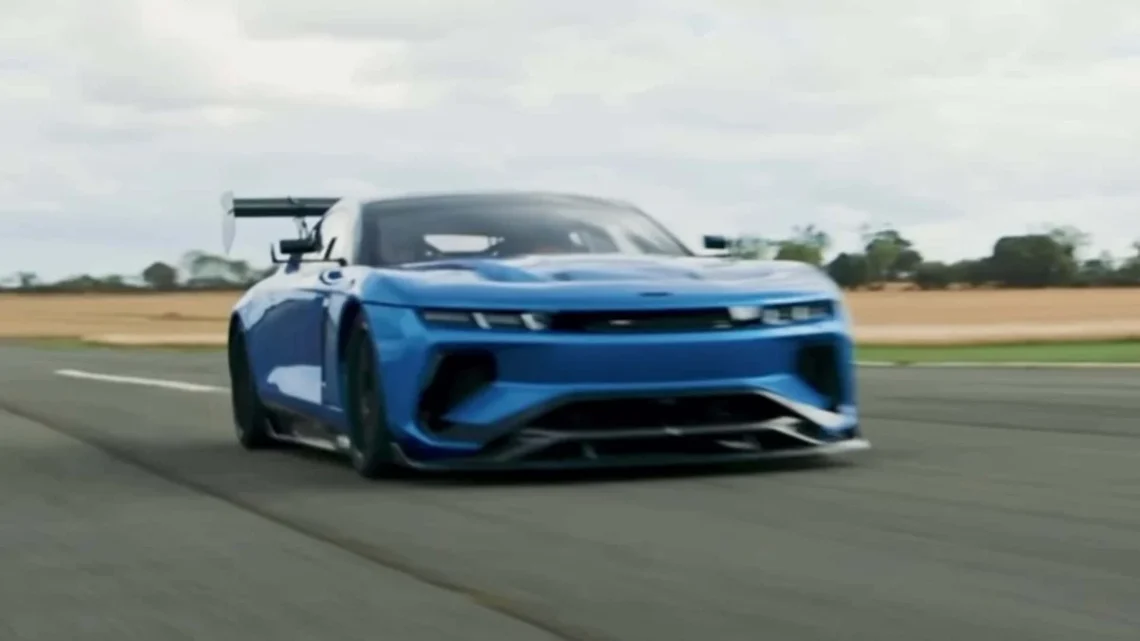
The automotive world has always harbored a soft spot for the resurrection of classic, storied nameplates. However, few revivals in recent memory carry the sheer audacity, raw mechanical aggression, and unfiltered acoustic theater of the newly minted Jensen Interceptor GTX. Currently breaking cover as a dedicated, track-only prototype, this British heavyweight has enthusiasts and purists alike buzzing with anticipation.
At the heart of the Interceptor GTX lies a mechanical marriage of convenience and brutality: a supercharged 6.8-liter V8 engine sourced originally from General Motors, but fundamentally re-engineered to deliver otherworldly performance figures. Out of the box, this heavily massaged powerhouse churns out a staggering 973 horsepower. For those whose appetite for adrenaline remains insatiable, Jensen asserts that with a proper secondary tune, the engine is fully capable of unleashing up to 1,200 horsepower.
What makes the Interceptor GTX particularly refreshing in an era dominated by silent, heavy electric vehicles and paddle-shipped dual-clutch transmissions is its analog soul. All of that unadulterated fury is routed straight to the rear wheels via a traditional manual gearbox. While the prototype currently serves exclusively as a circuit weapon designed to hone engineering parameters, the overarching ambition is clear: translate this track-bred monster into a street-legal reality. Jensen has outlined plans to eventually introduce road-going iterations—specifically a grand touring GT and a more aggressive sporting GTR—bringing the spirit of the race car to public tarmac.
Chronology: The Long Road Back to the Paddock
The journey toward the realization of the Jensen Interceptor GTX has been a meticulous, multi-stage evolution characterized by quiet determination and strategic engineering partnerships.
- The Initial Awakening (Early Phases): Whispers of the historic British marque’s return began circulating as industry insiders noted movement around the brand’s intellectual property. Automotive historians and fans of classic 1960s and 70s grand tourers waited with bated breath to see if the legendary Interceptor name would be treated with reverence or turned into a generic crossover.
- The Name Reveal and Teasers (Mid-Development): Jensen officially confirmed that its high-performance revival would indeed bear the Interceptor moniker, specifically adopting the GTX designation to signal a modern, track-focused ethos. Initial teaser campaigns and digital renderings showcased a muscular, low-slung silhouette that paid homage to the original car’s fastback lines while projecting a distinctly modern, aggressive stance.
- The Track-Only Confirmation: As development progressed, Jensen announced a strategic pivot: the initial production vehicle would debut strictly as a track-only special. This decision allowed engineers to bypass the stringent, time-consuming, and costly global homologation and emissions regulations required for road cars, focusing instead entirely on pure circuit dynamics, cooling efficiency, and structural rigidity.
- The Prototype Debut and Acoustic Unveiling: The curtain finally pulled back on the physical prototype, giving the public its first true look at the carbon-clad beast. Shortly after its static debut, Jensen treated enthusiasts to something arguably more intoxicating: the auditory experience of the supercharged 6.8-liter V8 screaming at full chat, cementing the prototype’s status as a living, breathing mechanical triumph.
Supporting Data: Dissecting the Beast
Beneath the sweeping bodywork of the Jensen Interceptor GTX lies an impressive matrix of bespoke engineering, outsourced American muscle, and cutting-edge motorsport technology.
The Powertrain Anatomy
While the engine block traces its lineage back to General Motors’ robust architecture, the similarities end almost entirely once the hardware crosses paths with specialized tuning houses. Jensen ships the raw blocks off to Late Model Engine (LME) in Texas, where the powerplant undergoes a comprehensive, no-expenses-spared transformation.
- Displacement: 6.8 liters, forced-fed via a high-capacity supercharger.
- Cylinder Heads: Fully CNC-machined for optimal airflow and thermal efficiency.
- Valvetrain: Upgraded with lightweight, high-strength titanium valves to safely handle high-rpm operation.
- Internal Components: A completely reinforced rotating assembly designed to withstand extreme cylinder pressures.
- Engine Management: Controlled entirely by a sophisticated MoTeC engine management system, ensuring precise fuel delivery, spark timing, and telemetry tracking.
Output and Performance Metrics
- Base Track Output: Approximately 973 horsepower.
- Tuned Potential: Up to 1,200 horsepower with customized boost and fuel mapping.
- Transmission: A heavy-duty manual gearbox—a rarity in the modern ultra-high-performance tier.
- Chassis Focus: Track-optimized suspension geometry, massive multi-piston braking systems, and aerodynamic downforce elements derived from endurance racing disciplines.
Official Responses and Industry Perspectives
The reception from the automotive media and industry observers has been overwhelmingly positive, marked by a mixture of cautious optimism and sheer awe.
"The race car definitely has us buzzing with anticipation for a road-ready version of the Interceptor. Jensen could have quite a ways to go to get there, but clearly the company is on the right path. When it does arrive, it likely won’t be cheap. But it should stand out, especially if it can sound anything close to the race car."
— Motor1 Editorial Team
Industry analysts have noted that reviving a defunct luxury or sports car brand is fraught with financial peril. However, Jensen’s strategy of establishing credibility through a high-profile, low-volume track car is a well-tested playbook used successfully by boutique manufacturers across Europe. By proving the durability of the Texas-built V8 and the robustness of the chassis on demanding racetracks, Jensen is building a formidable engineering foundation before ever promising a turnkey road car to a private collector.
Implications: What the Interceptor GTX Means for the Future of Motoring
The appearance of the Jensen Interceptor GTX carries significant symbolic and practical weight in today’s rapidly shifting automotive landscape.
The Defiance of the Analog Supercar
At a time when hypercars and track-day specials routinely rely on hybrid assistance, complex torque-vectoring computer algorithms, and lightning-fast dual-clutch transmissions to post lap times, the Interceptor GTX stands as a glorious anachronism. A supercharged V8 pushing nearly 1,000 horsepower through a manual shifter requires physical engagement, reverence, and genuine driver skill. It proves that there is still a fiercely loyal market—and an emotional necessity—for brute-force mechanical purity.
The Roadmap to Public Roads
For automotive enthusiasts, the ultimate promise of the Interceptor GTX lies in its transition from the circuit to the highway. Jensen’s stated goal to develop both a grand touring GT (focused on high-speed, long-distance luxury and cross-continental capability) and a sharper GTR variant means that the lessons learned on the track will directly benefit street drivers.
Of course, translating a nearly 1,000-horsepower track special into a street-legal vehicle is an immense hurdle. Emissions compliance, crash-test safety certification, interior refinement, and ride comfort must all be addressed without diluting the raw character that makes the prototype so captivating. When—and if—these road-going models finally materialize, they will undoubtedly carry an eye-watering price tag, likely placing them in the exclusive company of modern Restomods and ultra-limited hyper-GTs.
Until that day arrives, the Jensen Interceptor GTX remains a tantalizing promise. It is a deafening, tire-smoking reminder that the golden age of the internal combustion engine is not going down quietly—it is roaring into the night, one supercharged gear change at a time.